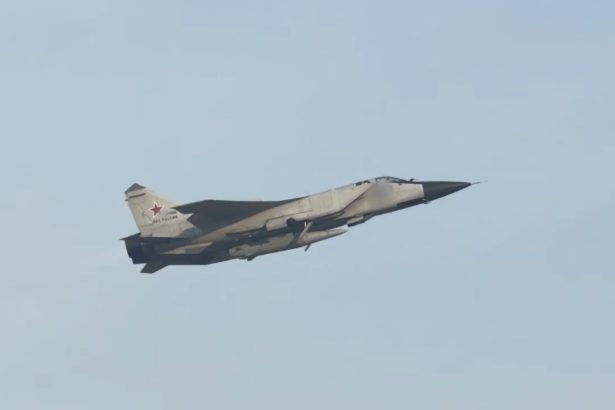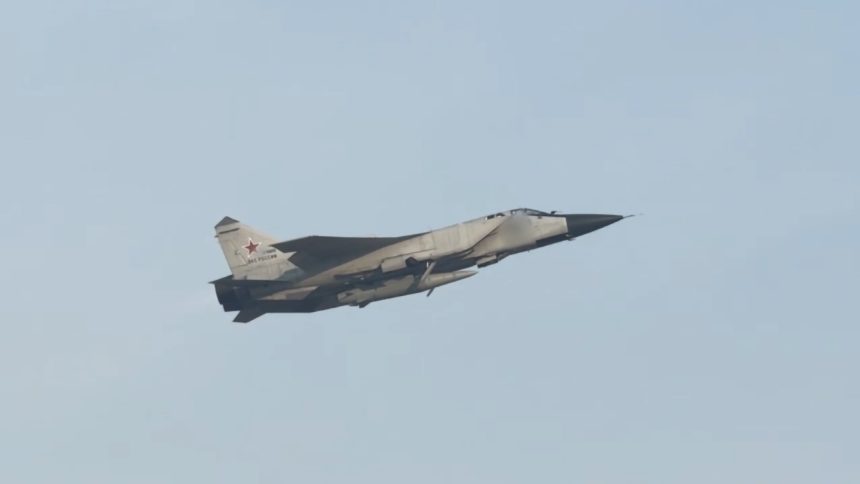
Russian Aerospace Forces publicized for the first time the MiG-31 armed with the Kh-47M2 Kinzhal aeroballistic hypersonic missile flying in the Indo-Pacific region.
Russia’s Ministry of Defense (RuMoD) released footage on Mar. 17, 2026, of its MiG-31I jets carrying the Kh-47M2 Kinzhal hypersonic Air-Launched Ballistic Missiles (ALBM) while flying over the Sea of Japan. Russian and Chinese jets have been flying joint patrols over the region for a few years now, with the last such combined flight reported by Japan and South Korea on Dec. 9, 2025.
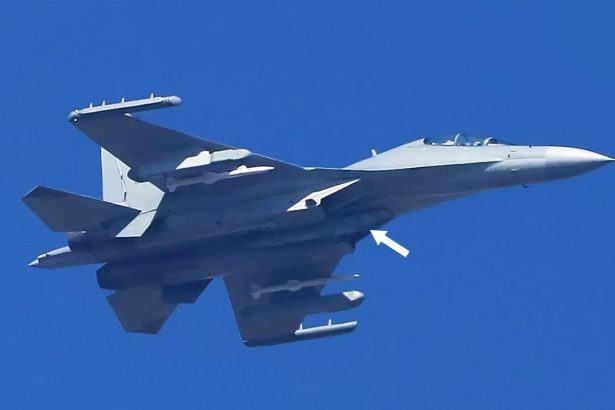
These have usually consisted of Russian Tu-95 Bear bombers, A-50 Airborne Early Warning and Control (AEW&C) aircraft, Su-30 fighter jets, together with Chinese J-16 fighter jets and H-6K/N bombers. MiG-31Is with the Kinzhal, however, are absolutely rare.
Russian military aviation analyst Guy Plopsky, who also shared images from the RuMoD video, told us this is at least the first time the ministry has released the video of the MiG-31I and the Kinzhal over this particular region.
Several stills from a new Russian MoD video showing two VKS MiG-31I strike aircraft receiving fuel from an Il-78M tanker during a scheduled mission over the Sea of Japan. Each MiG is seen equipped with either a live ALBM or a training variant thereof. The missile and the MiG make… pic.twitter.com/WRYZ9M0pPj
— Guy Plopsky (@GuyPlopsky) March 17, 2026
The Japanese Ministry of Defense’s Joint Staff, meanwhile, did not release any information about possible interceptions targeting this particular formation. In fact, while multiple intercepts were disclosed, no additional details were provided.
However, between Mar. 15 and Mar. 18, the Mod has been tracking a Russian Navy Udaloy-III class destroyer. The ship first proceeded northeast through the waters between Yonaguni Island and Iriomote Island, heading toward the East China Sea, and then transited through the Tsushima Strait toward the Sea of Japan.
令和8年3月15日、ロシア海軍ウダロイⅢ級駆逐艦が、与那国島と西表島との間の海域を北東進し、東シナ海へ向けて航行したことを確認しました。#防衛省・自衛隊 は、海上自衛隊の第1海上補給隊所属「はまな」(佐世保)により、#警戒監視・情報収集 を行いました。https://t.co/0hferQ4pXf pic.twitter.com/2196UlermD
— 防衛省統合幕僚監部 (@jointstaffpa) March 16, 2026
令和8年3月17日から18日にかけて、ロシア海軍ウダロイⅢ級駆逐艦が、対馬海峡を北東進し、日本海へ向けて航行したことを確認しました。#防衛省・自衛隊 は、海上自衛隊の第3ミサイル艇隊所属「しらたか」(佐世保)及び第4航空群所属「P-1」(厚木)により、#警戒監視・情報収集… pic.twitter.com/fsCqOxPKKb
— 防衛省統合幕僚監部 (@jointstaffpa) March 18, 2026
Russian MoD video and statement
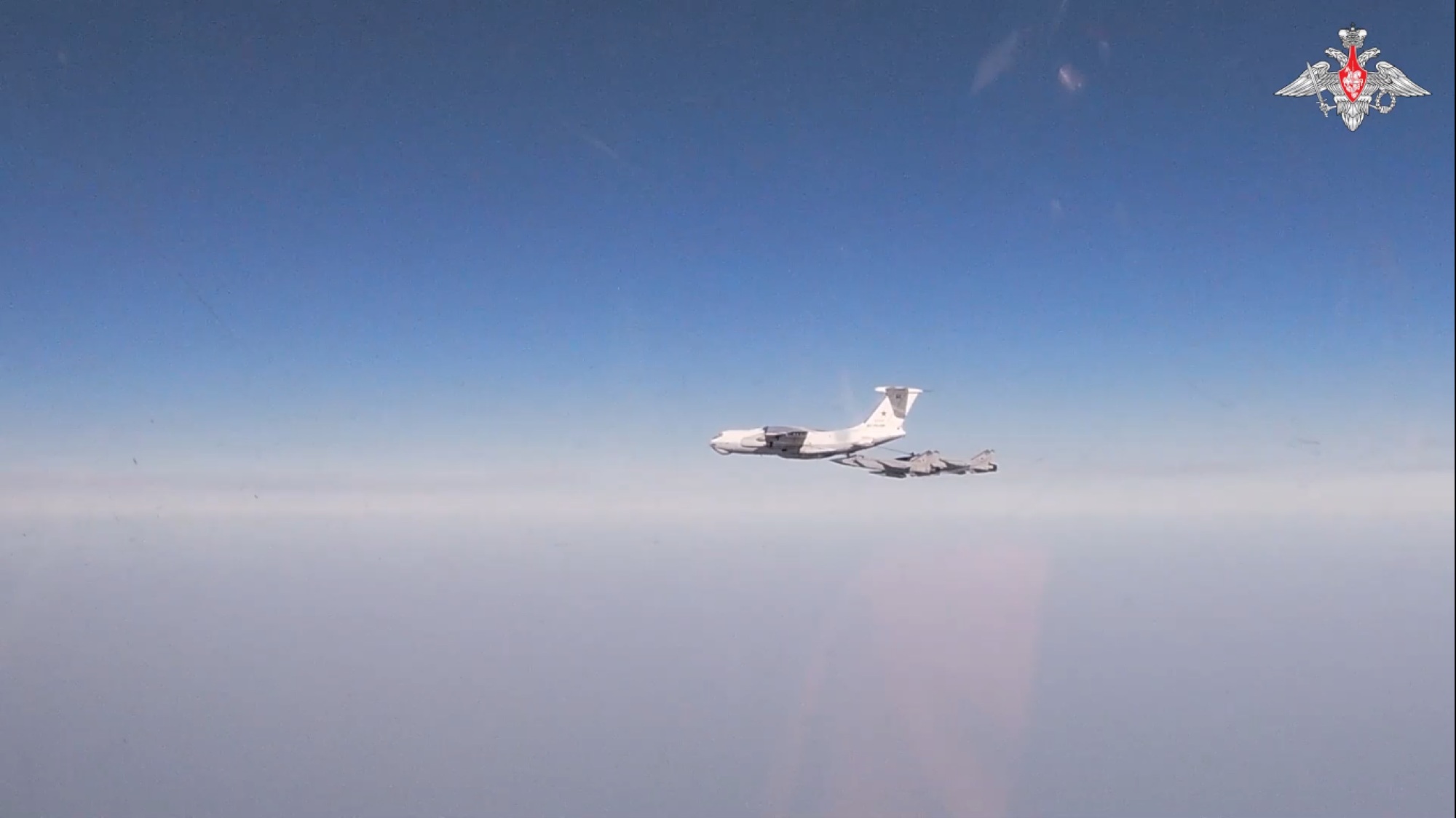
The video shows two MiG-31Ks armed with the Kinzhals, part of a formation with a total of five Russian aircraft visible. The formation also included an Il-78M tanker, which refueled the MiG-31Is, and two Su-30 fighters, with part of the footage showing one of the Su-30s from the seat of the other’s Weapons Systems Operator (WSO).
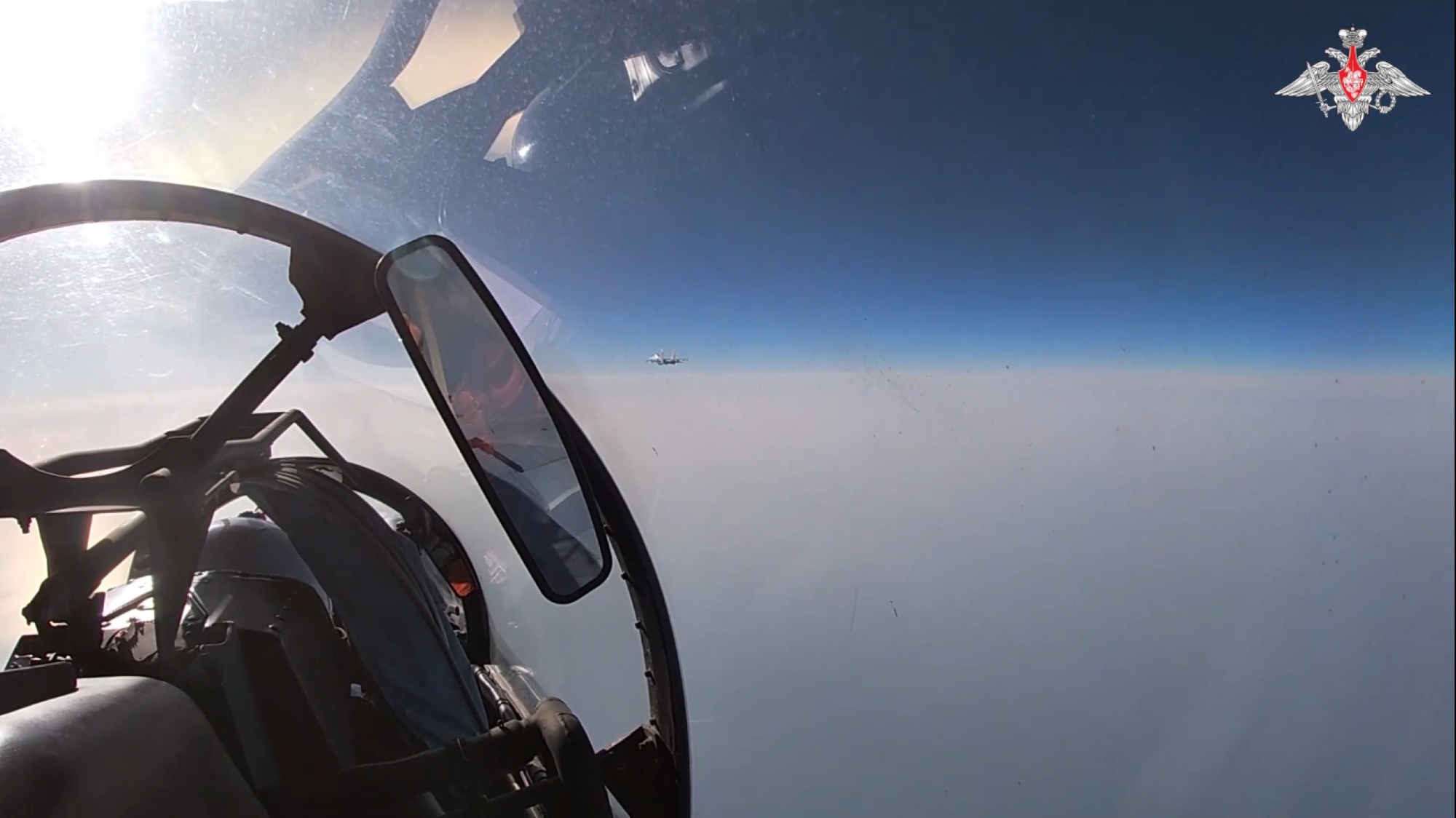
Screengrabs from the RuMoD video also show footage of the aerial refueling from both the cockpit of one of the MiG-31s and from the Il-78M. The MiG-31s are also shown flying overhead, possibly over their home base, with the Kinzhals carried on their centerlines.
MiG-31I fighters with the 9-S-7760 missile of the Kinzhal system conducted a routine flight over the Sea of Japan.https://t.co/K1rJblgVZo pic.twitter.com/Re5cWDh1eF
— Massimo Frantarelli (@MrFrantarelli) March 17, 2026
The statement from the RuMoD accompanying the video stated:
“The MiG-31 aircraft, equipped with Kinzhal hypersonic air-launched ballistic missiles, made a scheduled flight in the airspace over the neutral waters of the Sea of Japan. During the flight, MiG-31 aircraft crews practised refuelling in the air. All flights of Russian Aerospace Forces aircraft are carried out in strict compliance with international rules on the use of airspace.”
“Given that the MiG-31s were operating from Vladivostok, it is perhaps more likely that the Su-30s were from the 22nd IAP(Tsentralnaya Uglovaya) as it is near Vladivostok,” Plopsky told The Aviationist. Four MiG-31s were captured at Vladivostok airport on Mar. 17 and Mar. 19, along with an A-50U Mainstay AEW&C aircraft, by ‘AviVector’, who also observed three of the MiGs armed with Kinzhals.
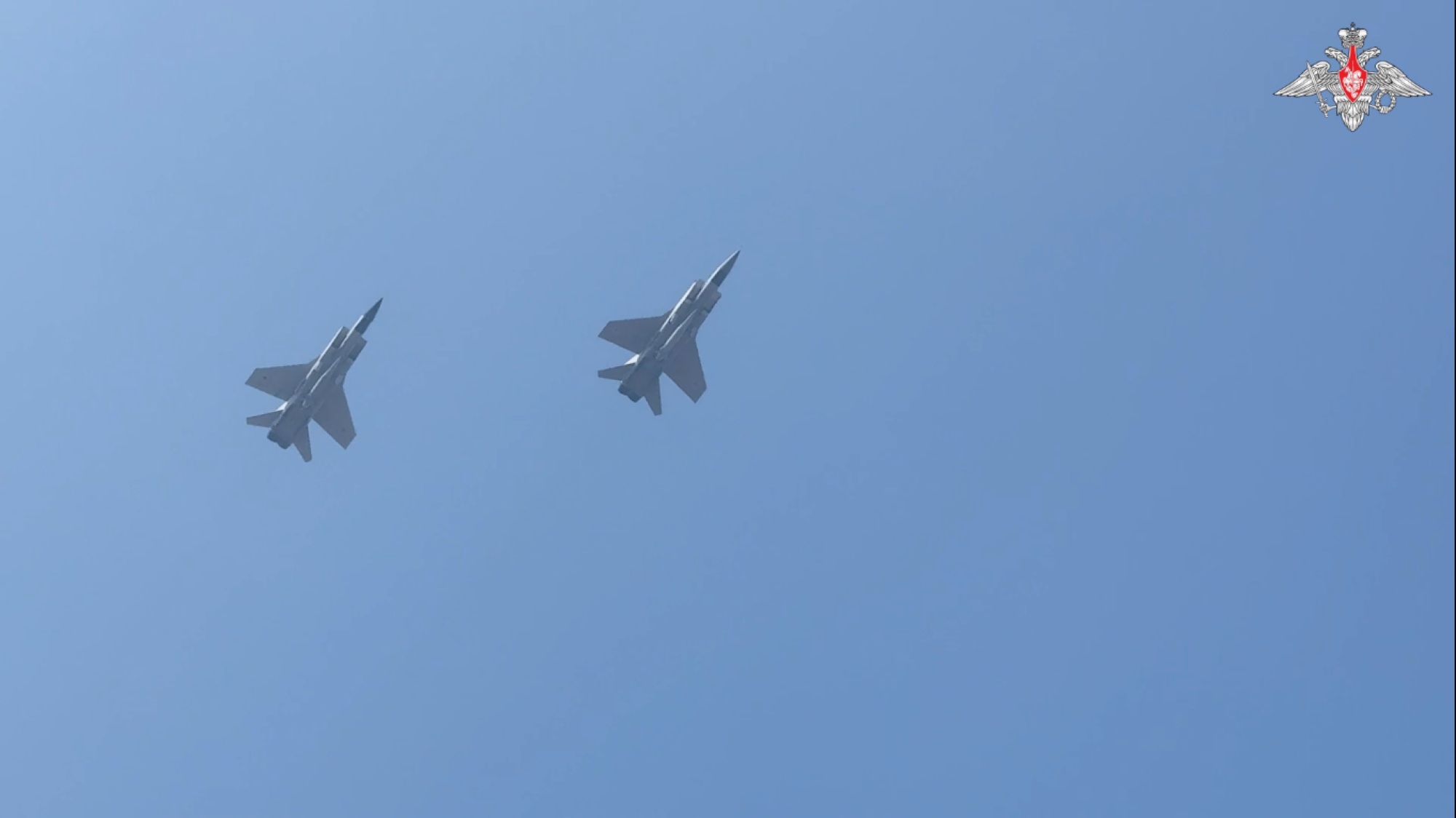
Plopsky however pointed out on X that the Kinzhals on the MiG-31s could also be inert variants used for training, and not live missiles. This therefore brings us to the diplomatic motivations behind such a flight.
Diplomatic overview
There could be two geopolitical explanations behind such a provocative flight with major strategic weapons over the Sea of Japan. One, it could be rooted in persistently tense relations between the U.S.-Japan-South Korea alliance in the western and northern Pacific regions and China, Russia and North Korea.
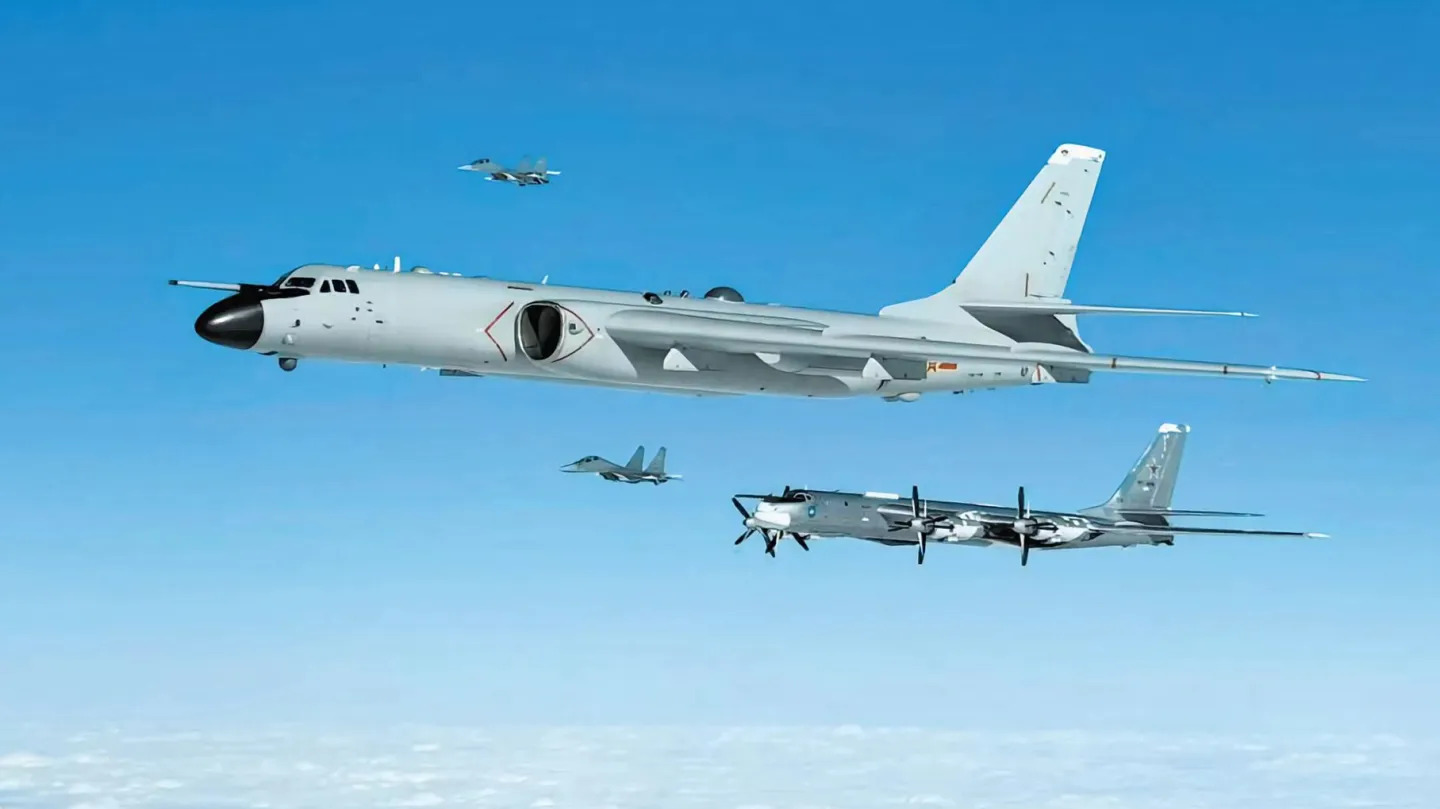
Ties have been further strained since Japan’s new head of government, Prime Minister Sanae Takaichi, has enhanced relations with the U.S. As explained before, joint Russian and Chinese overflights with frontline fighter and bomber aircraft have taken place before, when west Asia had notyet seen direct U.S.-Iran clashes.
中俄空中战略巡航现场画面
(微博 央视军事20251209)
12/9に実施の第10次中露合同空中パトロールの映像が公開。中国空軍[PLAAF]H-6K爆撃機や露 Tu-95爆撃機と思われる機体が参加。そのほか、映像内での中国側参加兵力はでJ-11BS戦闘機、Su-30MK2戦闘機、J-16戦闘機、KJ-500A早期警戒機となっている pic.twitter.com/4q3M1M6s0d
— KAROTASU (@type36512) December 9, 2025
Secondly, it could be remotely connected to the events in west Asia, with Russia conveying it can draw U.S. resources to relieve the pressure on ally Iran. However, as we explained in context of the delivery of Mi-28 Havoc attack helicopters to Tehran, this largely amounts to mere geopolitical posturing and does virtually nothing to impact U.S. operations over Iran. By far, it signals to reinforce Russo-Iranian ties and as an expression of solidarity against the U.S.