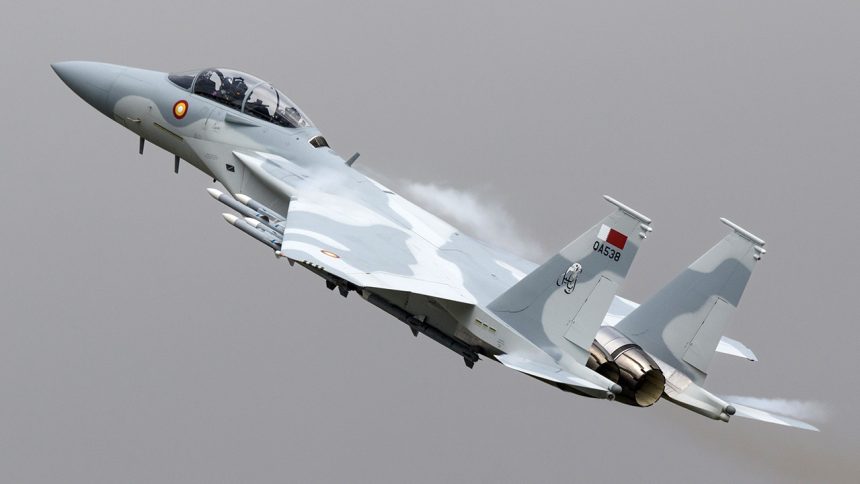
CNN says Qatari and U.S. sources confirmed a F-15QA Ababil intercepted the two Iranian Su-24s “two minutes” away from Al Udeid Air Base and Ras Laffan during a low altitude strike run.
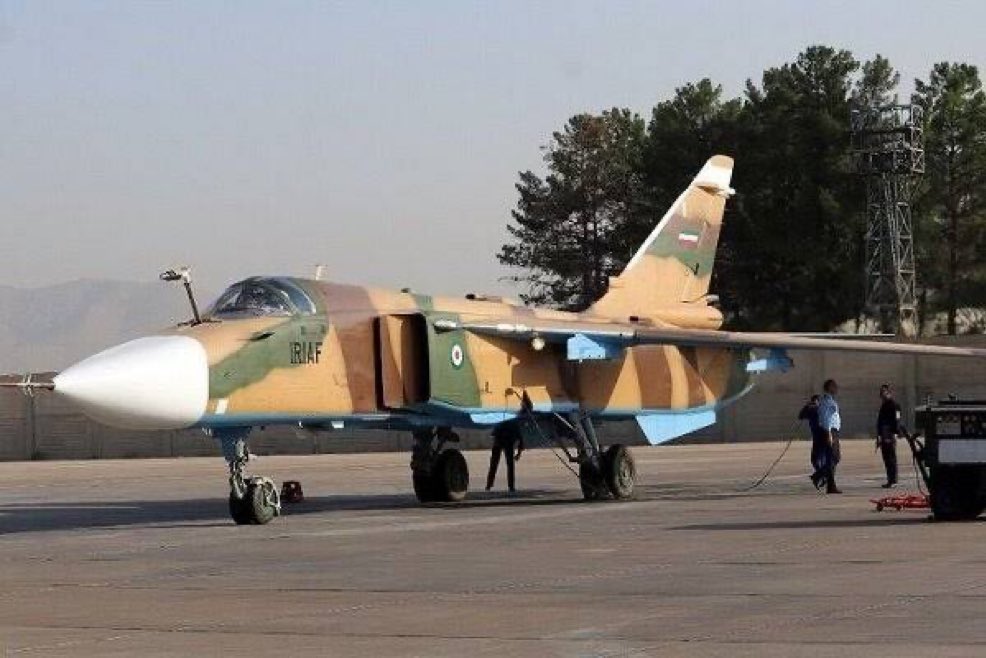
On Mar. 2, 2026, the Qatari Ministry of Defense has announced that the Qatar Emiri Air Force (QEAF) has shot down two Iranian Su-24 Fencer tactical bombers, without providing details about the assets employed. A new report by CNN now mentions that a Qatari F-15QA Ababil has been confirmed for the double kill, thus scoring the first air-to-air victories for one of the Eagle’s most advanced variants.
What happened
According to CNN’s report, the two Iranian Su-24s were attempting to strike Al Udeid Air Base, the Qatari base heavily used by U.S. forces, and Ras Laffan’s liquified natural gas processing facility. The sources quoted by the report said the two tactical bombers were “two minutes” away from their targets and were flying at just 80 feet to avoid detection.
A Source to CNN confirmed those Iranian Su-24s were indeed shot down by F-15QA. https://t.co/PlDQ5Qwpug pic.twitter.com/rDDVQigU2S
— Doha (@Doha1389960) March 4, 2026
The Su-24s did not respond to Qatari warnings over the radio and were thus visually identified and photographed “carrying bombs and guided munitions.” Considering the previously mentioned “time constraints” and “based on the available evidence,” the aircraft were “classified as hostile” and engaged by an F-15QA of the QEAF.
CNN says the Su-24s crashed into Qatar’s territorial waters, with Qatari Foreign Ministry spokesman Majed al-Ansari saying that a search and rescue effort is still underway to look for the crews. This incident is also being reported as the first time Iran has employed its aircraft to target neighboring countries since the beginning of Operation Epic Fury/Roaring Lion, instead of drones and missiles.
The involvement of Qatari fighters jets was also reportedly confirmed by the U.S. Chairman of the Joint Chiefs of Staff, Gen. Dan Caine, during a briefing at the Pentagon. “Qatari fighters for the first time have shot down two Iranian bombers on route to their location,” said Caine.
Qatari Prime Minister Mohammed bin Abdulrahman Al Thani described the incident as “escalatory,” saying it indicates Iran has “no genuine desire” to deescalate the situation. “Rather, it seeks to inflict harm on its neighbors and drag them into a war that is not theirs,” Al Thani said.
F-15QA’s First Aerial Victory
As we mentioned earlier, the initial Qatari statement was unclear on which specific assets were used to intercept the two Su-24s. The use of air defenses was only explicitly mentioned for the ballistic missiles intercepted on the same day, which left open the possibility of fighter aircraft being involved.
The QEAF operates three different fighter jets: the F-15QA Ababil, the Eurofighter Typhoon and the Dassault Rafale. The F-15QA is one of the most advanced variants of the F-15 Eagle, and has been used as the base for the development of the U.S. Air Force’s F-15EX Eagle II.
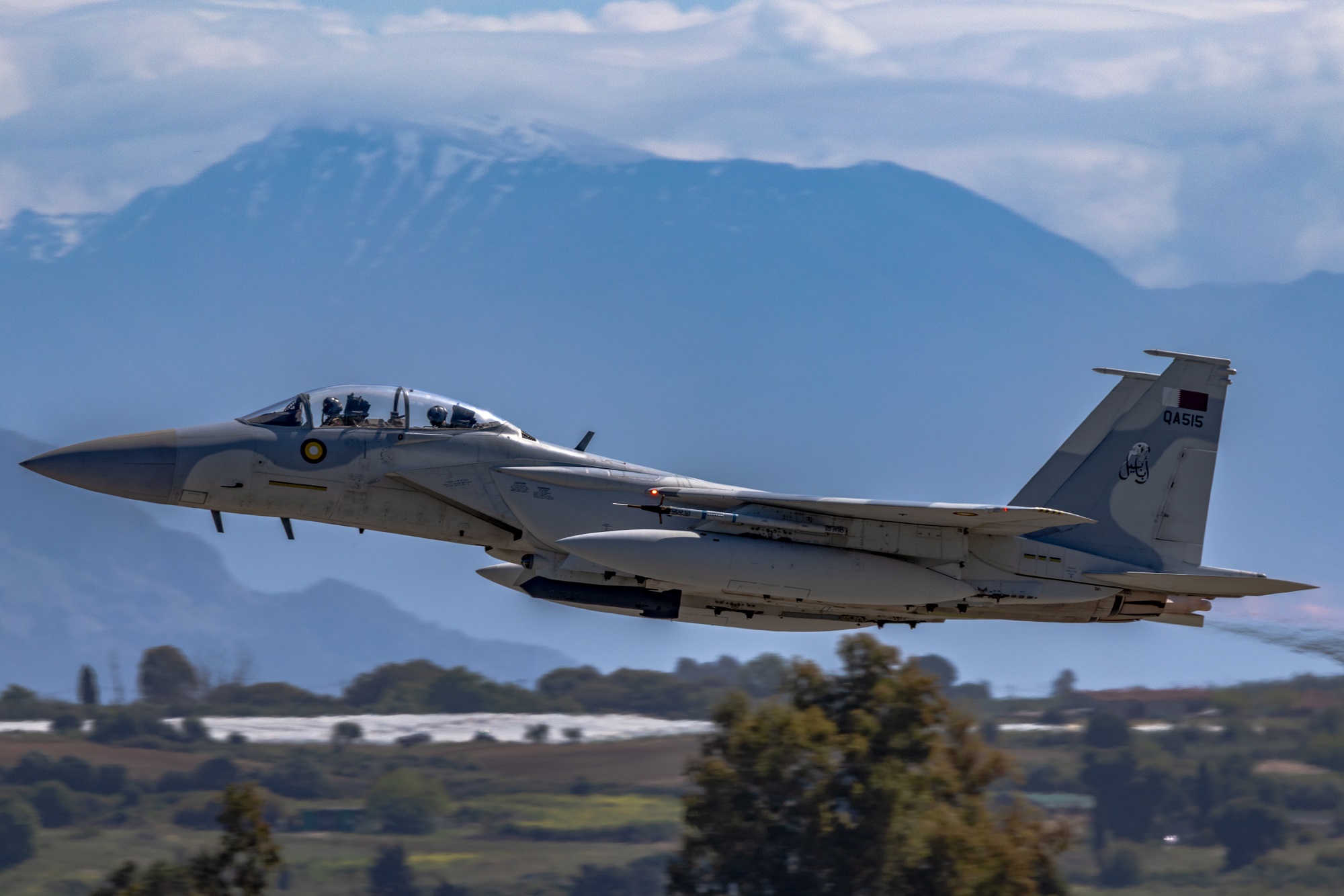
With the F-15QA now confirmed to be the asset employed to shoot down the Su-24s, the impressive combat record of the F-15 now increased even more.
Social media are now arguing whether this should be still at 104-0, considering only the kills by the pure fighter A-B-C-D variants, 106-0, considering also the two new kills as the jets are still F-15s (although one could argue that this count is missing the Mi-24 shot down by an F-15E with a GBU-10), or even 106-3, since three F-15E Strike Eagles were shot down in a friendly fire incident over Kuwait on the same day, Mar. 2, 2026.
However, friendly fire incidents are not counted towards that record. In fact, in 1995, a Japanese F-15J was shot down by a second Eagle which accidentally launched an AIM-9L Sidewinder during air combat training, and that was not counted in the F-15’s combat record.
F-15QA Ababil
In 2017, Boeing was awarded a contract to manufacture 36 F-15QA fighter jets for the Qatar Emiri Air Force (QEAF). The F-15QA made its first flight on Apr. 14, 2020 and the first four aircraft were delivered to the QEAF in 2021.
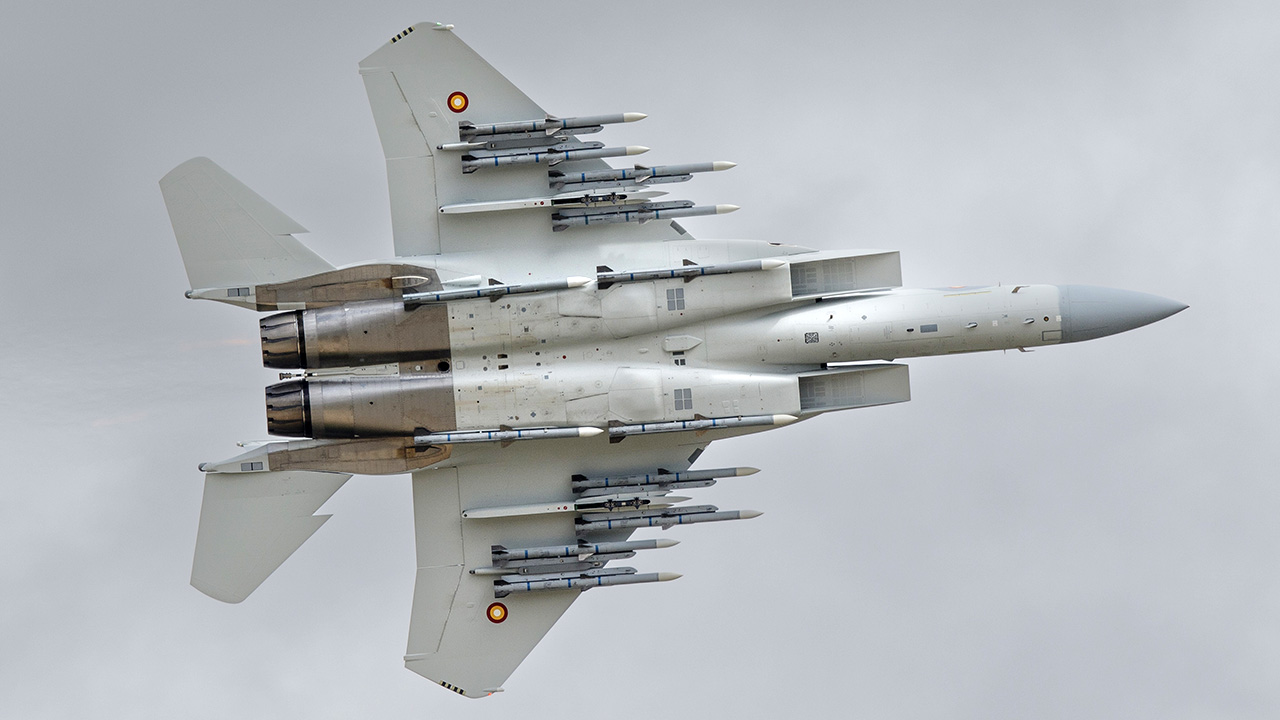
The F-15QA (Qatar Advanced) features new outer wing hardpoints for increased payload, AN/APG-82(V)1 Advanced Electronically Scanned Array (AESA) radar, Joint Helmet-Mounted Cueing Systems (JHMCS) for both the pilot and the Weapon Systems Officer (WSO), 10×19-in Large Area Displays (LADs) and low-profile Head-Up Display (HUD) in both cockpits, digital fly-by-wire and General Electric F110-GE-129 engines.
Compared to the F-15C/E, the F-15QA is equipped with the the Missile Approach Warning System (MAWS) sensors at the end of the tail booms and below the cockpit. Officially, it’s not known which MAWS system and self-defense suite has been installed in the aircraft, however we can see from the photos that the sensor is very similar to the AN/AAR-57A(V) Common Missile Warning System (CMWS) produced by BAE Systems that could be most probably coupled with the AN/ALQ-239 Digital Electronics Warfare Systems (DEWS), also produced by the same company.
Based on the F-15QA is the new F-15EX, that was developed to address a series of needs mainly emerged after the National Defense Strategy directed the U.S. armed services to adapt to the new threats from China and Russia. The aircraft, while extremely similar to the QA variant, features some US-only capabilities like the new AN/ALQ-250 Eagle Passive Active Warning Survivability System (EPAWSS) electronic warfare and electronic surveillance system and Open Mission Systems (OMS) architecture.