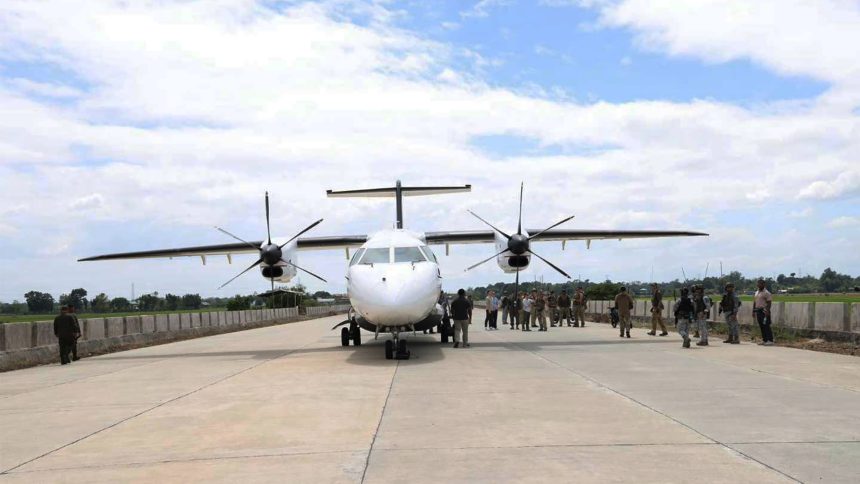
A C-146A Wolfhound operated by AFSOC reportedly struck a concrete barrier while taking off from a road during an exercise, causing injuries to the five occupants and significant damage to the aircraft.
The news comes via The Associated Press (AP), who reached out to U.S. Department of Defense sources for comment on the incident but received no response. Anonymous officials with knowledge of the event told AP that an investigation was underway. The C-146 (serial 15-3086), based on the civilian Dornier 328 turboprop airliner, landed on the road strip in Laoac, Pangasinan without incident but is said to have ‘swerved’ while attempting to take off.
Three crew members were transported to a nearby hospital for treatment of their injuries, while two others received medical attention at the scene.
An alternate landing zone activity by the Armed Forces of the Philippines, together with the United States Special Tactics Team, at the bypass road in Laoac, Pangasinan on Tuesday (Feb. 24, 2026). Defense Secretary Gilbert Teodoro said the activity is part of the upgrading and… pic.twitter.com/6RvEq1M0mc
— Philippine News Agency (@pnagovph) February 24, 2026
While no official comment has been forthcoming from U.S. sources, the state-run Philippine News Agency (PNA) confirmed via the Armed Forces of the Philippines (AFP) that the incident had in fact taken place, clarifying that “all pilots and crew were immediately accounted for and are safe. No civilians were injured.”.
The Armed Forces of the Philippines on Wednesday night confirmed that a US Air Force C-146 aircraft got involved in an accident while taking part in a joint roadway landing exercise in Laoac, Pangasinan on Feb. 24. https://t.co/m4srSnOlG0
— Philippine News Agency (@pnagovph) February 25, 2026
The official statement added: “The activity (joint roadway landing exercise) was conducted in a controlled training environment as part of ongoing efforts to enhance interoperability and preparedness for humanitarian assistance, disaster response, and national defense operations.”
Secretary of National Defense for the Philippines, Gilberto C. Teodoro, Jr., was among the crowd of spectators who witnessed the aircraft’s arrival, though it is unclear if he also witnessed the subsequent incident. An official statement labelled the exercise as “the first highway landing operation in the Philippines and only the second in Asia”. It added: “This milestone reflects the continued commitment of the Philippines and the United States to deepen defense cooperation and strengthen combined readiness in support of regional security.”
Regional Ops
C-146 Wolfhounds are documented as having been training with the AFP on austere operations for at least the last month, with official DoD imagery of such exercises available from late January. As well as the mentioned humanitarian and disaster relief (HADR) role, the Philippines are also notably on the frontline for the People’s Republic of China’s actions in the South China Sea and wider region. Disputes over territory between two countries have become increasingly tense, leading to the Philippines withdrawal from China’s ‘Belt and Road’ economic aid initiative in 2023.
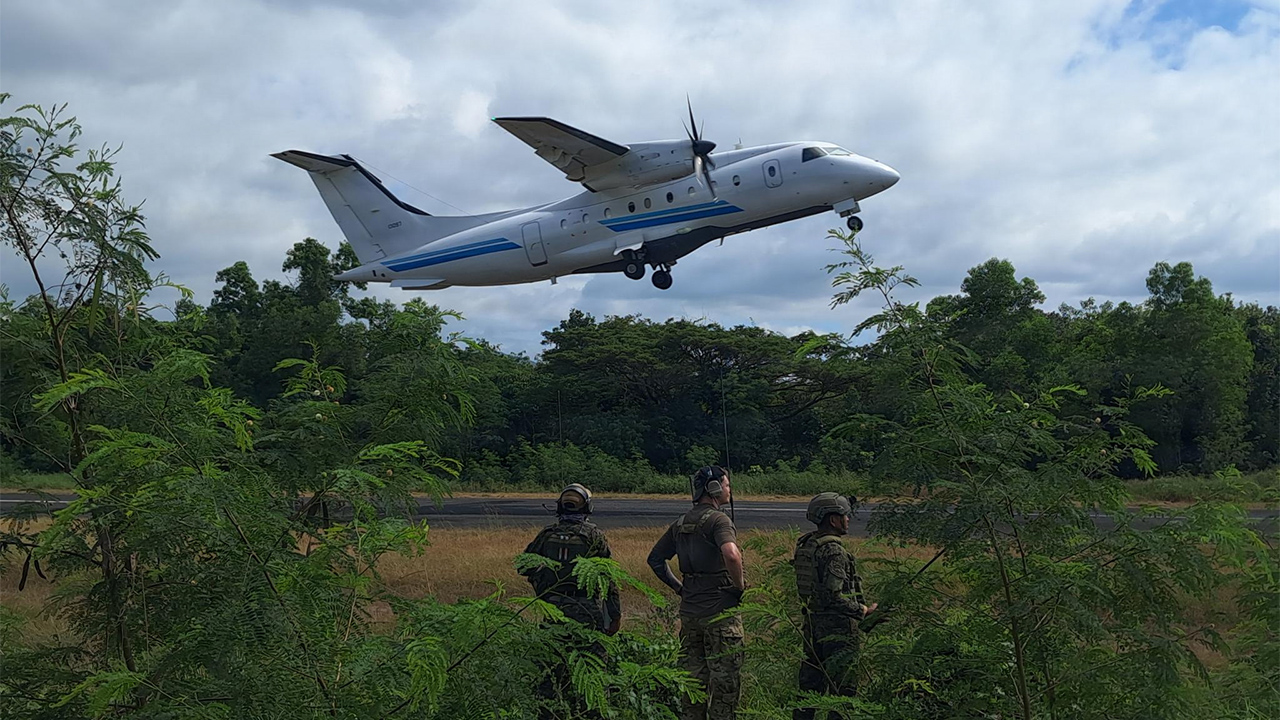
China claims as its own vast amounts of sea currently under the control of the Philippines, sparking confrontations that have seen ships collide, and fishing boats substantially damaged. If these confrontations were to turn ‘hot’ with kinetic military action, austere landing strips throughout the region would become vital hubs for maintaining a strong logistics chain, replacing established airfields which would be among the first targets hit by long range strike weapons.
The Wolfhound
The U.S. Air Force operates 20 C-146 Wolfhounds, all under the umbrella of Air Force Special Operations Command (AFSOC) and commonly seen operating throughout the world. Their civilian-esque colour scheme and overall appearance lend themselves to more discreet missions than aircraft like the MC-130J Commando II – one reason why the Europe-based 352nd Special Operations Wing now has Wolfhounds permanently assigned.
Like tactical airlifters designed for military use, the C-146 boasts an impressive short takeoff and landing (STOL) capability and can also operate comfortably from semi-prepared and unprepared airstrips.
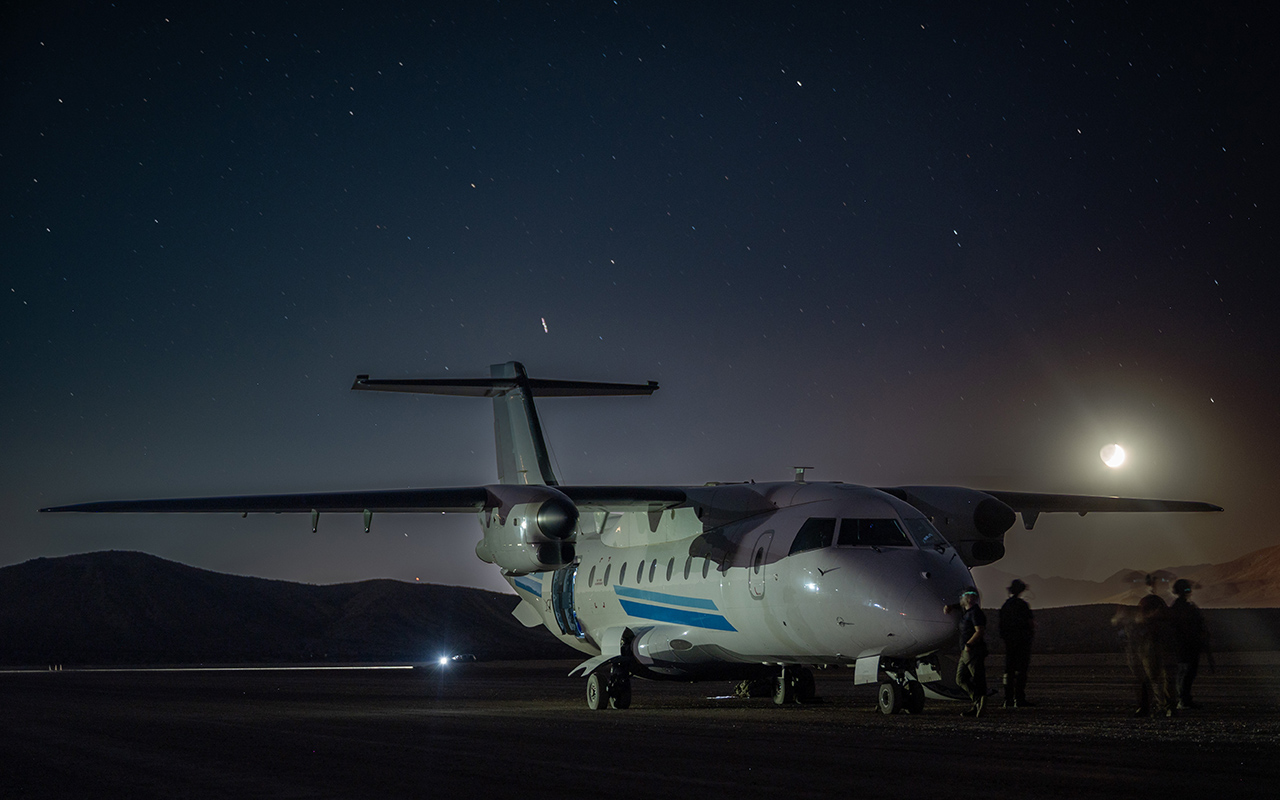
Combining these two features, the Wolfhound is adept at deploying U.S. special operations forces across the globe at short notice. It has been considered a ‘workhorse’ for AFSOC, taking over missions that would otherwise tie up expensive, specialist assets like MC-130s, while still providing a strong level of operational capability and flexibility.
The incident airframe, 15-3086, was built in the late 1990s for Shell’s operations in Nigeria and surrounding African nations. After several years, the aircraft eventually found itself on the U.S. register flying for Chip Ganassi Racing. After a brief stint flying for the American Samoan airline Inter Island Air, the aircraft found its way into U.S. Air Force hands in the 2010s and received its military serial by 2016.