GA-ASI plans to fly an MQ-9B with at least one between JASSM, LRASM and JSM in 2026, responding to demand for greater long-range fire capabilities in the Western Pacific.
General Atomics Aeronautical Systems (GA-ASI) has announced on Feb. 23, 2026, that it is working on introducing air-launched standoff surface-strike capability on its MQ-9B Remotely Piloted Aircraft (RPA), in both SeaGuardian and SkyGuardian variants. The company, in facts, is integrating the AGM-158 Joint Air-to-Surface Standoff Missile (JASSM), AGM-158C Long-Range Anti-Ship Missile (LRASM) and the Kongsberg/Raytheon Joint Strike Missile (JSM).
GA-ASI said its engineers have already started working on the drones’ structure and mission systems, and are looking into the impact of these heavy weapons on kinematic aspects like range, speed and stability. The company has also named the vast expanses of the Western Pacific as the theater that prompted the work on the new capabilities, as it acutely necessitates holding targets at risk from longer ranges.
The press release additionally describes a real-world scenario in which MQ-9Bs can employ these long–range missiles, with the drones loitering outside of the weapons engagement zone waiting for the order to drop the missiles. Reflecting its confidence in integrating the admittedly heavy missiles on the High-Altitude Long-Endurance (HALE)-class RPAs, GA-ASI said it plans “to fly at least one of these new weapons as early as 2026.”
GA-ASI is developing the addition of long-range standoff weapons to expand MQ-9B SkyGuardian® and SeaGuardian® #UAS mission roles.
Read the news: https://t.co/Mng9jyUT0n#MQ9B #RPAS pic.twitter.com/OJnMiEn7Y2
— General Atomics Aeronautical Systems, Inc (GA-ASI) (@GenAtomics_ASI) February 23, 2026
UAVs in non-wingmen roles in conventional wars
The Aviationist has been drawing attention to the immense benefits of autonomous unmanned systems used to unburden manned platforms in simpler conventional missions, like counter-drone, anti-submarine warfare (ASW), airborne early warning (AEW) and air-to-air engagements, through the coverage of Turkish, Chinese and some of the West’s own drone programs. Of these, the MQ-9B itself is being repurposed for the C-UAS, ASW, AEW, electromagnetic sensing and data/communications relay roles.
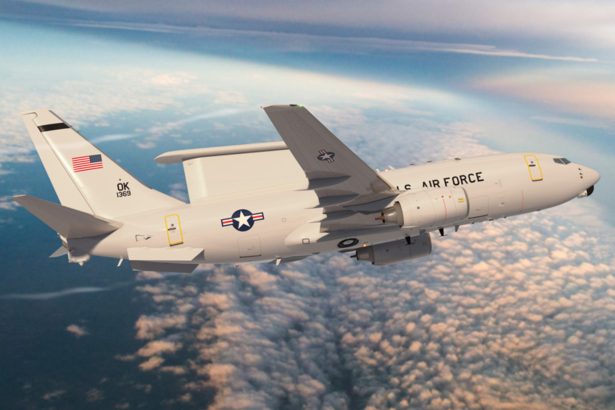
GA-ASI’s MQ-9B #RPAS will demonstrate airborne early warning & control capability in summer 2026.
Read the news: https://t.co/jWVJ4WsTbB#AEWC #DubaiAirshow #DAS25 pic.twitter.com/7szKqjfZrZ
— General Atomics Aeronautical Systems, Inc (GA-ASI) (@GenAtomics_ASI) November 17, 2025
These tasks do not require contextual and advanced sentient reasoning. Now that planners also envisage heavy surface strike as one of the mission sets, it can be noted how uncrewed systems, that help overcoming the limitations of human endurance, still open up a host of new options in military operations.
JASSM, LRASM and JSM on the MQ-9B
According to GA-ASI, the work to add JASSM, LRASM and the JSM to the MQ-9B family is in response to “demand […] from naval and air warfighters for platforms that can hold targets at risk from great ranges, especially over the expanses of air and water in the Western Pacific.” The press release then continued saying that “GA-ASI engineers have begun the work of adapting MQ-9B’s payload, stability, range and other features to accommodate the new generation of extended-range precision weapons.”
“MQ-9B continues to impress in the field and we keep adding to our global customer list,” said GA-ASI President David R. Alexander. “We want to continue to build value in the aircraft by expanding into more missions. MQ-9B features extraordinary payload capacity, so it only makes sense to add to our mission sets with the ability to carry long-range weapons.”
GA-ASI described the work done so far, which includes the full-range of “performance analytics.” This might involve computer modelling and simulations of the physical and aerodynamic impact of carrying the Lockheed Martin and Raytheon weapons on the MQ-9B family.
The statement further adds the company is “confident in MQ-9B’s ability to carry long-range weapons over long distances, while providing a measure of persistence and endurance.” The emphasis on “persistence” and “endurance” points to the longer-loiter times that would be possible without being constrained by human fatigue, disrupting an adversary’s offensive plans and allowing to promptly respond to targets of opportunity.
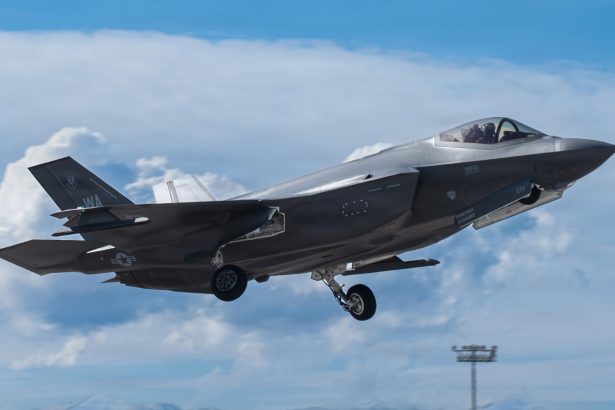
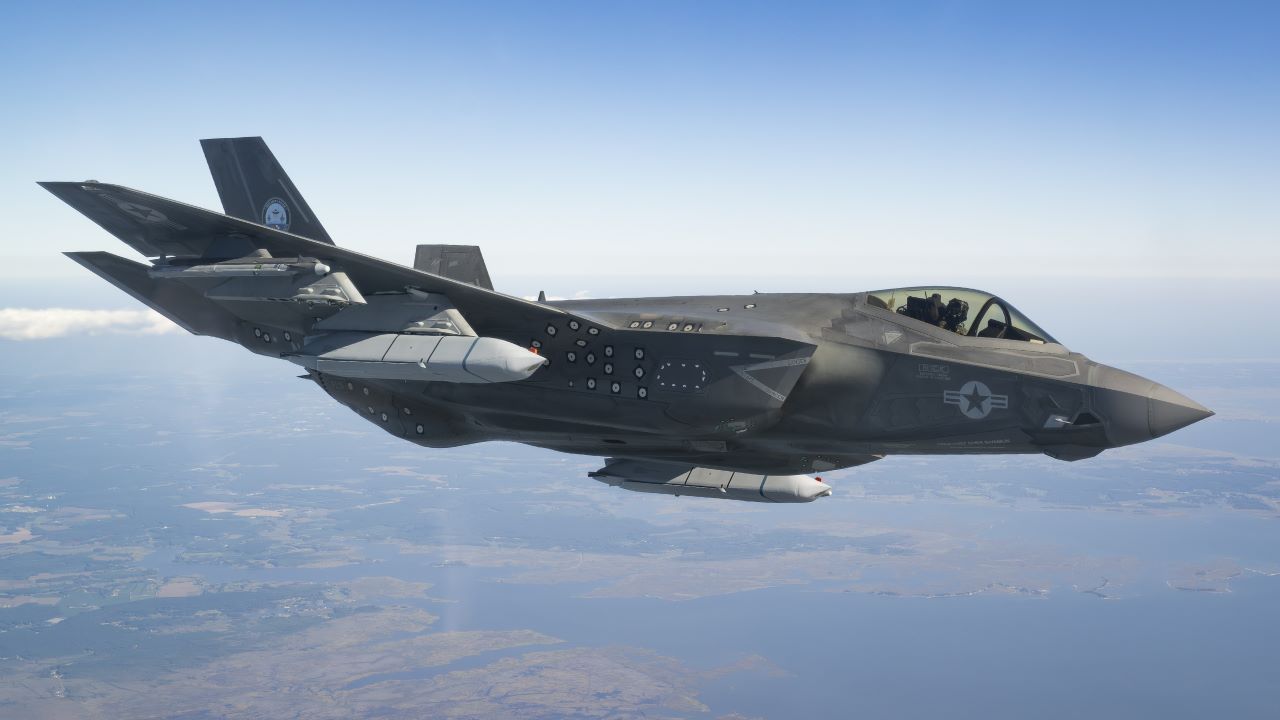
Indeed, the MQ-9Bs would most likely not be operating by themselves, but with other manned fighters like the F-35A, F-35B, F-35C, F/A-18E/F Super Hornet, F-16, F-15E and F-15EX and/or the P-8A Poseidon.
Use case scenario
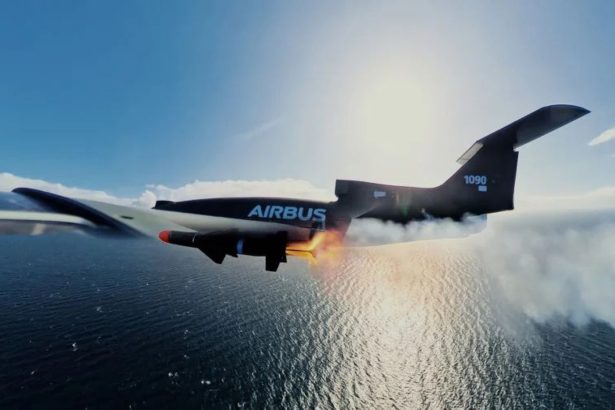
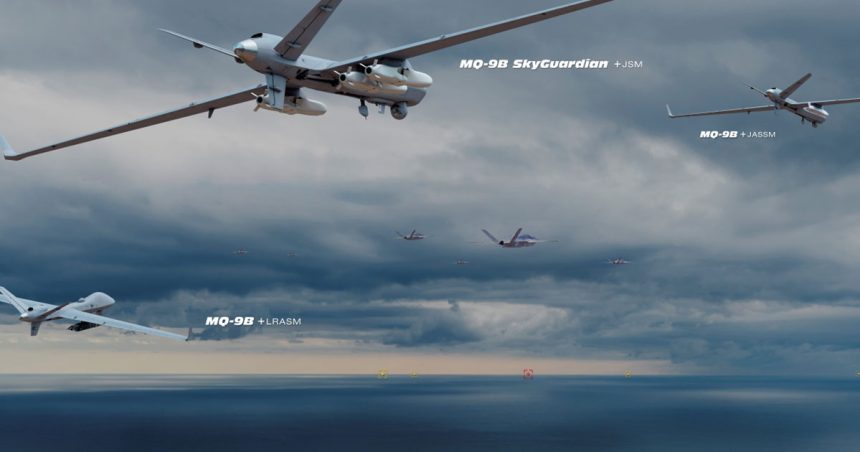
GA-ASI’s concept rendition shows three MQ-9Bs, with one carrying three JSMs, and the other two with a single JASSM and one LRASM, respectively. The company has not specified if these configurations represent the MQ-9B’s actual payload capacity with these missiles.
The SkyGuardian and SeaGuardian can carry a payload of 2,155 kg (4,750 lb) on nine hardpoints – eight under the wings and one on the centerline. With the JASSM weighting 1,200 kg (2,600 lb), the LRASM weighting 1,250 kg (2,760 lb) and the JSM weighting 416 kg (917 lb), it can be reasonably said the rendering reflects the actual configuration that will be used by the MQ-9B.
As mentioned, GA-ASI hopes to fly at least one of these new weapons in 2026, with the first flight likely including an inert round fixed onto a SeaGuardian or a SkyGuardian in a captive carry trial flight.

The press release describes a hypothetical scenario in which a JASSM/LRASM/JSM-armed MQ-9B could be used: “MQ-9Bs could launch from a number of friendly bases in the Western or Southern Pacific, fly to a hold point and loiter there outside a hostile power’s weapons engagement zone. If the order came to release the weapons, the aircraft could launch them in coordination with other U.S. or allied operations.”