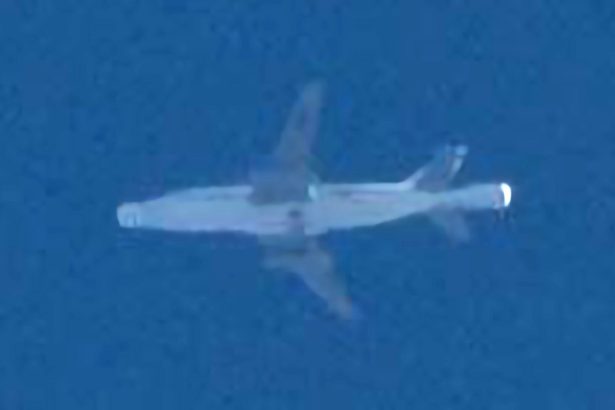
The new EC-2 Stand-Off Jammer aircraft, based on the Kawasaki C-2 transport aircraft, will replace the unique EC-1 which has been in service since 1986.
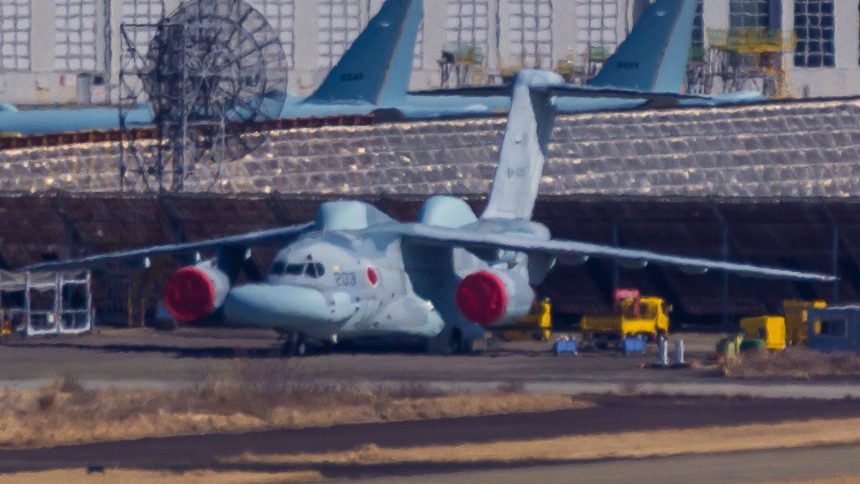
The latest in a number of Japanese aircraft with unusual modifications, the EC-2 Stand-Off Jammer (SOJ), just broke cover. The aircraft, which has been in development since 2021, has been spotted at Gifu Air Base.
The photo you can see as the cover of this article was captured on Feb. 17, 2026, by Mel Amahashi (@CirqueduCiel), which kindly allowed us to use it. The aircraft was caught at a distance in the background of a photo showing a Kawasaki P-1 maritime patrol aircraft taking off.
Keweseki
せんたんぎじせつ pic.twitter.com/6MHgrxGTql
— 天橋 める (@CirqueduCiel) February 17, 2026
The secretive aircraft, which appears to be the former C-2 18-1203, has so far been shown only in a rendering by the Ministry of Defense, with these being now the first photos of the actual aircraft. Notably, another C-2, 18-1202, was previously modified with similar, but smaller, bulges for the signal intelligence (SIGINT) role, and first flew in 2018 with the new designation RC-2.
The EC-2 SOJ
The new platform is a derivative of the Kawasaki Heavy Industries (KHI) C-2 transport aircraft. As it can be seen in the photos, the aircraft has been modified with a bulbous nose – similar to the EC-1’s nose, as well as two large bulges on the top of the fuselage, while two more should be located on the sides of the fuselage between the wings and the horizontal stabilizers.
The EC-2 Stand-Off Jammer (SOJ) is being developed to disrupt an adversary’s electronic warfare (EW) capabilities while still flying outside of the threat’s range. The Japanese Ministry of Defense previously said the aircraft will be used to support counter air operations in conjunction with other tactical assets.
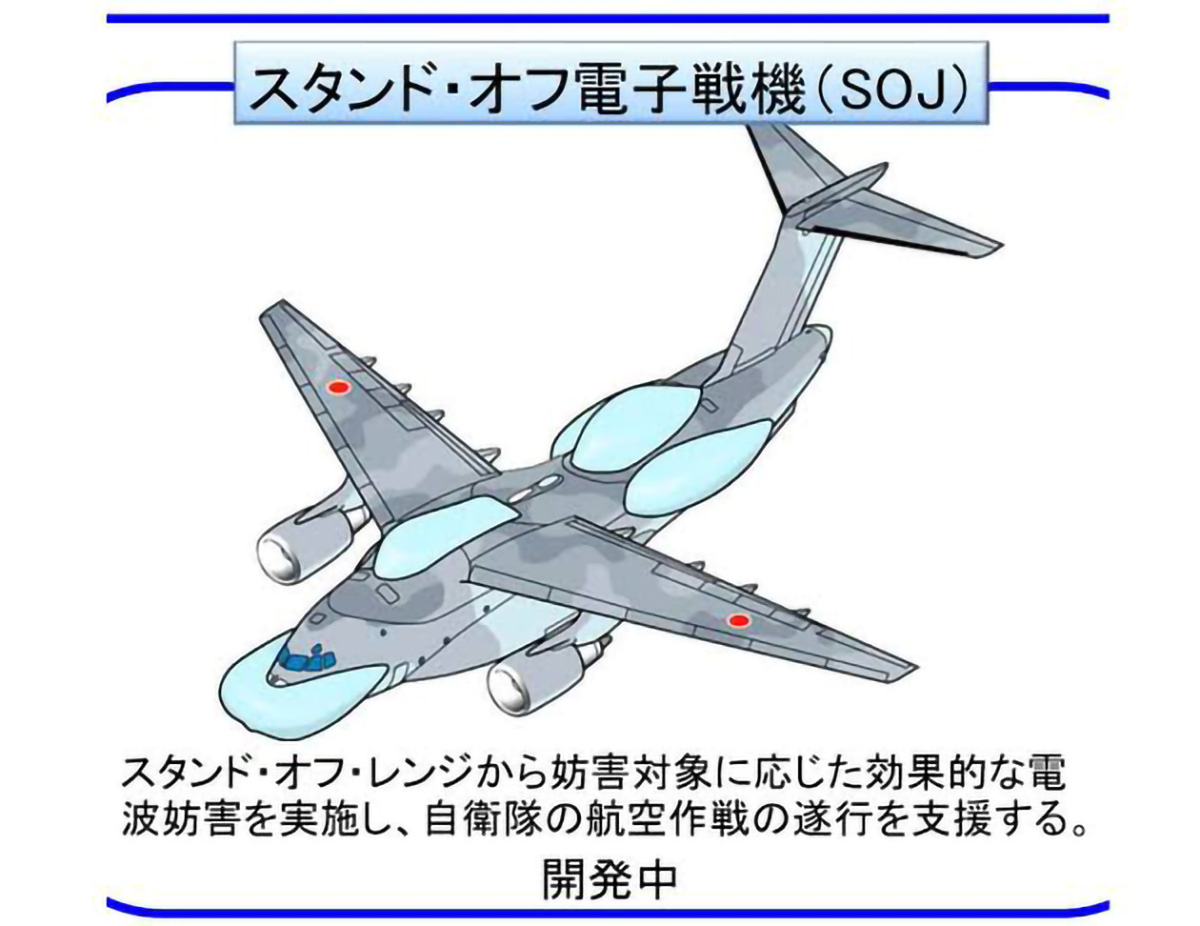
The aircraft will replace the unique EC-1, which has been in service since 1986. However, while the EC-1 program resulted in a single aircraft, the EC-2 fleet will include four aircraft, with ¥41.4 billion allocated to the development, according to MoD budget documents.
The development of both the EC-2 and RC-2 platforms is part of the MoD’s effort to “Improve capabilities to gather electromagnetic information necessary for electronic jamming and electronic protection” and “Develop necessary equipment to constantly and continuously gather, process, and analyze information especially on military trends in the vicinity of Japan.”
The program is divided in two phases, focusing on the integration of the new capabilities and their refinement, respectively. Among the equipment there will be components inherited from the EC-1, such as the J/ALQ-5 electronic countermeasures (ECM) system and advanced radio wave measurement systems.
キター\(^^)/ pic.twitter.com/PVcqplbJuT
— らやんだぁ (@mBY5lWgEY5a9Zoz) February 16, 2026
The aircraft is expected to be operated by the Denshi Sakusengun (Electronic Warfare Operations Group) at Iruma Air Base, the same which operates the EC-1 and will in future also operate the RC-2.
Replacing the Aging EC-1
The Japanese EC-1 is a specialized electronic intelligence (ELINT) and electronic warfare aircraft operated by the Japan Air Self-Defense Force (JASDF). The platform is based on the domestically produced Kawasaki C-1 tactical transport aircraft, developed as part of the effort to field an indigenous airborne platform for electronic warfare.
Only a single airframe was converted into the EC-1 configuration, which has also been used as a testbed and experimental platform. The aircraft was extensively modified with a peculiar black bulbous nose, tail radome, as well as several bulges along the fuselage that house the various sensors.
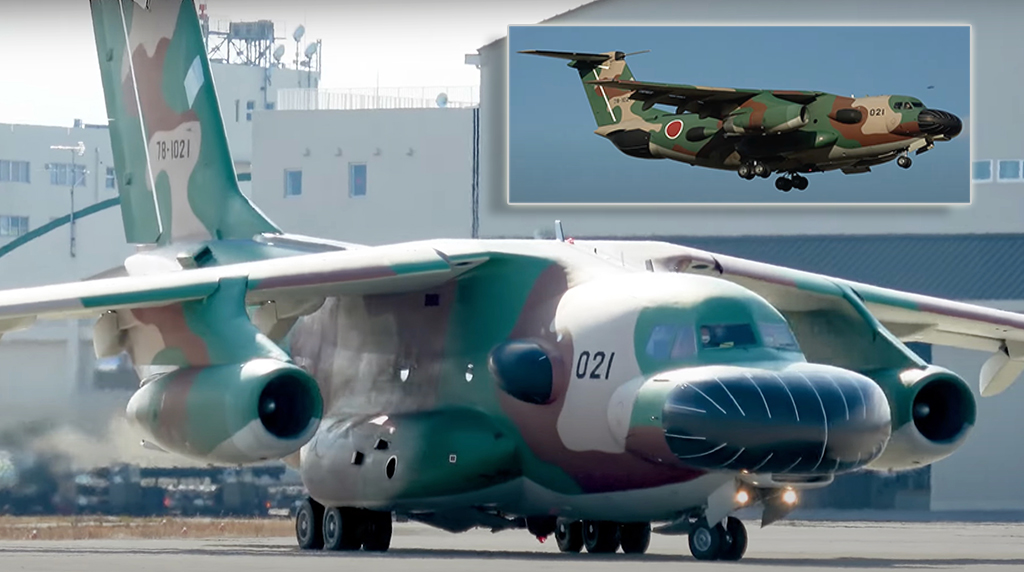
Among the systems installed are the domestic XJ/ALQ-5 ECM and Toshiba ELINT systems (along with American ECM and Elint avionics). These installations were designed to intercept, analyze, and record radar emissions and other electronic signals.
The domestic development of the platform was meant to strengthen Japan’s electronic warfare and surveillance capabilities, while maintaining secrecy around the program and its capabilities. Systems onboard the aircraft were primarily developed in cooperation with Japanese defense industry partners to reduce reliance on foreign technology.
The secretive aircraft, in service with the Electronic Warfare Support Unit at Iruma Air Base, in Saitama Prefecture, approximately 35 miles (55km) northwest of Tokyo. The base also operated the C-1 in the 402nd Tactical Airlift Squadron, and now also hosts the newer C-2.
Thanks to Mel Amahashi for allowing us to use his photo! You can find more of his work on X at @CirqueduCiel.