U.S. Air Force acquisition documents show that Boeing is being contracted to replenish the inventory of GBU-57’s expended during Operation Midnight Hammer.
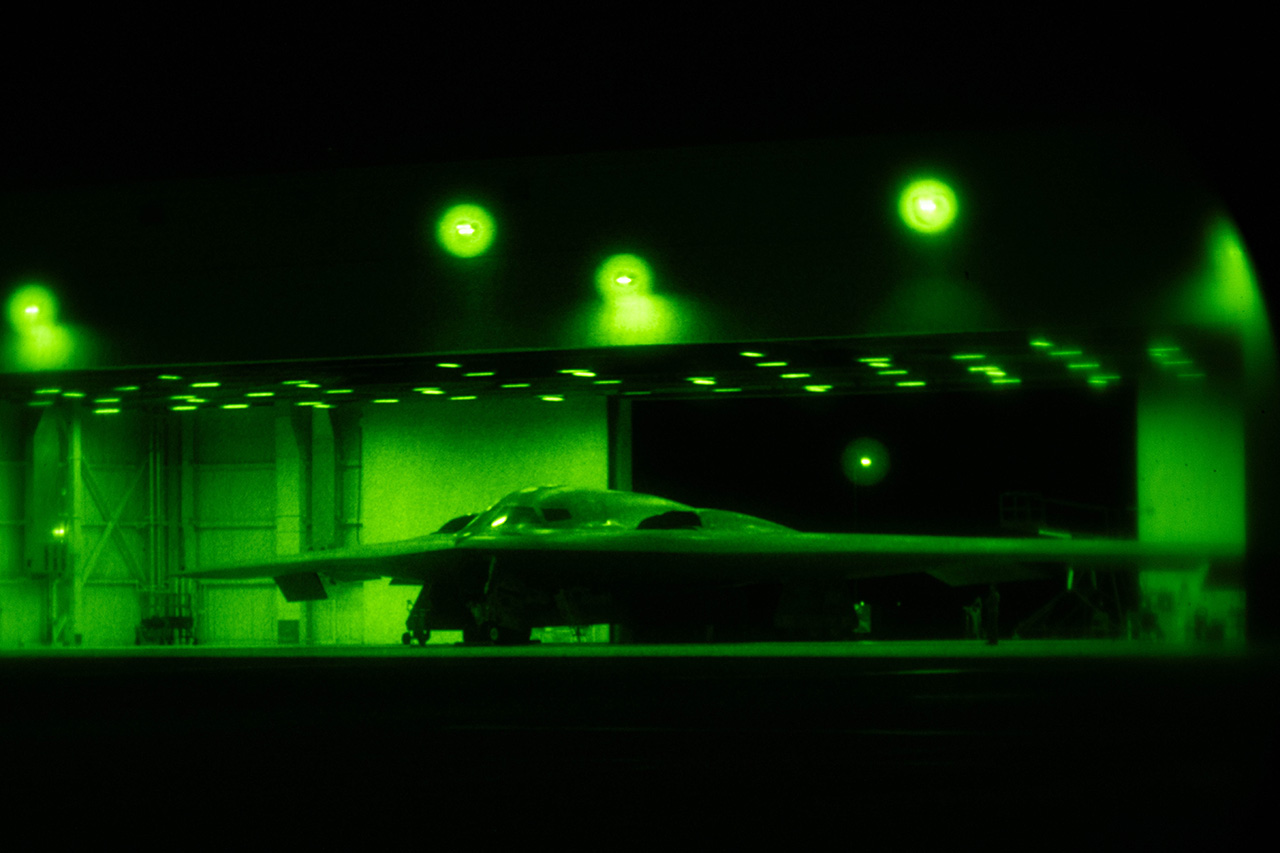
The U.S. Air Force is requesting the approval to award Boeing a sole-source contract for the production of additional GBU-57 Massive Ordnance Penetrator (MOP) weapons. The 30,000 lb bunker busting bombs have been notably used last year during Operation Midnight Hammer, which saw seven B-2 Spirit stealth bombers dropping 14 MOPs on Iranian nuclear sites on June 21, 2025.
As a matter of fact, the redacted Justification & Approval for Undefinitized Contract Action (UCA) document specifically mentions that the procurement of new bombs is “critically needed to replenish the inventory of GBU-57s expended during Operation Midnight Hammer.” The contract will include both MOP All-Up-Round (AUR) Components and Tail Kits, with the latter having a “projected delivery starting 10 January 2028 to replace expended units.”
Details about the procurement are not available, with the description of the required supplies being the most heavily redacted part of the document. In the opening of the document, the dollar value of the acquisition was indicated at over $100 million, while specific details about the precise value, number of weapons and timeline were redacted.
Moreover, the document mentions the procurement of the replacement bombs is “essential to restore operational readiness, [redacted], and ensure Air Force Global Strike Command (AFGSC) possesses the necessary assets to support strategic contingency war plans for all Combatant Commands (COCOMs).”
Notably, the service previously hinted at the intention to acquire new bombs in a budget reprogramming request in August 2025. In that document, the Air Force mentioned that funds were required to replace multiple weapons used during Operation Midnight Hammer, including GBU-39 Small Diameter Bombs, AGR-20F Falco guided rockets and GBU-57 MOPs, the latter with a required funding of $123 million.
GBU-57 MOP
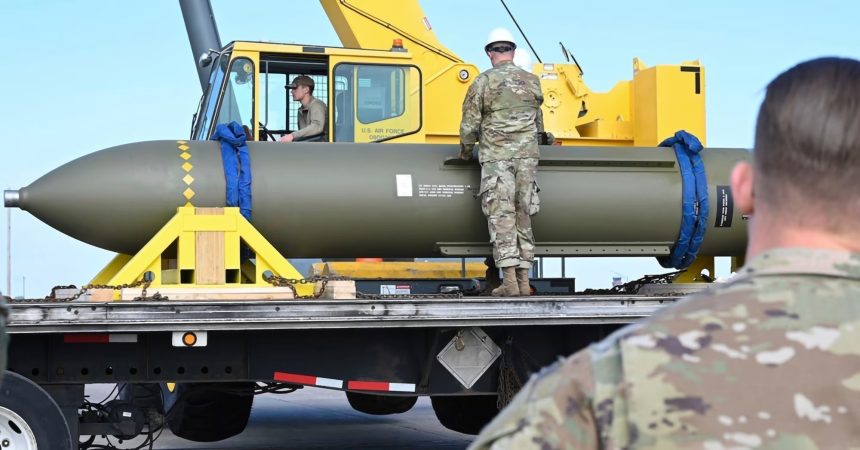
The GBU-57 Massive Ordnance Penetrator (MOP) is a 30,000-lb (14,000 kg), 20-foot long GPS-guided bomb said to be able to penetrate 200 feet of concrete before exploding. The weapon is exclusively available to the B-2 Spirit, which can carry two MOPs in its internal bomb bay.
The development was commissioned following the 2003 Iraq War, where existing bunker buster bombs were found to be inadequate for the most hardened structures. The U.S. Air Force describes the weapons’ function as “reaching and destroying our adversaries’ weapons of mass destruction”.
This makes the GBU-57 the weapon of choice in case of attack on buried targets, such as the Iranian bunkers where the nuclear program was being worked on. As we previously reported, the two biggest uranium enrichment sites in Iran were the Fuel Enrichment Plant at Natanz, located about three floors underground, and Fordow, dug far deeper into a mountain.
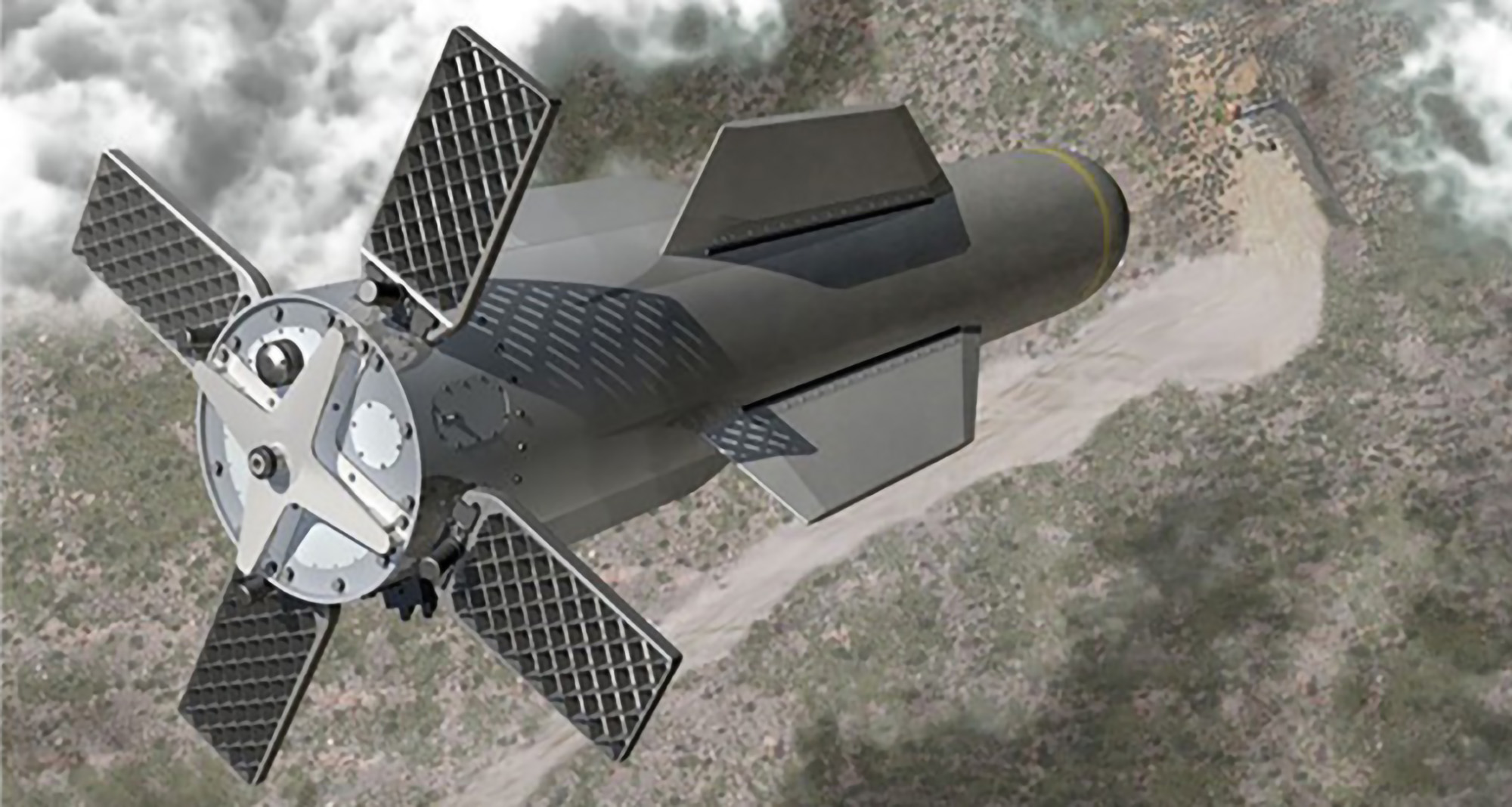
The secretive weapon has been upgraded in the early 2010s and, although the type of upgrades it received were not made public, it was reportedly equipped with new fusing and tail fins needed to give it greater ground penetration. Sources report that the GBU-57 has GPS/INS guidance and a large penetrator smart fuse to allow the warhead to reach a set depth before triggering the explosion.
Images of the MOP are pretty rare, with only a few released throughout the years. In 2013, we published here an interesting photo of a B-2 sitting next to a GBU-57. In December 2018, we found footage of a B-2 dropping a MOP in a video of the 393rd Bomb Squadron, one of the units that operate the Spirit stealth bomber as part of the 509th BW.
In April 2023, the 131st BW posted some photos including one depicting an inert GBU-57, used for training purposes. A month later, the 509th BW posted new photos, this time showing a live GBU-57.
Operation Midnight Hammer
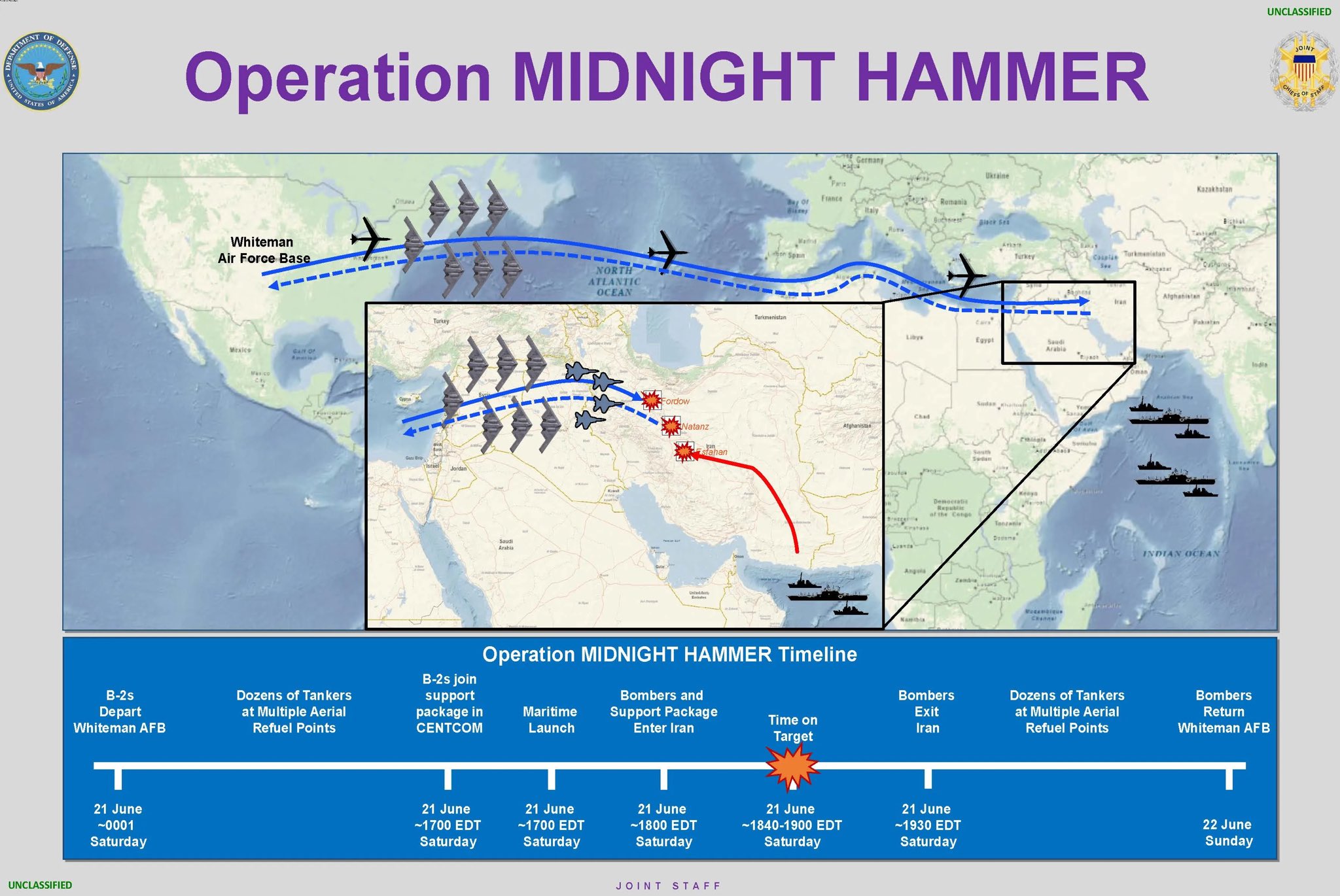
Operation Midnight Hammer, the airstrike that took out two of Iran’s most hardened nuclear facilities, saw more than 125 aircraft, including seven B-2 stealth bombers, sneaking into Iran while other B-2s were sent to Guam as decoys. As we reported in our articles on The Aviationist, the operation was a masterclass in precision and deception.
The attack came as a surprise as U.S. President Donald Trump said, just two days earlier, he would take two weeks before deciding whether to attack Iran. However, the operation was not the result of a last-minute decision, but the culmination of fifteen years of planning, intelligence-gathering, weapons development, and training.
On June 21, 2025, at 6:45PM Eastern Time (2:15AM June 22 in Iran), a formation of B-2 Spirit stealth bombers from Whiteman Air Force Base carried out the strike. The operation was described as the biggest attack mission ever performed by the B-2 Spirit and, with a non-stop 36-hour round trip covering more than 13,000 miles, the longest B-2 mission since the opening of the Afghanistan war in 2001.
As a result, fourteen GBU-57 bombs were dropped on the Iranian nuclear facilities. All weapons functioned as intended, hitting their targets with full effectiveness, according to officials.
Defense Secretary Pete Hegseth later explained that the strike sequence was designed for maximum penetration. The first GBU-57 was used to breach a reinforced concrete structure, creating the central crater visible in satellite imagery, while the remaining bombs were delivered through the same opening to ensure complete destruction of the internal target.

Additionally, a U.S. submarine in the U.S. Central Command (CENTCOM) Area of Responsibility (AOR) launched more than two dozen Tomahawk land attack cruise missiles against key surface infrastructure targets at Esfahan. The Tomahawks were the last to strike to ensure the strike package retained the element of surprise throughout the operation.
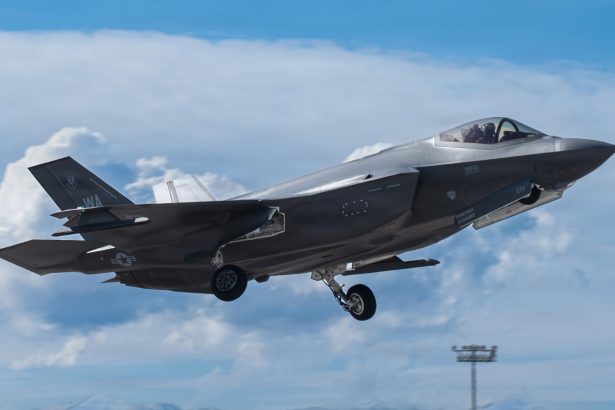
As common in such operations, fighter escorts and SEAD (Suppression of Enemy Air Defenses) assets went ahead to clear the path for the bombers. The latter role was specifically assigned to F-35s, which were the first to penetrate Iranian airspace and used their stealth, radar, sensors and targeting systems to detect and destroy surface-to-air threats.