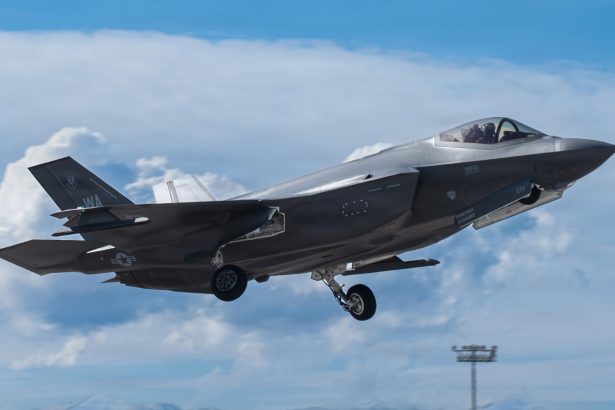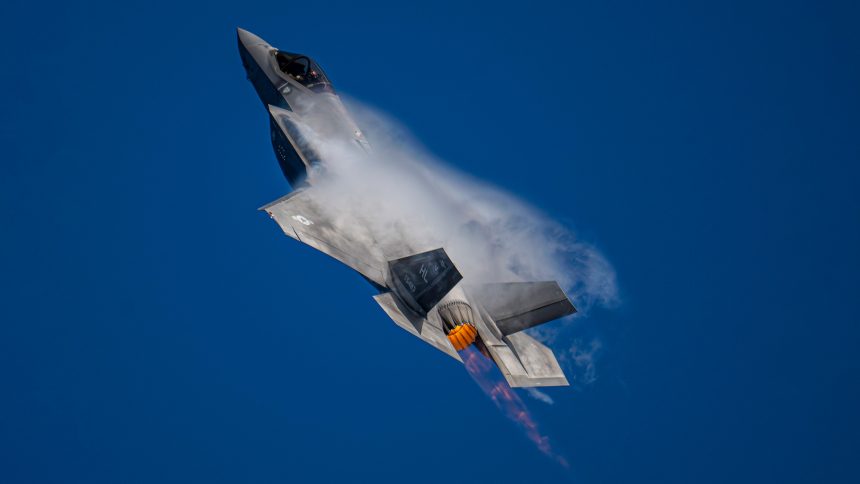
According to reports, U.S. F-35 might have been delivered since June 2025 with a ballast in place of the new APG-85 radar which has been suffering from delays.
Recent reports indicate that a number of newly delivered F-35 Lightning II aircraft may be entering service without a fully installed onboard radar. The issue, first reported last week by Defense Daily and affiliate publication Avionics International, reportedly affects F-35s delivered to the U.S. military since June 2025.
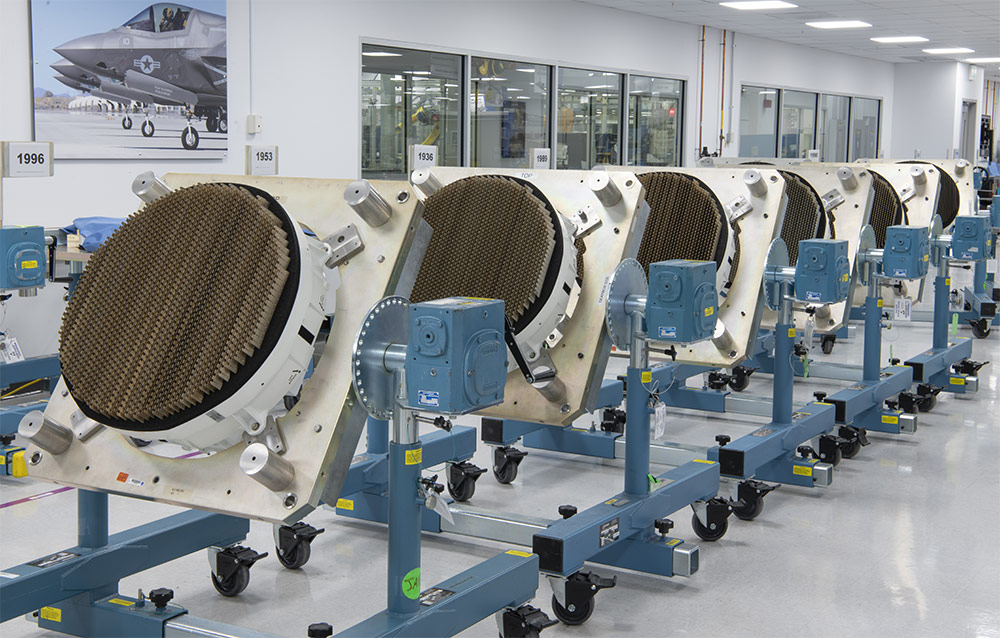
These aircraft were planned to receive the new APG-85 radar, developed to replace the current APG-81 radar on F-35s in Block 4 configuration starting with Production Lot 17. However, the new radar is being affected by delays and has reportedly yet to enter the production stage.
The development of the APG-85 was first publicly acknowledged by the F-35 Joint Program Office (JPO) in 2023, followed few days later by Northrop Grumman’s announcement. The company also manufactures the current APG-81.
Official Statements
As the original reports quoted an unnamed source, we reached out to the F-35 JPO, Lockheed Martin, Northrop Grumman and the U.S. Air Force. While the latter two did not return our request for a statement at the time of writing, Lockheed Martin referred us to the JPO.
In an emailed statement, an F-35 JPO spokesperson told us:
F-35 Lightning II aircraft are being built to accommodate the F-35 advanced radar (APG-85) for U.S. Air Force, Navy, and Marine Corps. Initial fielding for some F-35 aircraft is planned for Lot 17, which began delivery in 2025 and continues through September 2026.
Due to program security reasons, we are protecting any additional information with enhanced security measures.
As a matter of fact, the statement neither confirms nor denies the reports about the radar-less F-35s. While no official confirmation has been issued to the public, Congress is already informed about the issue.
Rep. Rob Wittman (R-Va.). Vice Chairman of the House Armed Services Committee and Chairman of the Tactical Air and Land Forces Subcommittee was recently asked about the reports, to which he replied “I know all about it, but the delivery of the aircraft is classified,” adding he “can’t speak to the condition of the aircraft.”
However, he also commented about the integration of the new radar, which he defined as “challenging.”
“The APG-81 is different than the APG-85, and therefore delivering the aircraft, as currently configured, with an APG-85 radar versus an APG-81 radar is challenging,” said Wittman. “The bulkhead configuration is key because for both of the radars, they are very different.”
The congressman praised the capabilities of the APG-85, explaining that the radar is among the reasons for the upgrades to the engine. As we previously reported here at The Aviationist, Pratt & Whitney is working on the F135 Engine Core Upgrade (ECU), designed to enhance thermal management and auxiliary power generation to meet the growing demands of the F-35’s onboard systems.
“It’s an incredibly advanced radar,” Wittman said. “The arrays on it give it much more power which is why we have to upgrade the engine. I think we need about 82 kilowatts of power versus what it’s producing right now. The APG-85 is key to Block 4, and it’s key to TR-3 software upgrade capabilities and integration with the imaging system, the Distributed Aperture System.”
Measures are being taken to accelerate delivery. Wittman said steps taken so far “condensed the testing regime,” while work is being done to “continue to compress the schedule” even more.
“I spoke to Lockheed […], and they’re working with Northrop to get APG-85 delivered even faster,” Wittman said. “It’s my hope they do it as fast as humanly possible and have the system perform. I don’t want it delivered, if it’s gonna be operationally deficient because then the aircraft sits on the tarmac.”
Radar-less F-35s
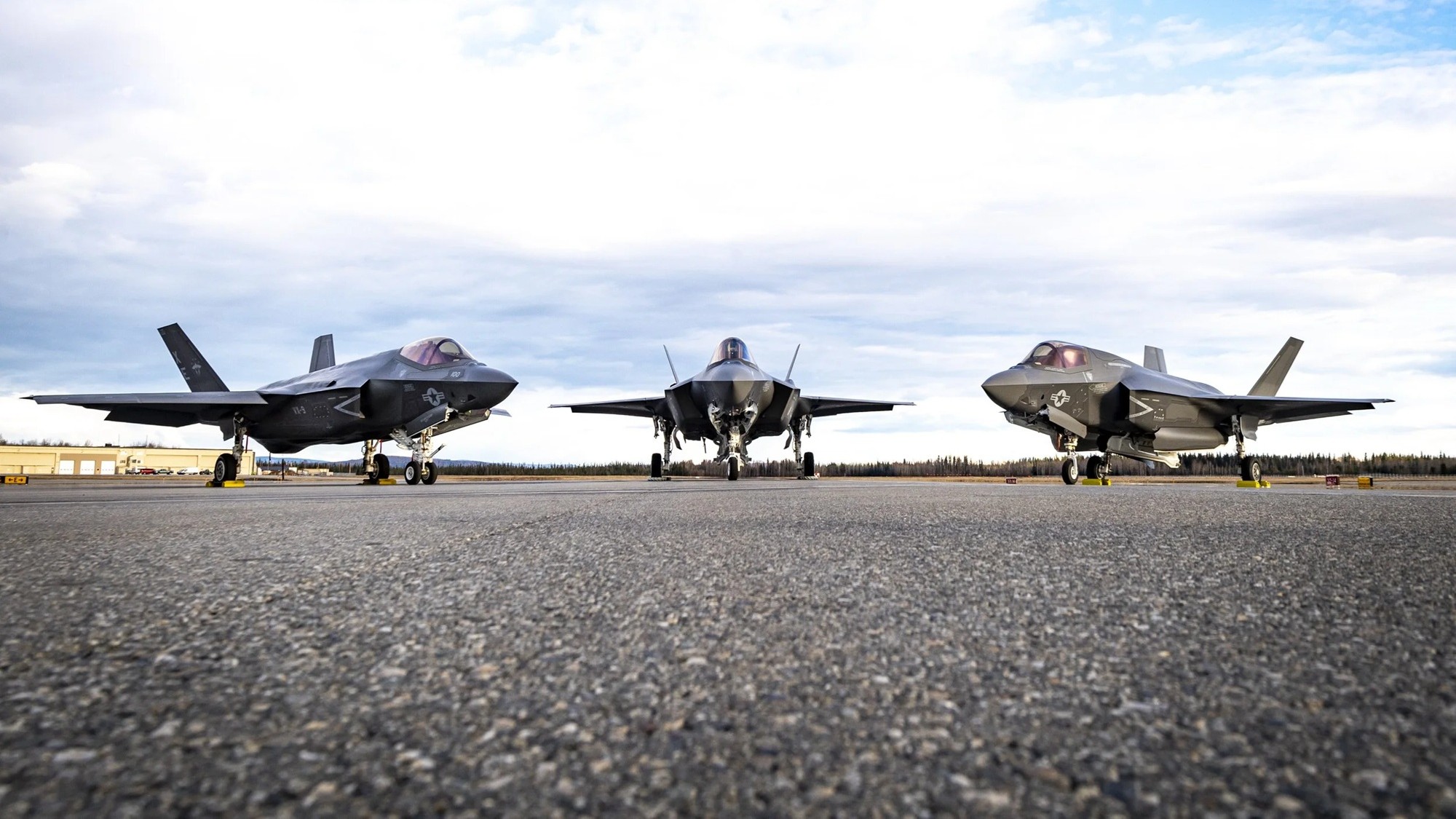
According to the unnamed source, the issue only affected F-35s delivered to the U.S. military, as they are currently the only ones slated to receive the new radar. Even without the radar, the aircraft are still airworthy, although they required a ballast in the nose to avoid affecting the balance while in flight.
It must be noted that the issue, while its severity is not negligible, it is not unprecedented. In fact, in the 1980s, the Royal Air Force’s Tornado F.2 was initially delivered without the Foxhunter radar due to delays, replaced by a concrete ballast for balance.
An obvious question would be why, given the delays with the APG-85, the F-35s were not delivered with the APG-81 as interim solution. This is not possible because of the different bulkhead configuration, which makes the two radars not interchangeable.
One of the reasons is related to the fact that the bulkhead is also used to correctly place the radar so the array can be in the correct attitude. Having to use a different attitude would greatly affect the performance of the radar.
According to Breaking Defense, Lockheed Martin’s CEO Jim Taiclet already warned in 2025 about possible risks in the radar’s delivery schedule. A solution to mitigate these risks has also been proposed, although it would take possibly two years to deliver.
In fact, Taiclet wrote in an unclassified letter to then Air Force Chief of Staff Gen. David Allvin that, as part of “proactive steps to create viable options,” the company already started designing a new bulkhead that “supports a decision point to determine which radar system to include in U.S. Lot 20 production aircraft deliveries.”

This would mean that, counting all U.S. aircraft in Lots 17, 18 and 19, up to 229 aircraft might be affected by the delays in the radar delivery. However, if only the F-35As were to be affected – as the initial report specifically mentioned the A variant when asking Wittman for comment – that number would decrease to 131 airframes.
Ballast’s Photo
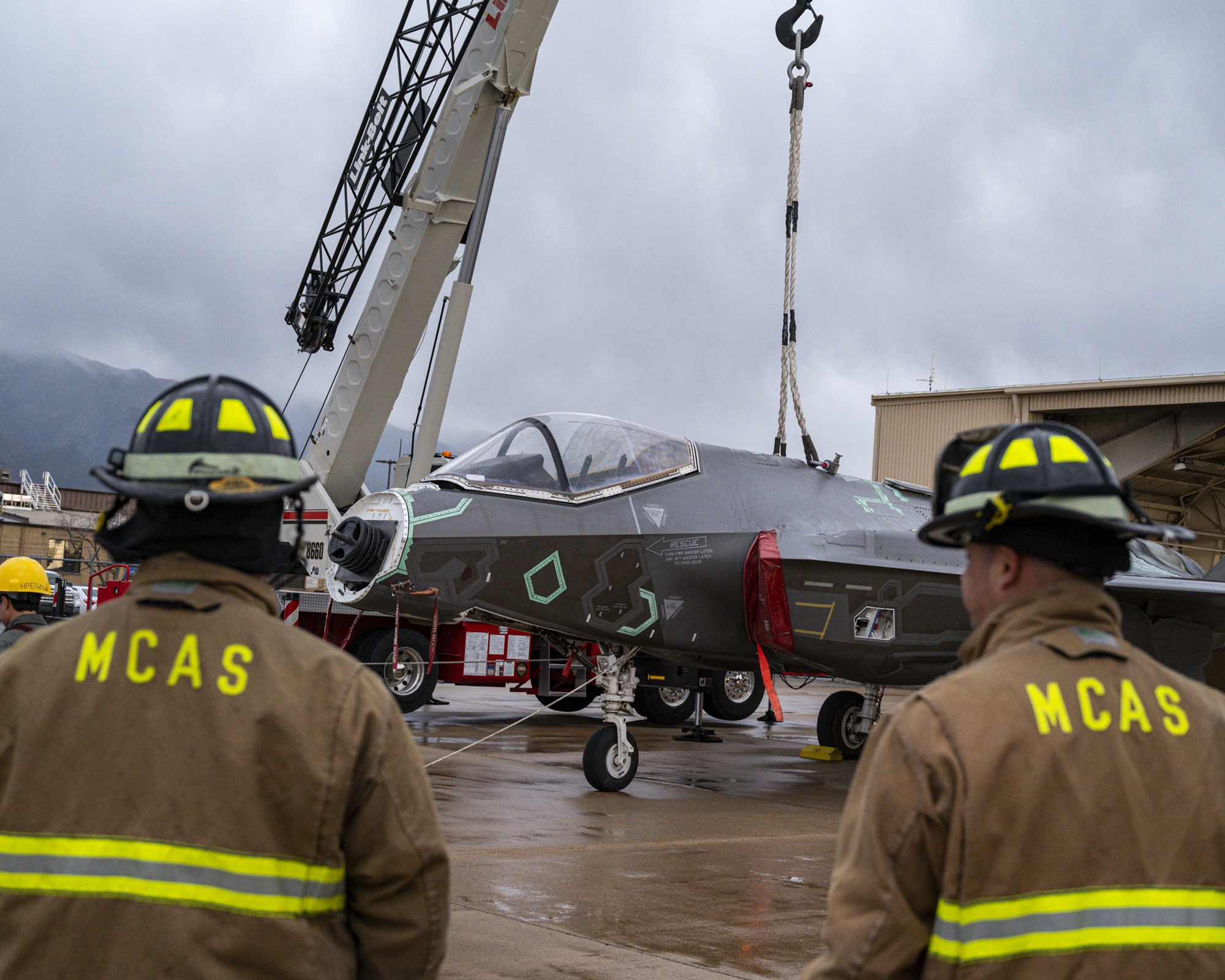
Immediately after the first reports regarding the radar issue came out, a photo went viral, showing one of the presumed radar-less F-35s with the nose cone removed and the ballast installed. However, that image is completely unrelated and dated to even before the delays of the APG-85 became known.
In fact, the image was captured at Hill Air Force Base, Utah, on Sept. 17, 2024, during a joint training exercise on crash, damaged, disabled aircraft recovery (CDDAR) procedures. Moreover, the F-35A in the photo is partially disassembled, with more than just the nosecone missing, not to mention the emergency services Marines that can be seen in the foreground.
Adding to the incongruencies, the ballast seen installed on that F-35A appears to be made of four gym weight plates, possibly the 45 lb (20.4 kg) plates that can be commonly found in U.S. gyms. While such a ballast would work on the ground and preserves the airframe’s balance, it is unlikely to be used in flight operations, with possibly a more specific solution being used.
Transition to APG-85 and Tech Refresh 3/Block 4
It is important to note that the APG-85 is one of the main components of the Technology Refresh 3 (TR-3) and the associated Block 4 configuration. Issues with the new configuration prompted a halt to the deliveries in July 2023.
A year later, in July 2024, the F-35 JPO and Lockheed Martin agreed on a “truncated” version of the new configuration as stopgap, allowing to resume deliveries. Details about the truncated TR-3 were not released, but this allowed to finally clear the backlog in May 2025.
A total of 72 jets piled up at Lockheed Martin’s plant in Fort Worth, Texas, a decrease in the initial estimates that forecasted up to 120 F-35s that could be undelivered. The clearing of the backlog also contributed to the company setting a record delivering 191 F-35s in 2025.
With these aircraft being part of the earlier Lot 16, they would not be affected by the radar problem as they would come out of the production line with the APG-81. It is unclear if the decision to install a ballast instead of the APG-85, if confirmed, was part of measures being taken to avoid having F-35s piling up again until the deliver of the new radars.
The Technology Refresh 3 (TR-3) has been defined as the “backbone” for the upcoming Block 4 upgrade. The Block 4 includes hardware upgrades to 75 major systems, with enhancements to the electronic warfare suite, the new APG-85 radar, EOTS (Electro-Optical Tracking System), improved cockpit displays, navigation and communication systems and a next-generation Distributed Aperture System (DAS).
The program experienced severe issues which greatly impacted the fielding schedule of the new configuration. According to the Government Accountability Office (GAO), the issues were mainly attributed to software that could not support the F-35’s radar and electronic warfare systems as intended.

“Program officials stated that early versions of radar and in-flight systems software can commonly experience rebooting issues,” the GAO said. “However, even after being nearly a year delayed, TR-3 software continues to be unstable, according to test officials.”
The interim “truncated” TR-3 offers some of the planned capabilities while the remainder of the problems is being solved. The complete TR-3 is planned to be later retrofitted on delivered aircraft, with the retrofit requiring 14 days of downtime and performed during scheduled maintenance, as we previously reported here at The Aviationist.
APG-85
As we mentioned in our previous reports, the mention of the APG-85 first appeared in the U.S. Air Force’s unfunded wish list for Fiscal Year 2023, which included seven F-35A in Block 4 configuration with the APG-85 radar as part of the Lot 17. The APG-85 designation emerged again few months later, with the F-35 JPO later confirming that indeed a new radar was in the works.
“The U.S. Air Force, Navy, and Marine Corps are jointly developing and integrating an advanced radar for the F-35 Lightning II, which is capable of defeating current and projected adversarial air and surface threats,” said the F-35 JPO. “This advanced radar will be compatible with all variants of the F-35 aircraft.”
Without knowing anything else, the APG-85 might be a heavily modified APG-81, to such extent that it required a new designation, or a completely new radar being developed. In fact, if that was just an upgrade, the designation would have been APG-81v1, as done for other radars.
The development of the APG-81 officially started in 2001, although it traced its roots to the 1990s. Described as the successor of the F-22’s APG-77, the radar is based on Gallium Arsenide (GaAs) Active Electronically Scanned Array (AESA), with air-to-air and air-to-ground modes, high resolution Synthetic Aperture Radar (SAR) mapping, Ground Moving Target Indication (GMTI) and Electronic Warfare (EW) capabilities.
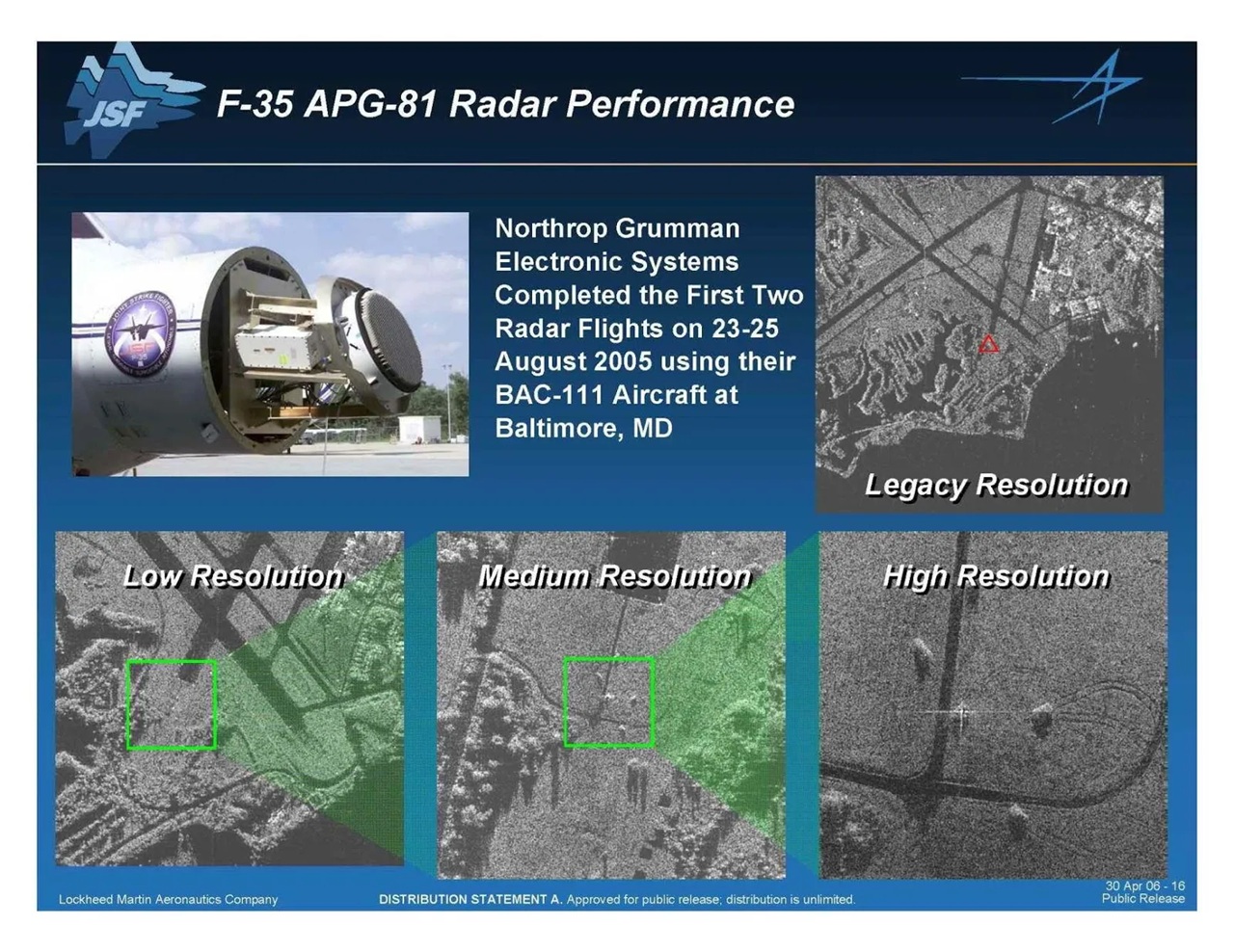
The new APG-85 is planned to incorporate some of the latest technologies available, with unconfirmed rumors mentioning the possibility of the adoption of Gallium Nitride (GaN) for the Transmit/Receive (T/R) modules. The radar is meant to defeat “current and projected adversarial air and surface threats” over the next decades.
Northrop Grumman, which already manufactures the current APG-81 radar, also emerged as the developer of the APG-85. The JPO did not disclosed if this radar will be available to all F-35 users or if it will remain a U.S.-only system.
Implications
The radar-less F-35s would be significantly constrained during operations. While the F-35’s sensor fusion allows it to receive targeting data from other networked platforms, the absence of an onboard radar would limit independent air-to-air and air-to-ground mission capability.
Such aircraft would likely be restricted to training, ferry, or limited test roles until retrofitted with a functional sensor. This approach would mirror previous periods in the F-35 program when aircraft were delivered with incomplete mission systems pending later upgrades.
At present, without official details about the radar issue, many questions remain unanswered, including the number of aircraft delivered without the radar and the timelines for both the delivery of the new radar and the retrofit on those aircraft. Whether the current situation represent a short-term integration hiccup or a more extensive problem will likely become clearer as official data emerges from the Pentagon and industry.
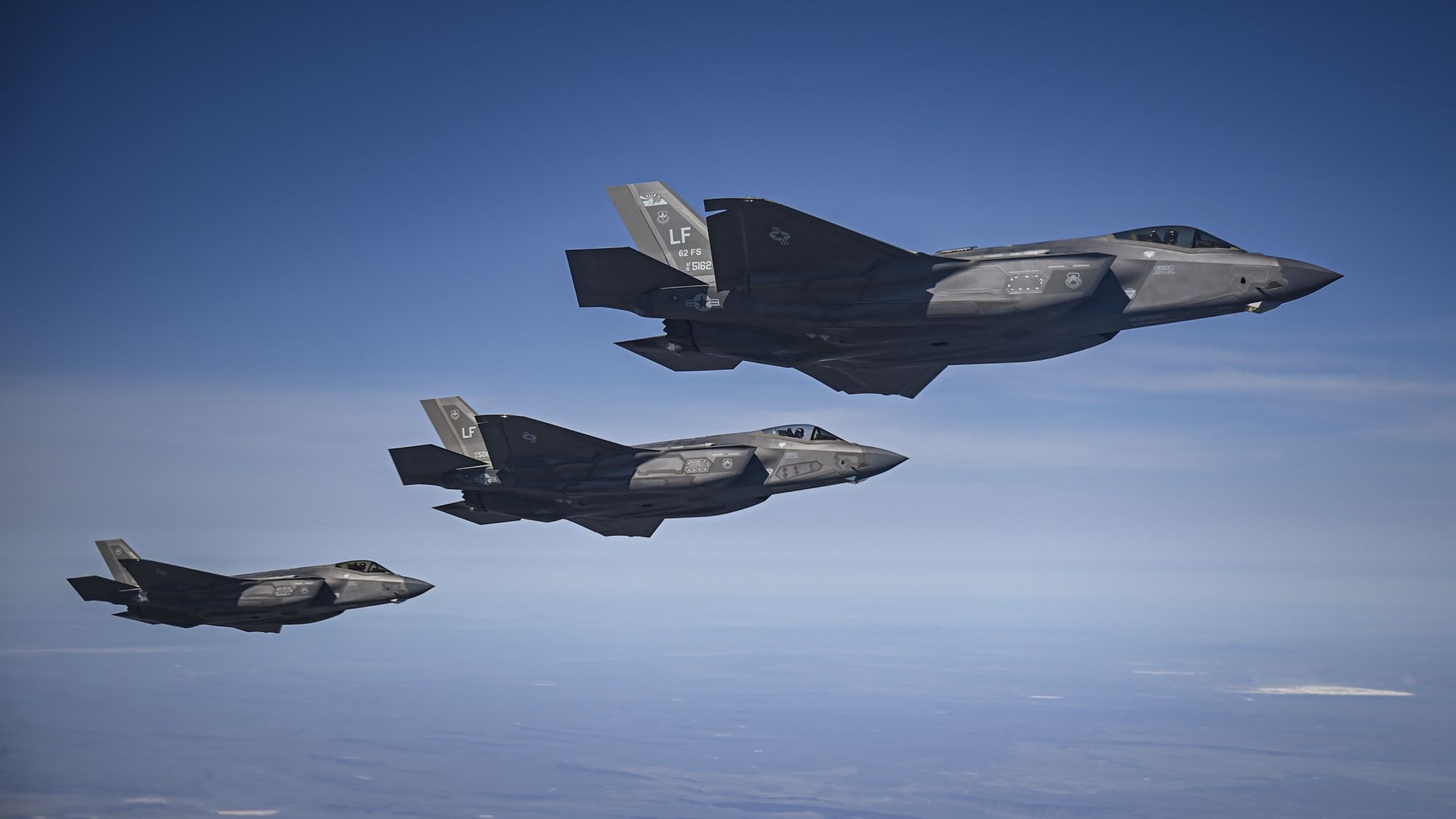
Nevertheless, the introduction of the APG-85 remains a central element of the F-35’s long-term relevance against evolving air defense and fighter threats. The new challenges however underscore the continuing complexity of fielding advanced capabilities within a program of the F-35’s scale.
At the same time, the issues also underscore how critical is the supply chain and how issues with one of the links can affect the remainder of the chain. This is further reflected by the operational aspect, as such issues introduce temporary capability gaps that require retrofit programs and phased upgrades to be assessed.