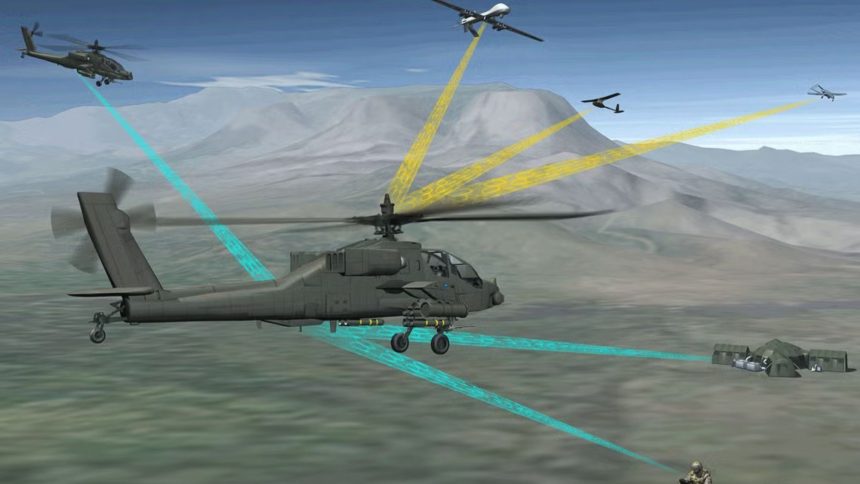
The UK’s MoD has invited seven firms to propose their designs for Project NYX, which will give the AH-64 Apache an unmanned loyal wingman.
The U.K. Ministry of Defence (MoD) took a new step towards Project NYX on Jan. 24, 2026, by inviting seven European and U.S. companies to present their designs. The new development follows a pre-qualification phase which concluded in late-2025, and will be followed by a further down selection of four firms in March.
Project NYX seeks new Autonomous Collaborative Platforms (ACP)/Uncrewed Air Systems (UAS) that will be employed as “loyal wingmen” drones for the AH-64 Apache attack helicopters. Primarily performing Intelligence, Reconnaissance, Target Acquisition, and Reconnaissance (ISTAR) and Electronic Warfare (EW) roles, they would also bring the affordable “mass and lethality” in contested battlespaces.
The MoD identifies the seven companies invited as Anduril, BAE Systems, Leonardo, Lockheed Martin UK, Syos, Tekever and Thales. Early in December 2025, Anduril UK, a subsidiary of the U.S. firm Anduril, had teamed up with British company GKN Aerospace for Project NYX, with the press release showing the tail section of a mock up aircraft, which we noted it suggested the Anduril/GKN bid might favor a tiltrotor aircraft approach.
The future selection in March will involve formal contracts for research and development of concept demonstrators. The MoD says it is currently targeting an Initial Operational Capability (IOC) by 2030.
British companies are building the future of defence.
Seven UK industry partners have been selected to develop prototype ‘wingman’ drones that will operate alongside Apache attack helicopters.
These autonomous systems will work alongside our Armed Forces to keep them safer on… pic.twitter.com/nMGMG9tVQc
— Ministry of Defence 🇬🇧 (@DefenceHQ) January 24, 2026
British Apache attack helicopters
The 2026 World Air Forces report, which counted figures until December 2025, puts the number of AH-64E Version 6 (V6) with the British Army’s Air Corps at 50. The ‘E’ variant is distinguished by the ability to employ a Manned Unmanned Teaming (MUM-T) mast for controlling uncrewed aerial systems, and the UK could possibly share lessons with the U.S. Army on its employment.
The British helicopters have practiced classic overhead helicopter gunship roles in support of armored operations with U.S. Army AH-64E Apache Version 6 helicopters. However, the British Army has noted the advantages of the joint employment of manned attack helicopters and unmanned platforms in the new combat scenarios.
The following reference by the U.K. MoD to the continuing significance of attack helicopters, particularly in armored and artillery warfare, validates the previous analyses by The Aviationist: “Project NYX is delivery of that work in action, capitalizing on the power of drones, AI and autonomy to complement the ‘heavy metal’ of tanks and artillery to make our Armed Forces stronger and safer on the battlefield.”
The Royal Air Force has also tested First Person View (FPV) drones from its CH-47 Chinooks, possibly towards a similar operating concept. This might have served largely to freeze the procedures for safely operating drones from aboard helicopters that have not built-in capabilities to control unmanned assets.
UK has selected 7 companies to develop prototype uncrewed “wingman” drones designed to operate alongside Apache attack helicopters under Project NYX.The program aims to field autonomous systems for reconnaissance,strike,& electronic warfare missions,with initial operational 2030. pic.twitter.com/BC0SylGQOW
— Valhalla (@ELMObrokenWings) January 24, 2026
Autonomous drones
The MoD’s subsequent specification of the drones being required to operate on a “command rather than control” principle suggests highly autonomous capabilities, reflecting the modern realities of electromagnetic spectrum warfare.
“The drones will operate on a ‘command rather than control’ principle, utilizing AI for independent decision-making – being able to adjust to complex battlefield situations within the bounds of mission parameters,” reads the MoD’s statement. “They will enhance lethality, survivability, and mission effectiveness while reducing the risk and logistical burden for human-operated systems.”
Drones with greater man-in-the-loop control also entail flooding the surrounding airwaves with more radio control signals, making a ripe target for electronic warfare jamming, and possibly strikes. Naturally, with a higher degree of autonomy, the crew can focus on other combat tasks too, while merely overseeing and commanding the UAV.
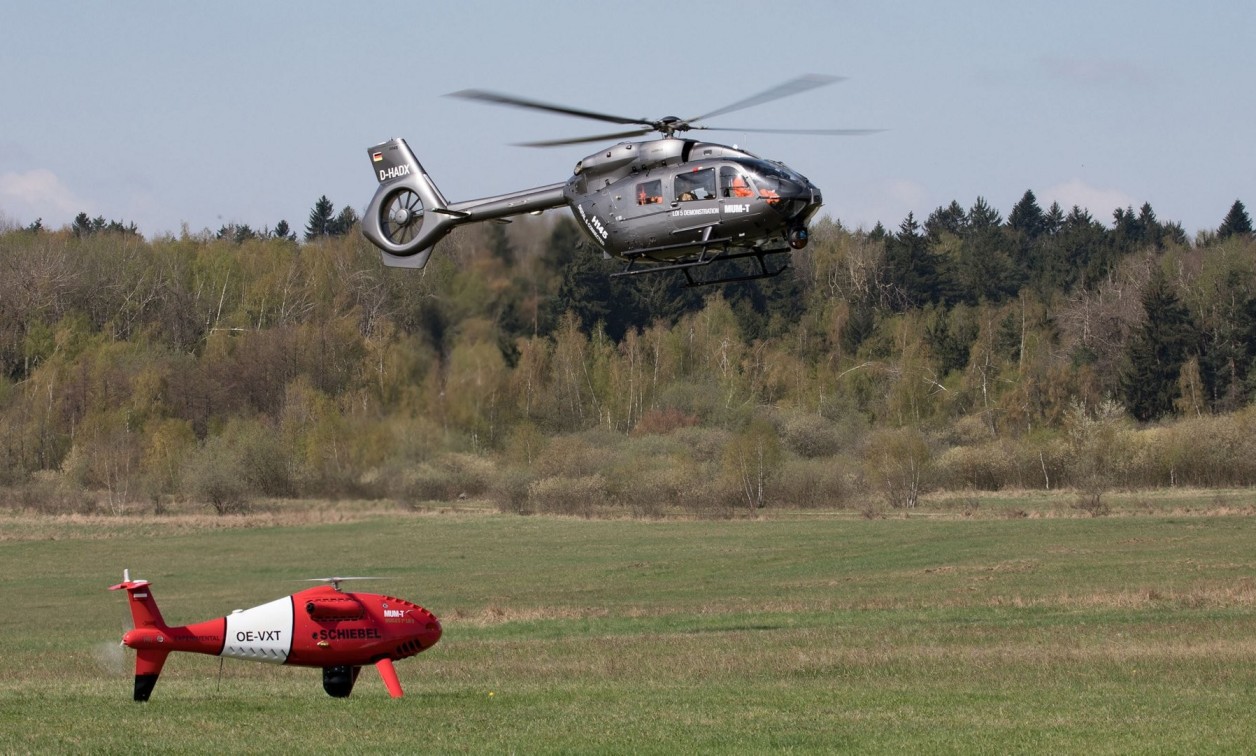
AI would be utilised for independent decision-making, being able to adjust to complex battlefield situations within the bounds of mission parameters. They will enhance lethality, survivability, and mission effectiveness while reducing the risk and logistical burden for human-operated systems.
Semi-autonomous drones can undertake basic tasks like taxi, take-off, set waypoint patrols and return to base and land, while autonomous drones can themselves scan, detect, track and engage and confirmed hostile targets, without human intervention. These tasks do not require sentient, contextual reasoning, and the AI technologies governing them can be further perfected through Machine Learning (ML).
Existing drones
Lockheed Martin UK shared footage on Jan. 8, 2026, of a test in the UK of its MDCX mission autonomy software, integrated with the U.K.-developed Vigilance Mission and Sensor management system. They simultaneously commanded a Group 1 Indago 2 quadcopter and a Group 2 Stalker fixed‑wing UAS – the latter a Lockheed product commonly used by many special operations forces.
📢 Big news from #Cowes: @GKNAero & @anduriltech have signed a teaming agreement to advance the UK’s next-gen UAV & rotorcraft capability, in collaboration with @flyarcher.
The partnership could create 100+ skilled jobs.
Full release 👉 https://t.co/RMJH2JbaQi pic.twitter.com/za1k9KjUDi
— GKN Aerospace (@GKNAero) December 9, 2025
The company did not say when the test took place, but the press release quoted the commanding officer of the Royal Navy Air Station Culdrose. It is also unclear whether this trial is related to Project NYX.
Tekever, one of the other competitors, already has some of its platforms in service in the UK, including the AR3 which served as the base for the StormShroud drones. The company has also been supplying its AR3 autonomous small UAS for medium range maritime and land-based ISTAR missions to Ukraine since 2022.
We put our autonomous tech to the test and it delivered. 🌐
Our MDCX™ platform simultaneously controlled an Indago quadcopter, Stalker UAS with the Vigilance system during a recent UK demo. pic.twitter.com/mTxWZ9jD1n
— Lockheed Martin UK (@LMUKNews) January 8, 2026
Another step towards Project NYX
Minister for Defence Readiness and Industry Luke Pollard said in the press release that these drones are meant to make the British Army “more effective and lethal.” He further added “Project NYX represents the cutting edge of the Defence Industrial Strategy, working with leading British industry partners to ensure the UK remains at the forefront of autonomous military technology.”
Project NYX builds upon the Strategic Defence Review, that aspires to have UAVs pairing up with Apache attack helicopters, “pivoting to a new way of war.” The completed drones of the seven industry partners that have been invited to bring forward their designs must serve as “loyal wingmen” alongside crewed Apache attack helicopters to perform “reconnaissance and surveillance in contested areas, strike and target acquisition and electronic warfare.”
🇺🇦 Since the outbreak of war nearly three years ago, #TEKEVER has been providing unwavering 24/7 support to Ukrainian operators who risk their lives daily.
The TEKEVER AR3 has become a vital tool in Ukraine’s defence, playing a key role in identifying high-value enemy targets pic.twitter.com/n2vjQTtWi7
— TEKEVER (@TEKEVER) January 30, 2025
The MoD also noted how the SDR was reorienting to a “new way of war” that involves “harnessing new technology” in “uncrewed and autonomous capabilities” for the British military “to generate mass and lethality.”