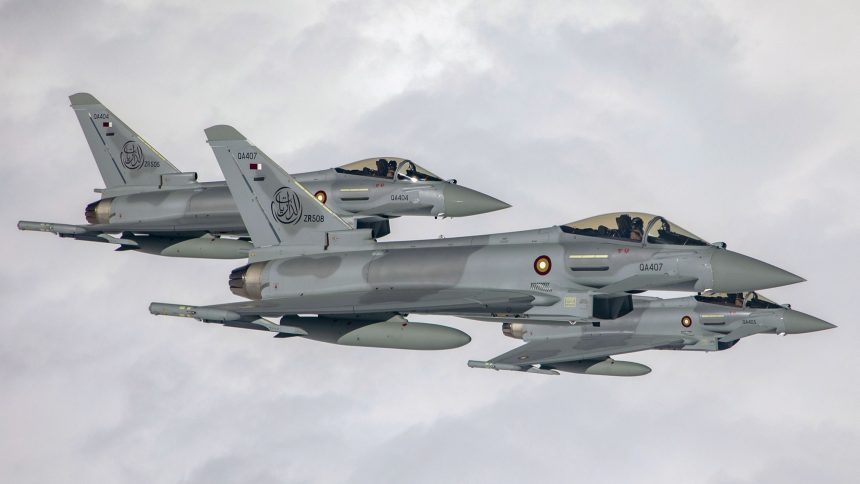
According to local media, Türkiye is set to receive its first Eurofighter Typhoons from Qatar by late February, part of 12 second-hand jets bought from the country.
Türkiye appears now closer to the delivery of its first Eurofighter Typhoon fighter jets, marking a significant milestone in Ankara’s long-running effort to acquire the European aircraft. According to multiple Turkish media outlets, the first aircraft is expected to be delivered by late February 2026.
The aircraft will come from Qatar’s existing Typhoon fleet, following the completion of negotiations and the start of pilot training. It has been reported that Türkiye procuring 12 Typhoons out of the 24 currently serving in Qatar.
The expected delivery follows high-level trilateral talks held in Doha between senior defense officials from Türkiye, Qatar, and the United Kingdom. The meeting, hosted by the Qatari Air Force Commander and attended by Turkish Air Force Commander Gen. Ziya Cemal Kadıoğlu and representatives of the Royal Air Force (RAF), focused on finalizing details of the Eurofighter procurement process, according to statements from Türkiye’s Ministry of National Defense.
First Typhoons by Late February
Both Türkiye Today and Hürriyet Daily News report that Ankara expects the first Eurofighter Typhoon sourced from the Qatari Air Force to arrive by the end of February. Deliveries will begin once negotiations are formally concluded, however reports mention that Turkish pilots have already begun training on the aircraft.
Türkiye plans to acquire 12 second-hand Eurofighter Typhoons from Qatar as part of a multi-source acquisition strategy. The aircraft are expected to provide a near-term capability boost while Ankara awaits the delivery of new-build jets from the United Kingdom later in the decade.
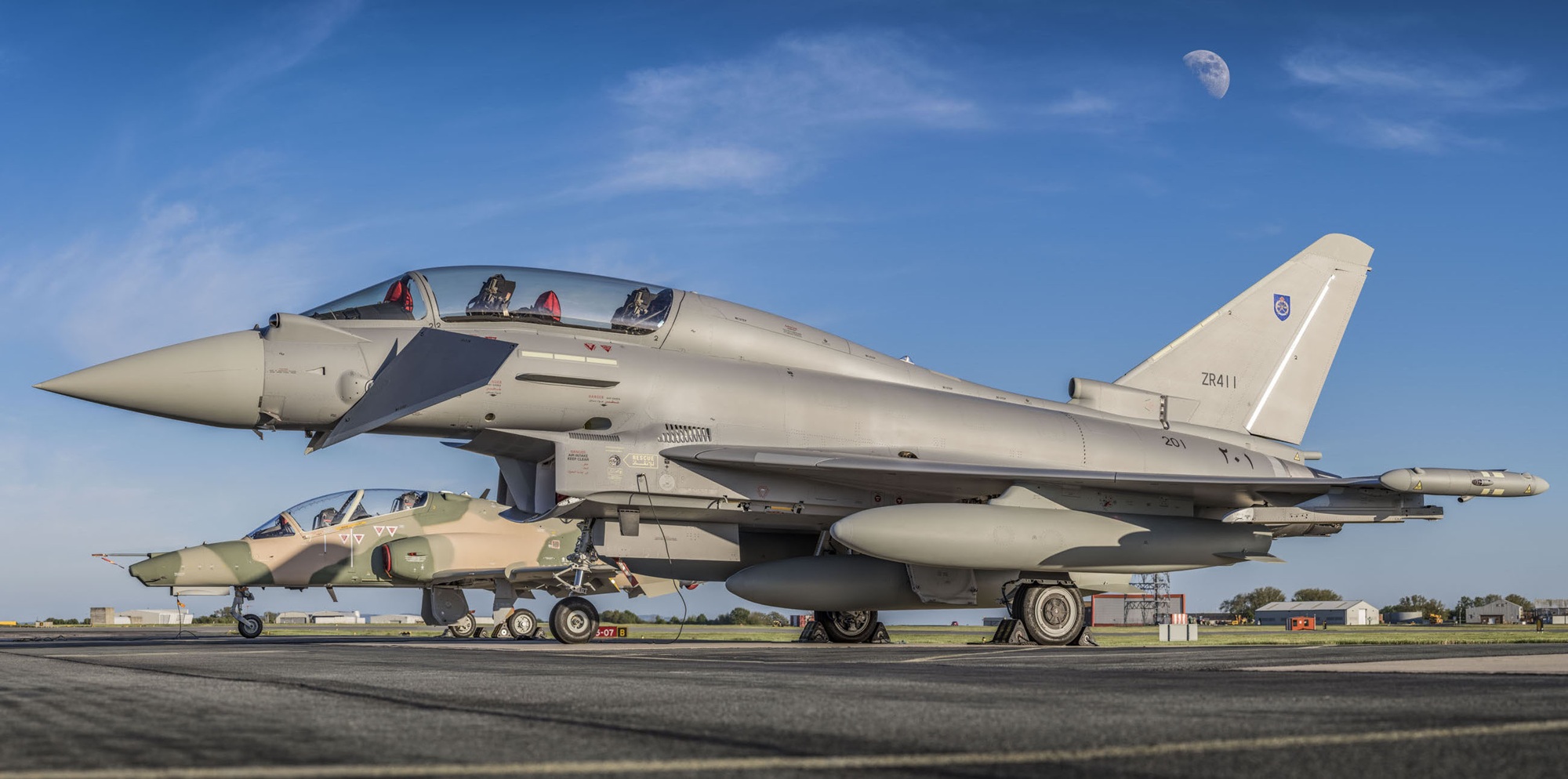
As we previously reported here at The Aviationist, Türkiye signed an agreement with the United Kingdom in October 2025, worth £8 billion, to acquire 20 newly bult Typhoons. The contract also covers training, spares, integration services, and MBDA-supplied weapons.
Türkiye, according to TurDef, plans to ultimately acquire 44 Eurofighter Typhoons in total, including the 20 newly built jets. The remaining 24 Typhoons will be second-hand aircraft, to be sourced from Qatar and Oman.
Capabilities and Configuration
The hybrid acquisition model adopted by Türkiye will likely result in a mixed fleet with Typhoons in different configurations. While this compromise would allow to address immediate operational needs, in the long term mixed fleet might be challenging to manage, unless some upgrades are planned to bring all the aircraft to the same configuration.
Qatar’s Typhoons are Tranche 3A aircraft equipped with the ECRS Mk0 AESA radar, an early-generation variant of the ECRS. Similarly, the Omani Typhoons are Tranche 3A aircraft but retain the mechanically scanned CAPTOR-M radar.
Additionally, Qatar’s Typhoons are in the P3E(b) – Phase 3 Enhancement bravo – configuration, which was the first to allow ECRS radar operations, while Omani Typhoons are believed to be in the older P2E configuration and the newly built Typhoons might come in the new P4E configuration.
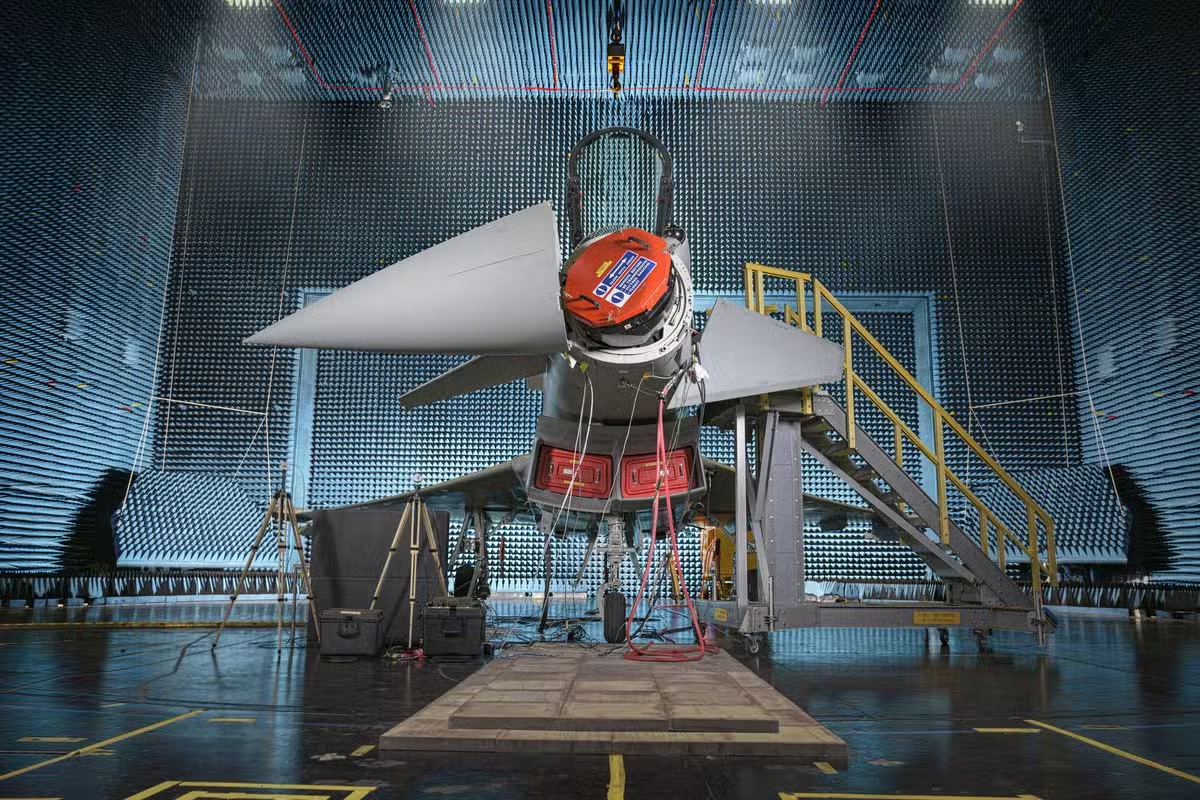
The Phase 2 Enhancement (P2E) upgrade was divided into two parts, providing initial Storm Shadow integration with P2E(a), and Meteor integration with P2E(b). The Phase 3 Enhancement (P3E), again divided in multiple parts, introduced the ECRS radar, Litening 5 targeting pod, Brimstone and full Meteor integration, as well as other avionics upgrades and human-machine interface (HMI) enhancements.
The new Phase 4 Enhancement (P4E) configuration, announced in 2024, contains a number of new developments. Among these is an automated sensor management capability for all Typhoon radars that will allow to exploit the capabilities of the new AESA radar to complete multiple simultaneous tasks, while reducing the pilot workload.
According to Reuters, the UK-Türkiye agreement includes a substantial weapons package supplied by MBDA. The package reportedly includes Meteor and Brimstone.
Avoiding a Capability Gap
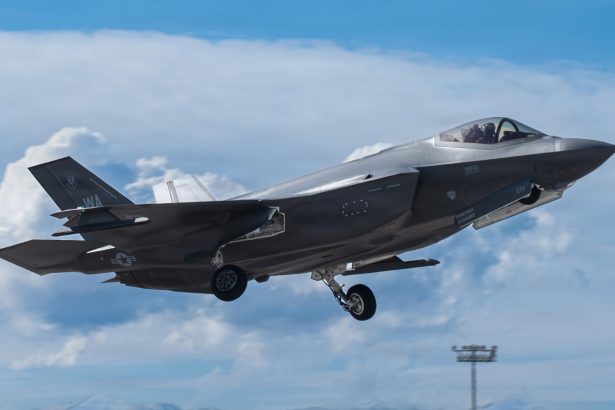
As we previously reported here at The Aviationist, Türkiye’s pursuit of the Eurofighter Typhoon must be viewed in the context of its exclusion from the F-35 Joint Strike Fighter program following the acquisition of the Russian S-400 air defense system. Ankara has consistently described its removal from the program as unfair and has sought alternative paths to maintain a credible air combat capability.
President Recep Tayyip Erdoğan has continued to raise the possibility of Türkiye’s return to the F-35 program, with U.S. President Donald Trump recently stating that Washington was “very seriously” considering lifting the ban. It is unclear if negotiations are ongoing to address the issue.
Türkiye finalized a separate deal with the U.S. in 2024 for 40 new build F-16 Block 70s, while an initial plan to acquire 79 upgrade kits for its current F-16 fleet was abandoned. These kits are being replaced by local upgrades.
Moreover, Türkiye is developing its indigenous fifth-generation fighter, KAAN, which is intended to replace parts of the F-16 fleet beginning in the 2030s. However, KAAN remains several years away from operational service, with only a prototype flying so far.
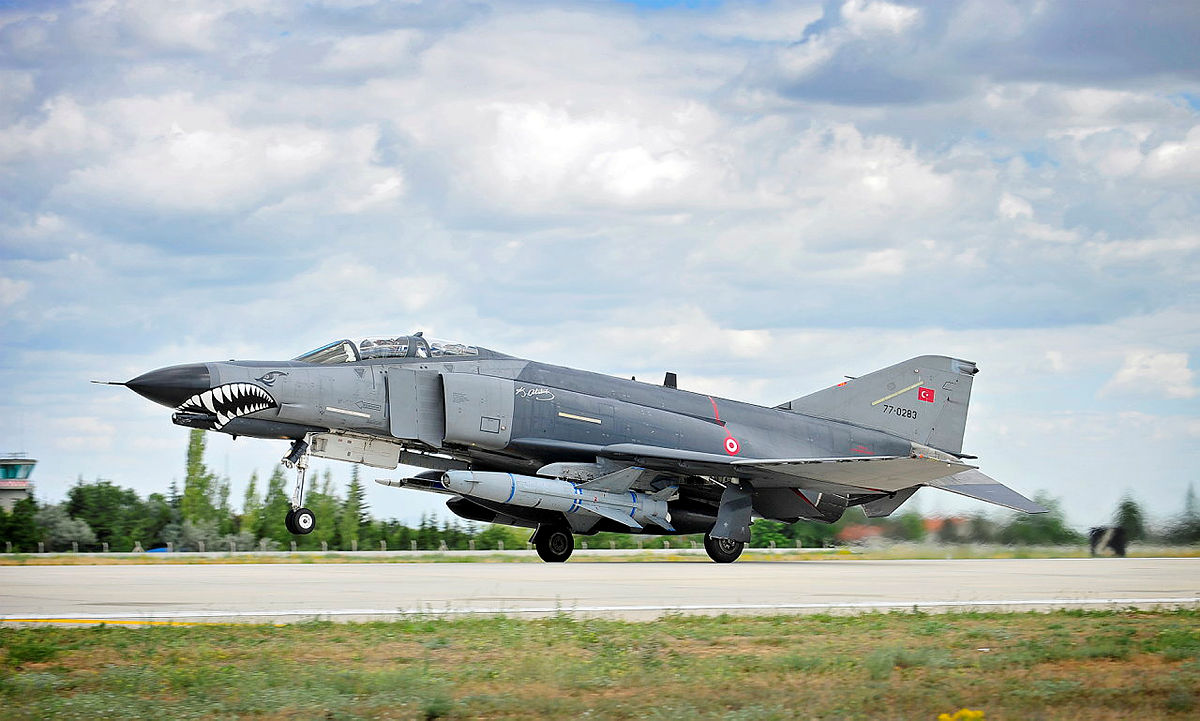
Both KAAN and the F-16’s local upgrades would allow the country to reduce foreign dependence for defense procurement. However, Türkiye needs a replacement for its aging F-4 Phantom II fleet, initially meant to be replaced by the F-35.
In this context, the Typhoon’s acquisition, and particularly the rapid delivery of second-hand aircraft, would ensure continuity without capability gaps.