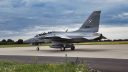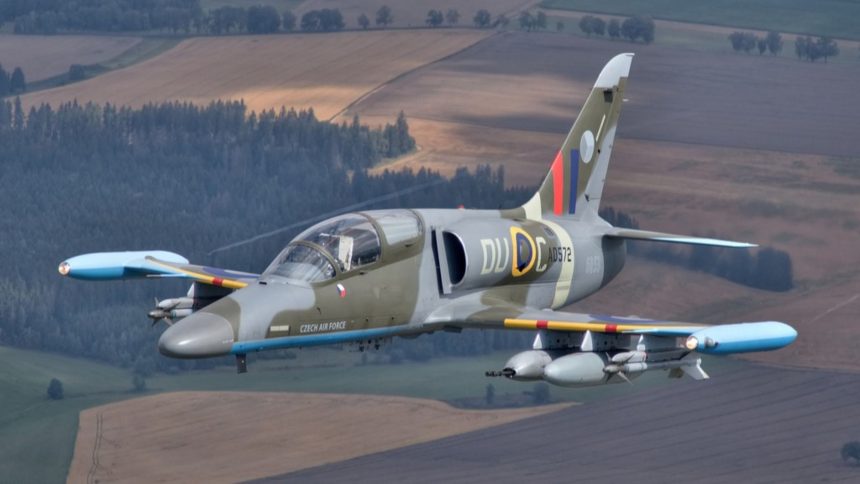
Czech Republic President Petr Pavel proposed sending four L-159 to Ukraine, but Prime Minister Andrej Babiš later announced that the plan had been rejected.
Opposing camps within Czech politics have blocked the transfer of light combat jets to Ukraine. President Petr Pavel, a former General and head of NATO’s Military Committee, proposed on Jan. 16, 2026, to transfer “several medium combat planes” during his visit to Kyiv, according to Reuters.
However, on Jan. 19, 2026, Prime Minister Andrej Babiš, who is part of a coalition of the ANO, SPD and Motorists parties, rejected the plan, ČT24 reported. Both reports also identified the candidate aircraft as the Aero Vodochody L-159A ALCA, which the Czech Air Force (CzAF) has been operating as a light combat aircraft and advanced jet trainer since the early 2000s.
Some other unverified reports also mentioned the aircraft could be the Aero L-39NG, but this is now largely believed to be untrue. As per the World Air Forces 2026 report, that counted figures up to December 2025, the CzAF operates 24 L-159s and 11 L-39NGs, as well as 14 JAS39 Gripen C/Ds as its frontline fighters, and has committed to the procurement of 24 F-35A Lightning IIs.
L-39NG could be also the option, as it was introduced with targeting container and gun pods as well.https://t.co/8O0d2XaGte pic.twitter.com/aP6SXi3RHc
— Kamil Staščík 🇨🇿🇪🇺🇺🇦 (@Kamil42090261) January 17, 2026
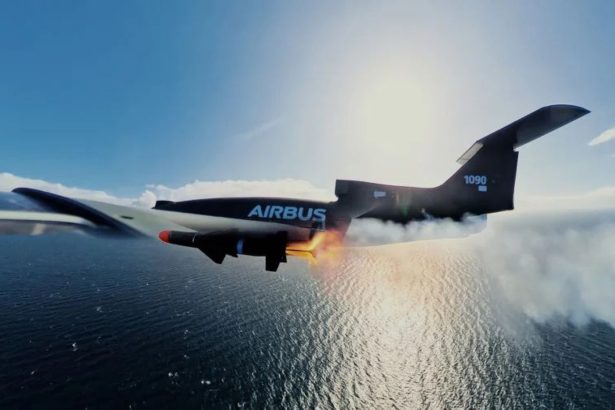
Russian Geran-2 One-Way Attack (OWA) drones used to attack Ukraine are being shot down by using door guns of Ukrainian Mi-8 helicopters and the main gun of Mi-24 helicopters. The L-159As would make a vital addition to the cost-effective airborne counter-drone systems used by the country.
Geran-2s are also evolving, and some examples shot down in Ukraine have been found with R-60 and Man-Portable Air Defense (MANPAD) installed on their top. The R-60 AAM was also recently found on a jet-powered Shahed.
Second known downed Russian Shahed equipped with a R-60 air-to-air missile. This time R-60 was installed on a jet-powered Shahed. https://t.co/3MVn88RU4k pic.twitter.com/GqiELLgCvC
— Special Kherson Cat 🐈🇺🇦 (@bayraktar_1love) January 14, 2026
Change of plans
Pavel has been asserting military and diplomatic support to Ukraine since 2022, while criticizing Russia. On Jan. 7, ahead of Pavel’s visit to Kyiv to meet with President Volodymyr Zelensky, Babiš himself had promised to continue with the supply of ammunition, which the Czech Republic had been doing since 2024, Radio Prague International reported.
However, the same report cited a caveat that Babiš placed, which was a sign of things to come:. “Czechia will not cancel its ammunition initiative for Ukraine and will continue to coordinate the project, Prime Minister Andrej Babiš said after talks among leaders of the so-called ‘coalition of the willing’ in Paris on Tuesday. Babiš said […] that the initiative will continue only if it is financed by other countries, with no money coming from Czech taxpayers.”
The Czech government has decided that Czechia will not sell it’s Aero L-159A Alca light combat aircraft to Ukraine.
President Petr Pavel said that Ukraine had proposed to buy four of the 24 aircraft used by the Czech Air Force. However, the Czech… pic.twitter.com/hQE80hReYR
— 𝕻𝖗𝖆𝖎𝖘𝖊 𝕿𝖍𝖊 𝕾𝖙𝖊𝖕𝖍 (@praisethesteph) January 19, 2026
Then, on Jan. 16, during the meeting with Zelensky in Kyiv, Pavel told a press conference: “The Czech Republic can in relatively short time provide several medium combat planes, which are highly effective in fighting drones, and I believe we will manage to quickly and successfully conclude this issue.”
On Jan. 19, CT24 announced the decision of the coalition led by Babiš (ANO party), Defense Minister Jaromír Zůna (SPD), and head of diplomacy Petr Macinka (Motorists), to “reject the sale of L-159 aircraft to Ukraine.” While Zůna said the CzAF needs the aircraft, Macinka said Pavel “did not inform the government in advance” before making the announcement in Kyiv.
The CT24 report cited a host of other opinions from Czech political personalities from both pro and anti-Ukraine sides, who pointed to everything from the need to maintain credibility before NATO allies, garnering export sales, differing views on the impact on CzAF’s military preparedness, to simple political tussles between various parties.
Interestingly, CT24 quoted a statement by Pavel last week who said the number of L-159 aircraft asked by Ukraine were four. This “represents an acceptable level of risk,” the report quoted Pavel.
L-159 and L-39
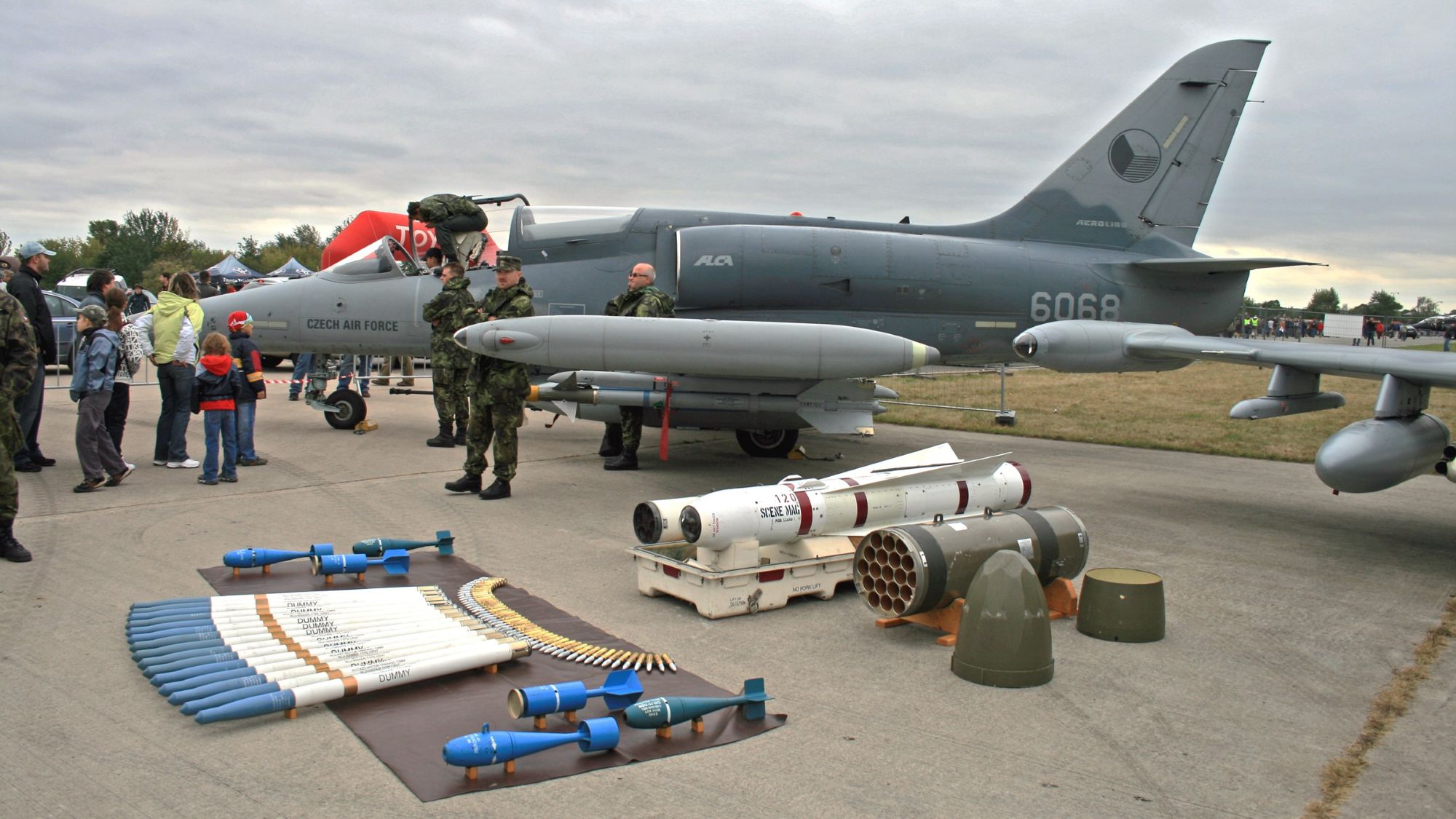
Of the 24 L-159s in service in Czechia, 16 are single-seat L-159As, and the remaining eight are in the two-seat L-159T1+ and T2 standards. The L-159A is a multirole combat aircraft and jet trainer with a Grifo-L multi-mode doppler radar, and can carry a range of guided and unguided NATO weapons.
Další L-39 Skyfox úspěšně předán!
Dnes odletěl z Vodochod už 5. Skyfox pro LOM PRAHA.
Letoun posílí výcvik pilotů v pardubickém Centru leteckého výcviku.#L39Skyfox #AeroVodochody #CzechAviation #PilotTraining pic.twitter.com/vZOqWQAMKY
— 🍀Tomáš Doupal 🇨🇿 (@TomasDoupa39474) January 20, 2026
5 out of 8. 5th L-39NG Skyfox was delivered to Flight Training Centre Pardubice. 3 more will be delivered this year. pic.twitter.com/GpNahMsXE4
— Daniel of Bohemia (@Danny_elMayor) January 19, 2026
A PL-20 dual-barrel gun pod on the centerline could be particularly useful against slow-flying drones. The T1+, first unveiled in March 2017, has upgraded mission systems, avionics, instrumentation and displays. The T2 meanwhile is a twin-seat jet, converted from the older single-seat L-159A, with improved navigation, instrument and communication suites and ejection system.
Hello from @DubaiAirshow where European 🇪🇺 innovation is on full display, including this Skyfox from my home country 🇨🇿.
Just as the EU is strengthening its defence readiness, our focus is on smarter mobility, stronger partnerships & a more resilient Europe in a changing world. pic.twitter.com/w765vj82id
— Lucie Berger (@BergerLucie) November 19, 2025
While the Aero L-39 Skyfox is a successor to the Cold War-era L-39 Albatross, the L-159 was derived from the L-59 Super Albatross trainer, itself based on the L-39 Albatross. The L-39 Skyfox was also offered as a drone-hunting platform during last year’s Dubai Air Show in November 2025, with a gun-pod, a Thales FZ275 LGR seven-shot rocket pod and a SiNAB Phoenix targeting pod.