South Korea confirms the completion of the KF-21 Boramae flight test program after 1,600 sorties, paving the way for ROKAF deliveries and Block 2 development.
South Korea’s indigenous KF-21 Boramae (Korean for “Hawk”) fighter has reached a major milestone, with the country officially announcing the completion of the flight test campaign. The achievement represents an important step toward operational service with the Republic of Korea Air Force (ROKAF), with the first deliveries scheduled for 2026.
Flight test program
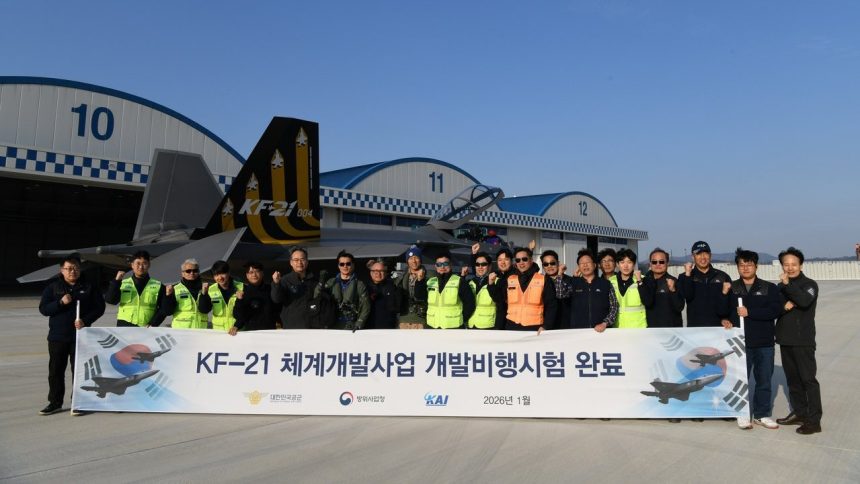
According to South Korea’s Defense Acquisition Program Administration (DAPA), the flight test program concluded after approximately 1,600 sorties conducted over a 42-month period, “without any accidents” since the first flight in July 2022. The campaign wrapped up two months ahead of schedule, with the final test flight conducted by the fourth prototype on Jan. 12, 2026, from Korea Aerospace Industries’ (KAI) facilities at Saechon.
DAPA officials, quoted by South Korea’s Yonhap News Agency, attributed the accelerated schedule to the use of additional test locations and the integration of air-to-air refueling into the campaign. This allowed the aircraft to remain airborne longer and conduct multiple evaluations during a single sortie.
The test program encompassed around 13,000 individual test conditions, covering a wide spectrum of operational and edge-of-envelope scenarios, including air-to-air weapon launches and recovery from extreme flight attitudes. A total of six flying prototypes were used, of which two were twin-seat variants, as well as two prototypes for ground tests.
Block 1’s Fielding
DAPA will finalize the KF-21’s development program in the first half of 2026, with the deliveries starting in the second half. South Korea has already a contract for 40 KF-21 Block 1 aircraft, fist signed in 2024, and the first jet entered final assembly in May 2025.
While these initial jets are primarily meant for air-to-air missions, their introduction will allow to establish a foothold in the ROKAF, shaping training and procedures. At the same time, the introduction of the KF-21 Block 1 allows to begin the replacement of the F-4 Phantom and F-5 Tiger, among the service’s oldest platforms.
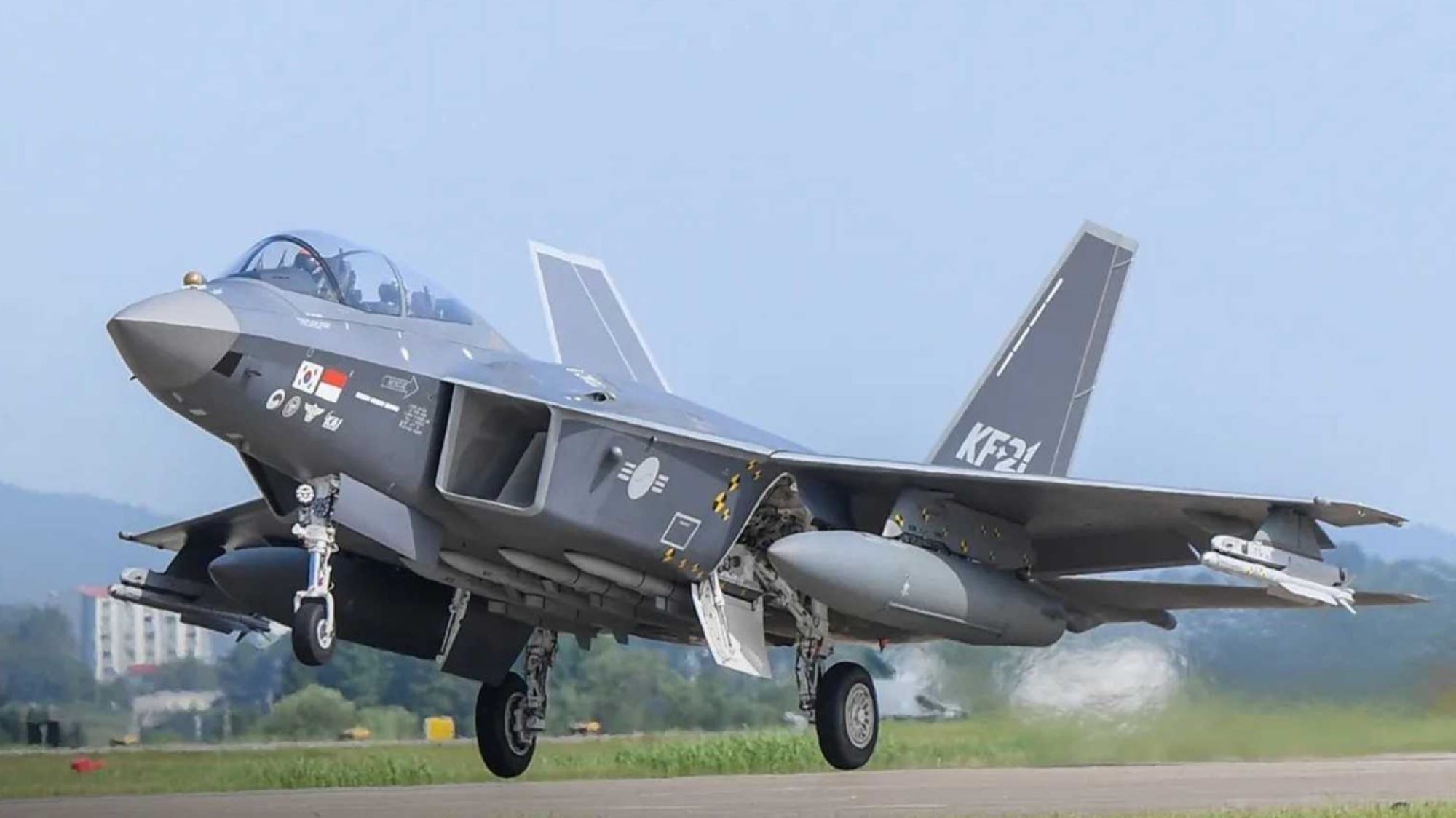
The initial variant of the KF-21 will not include an internal weapons bay, with the weapons carried externally. The aircraft will feature four semi-recessed attachment points for Meteor missiles below the fuselage, as well as a chin mounting point below the right engine’s air inlet for an indigenous targeting pod, and a total of six wing hardpoints, which would be able to carry external fuel tanks, JDAM bombs and IRIS-T missiles.

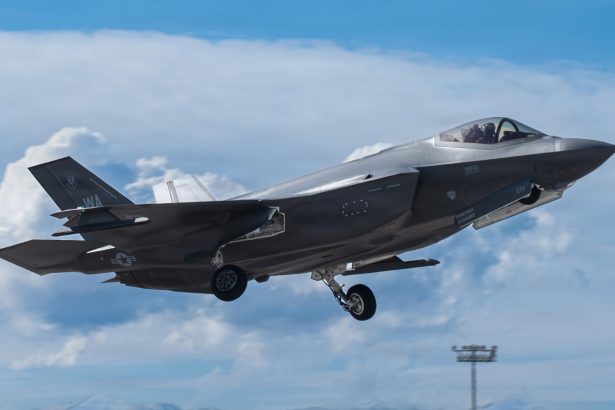
The ROKAF aims to field 120 KF-21s by 2032, also including the Block 2 variant, complementing the KF-16 Fighting Falcon, F-15K Slam Eagle and F-35A Lightning II. As part of the service’s broader modernization, these are also undergoing upgrades, with the KF-16 being brought to the Block 70 standard and the F-15K being brought to a configuration similar to the F-15EX Eagle II.
Block 2’s Development
While the Block 1 configuration focuses on air superiority tasks, development of the KF-21 Block 2 variant with expanded air-to-ground capabilities is already underway. As we previously reported here at The Aviationist, KAI and DAPA have been advancing plans to expand the aircraft’s mission set to include air-to-ground and reconnaissance roles.
Yonhap News Agency reported that, in December 2025, KAI secured a ₩686 billion ($465 million) contract specifically aimed at developing the KF-21’s strike capabilities. A video also showed that pit drop testing has already started, with the GBU-12 Laser-Guided Bomb (LGB), GBU-56 Laser Joint Direct Attack Munition (LJDAM) and Korean Air-Launched Cruise Missile (KALCM) among the weapons shown.
The KF-21 features a maximum payload capacity of approximately 7,700 kg (17,000 lb), providing ample margin for a broad range of weapons and stores, with ten different munitions reportedly eyed. DAPA has also adjusted the program timeline, moving air-to-ground weapons tests forward to the first half of 2027, compared to the previous schedule that targeted late 2028.
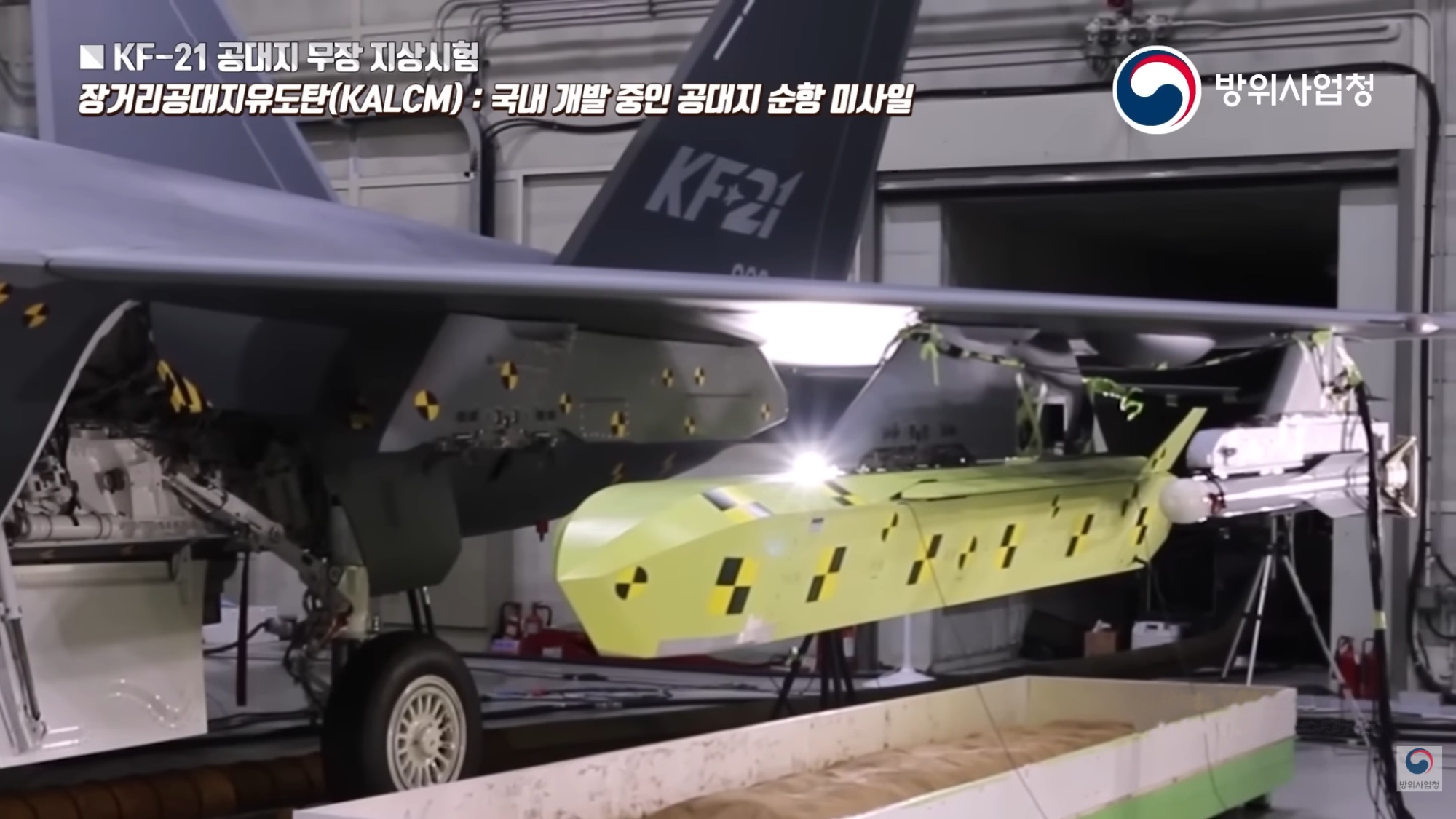
The initial air-to-ground capability is expected to be achieved approximately 18 months earlier than the original project plan, and will be applied to mass-produced KF-21 aircraft starting in 2027. Currently, design, verification, and ground testing for air-to-ground weapons flight testing have been completed, according to reports.
Block 3’s Plans
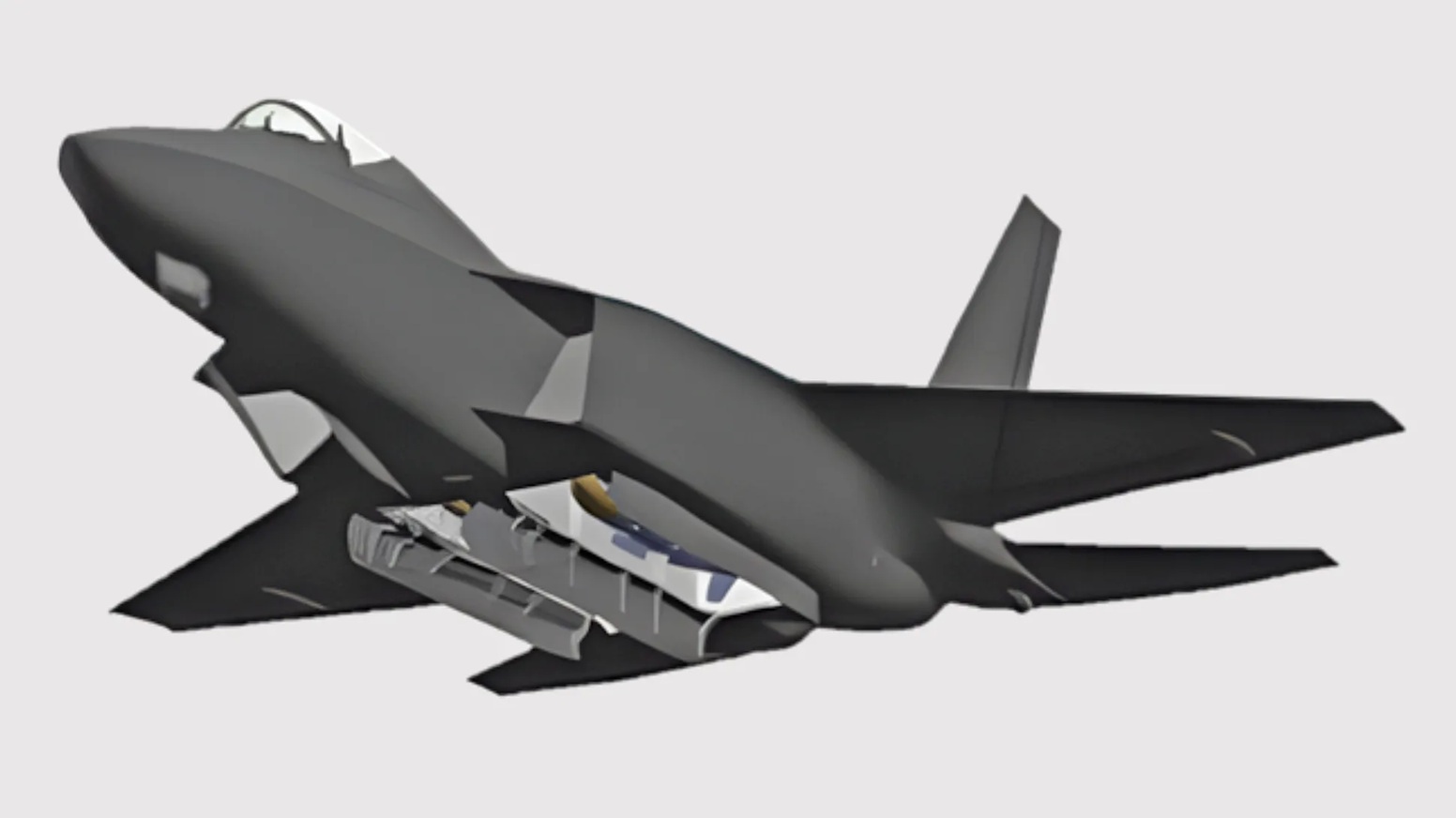
The future Block 3 aircraft is envisaged to be a pure stealth fighter with radar-absorbent material, paint and coatings, internal weapons bays, sensor fusion and certified to operate with Collaborative Combat Aircraft (CCA). Some reports also called the new variant as KF-21EX.
For the new variant, DAPA launched an Advanced Aviation Engine Development Project aiming to deliver a power plant that would produce 16,000 pounds of dry thrust and 24,000 pounds of thrust with afterburners. The new engine is expected to be integrated on the KF-21 Block 3 by 2040 and replace the current General Electric F414, which Hanwha Aerospace manufactures locally under license.
Other changes brought with the Block 3 would be a new profile for the cockpit’s canopy, a sensor below the nose similar to the F-35’s EOTS, new nose radome, upgraded electronic warfare capabilities and antennas. Its expected introduction date however is not yet clear.
Uncertain Export Prospects
Despite progress, the KF-21 has yet to secure its first confirmed international order. While the fielding of an indigenous fighter to replace aging platforms is the focus, export is also considered a high priority by the South Korean government.
Indonesia continues to be formally involved in the program as an investor, with long-standing plans to acquire the aircraft and participate in its manufacture. However, as reported on other occasions, the partnership has been strained by delayed payments and a reduction in Jakarta’s financial contribution.
Notably, according to South Korean media, Indonesia will no longer receive the fifth prototype for local flight testing and weapons integration, as originally planned. Moreover, Indonesia has yet to sign a contract for the acquisition of the new fighter.
A potential export customer which recently emerged is the Philippines, which is reportedly in talks to acquire between 12 and 24 KF-21s. This appears to have prompted urgent negotiations by Indonesia to avoid falling behind in the production queue, with talks about the acquisition of 16 KF-21 Block 2 jets.
Other potential customers mentioned in recent reports mention Poland, Malaysia, Peru, and the United Arab Emirates. Discussions with some of these countries are reportedly ongoing, with the Polish Air Force Chief also flying on the KF-21, but no contracts have yet been announced.