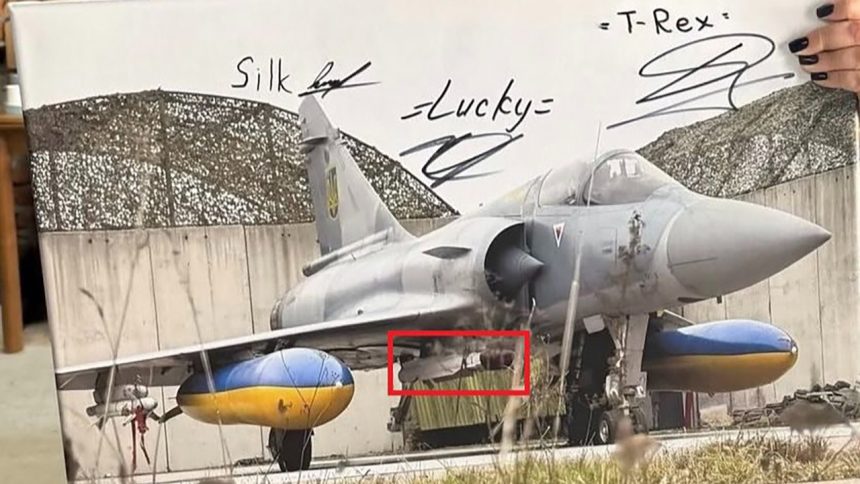
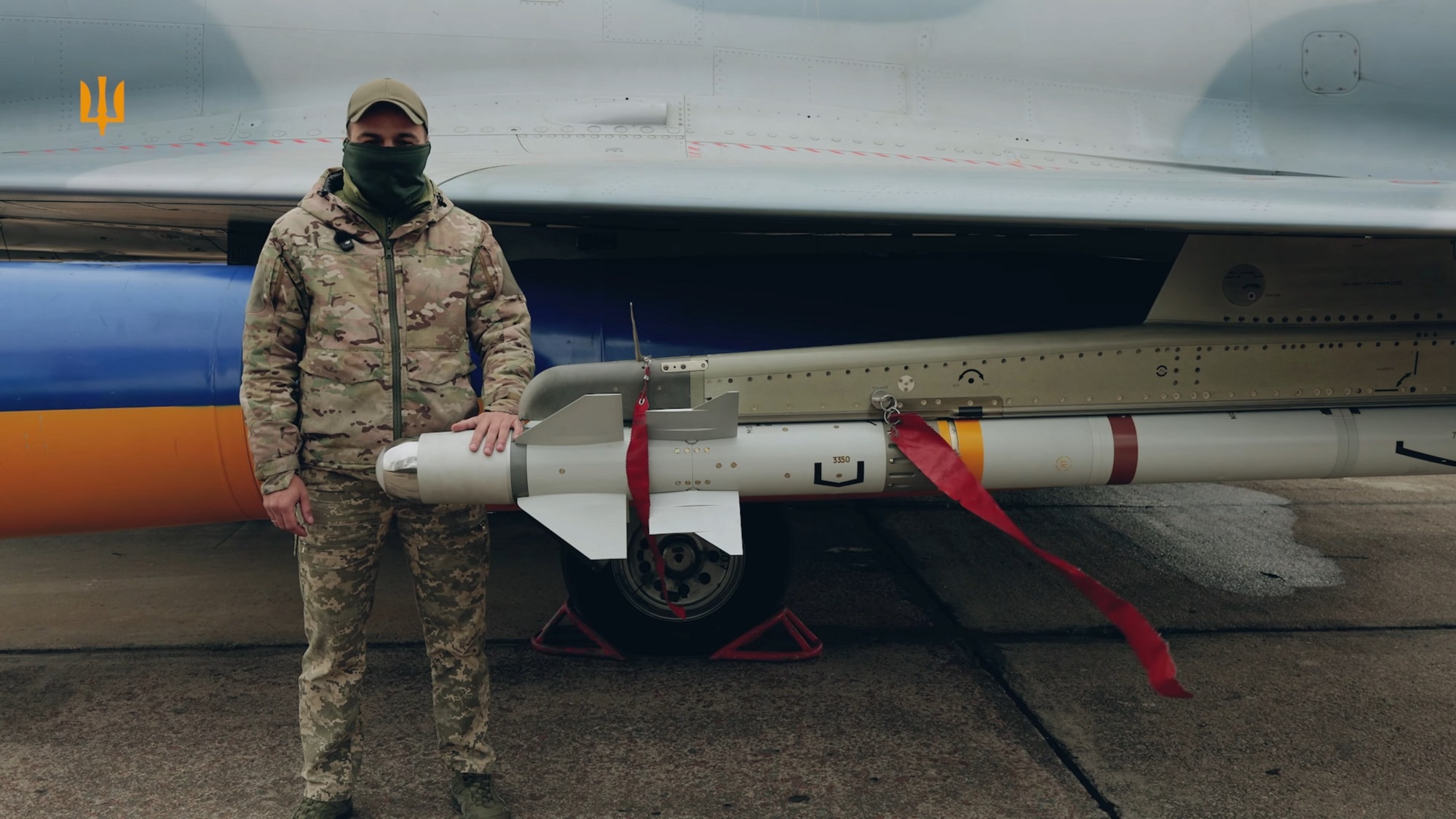
A recently emerged photo shows a Ukrainian Mirage 2000 equipped with a MICA air-to-air missile, after being initially showcased only with the older Magic 2.
A MICA air-to-air missile has finally been spotted on a Mirage 2000 of the Ukrainian Air Force. After being initially showcased only with the older Magic 2, a recently emerged photo shows at least a MICA installed on the jet’s hardpoints.
The Image
The image was first shared by the Volyn SOS Medical charity foundation on its Instagram page, before it was reshared by multiple accounts on X and the Ukrainian outlet Militarnyi. The image was donated by the pilot to the charity foundation, stated the original post, which was later removed.
Ukrainian Mirage 2000 fighters have been equipped with French MICA medium-range air-to-air missiles to counter Russian air targets. https://t.co/AuliNF5G7i pic.twitter.com/y5zXa9vgKQ
— Special Kherson Cat 🐈🇺🇦 (@bayraktar_1love) January 5, 2026
It is unclear which variant of the missile is installed on the aircraft, as the tip is hidden by a remove before flight cover. Considering the hardpoint on which it was installed, it is possible the weapon is the radar-guided variant.
At the same time, it is also unclear if the weapon was already in the inventory of the Ukrainian Air Force or if it was part of a recent supply. So far the weapon was never shown in official media of the Mirage 2000 by the Ukrainian military, with the limited open-sourced images also showing only the Magic 2.
In a recent video, however, a Ukrainian Air Force pilot highlighted that the French-made fighter had a serious limitation in its capabilities. This might have been a reference to the MICA.
“In my opinion – and in the opinion of my fellow pilots – this aircraft lacks longer range air-to-air weapons,” says the pilot. “Something in the middle ground between efficiency and cost, so that we can engage the massive number of enemy aerial threats we face.”
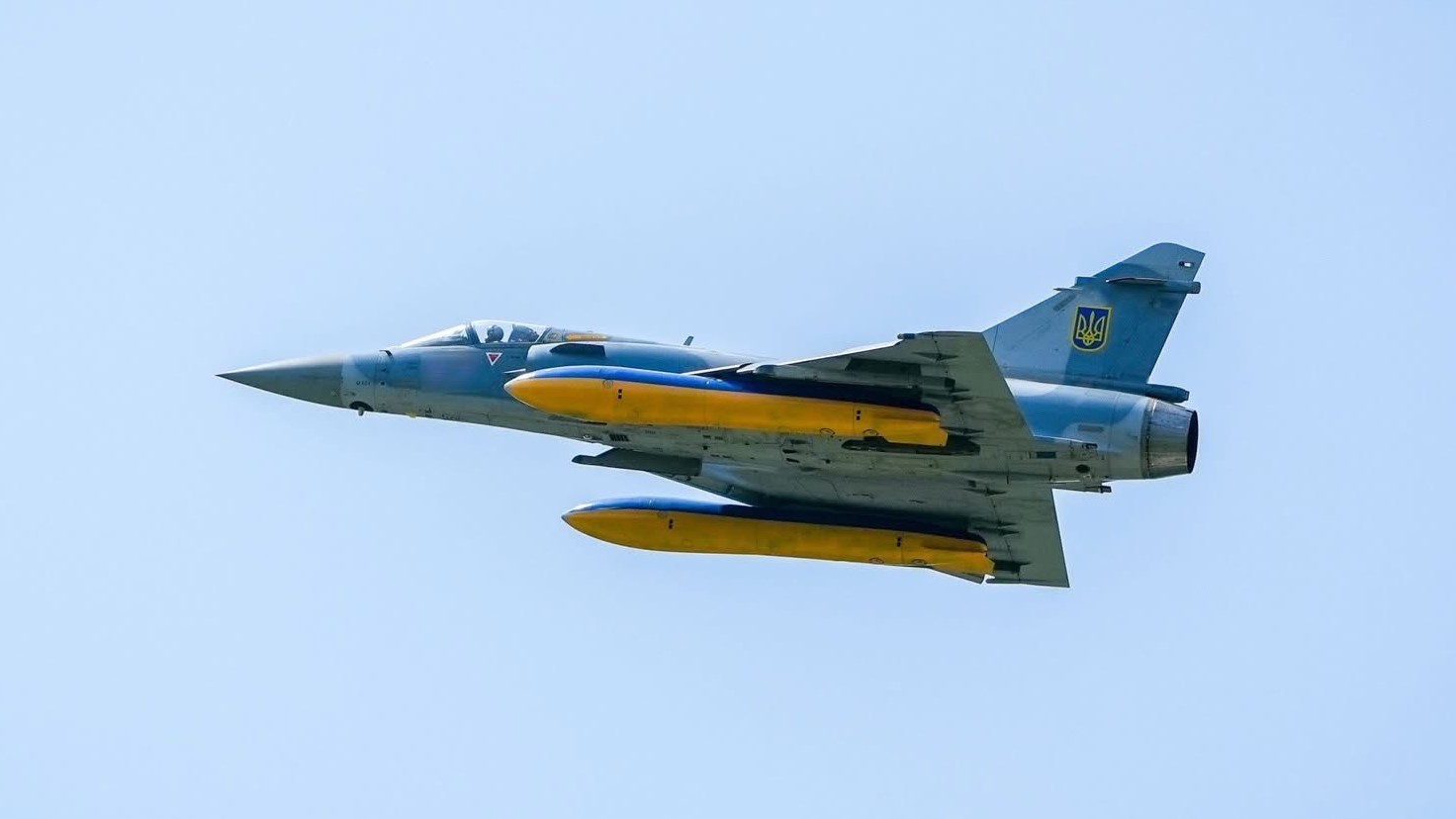
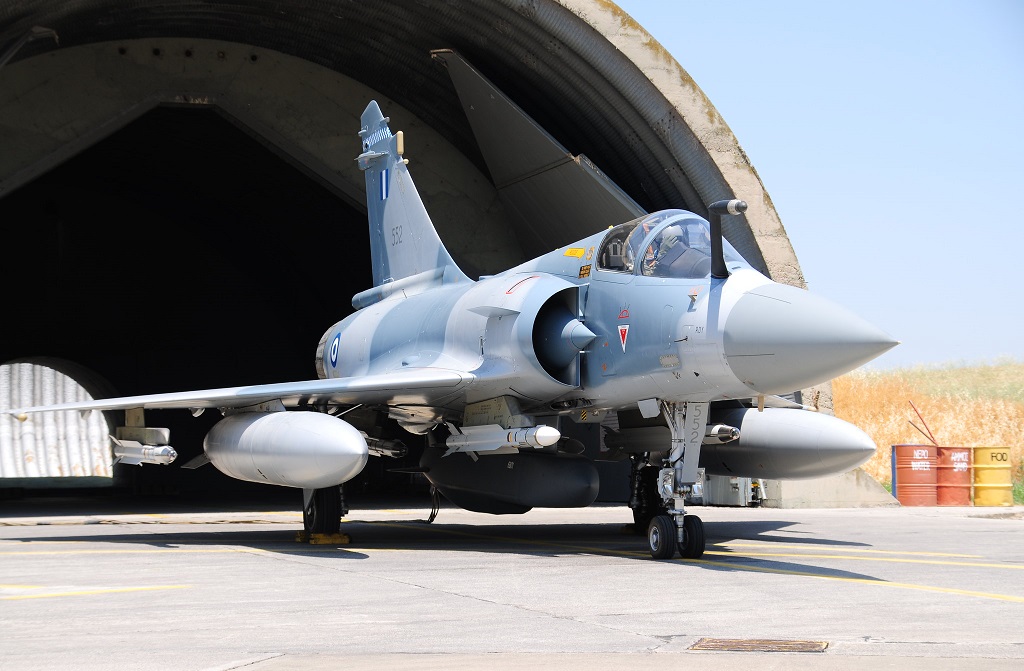
The Mirage 2000-5, the same type transferred to Ukraine, has the capability to employ the newer MICA IR IR-guided short to medium-range missile and the MICA EM radar-guided short to medium-range missile. In French service, the MICA IR replaced the Magic 2 and the MICA EM replaced the Super 530.
The MICA
The MICA (Missile d’Interception, de Combat et d’Auto-défense) is a short- to medium-range air-to-air missile developed by MBDA, which equips the Dassault Rafale and Mirage 2000-5 fighters. Designed as a multi-role weapon, MICA can engage enemy aircraft, cruise missiles, and unmanned aerial vehicles in both beyond-visual-range (BVR) and within-visual-range (WVR) combat.
A photo of a Ukrainian Air Force Mirage 2000-5F
Note the MICA air to air missile just below the right intake on the aircraft. This is the first time we have seen Ukrainian mirages with these missiles
January 2026 pic.twitter.com/YG6yBJkS50
— capt. Wild Bill Kelso (@_wild_billkelso) January 5, 2026
A defining feature of the MICA family is the availability of two variants with different guidance, which however share a common airframe. These are the MICA EM (ÉlectroMagnétique – ElectroMagnetic), equipped with an active radar seeker, and MICA IR (InfraRouge – InfraRed), which uses an Imaging InfraRed (IIR) seeker.
MICA is powered by a solid-fuel rocket motor and incorporates thrust-vector control, providing high agility in close-in engagements. The missile employs inertial navigation with mid-course updates, transitioning to autonomous terminal guidance at a pre-programmed distance.
Its range is typically quoted in excess of 60 – 80 km, depending on launch conditions. The missile is said to carry a fragmentation warhead with proximity and impact fusing.
MBDA is now developing the upgraded MICA NG (Nouvelle Génération – New Generation) to address emerging air combat threats beyond 2030. While retaining the same form factor, MICA NG introduces entirely new seekers in both variants, notably an AESA (Active Electronically Scanned Array) active radar seeker and an advanced IIR with improved sensitivity and target discrimination.
Key improvements include greater engagement range, enhanced resistance to electronic countermeasures and improved performance against low-observable and highly maneuverable targets. The weapon will also feature a new dual-pulse rocket motor to extend the no-escape zone.
Beyond air-to-air roles, MICA has also been adapted for surface-launched air defense applications, forming the basis of the VL MICA system.
The Mirage in Ukraine
French Defense Minister Sebastien Lecornu has announced on Feb. 6, 2025, the delivery of the first Mirage 2000 fighters to Ukraine. A month later, on Mar. 7, the Ukrainian Air Force announced the Mirage 2000’s first recorded combat engagement, successfully intercepting a Russian Kh-101 cruise missile during a large-scale missile and drone attack.
According to Ukrainian media, the Mirage 2000-5F is often used in the air defense, but has also been used for attack missions, although this can’t be verified. As a matter of fact, France said the aircraft would be modified before delivery to add air-to-ground capabilities, including the SCALP-EG air-launched cruise missiles and AASM Hammer guided bombs, both already used by Ukraine.
The number of jets delivered to Ukraine is unknown, although the French government said Ukraine would receive six Mirage 2000-5F fighters during the first quarter of 2025. The French President Emmanuel Macron has pledged to provide additional Mirages in 2026.
One of the aircraft was lost on July 22. The Ukrainian Air Force reported that “an aircraft equipment failure occurred” during an evening mission, forcing the pilot to eject, and he was later safely rescued. An investigation is ongoing.
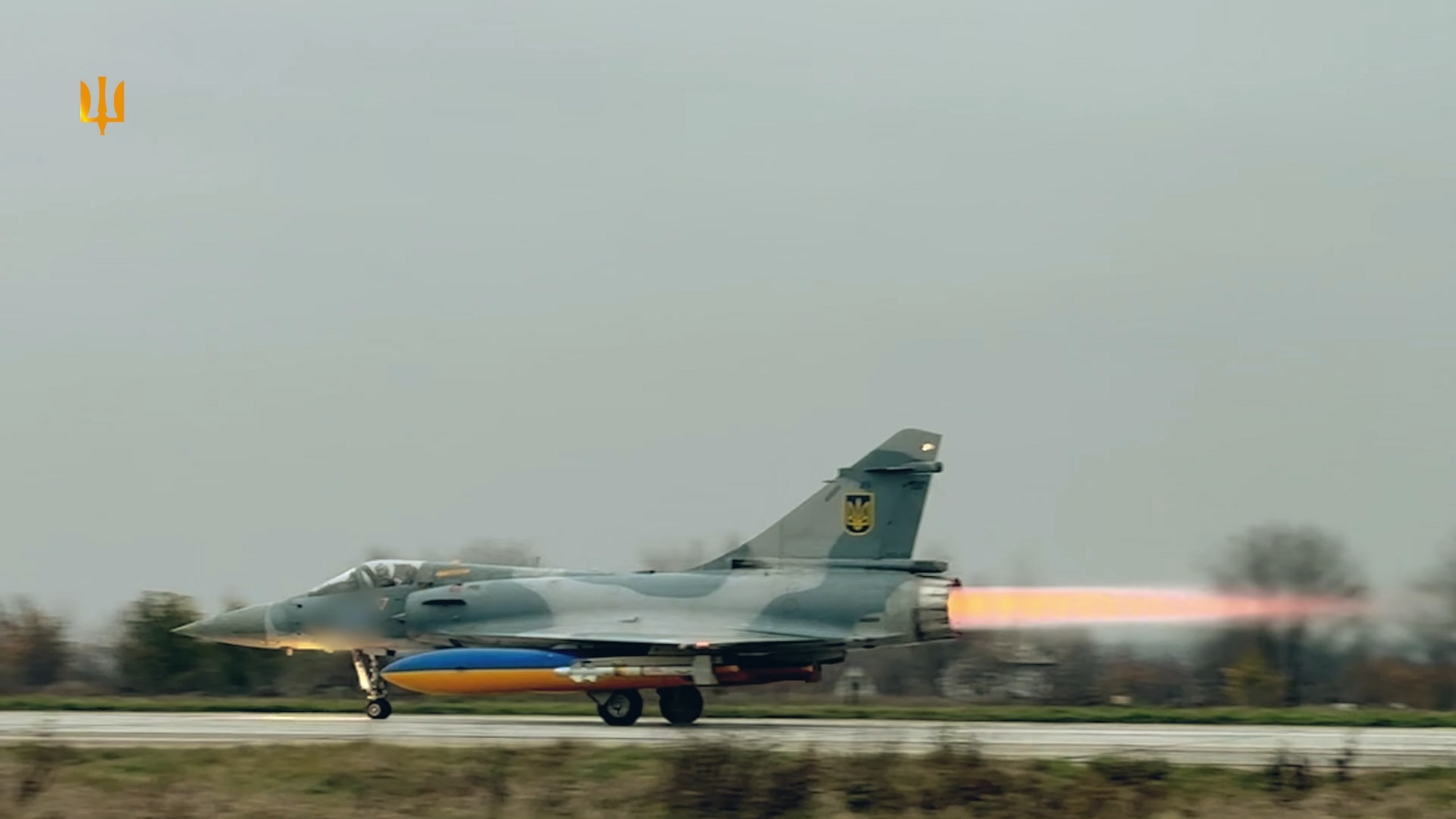
Recently, the Ukrainian Air Force released a video of a rarely seen French-supplied Mirage 2000, with a pilot and technicians speaking about the jet’s effectiveness on the battlefield. The jet is shown at a forward operating airfield, as the service continuously moves its assets to avoid them being targeted on the ground.
In the beginning of the video, the pilot said his “impressions of this aircraft are extremely positive.” He further added “the effectiveness of intercepting enemy drones and missiles on this aircraft is 98%. These are impressive numbers.”
We currently have no data to verify these claims. However, a Mirage 2000 was recently shown with six cruise missile kill markings, with the pilot confirming the markings represent Kh-101s. He also claims that there are also six more kills that have not yet been added, as they “don’t always have stencils […] at forward airfields.”