U.S. officials detail Operation Absolute Resolve, revealing the scale, planning, and aftermath of the joint operation that captured Venezuela’s president.
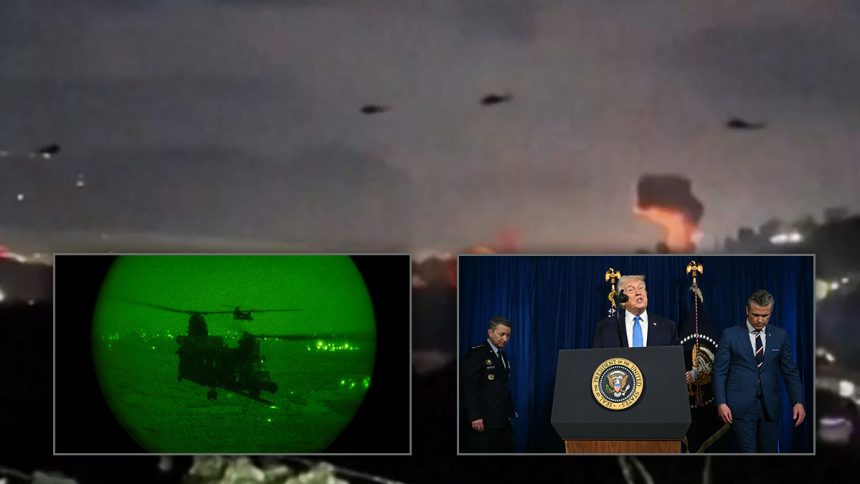
Following the U.S. special operation in Venezuela in the night of Jan. 3, 2026, a press conference was held by the U.S. administration, attended by U.S. President Donald Trump, Secretary of Defense Pete Hegseth, Chairman of the Joint Chiefs of Staff Gen. Dan Caine and Secretary of State Mark Rubio.
The operation, dubbed “Operation Absolute Resolve,” has been defined as an apprehension operation focused on bringing Venezuelan President Nicolás Maduro to justice. The entire joint force was involved, in cooperation with the intelligence and law enforcement communities.
“Late last night and early today, at my direction, the United States Armed Forces conducted an extraordinary military operation in the capital of Venezuela. Overwhelming American military power, air, land, and sea was used to launch a spectacular assault. And it was an assault like people have not seen since World War II.”
— U.S. President Donald J. Trump
The operation
Gen. Dan Caine provided some more details about the operation, explaining that preparation work began months ago. Caine said the work exploited decades of experience in hunting down terrorists, and saw all components of the joint force working with intelligence community and law enforcement.
President Trump Holds a Press Conference, Jan. 3, 2026 https://t.co/5ykCqSNuNa
— The White House (@WhiteHouse) January 3, 2026
The work involved tracking Maduro to “understand how he moved, where he lived, where he traveled, what he ate, what he wore,” Caine said. This echoes previous reports of CIA teams operating in Venezuela to keep tabs on Maduro and establish a pattern of life.
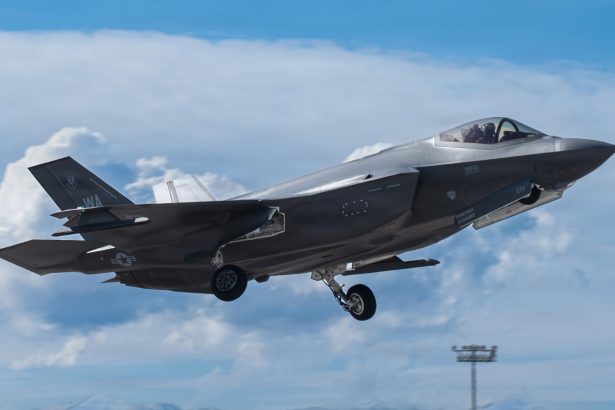
A total of 150 aircraft took part in the operation, including F-22 Raptors, F-35 Lightning lls, F/A-18 Super Hornets, EA-18 Growlers, and B-1 Lancers, together with Remotely Piloted Aircraft and rotary wing. The aircraft were launched from 20 different bases both on land and at sea.
F-35s returning to Puerto Rico this morning after an overnight U.S. strike on Venezuela. pic.twitter.com/QBV74XjHJG
— OSINTtechnical (@Osinttechnical) January 3, 2026
Much of the air activity was focused on providing cover fire and suppression fire in support of the helicopters that were transporting the assault force. Caine explained the helicopters flew at 100 ft over the water during their approach to Caracas, and one helicopter came under fire while preparing to land, although it was able to continue the mission safely.
The assault force arrived on target at 2:01 a.m. Caracas local time (1:01 a.m. EST), achieving a total element of surprise, and left the area at 2:29 a.m. Caracas local time (3:29 a.m. EST). No U.S. soldiers were killed, although some were injured.
Photos released by the White House also show that OSINT profiles on social media were monitored in real time in order to protect OPSEC (Operational Security). This is similar to what happened during Operation Midnight Hammer in Iran.
— The White House (@WhiteHouse) January 3, 2026
The aftermath
Following the operation, Maduro was flown to the USS Iwo Jima amphibious assault ship, from which the assault force was launched. From there, he will be brought to the U.S. and transferred to federal authorities for prosecution.
Immediately after the operation, Nicolás Maduro and his wife, Cilia Flores, have been indicted in the Southern District of New York. Maduro, according to Attorney General Pamela Bondi, “has been charged with Narco-Terrorism Conspiracy, Cocaine Importation Conspiracy, Possession of Machineguns and Destructive Devices, and Conspiracy to Possess Machineguns and Destructive Devices against the United States.”
Shortly before the press conference, Trump released a photo of Maduro aboard the Iwo Jima. The image shows Maduro in a tracksuit, with obscured glasses, hearing protection (possibly blocking all sounds to isolate him) and an emergency floatation device, held by a DEA agent.
Nicolas Maduro on board the USS Iwo Jima. pic.twitter.com/omF2UpDJhA
— The White House (@WhiteHouse) January 3, 2026
Trump further said the U.S. is going to run Venezuela with a group until a proper power transition can take place. Discussions are in progress to decide the next steps, with Defense Secretary Pete Hegseth and Secretary of State Marco Rubio part of the team helping run Venezuela.
Trump also added that Rubio spoke to the Venezuelan Vice-President Delcy Rodríguez, although he pointed out “was chosen by Maduro.” When asked about the Venezuelan opposition leader María Corina Machado, he noted “it would be very tough for her to be the leader, she doesn’t have the support within or the respect within the country.”
In the worst case, Trump suggested administering Venezuela for years would not cost the U.S. anything “because the money coming out of the ground will be very substantial.” He further added “we going to get back the oil, […] we’re going to be reimbursed for all of that.”
“We’re going to have our very large United States oil companies go in, spend billions of dollars, fix the badly broken infrastructure and start making money for the country.”
— U.S. President Donald J. Trump
What happened
We extensively covered the events of Jan. 3’s night in our previous report earlier in the day. Here is a recap provided for context.
Airstrikes and helicopter raids have been reported across Venezuelan territory in the night of Jan. 3, 2026. Later, U.S. President Donald Trump confirmed that American forces had launched a “large-scale strike” and captured Venezuelan President Nicolás Maduro and his wife.
According to U.S. officials cited by CBS News, the operation was authorized directly by Trump following an unprecedented buildup of U.S. military assets in the U.S. Southern Command (SOUTHCOM) area. The operation was reportedly lead by the U.S. Army’s 1st Special Forces Operational Detachment–Delta, better known as Delta Force, as well as FBI agents.
Breaking: During the early hours of 3 January, the U.S. conducted a large-scale strike against Venezuela. Per POTUS, President Nicolas Maduro was captured & flown out of the country. CBS reports Delta Force carried out the operation. As of 5AM ET, here’s what we know:@SA_Defensa pic.twitter.com/GdhuewgZwc
— Ian Ellis (@ianellisjones) January 3, 2026
The operation followed months of heightened activity, including U.S. strikes against alleged Venezuelan drug trafficking vessels as early as September 2025, and drone strike inside Venezuela in December attributed to CIA. By December, all required assets were reportedly ready, though weather and the other U.S. military operations abroad delayed the operation in Venezuela.
Specific details of the air campaign remain limited, although the scale of assets involved suggests a complex, multi-domain operation. It is unclear if the USS Gerald R. Ford Carrier Strike Group, which was operating in the region with its complement of F/A-18E/F Super Hornets and EA-18G Growlers, took part in the action.
On the other hand, the USS Iwo Jima amphibious ready group indeed had a central role. In fact, while its air wing with AV-8B Harrier IIs, CH-53 Super Stallions and MV-22B Ospreys were staged ashore, the ship was used to launch the special operations helicopters for the air assault.
Land-based F-35A and F-35B Lightning II fighters were also involved in the operation, alongside additional Growlers and F-22 Raptors and. These assets were spotted departing and returning to Puerto Rico during the operation. An RQ-170 was also spotted for the first time operating from the airfield, following weeks of rumors.
https://t.co/jmjHs0E7B2 https://t.co/puFwEbfFq1
— OSINTtechnical (@Osinttechnical) January 3, 2026
MH-47G Chinooks and MH-60 Direct Action Penetrators from the 160th Special Operations Aviation Regiment (SOAR) were positively identified in videos emerged online, first pointing to a special operation in progress. While the formers transported the assault force, the latter provided Close-Air Support (CAS) to cover the assault force.
Targets reportedly struck include military bases, port infrastructure, communications towers, and Venezuelan air defense systems. This, together with images later emerged of Russian-made Buk surface-to-air missile systems destroyed, further point to part of the air package conducting Suppression of Enemy Air Defenses (SEAD) in support of the helicopters.
Caracas, Venezuela, the remains of a Russian-made Buk-M2E SAM system sit smoldering after an overnight U.S. airstrike. pic.twitter.com/tANAAn659U
— OSINTtechnical (@Osinttechnical) January 3, 2026
Venezuela’s government declared a state of emergency, condemning the strikes as a “very serious military aggression,” while Vice President Delcy Rodríguez demanded proof of life for Maduro and his wife. Many condemned the operation, including some of Venezuela’s closest allies such as Russia, Iran and China. Notably, a Chinese delegation met Maduro in Caracas few hours earlier.
JUST IN: 🇨🇳🇻🇪 Chinese officials arrive in Venezuela for talks with President Nicolás Maduro. pic.twitter.com/abviFRZV3f
— BRICS News (@BRICSinfo) January 3, 2026
U.S. authorities stated that military action was limited to supporting Maduro’s capture and that no further strikes were planned. Trump later confirmed that Maduro was taken aboard USS Iwo Jima and would be transferred to New York to face long-standing U.S. criminal charges.
The last public image of the USS Iwo Jima was captured on 12/18/25 as it was departing port in Ponce, Puerto Rico by @MichaelBonet8.
The flight deck is clear of aircraft.
1/ https://t.co/ff3Ewsr8tl pic.twitter.com/wmO1y0KwjQ
— TheIntelFrog (@TheIntelFrog) January 3, 2026
No U.S. fatalities were reported, although Trump stated that some personnel were injured and one helicopter sustained damage but was able to recover safely. Venezuela claims multiple fatalities, both military and civilian.
Trump further said that Maduro and his wife were caught in the middle of the night, while attempting to reach a safe space in his residence described as a “fortress.” According to Trump, “he was in a house that was more like a fortress than a house. It had steel doors, it had what they call a safety space where it’s, you know, solid steel all around. He didn’t get that space closed. He was trying to get into it, but he got bum rushed so fast that he didn’t get into that.”
An image later released by the President shows Maduro in a tracksuit, with obscured glasses, hearing protection and an emergency floatation device, held by a DEA agent. He is now being flow to the U.S. for transfer to law enforcement.
The timing of the raid is notable. It occurred exactly six years after the killing of Iranian General Qasem Soleimani (Jan. 3, 2020) and 36 years after Panama’s Manuel Noriega surrendered to U.S. forces (Jan. 3, 1990).