The first capabilities will be activated in the next six months, with the full system in place within two years, defence minister Cezary Tomczyk told the UK’s Guardian newspaper.
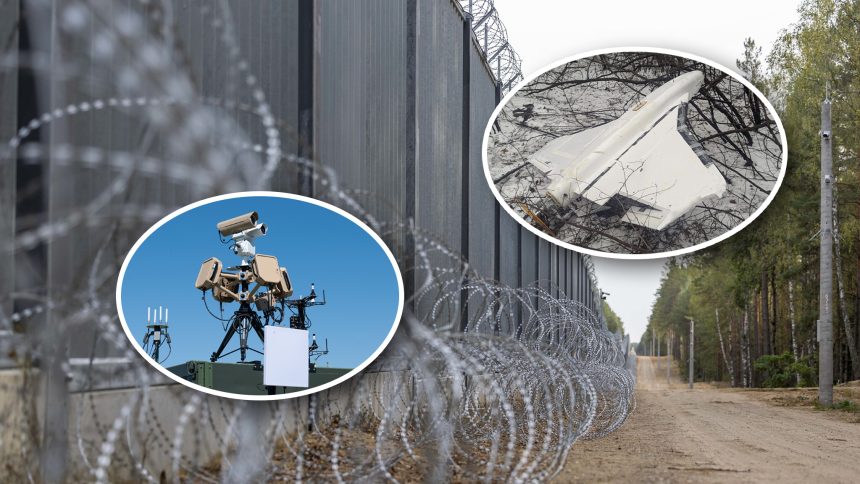
Fortifications along Poland’s borders with Belarus and the Russian exclave of Kaliningrad will be upgraded over the next two years with new air defence systems designed to mitigate the threat from drones, with an expected cost upwards of €2 billion ($2.35 billion). Electronic warfare measures will be partnered with radar-controlled guns and missiles that could be rapidly deployed at times of heightened tensions.
Speaking to The Guardian, a major British newspaper, Cezary Tomczyk said “We expect to have the first capabilities of the system in roughly six months, perhaps even sooner. And the full system will take 24 months to complete”. Tomczyk has served as a minister in Poland’s Ministry of National Defence since 2023. Some counter-drone systems have, as of Dec. 23, 2025, already been installed on the border with Belarus, though it is not known whether this is considered part of the same system as Tomczyk has discussed.
Poland installed the first cluster of anti-drone defence systems on a new observation tower near the Belarus border as the government strengthens security. Over 6,000 personnel to spend Christmas on border duty.
➡️ https://t.co/2lLgeBROGO pic.twitter.com/zPFEveNCud
— euronews (@euronews) December 23, 2025
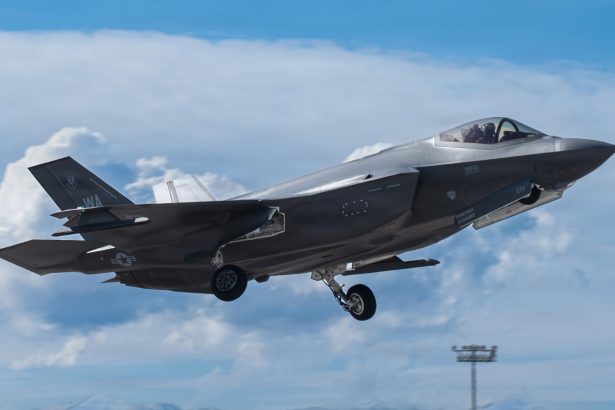
Bordering Ukraine, Poland is on the frontline of NATO’s renewed confrontations with Russia. It is in the process of a major renewal of its military capabilities, retiring legacy systems that date from the nation’s days as a member of the Warsaw Pact. Sukhoi Su-22 Fitters were withdrawn from service earlier this year, while its MiG-29s are in their final days. The Polish Air Force’s first F-35A Lightning IIs – known locally as Husarz – are expected to arrive in 2026. The country is also procuring a massive fleet of AH-64E Apache attack helicopters, as well as thousands of armored vehicles for its army.
‘Poland must be ready to defend itself’ – PM Tusk to advance Warsaw’s ‘modern army’ amid Russia-Ukraine conflict.
Poland plans record defence spending of 186–187 billion zlotys ($45–48.7 billion) in 2025 – about 4.7% of GDP, the highest in NATO, reports say. pic.twitter.com/ebh96QPNvX
— Viory Video (@vioryvideo) July 30, 2025
In September, an incursion by Russian drones into Polish airspace was met with direct action by NATO aircraft. Polish F-16s were joined by Dutch F-35As, deployed on a Baltic Air Policing rotation, and shot down a number of the drones. Prime Minister Donald Tusk considered the event a “large scale provocation”.
Although September’s drone incident came via Poland’s border with Ukraine, it is the borders with Kaliningrad and Belarus – a close ally of Russia – where vulnerability is most felt. It is from these locations where any direct attack on Poland would almost certainly come, and as such these borders have been reinforced to increasing degrees over the past decade – a process that is now being rapidly expedited.
Poland is actively strengthening its eastern border, particularly with Russia’s Kaliningrad region, in response to the growing threat from Russia. pic.twitter.com/xtKdS1rfnB
— WarTranslated (@wartranslated) May 31, 2025
Polish Deputy Defense Minister Cezary Tomczyk warned that about 40,000 troops will be stationed near the border during Russia and Belarus’s Zapad-2025 drills. He said Poland has been preparing for months, stressing that the exercise is offensive in nature. pic.twitter.com/R5VIZZsOQv
— NOELREPORTS 🇪🇺 🇺🇦 (@NOELreports) September 11, 2025
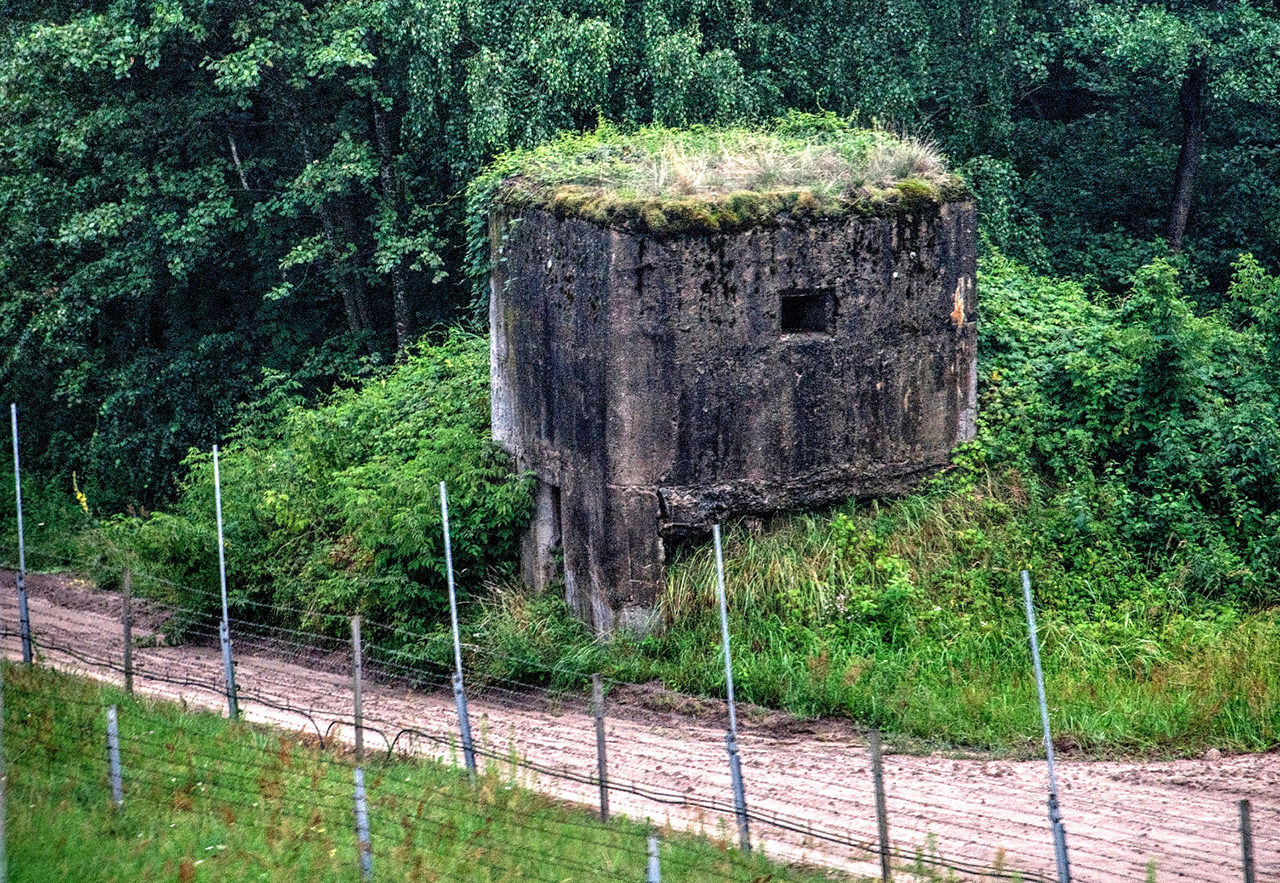
Though ditches and dragon’s teeth would impede the progress of an invading ground force, they do little to impact the operation of cheap, mass-produced drones, which can be used both for reconnaissance and for attack. With the right explosive charges, they could even be sent into the defence zones in an effort to clear a path for vehicles and troops. This is where the new drone defences are intended to come into play.
Tomczyk clarified that certain parts of the system would be deployed as and when required: “Some of this is for use only in extreme or war conditions. For example, these multi-barrel machine guns are difficult to use in peacetime, because everything that goes up must go down.”
Jamming devices and other electronic measures would most likely be more permanent fixtures, keeping a permanent watch over the border areas. The minister doesn’t believe that Europe is at risk of direct, conventional war while Ukraine continues to defend itself, but that Russia could employ “provocations and acts of sabotage” means against Poland and allied nations. Russia is already accused of being behind acts of sabotage against infrastructure across Europe, as well as drone incursions that have interrupted operations at airports and airbases.
Tonight, unidentified drones are flying over multiple critical sites and airfields across Denmark.
Multiple commercial airports have suspended flights, and drones were spotted over Skrydstrup Air Base, a key Royal Danish Air Force installation. pic.twitter.com/EqsyjUr6sj
— OSINTtechnical (@Osinttechnical) September 25, 2025
To fund the project, Poland will draw upon funding available through the Security Action for Europe (SAFE) program. SAFE is an initiative introduced by the European Union (EU) earlier in 2025 that will provide member states with loans from an available pot of €150 billion to boost defence spending, enable joint procurement of defence equipment and strategic enablers, and develop security measures for critical infrastructure. Members of the European Free Trade Association (EFTA) – Iceland, Liechtenstein, and Norway – will be given equal access to full EU members, as will Ukraine, while close allies like the United Kingdom, Japan, and Canada will be able to participate in joint procurement projects.