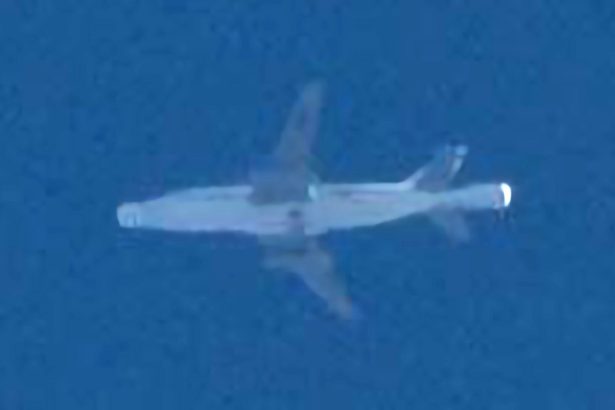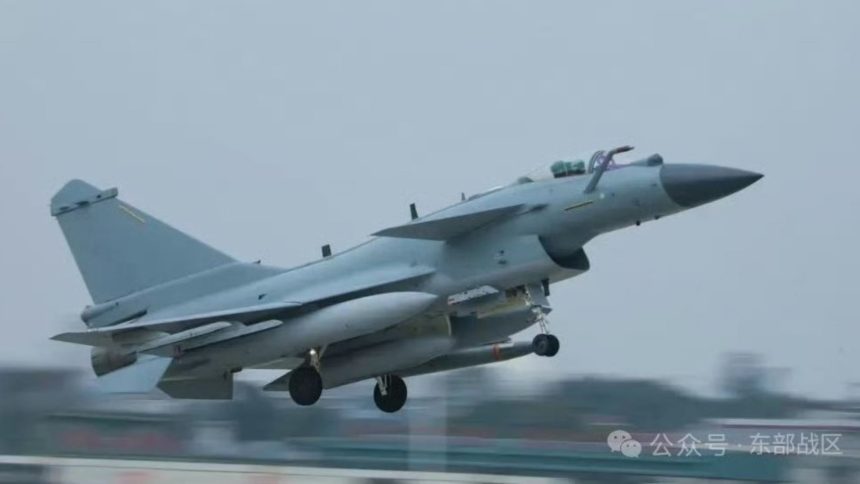
The YJ-21E spotted on the J-10C is a smaller variant of the larger YJ-21/KD-21 predominantly spotted on the H-6K bomber, specifically designed for fighter jets and drones.
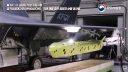
China’s J-10C fighter has emerged in a recent photograph with what observers have identified as the ‘E’ variant of the YJ-21 Anti-Ship Ballistic Missile (AShBM), the YJ-21E. Describing it a “smaller” variant of the YJ-21 that has been previously been carried by the PLA Air Force’s H-6K bombers, ‘Hurin’, a leading profile analyzing Chinese aerospace and military equipment, also shared an image of a mock-up display of the YJ-21E from an exhibition.
It must be noted that given the multirole nature of the J-10C, the aircraft could have been integrated with the air-to-surface missile for some time (and even live-fired it), with this being only the first time it has been photographed. The J-10C can be considered in the same class of the U.S.-made F-16, which is the launching platform for heavy-hitting surface-strike munitions like the AGM-158 JASSM-ER and the Stand-in Attack Weapon (SiAW), but also capable of employing anti-ship missiles.
The YJ-21 also goes by other designations accorded by various quarters. In fact, it has been identified as the KD-21 by other Chinese military analysts like Andreas Rupprecht, and 2PZD-21 by the Chinese military itself, with the corresponding markings spotted on the missile being carried under the H-6K since 2022 in unofficial pictures.
BREAKING: A J-10C fighter has been spotted carrying what appears to be the YJ-21E hypersonic missile, marking the first known integration of a smaller export-configured hypersonic land attack/anti-ship weapon on the aircraft. 👇 pic.twitter.com/6JMvB2TfMC
— Pakistan Defence (@PakDef_) December 24, 2025
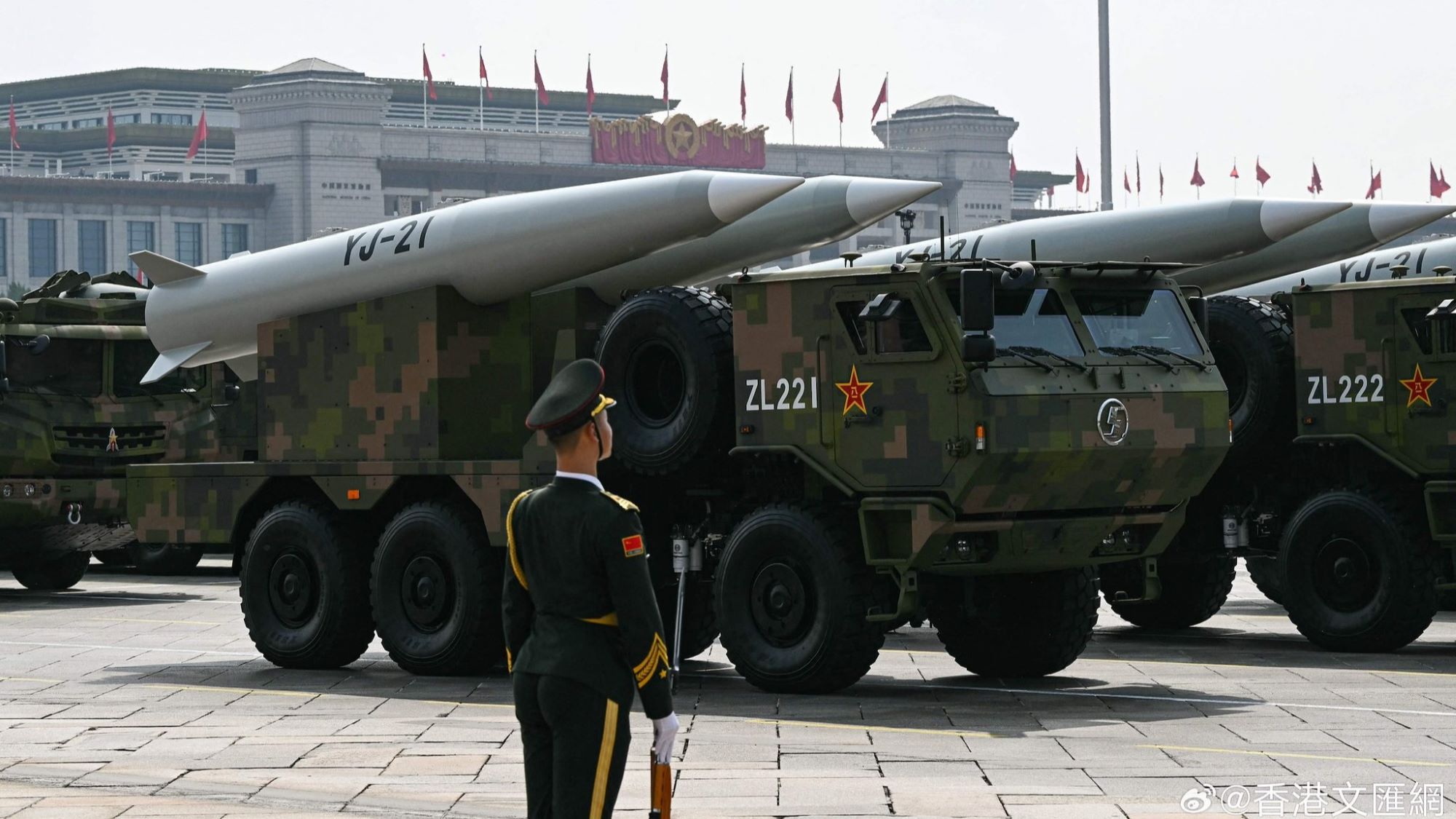
The YJ-21 designation had been mentioned by Chinese state outlets like Global Times, which itself attributes the origin of this nomenclature to “foreign media.” This was then confirmed to be the final, official designation during the Sep. 3 parade, where truck-mounted models of the missiles with the YJ-21 marking rolled down as a part of that contingent.
The KD-21 ALBM
We have reported about the KD-21 in the past, when it was displayed as a part of the payload of a CH-series Unmanned Combat Aerial Vehicle (UCAV) in October 2024. Prior to that, in July of the same year, we reported about an H-6K being photographed carrying four of the missiles, two and a half months after a PLAAF H-6K was captured dropping the KD-21 in official footage.
Could this be the CH-9 (?) or is it a CH-5 variant?
Also noteworthy is the KD-21 (2PZD-21) ALBM.
At least it looks like the larger “green” UCAV we’ve seen some time ago.
(Image via @琴石2022 from Weibo) pic.twitter.com/LNF1SRyis7
— @Rupprecht_A (@RupprechtDeino) September 27, 2024
The Aviationist has also reported about other massive Chinese Air-Launched Ballistic Missiles (ALBM) like the CH-AS-X-13. Other observers had pointed out this is unlikely to be just an extended KD-21, given the significant differences in the nose cone and the length, although it is not possible to discern how the KD-21/2PZD-21/YJ-21/YJ-21E and the CH-AS-X-13 are related.
Great surprise! 😮
For the first time a PLAAF H-6K was seen carrying for 2PZD-21 (KD-21) ALBMs.
(Images via @南部空军 from Weibo) pic.twitter.com/o6cEAuGNza
— @Rupprecht_A (@RupprechtDeino) June 29, 2024
J-20 and the YJ-21E
The J-10C in the newly surfaced image is carrying the YJ-21E on its port (left-side) wing while being photographed from the right side. Only some parts of the weapon are visible, including the tip and a significant part of the lower half.
We can see a dual red and yellow-coloured band near the tip. The KD-21 shown in front of the CH-series UCAV as a part of its representative payload has a red-colored band instead.
In an earlier picture from November 2022, the 2PZD-21 (the designation stenciled on the missile’s body) under the H-6K had a yellow band along a part of its length. However, Global Times reported in July 2024, when the H-6K carried four of the missiles, that the November 2022 reveal during the Zhuhai Air Show as a static display was the weapon’s debut. On that occasion, the missile sported a sealed exhaust, as common with inert weapons.
So far the best images of the H-6K serial number 11097 with the new ballistic missile under its wings.
(Images via @航空工业 and @瘦驼 from Weibo) pic.twitter.com/XfcwQ8fqqn
— @Rupprecht_A (@RupprechtDeino) November 3, 2022
Generally, going by standard international military practices, blue bands represent inert/training munitions, while yellow ones indicate live munitions. It is unclear whether China similarly uses red and yellow to denote live status.
An Apr. 1, 2025 image also showed an H-6K bomber carrying two KD-21 ALBMs, which observers claimed was during the “Strait Thunder-2025A” exercise held by the ETC (Eastern Theater Command) around Taiwan. These did not have any colored markings, but rather a white-colored tip.
That‘s interesting: AFAIR it is the first time confirmed, to see the KD-21 ALBM being carried by an operational bomber.
Here a H-6K assigned to the 10th Bomber division carries two KD-21s during the ongoing exercise.
(Images via @太湖军I名 from Weibo) pic.twitter.com/EszNyGrPd9
— @Rupprecht_A (@RupprechtDeino) April 1, 2025
Rupprecht and other observers at the time believed the KD-21 had been already operational, as the H-6K carrying it belonged to an operational unit – the 10th Bomber Division. Given that, in the latest image of the KD-21 under the J-10C, we cannot see the missile fully, especially its rear exhaust and control fins, it is difficult to analyze the overall dimensions of the weapon and the differences from the larger KD-21.
The J-10C here is also not carrying any other munitions, except for three external fuel tanks. Markings on the aircraft and the tail that indicate the serial number and its unit are also absent, although this is possibly deliberate for Operational Security (OPSEC) purposes.
5月1日メーデー特番内に登場したH-6K爆撃機。
2PZD-21 ALBMの実弾発射シーンがあります。 pic.twitter.com/68uxH3Eazz
— お砂糖wsnbn (@sugar_wsnbn) May 1, 2024
Conclusion
What can be said for certain is that the trend of deriving certain ALBMs from a larger missile is now common practice.
This can be seen in the relationship between the Kh-47M2 Kinzhal aeroballistic hypersonic missile and the ground-launched 9K720 Iskander-M tactical ballistic missile. The Center for Strategic and International Studies (CSIS) noted that the Kinzhal “is likely derived” from the Iskander-M.
C-AS-X-13というやつか
結局YJ-21と関係無いのかどうかが分からん https://t.co/8nMLf7KK4h pic.twitter.com/r8IsshG2ZE
— MIKOYaN☆🕷️ (@mikovlev130) April 5, 2025
This means the Kinzhal could just be an Iskander-M without its booster stage, used when the weapon is launched from the road-mobile Transporter Erector Launcher (TEL). To launch the missile from the air, it is likely the carrier MiG-31K has to attain the particular speed and altitude similar to the ones achieved by the Iskander’s booster, before the jet’s pilot begins the launch sequence.
The purpose of the reasoning is to highlight that certain weapons development trends across countries are universal. Even if the KD-21/2PZD-21/YJ-21 and the CH-AS-X-13 were unrelated, their strikingly similar shapes show how developing a missile based on an existing one is a simpler proposition.
9A7660のようにブースターを1段追加してる訳でもないのに舵がないということはKD/YJ-21はCM-401ともDF-12とも違う完全新設計なのか?
陸軍が採用したらしい火龙480には舵がない気がするがこの展示は実物じゃないので多分無関係だろう https://t.co/k9EUjbZNCM pic.twitter.com/lw1ojGsWvm
— MIKOYaN☆🕷️ (@mikovlev130) April 4, 2025
The CH-AS-X-13 will drop from the slow-flying H-6K before the booster ignites and the missile goes near vertical, in a ballistic or quasi-ballistic trajectory, before shedding its stages to release the final stage’s ‘kill vehicle.’ A fast-flying J-10, given its own organic high-speed, can release the KD-21/YJ-21/2PZD-21 at the required kinematics. This will dive down at what GT says would be hypersonic speeds (Mach 5 and above) on aircraft carriers.