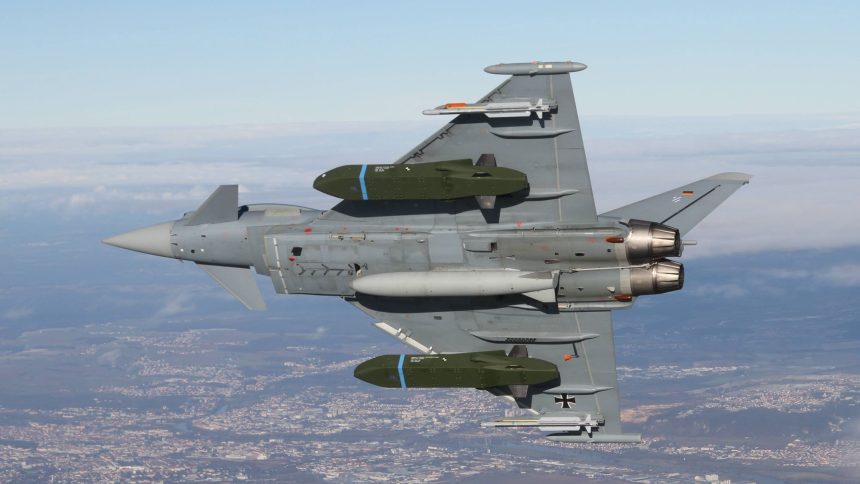
The Taurus NEO is an enhanced variant of the German-Swedish Taurus KEPD 350 air-launched cruise missile.
Setting the stage for the development and future production of the German-Swedish Taurus KEPD 350 Air-Launched Cruise Missile (ALCM), Germany’s Federal Office of Bundeswehr Equipment, Information Technology and In-Service Support (BAAINBw) signed a contract for “preparing a serial production line” for a new “capability enhanced” variant of the weapon, called Taurus NEO.
A Dec. 18, 2025, statement from MBDA Deutschland said the development allows the company “to produce large quantities in Germany.” This also comes nearly a year from a “Major Overhaul 2” contract that MBDA received by the BAAINBw on Dec. 20, 2024, for maintenance and modernization of the weapon at the firm’s Schrobenhausen facility to extend its service life with the German Air Force (Luftwaffe) “until 2045.”
The German-Swedish missile is developed by Taurus Systems GmBH, a joint venture between MBDA and Saab. The Bundeswehr (German Armed Forces) had acquired roughly 600 Taurus KEPD 350 ALCMs for the Luftwaffe’s Tornados between 2005 and 2010, a role that later went to its Eurofighters. The full integration and operational capability of the two platforms is still in process as of July 2025, according to MBDA Deutschland, and German reports have noted the same 2040s-2045 timeline to keep the missile in service.
Das @BaainBw hat die Serienvorbereitung für die Modulare Abstandswaffe Taurus Neo in Auftrag gegeben. Die Produktion für den Nachfolger der eingeführten Taurus soll ab 2029 beginnen.https://t.co/AWY1oJ8tij
— Europäische Sicherheit & Technik (@esutde) December 22, 2025
Current and older Taurus KEPD contracts
MBDA Deutschland explicitly says the new contract pertains to a “serial production line” for the Taurus NEO currently being developed, in order to prepare ground for its manufacturing following that future award. In fact, the contract with the BAAINBw prepares a “serial production line to produce a capability enhanced TAURUS NEO stand-off guided missile system,” and “MBDA plans to produce large quantities in Germany.”
MBDA’s executive group director Thomas Gottschild said in the press release: “MBDA has always been committed to delivering decisive capabilities that ensure European sovereignty. With TAURUS NEO, Germany is specifically building up its state-of-the-art deep strike capabilities, thereby providing a critical contribution to the deterrence capabilities of Europe and NATO. In so doing, MBDA demonstrates its unique expertise in Europe, offering a comprehensive portfolio of deep strike solutions launched from the ground, air, surface, and sub-surface.”
TAURUS upgrade incoming!
Deutschland beauftragte Ende letzten Jahres die Wartung & Modernisierung der Bundeswehr TAURUS Marschflugkörper.
So viel kann an dieser Stelle verraten werden, die Vorbereitungen laufen intern bereits mit Hochdruck an. https://t.co/WpfYGBJILT pic.twitter.com/Dw3kxF5jzO
— MBDA Deutschland (@MBDADeutschland) February 25, 2025
MBDA’s press release noted over 500 km range for the missile, yet the framing is not clear if it pertains to the future NEO or the existing Taurus KEPD 350, which too can touch distances around the same range.
“The Taurus missile enables the German Air Force to overcome enemy air defence systems from a safe distance, minimizing the risks to pilots and platforms,” said MBDA. “With a range of over 500 kilometres and the highest standards in terms of precision, TAURUS makes an important contribution to deterrence and to national and allied defence.”
The serial production line’s contract enables “the earliest possible availability of the first systems,” as well as “further development of new and advanced capabilities, and the expanded production capacity of the TAURUS modular stand-off weapon.” Hartpunkt added that the production line contract also followed a larger €450 allocation by the Bundestag’s budget committee, out of which €415 million is meant for the manufacturing.
Zukünftige Bundeswehr Trägerplattform des TAURUS in Aktion.
Die Eurofighter von @Team_Luftwaffe werden für den Einsatz des Marschflugkörpers zertifiziert. pic.twitter.com/JLjgfg1BkI
— MBDA Deutschland (@MBDADeutschland) July 3, 2025
“The manufacturer is expected to use these funds, among other things, to procure long-lead components.” These include raw materials, components and “specific explosives” with “delivery times of one to two years,” Hartpunkt noted.
The December 2024 Major Overhaul 2 award meanwhile involved a “comprehensive modernization” of the existing Tauris KEPD 350 in German stocks. “In addition to maintenance, the system will receive technological upgrades to meet the increasing demands placed on modern weapon systems,” said the statement.
The Taurus KEPD 350 ALCM
The name TAURUS is an acronym for Target Adaptive Unitary and Dispenser Robotic Ubiquity System. The Taurus KEPD 350 ALCM is in the same class as the British-French Storm Shadow/SCALP-EG, or the Turkish SOM-J, with a range between 400-500 km.
The heavy-hitting munition is ideal for deeply buried, fortified and hardened land targets housing infantry bunkers, logistical, command and control nodes and possibly even hardened aircraft shelters.
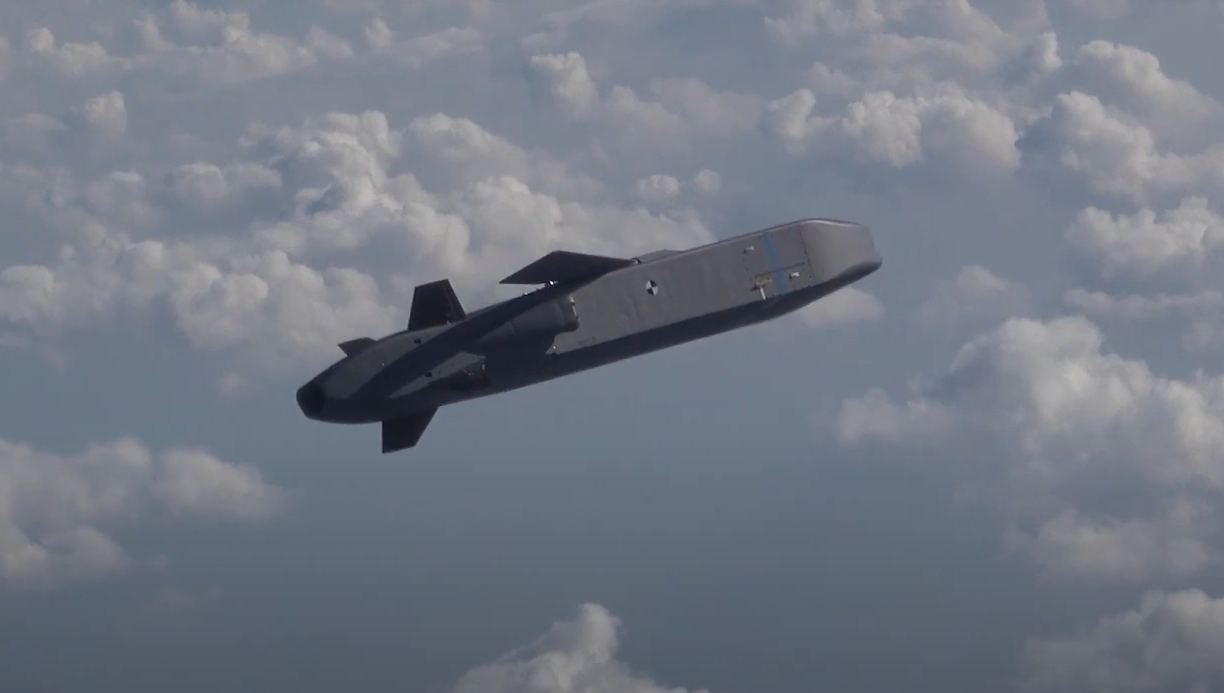
The weapon’s guidance and navigation suite comprises a tri-mode INS-GPS-TRN (Inertial Navigation System-Global Positioning System-Terrain Reference Navigation) system, with the endgame dictated by an image referencing seeker.
The missile has top-mounted folding wings which deploy upon launch, X-shaped tail fins and protruding side-intakes for its air-breathing engine. Flying terrain-hugging altitudes of 35 meters, the Taurus KEPD 350 touches almost Mach 1 at 1,170 km/h (Mach 0.95). Its 481 kg dual-stage MEPHISTO (Multi-Effect Penetrator High-Sophisticated and Target Optimized) warhead delivers primary and secondary charges for plowing through heavily fortified structures.
Joachim Knopf, Geschäftsführer Taurus Systems GmbH: „Sowohl die #Taurus Neuproduktion, die Plattformintegration als auch die Überholung der Bestände können wir kurzfristig anschieben. Voraussetzung ist die Beauftragung durch den Kunden.“ pic.twitter.com/Kw20yyVC4a
— MBDA Deutschland (@MBDADeutschland) January 19, 2024
The Republic of Korea Air Force (RoKAF) is another major operator of the missile, using it from its F-15K Slam Eagle fighters. Sweden too decided to acquire the missile in February 2025, to be integrated on its Saab JAS39 Gripen C/D fighters.
Taurus NEO
As per Hartpunkt, Taurus NEO’s upgrades is likely to include a new and longer ranged propulsion system over the current U.S.-made Williams International P8300-15 turbofan engine. This is to primarily address export-control restrictions arising out of American components that would impact international sales.
Neues Konzept von MBDA Deutschland. Neben #TAURUS soll zukünftig RCM² die Truppe verstärken.
Eine Besonderheit: RCM² wird sowohl von Kampf- und Transportflugzeugen als auch von Fregatten und Landfahrzeugen verschossen werden können. pic.twitter.com/8nSK83eGHi
— MBDA Deutschland (@MBDADeutschland) November 26, 2024
Other upgrades would feature improved navigation, targeting and seeker systems. MBDA Deutschland has said in recent concept videos that the existing Taurus KEPD 350’s navigation systems possess “multiple redundancies,” fusing Inertial Navigation System (INS) and “altitude-referenced and image-based navigation” to precisely find its way to the target “without GPS.” The missile is following a nap-of-the-earth cruise flight over and around hills and valleys, giving little time for air-defense systems to react.
Neuer Flugkörper mit #TAURUS Genen: RCM² ist MBDA Deutschlands Lösung für ein Teilstreitkräfte übergreifendes Waffensystem großer Reichweite.
RCM² soll einzeln oder als vernetzter Flugkörperschwarm von Land-, See- & Luftplattformen eingesetzt werden können. pic.twitter.com/WgCycEjtCS
— MBDA Deutschland (@MBDADeutschland) September 5, 2024
A short September 2024 by the company shows one RCM² “cross-branched weapon system”, derived from the Taurus. How and whether this is related to the NEO, is not known. The missile is optimized for low-observability with a faceted nose and side air-intakes. The nose section is however missing the optical seeker prominently seen in the existing Taurus variant, and is shown capable of being vertically launched from ships, palletized fires from cargo aircraft, and ground vehicles.