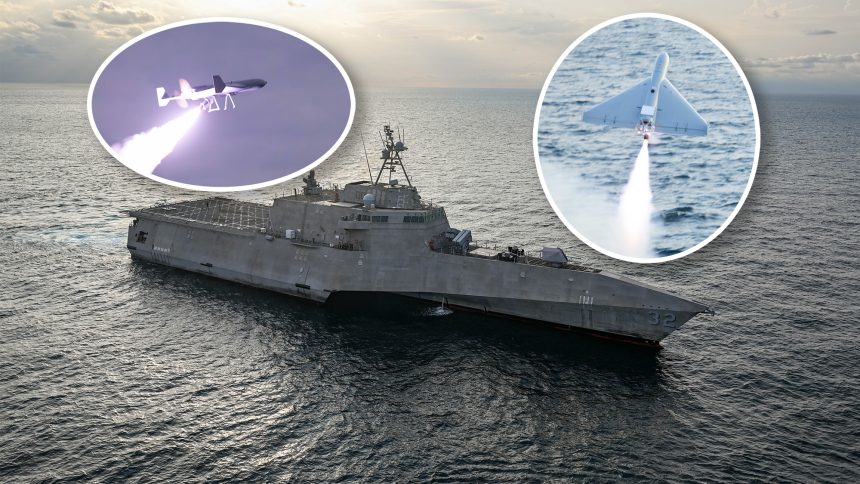
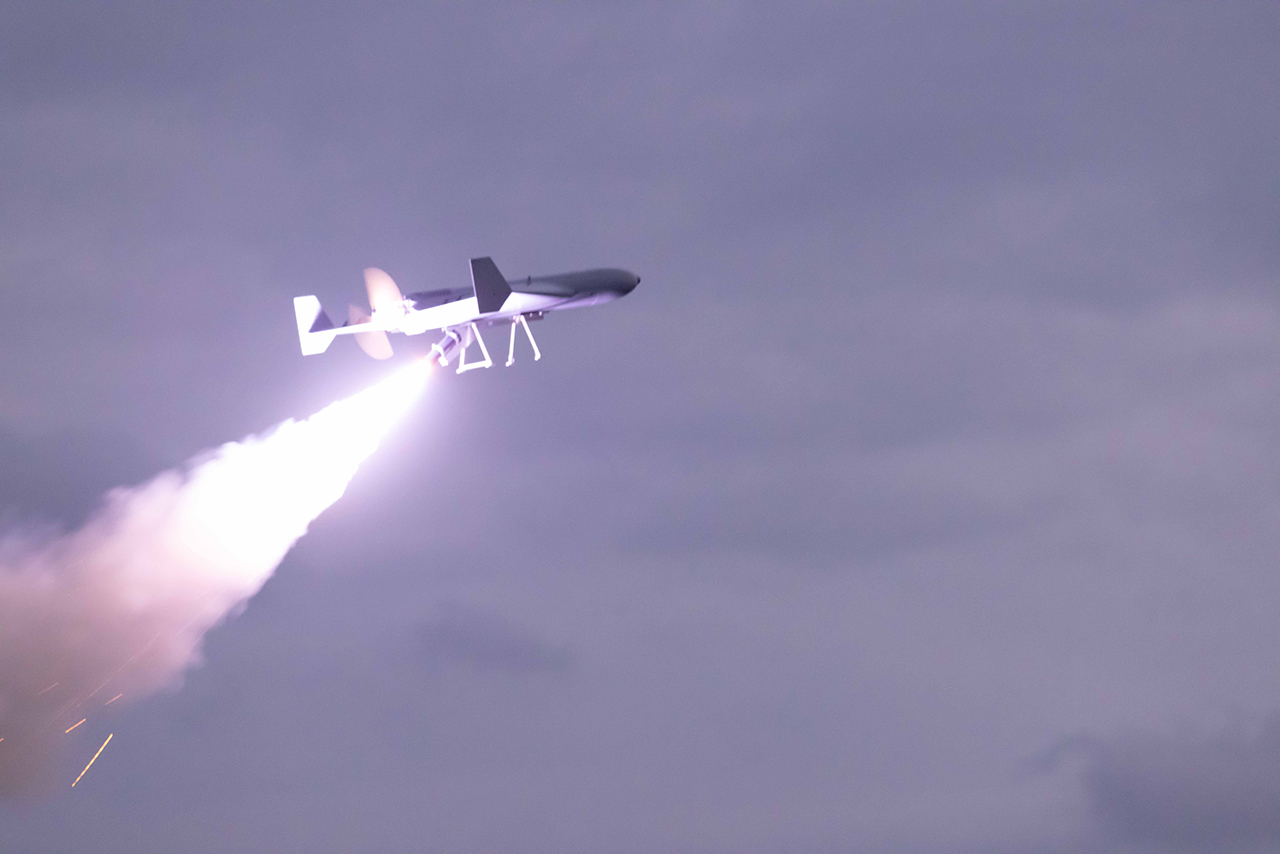
A Low-cost Unmanned Combat Attack System (LUCAS) was launched from the flight deck of littoral combat ship USS Santa Barbara while operating in the Persian Gulf on Dec. 16, 2025.
In a press release, the U.S. Department of Defense said on Dec. 18, 2025 that the launch of a Low-cost Unmanned Combat Attack System (LUCAS) two days earlier marked the first time such a capability had been fielded from a ship while at sea. The USS Santa Barbara (LCS 32), an Independence class littoral combat ship commissioned in 2023, used its large flight deck as a launch platform for the LUCAS drone.
The ability to deploy effectors like LUCAS without the need for more permanent launch systems, like the Mark 41 vertical launch system (VLS), will allow deployment from a wider range of warships and even auxiliaries, as well as employment from austere locations on land.
The announcement comes only weeks after the U.S. announced the deployment of a one-way attack drone (or one-way attack unmanned aerial vehicle (OWUAV)) squadron to the Middle East under the command of U.S. Central Command (CENTCOM). Task Force Scorpion Strike (TFSS) is intended to leverage new developments in low-cost UAV systems to more rapidly deploy new capabilities to frontline forces.
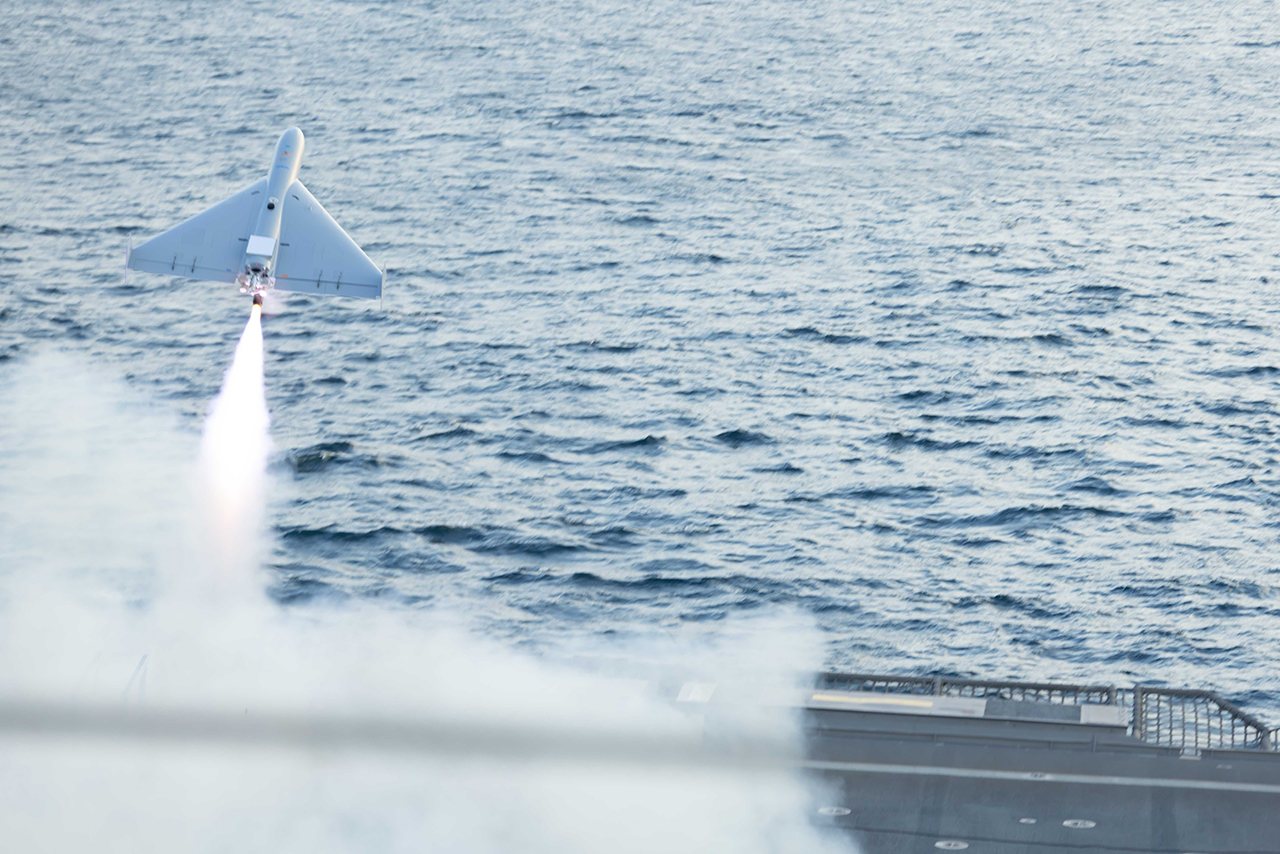
“This first successful launch of LUCAS from a naval vessel marks a significant milestone in rapidly delivering affordable and effective unmanned capabilities to the warfighter,” said Vice Adm. Curt Renshaw, commander of the U.S. Navy’s 5th Fleet. “This achievement demonstrates the power of innovation and joint collaboration in this critical region.”
Renshaw added that the LUCAS family of drones “will undoubtedly enhance regional maritime security and deterrence”.
“Bravo Zulu. U.S. Navy forces in the Middle East are advancing warfighting capability in new ways, bringing more striking power from the sea and setting conditions for using innovation as a deterrent.” – Adm. Brad Cooper, CENTCOM Commander https://t.co/TgQ4WLbph3 pic.twitter.com/WUiAVojTht
— U.S. Central Command (@CENTCOM) December 18, 2025
The exact range of currently in-service LUCAS drones has not been clarified, but is stated to be extensive – a specification sheet produced by manufacturer Spektreworks for the FLM-136 product from which LUCAS is derived lists an endurance of 6 hours with a cruising speed of 55 knots. They can be launched using catapults, rocket assistance, or mobile ground systems and vehicles.
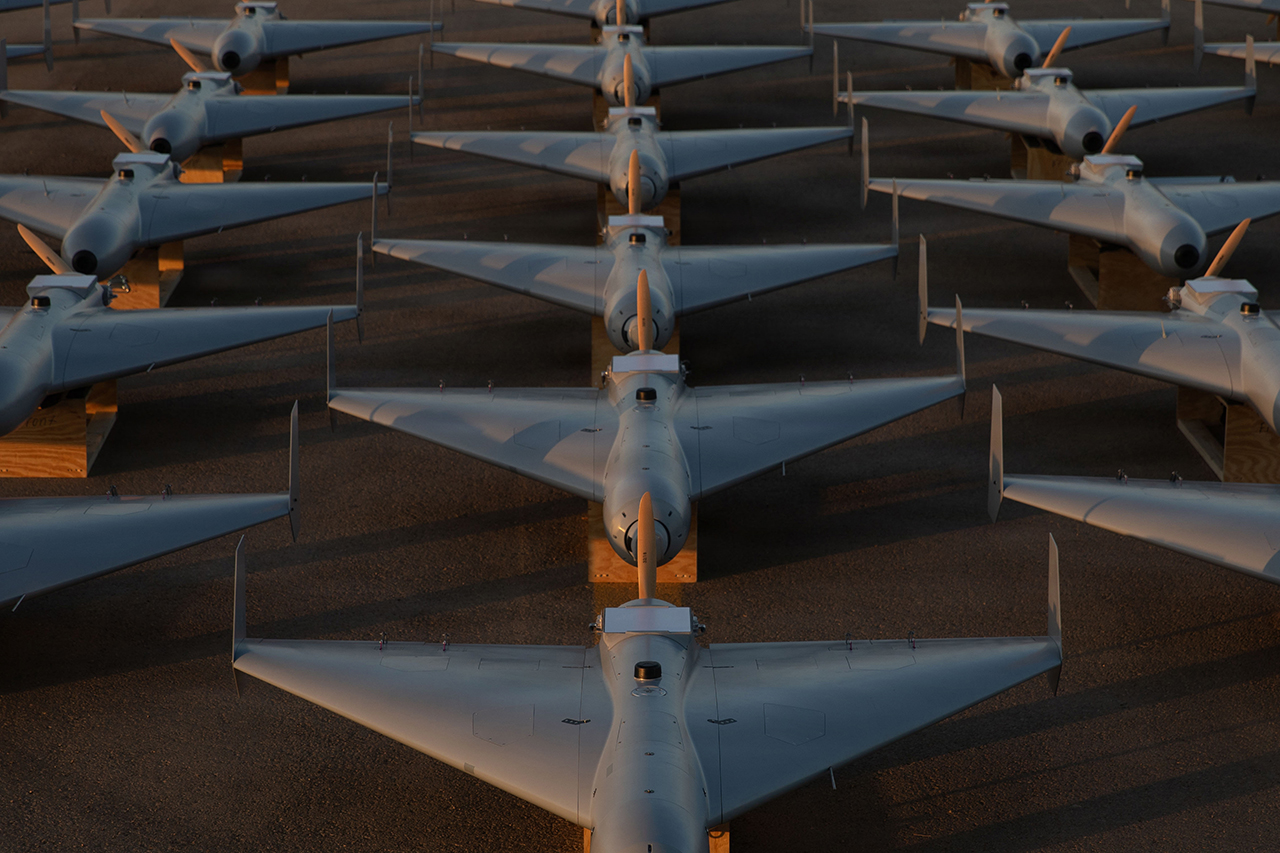
Outwardly, the LUCAS drone resembles the Iranian Shahed 136 – also known in Russian service as Geran-2. Shahed 136s have been used extensively in the Middle East as well as in Ukraine, and the relative success of the low-cost and easy to manufacture weapon is what has inspired the U.S. and other nations to produce their own equivalents. Interestingly, the Shahed 136 itself is likely to have been reverse engineered from Israel’s IAI Harpy, which itself is based on an earlier German design.
Tactics and Deployment
While these relatively basic drones can, on their own, be relatively easily downed by even simple anti-air weaponry, their strength comes from being deployed in saturation attacks. With each system costing far less than a traditional cruise missile, huge batches of OWUAVs can be launched from multiple directions to confuse, overwhelm, and overcome an opponent’s air defence networks. The same tactics with manned aircraft would theoretically be possible, but at a high potential cost in terms of human pilots. By using unmanned systems to field the strategy each individual drone can be treated as disposable – the real focus of the strike being on the package as a whole.
A first person perspective from a Ukrainian soldier of a sustained Russian FPV drone attack.
Most people – including Western military thinkers – can’t comprehend the sheer saturation of drones on the battlefield. It’s not one FPV you have to evade; it’s a constant stream. pic.twitter.com/ZsQNJJGyWc
— Jimmy Rushton (@JimmySecUK) November 1, 2025
Iran, with its far more limited resources and access to advanced technology compared to the U.S. and other nations, gained a significant head-start in deploying these simple but effective weapons. Through their ties with Russia, they quickly found their way onto the frontlines in Ukraine. While the U.S. retains a huge technological advantage, the individual cost and complexity of even some of the most basic weapons in service with the U.S. military can outweigh that of these drones by a big margin. In a long-term, protracted conflict this difference could be vital.
In addition to simple ‘suicide’ attacks, where a drone is fitted with a warhead and simply flown into a target, systems like the Shahed 136 have taken on whole new roles even including air-to-air combat.
Video of a Russian Shahed / Geran-2 OWA UAV equipped with an R-60 air-to-air missile downed by the 412th Nemesis Brigade’s Darknode battalion with a Sting interceptor from @wilendhornets. https://t.co/QkWH79sXfHhttps://t.co/w3BS2MaRwq pic.twitter.com/f6VE4uNmu2
— Rob Lee (@RALee85) December 1, 2025
On their own, systems like LUCAS are unlikely to replace any current capabilities, but exist instead to provide yet another available option to military commanders and assist in accomplishing overall objectives. Again, due to their relatively low cost, the risk in funding their introduction and deployment is comparatively low compared to many other proposed technologies.
Manufacturers have quickly noticed the demand for this type of system, and at recent defence trade events like DSEI in London a vast number of OWUAV options – both available to order as well as those still in development – were on the table for potential customers to examine. European industry giant MBDA, responsible for weapons like the Meteor air-to-air missile and Storm Shadow cruise missile, launched their One Way Effector product at the Paris Air Show in June 2025 and followed up with an extensive display at DSEI.