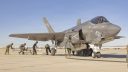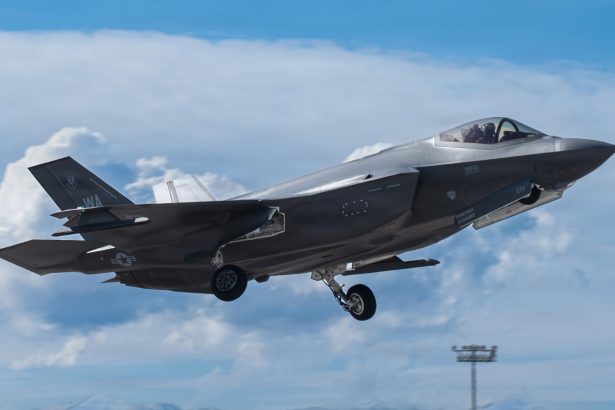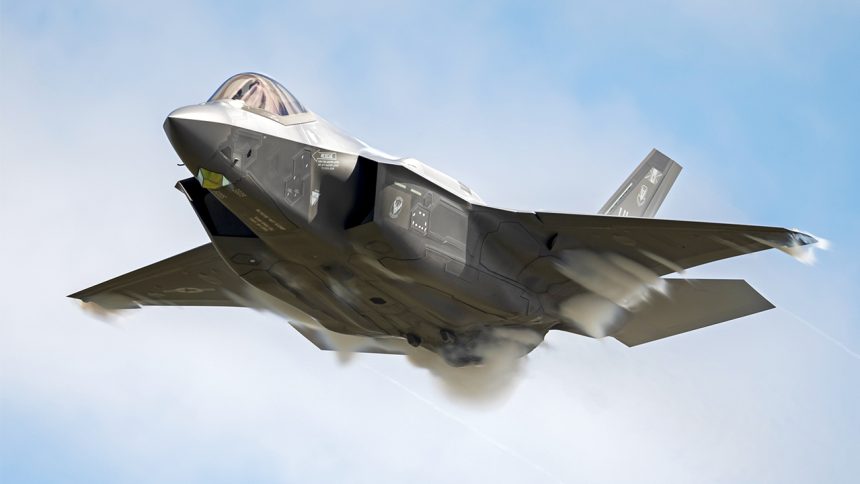
Switzerland, after approving a US$7.5 billion expenditure for its next generation of fighter aircraft, is being forced to cut back its planned order of 36 F-35A Lightning IIs in order to remain within budget.
The decision to procure the F-35A Lightning II over competition from the Eurofighter Typhoon, Dassault Rafale, and the Boeing F/A-18E/F Super Hornet was taken in June 2021 after years of protracted debate and an order of Saab Gripens that was overturned by a public referendum. Initially wanting 36 aircraft for the Swiss Air Force, a budget of CHF6 billion (US$7.5 billion) was set and approved by the electorate. At the time, the F-35A was said to represent the best value for money of all the options, and won out in an extensive technical evaluation program.
Rising costs, attributed to inflation and supply chain price increases, now have thwarted Switzerland’s ability to complete the full buy of 36 aircraft. These additional costs, foreseen in advance, have the full order not financially viable, but the Swiss Air Force intends to procure as many airframes as it can afford within the approved budget. An exact number expected to be ordered in total has not been provided, likely due to ongoing negotiations and the fact further price adjustments could hit the later batches of aircraft.
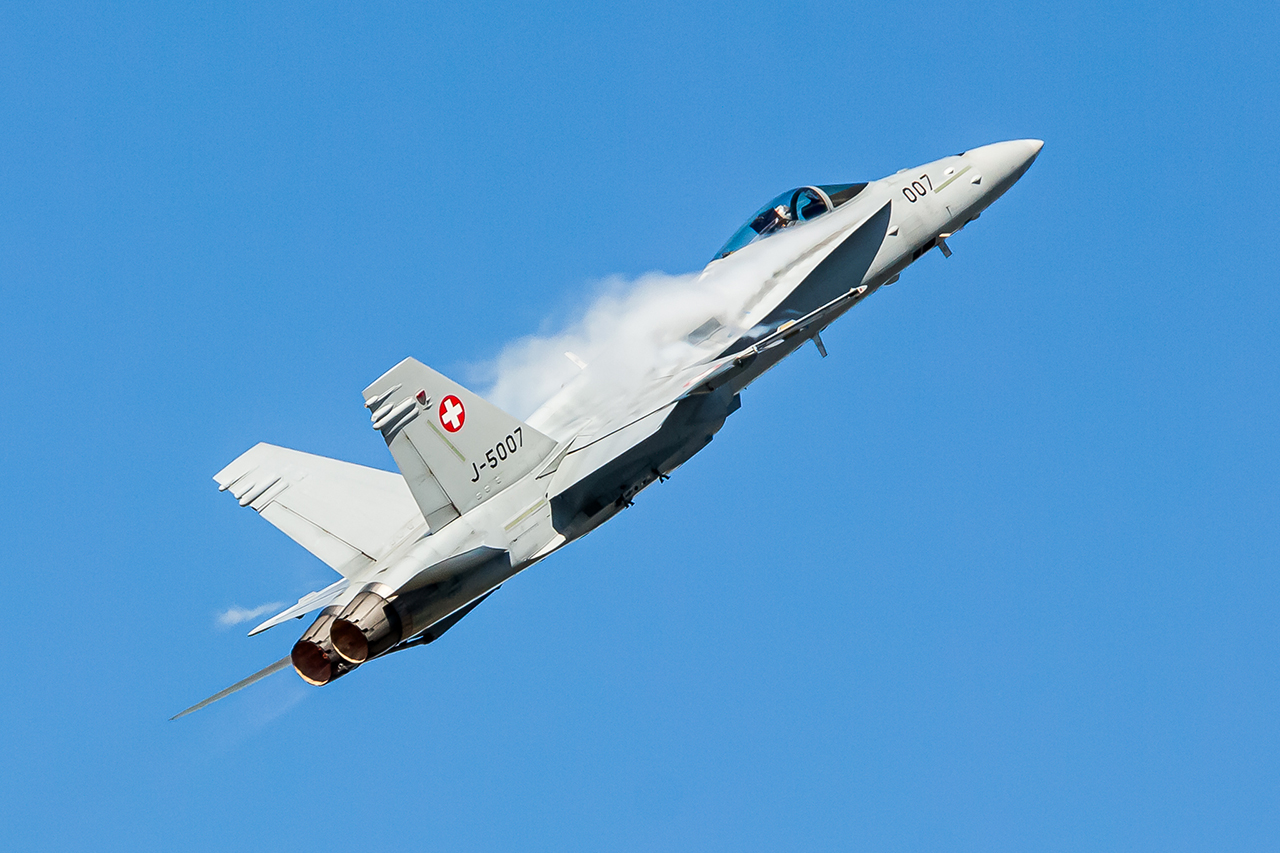
Pushing back the order, the official statement says, is not an option. Switzerland’s fleet of F/A-18C/D Hornets were delivered in the mid to late 1990s, and by the time of their planned withdrawal in the early 2030s they will all be over thirty years old. Maintaining the relatively small fleet going forwards will become increasingly difference as the U.S. and other operators of the Legacy Hornet move on either to the Super Hornet, or to other aircraft entirely. A service life extension program (SLEP) is due to be completed by the end of 2027, with only around half of the Swiss Air Force’s Hornets receiving the full refit.
Swiss Politics
Switzerland’s political climate is particularly unique. Though overseen by the Federal Council, which essentially acts like what other countries would call their cabinet, and a Federal Assembly, direct democracy remains critical to the nation’s governance. Certain decisions, such as constitutional amendments, require approval by public referendum in order to be implemented. Additionally, any law passed by the Federal Assembly can be subject to a binding public referendum should enough signatures within at least one of Switzerland’s 26 federated states be gathered.
This potential to be overruled, especially with the previous rejection of Gripens, in mind, the government decided not to push for an increased budget nor for the use of offset agreements to accommodate some of the additional cost.
At the same time, Switzerland remains fiercely committed to its international neutrality and to maintaining a formidable armed forces tasked with upholding Swiss independence. The majority of Swiss military personnel are conscripted, with military service being mandatory for all able-bodied males. Service weapons are kept with personnel at home, and much of the country is dotted with defence emplacements that could quickly be brought into service if required. Additionally, Swiss law mandates access to emergency nuclear-hardened shelters for all civilians.
Meiringen Air Base still maintains an underground cavern network that can be used by its F/A-18 Hornets as an additional layer of protection.
A blast from the past: Swiss Mirage IIIs nestled in their subterranean hangar. Today, Meiringen AB remains the only Swiss base with a fully operational caverne. pic.twitter.com/F0KYzp7tiZ
— Air Power (@RealAirPower1) October 19, 2024
Despite this focus on national defence, until the end of 2020 the Swiss Air Force maintained only a daytime air defence watch – a fact that became well known after French and Italian fighters were scrambled to intercept a hijacked aircraft that entered Swiss airspace early on one 2014 morning, before the Swiss Air Force’s F/A-18s were on duty. After an extensive training regime in the UK alongside the Royal Air Force, where Swiss pilots trained in night-time air defence operations, 24/7 air defence cover has been able to be instituted. These exercises, named YORKNITE, are now an annual occasion at RAF Leeming, Yorkshire.
Switzerland’s neutrality policy has also been tested by Russia’s actions in Ukraine and its hybrid warfare strategies in the wider European theater. Though support for neutrality remains extremely high among the public, a 2024 report by the Federal Department of Defence, Civil Protection and Sport said it was now necessary to “revise Switzerland’s neutrality policy in view of the security policy challenges”.
In Switzerland, the Defense Ministry recommends abandoning the country’s 500-year neutrality – Politico
putin, money and weapons are pushing for such a rethink. A panel of experts recommends that the government should work on a “joint defense capability” with the EU and NATO in… pic.twitter.com/Z5WAn1s3Yv
— Jürgen Nauditt 🇩🇪🇺🇦 (@jurgen_nauditt) August 31, 2024
Among the changes, the report suggested revisions to Swiss law that would allow other nations who have previously purchased Swiss defence equipment under the stipulation that it not be re-exported to send these arms to Ukraine. Increased cooperation with NATO and the European Union – Switzerland being a member of neither – is also recommended, alongside a rise in defence expenditure from 0.7% to 1% of the country’s GDP.
In light of the deteriorating security situation, the Swiss government is realigning Switzerland’s security policy. It has launched a consultation procedure and instructed the relevant departments to start taking measures. https://t.co/iNqHL3XQZf @vbs_ddps
— Swiss Federal Government (@SwissGov) December 12, 2025
Alongside the F-35, Switzerland intends to purchase new air defence missile systems to replace ageing – and short-ranged – Rapier and Stinger missiles. A contract was signed in July 2025 for five IRIS-T SLM systems for short to medium range use, and five Patriot systems were ordered in 2022. These longer-ranged missiles, manufactured by the U.S., were originally due to enter Swiss service in 2026, but delivery of the missiles was re-prioritized for Ukraine and Switzerland’s delivery pushed back.