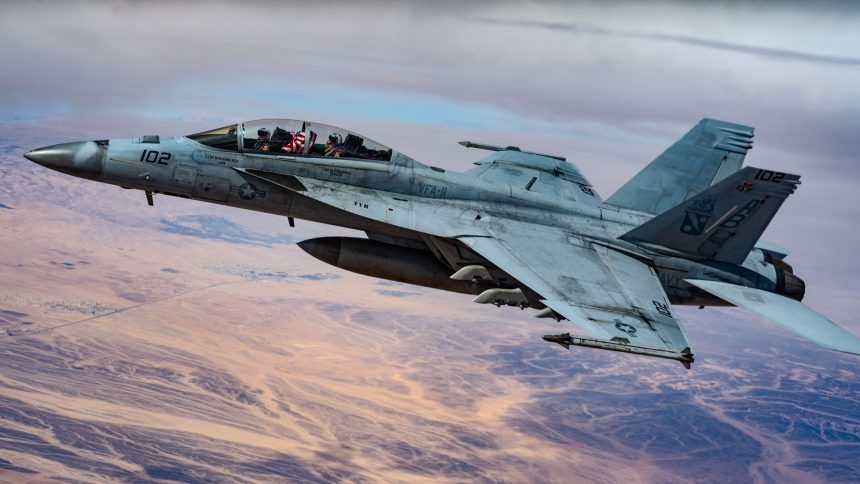
The U.S. Navy is continuing the work to extend the F/A-18E/F Super Hornet’s service life to 10,000 flight hours, with the latest contract covering up to 60 aircraft.
The U.S. Navy has awarded Boeing a new contract, worth $930.77 million, to continue the work on the Super Hornet Service Life Modification (SLM) program. As part of the program, up to 60 F/A-18E/F aircraft will see their service life extended from 6,000 flight hours to 10,000 flight hours.
Moreover, the aircraft will also undergo the integration of Block III avionics capabilities as part of the same contract. In fact, the modifications for the Block III upgrade are being integrated concurrently with the SLM.
The SLM program is critical to keep the Super Hornet relevant in modern scenarios as the platform recently turned 30. Also, with the F/A-XX next-generation fighter in a limbo and with an uncertain future, the Navy needs to make sure the aircraft can fly well into the 2030s and early 2040s to avoid dangerous capability gaps.
The 60 aircraft covered by this contract, awarded on Dec. 16, 2025, will join at least 125 Super Hornets which are already covered by multiple contracts awarded since 2018. The Navy today has around 550 F/A-18E/F Super Hornets in service.
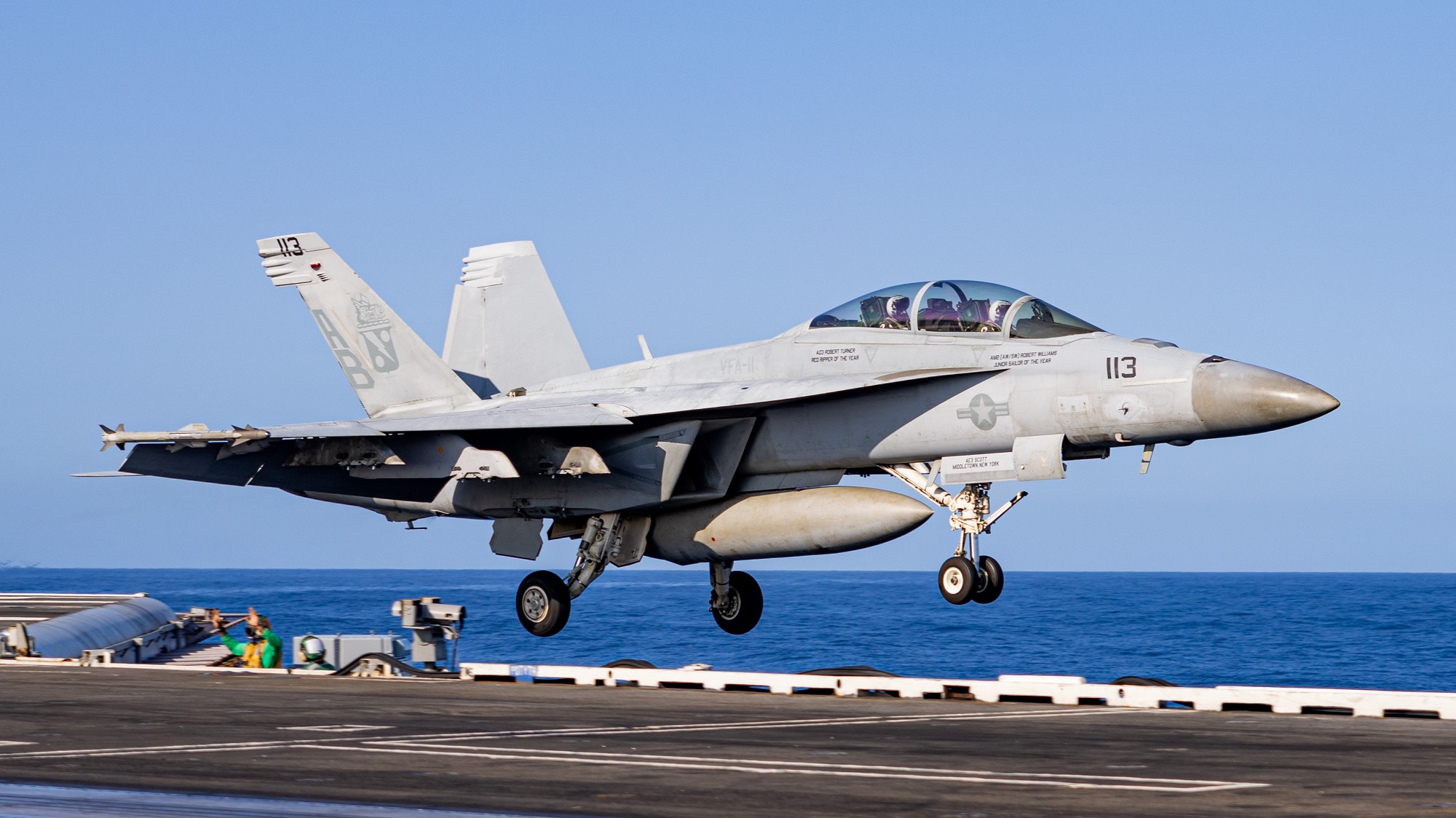
The Super Hornet Service Life Modification program
The Service Life Modification (SLM) program adds 4,000 flight hours to the service life of the already delivered Super Hornets, as well as applying the Block III upgrades. The first phase of the SLM program has already been in motion for some years, extending the service life of the Super Hornet from 6,000 to 7,500 flight hours.
The second phase, which started in 2023, is looking to extend the service life to 10,000 flight hours and perform the modifications required for the Block III upgrades. The first two aircraft to be modified have been delivered back to the U.S. Navy on Jun. 27, 2024, after less than a year and ahead of schedule.
According to the company, the aircraft were delivered one month ahead of schedule from St. Louis and two months ahead of schedule from San Antonio. The press release added that the two aircraft have the same capabilities as Super Hornets being delivered from Boeing’s new-build production line.
“Great measures were taken by the Boeing and Navy teams to ensure these are the safest and most capable Block III F/A-18s we can give our warfighters,” said Mark Sears, Boeing Fighters vice president. “These are just the first of many deliveries, with around 15 years of SLM deliveries to go.”
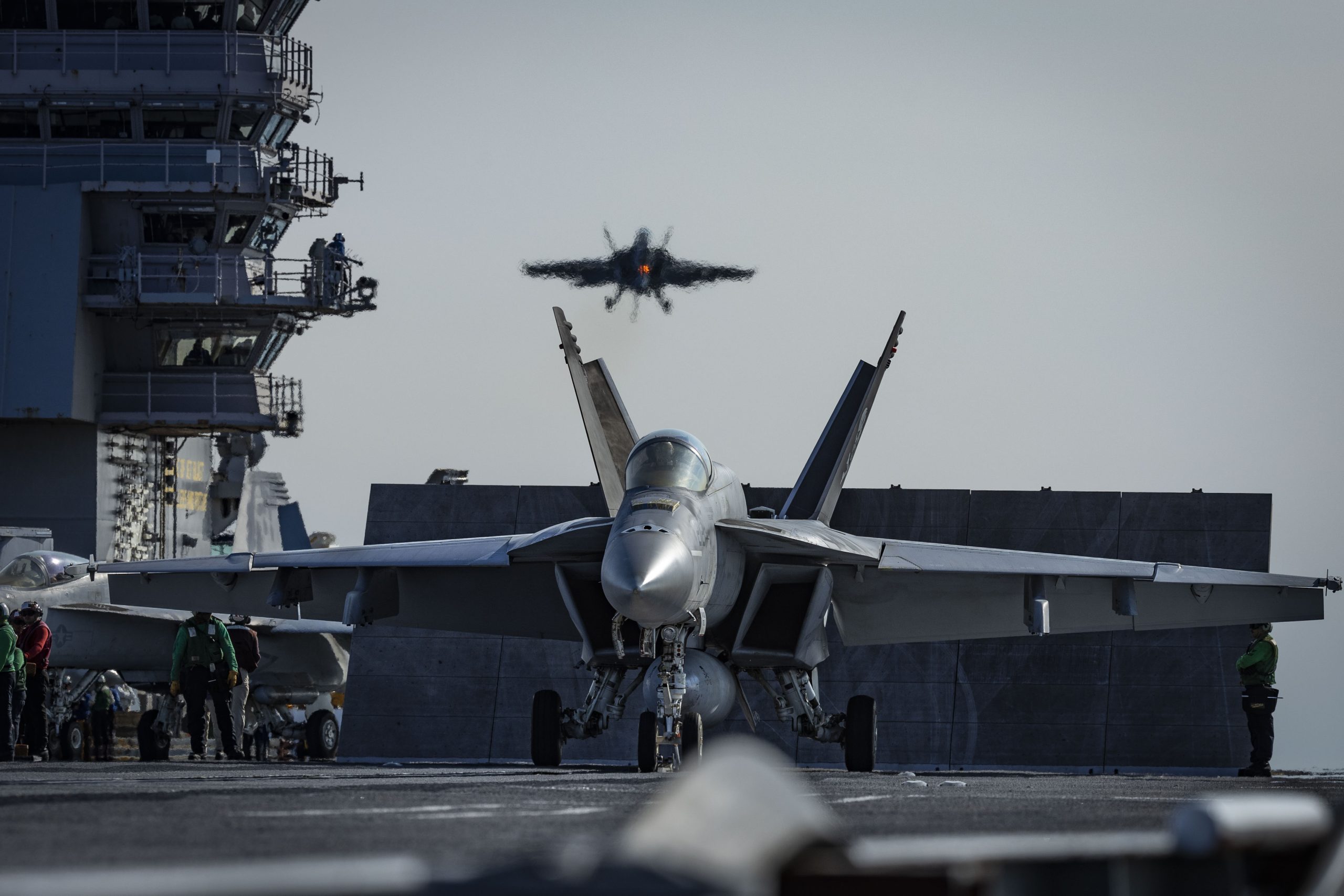
Although Boeing will stop to the production of the Super Hornet in 2027, this will not affect the modernization currently in progress in the U.S. Navy F/A-18E/F fleet. In fact, these works, along with the similar EA-18G modernization, will continue on a separate production line well into the 2030s.
The company and the Navy worked closely to improve productivity and complete Block III upgrades ahead of the 15-month contract requirement. This was made possible by establishing a baseline for the condition of Block II F/A-18s received at Boeing, and the Navy’s work to prepare the jets in advance, as well as sharing information and best practices across multiple SLM sites to improve efficiency, manage workload distribution and optimize resource allocations.
The Super Hornet Block III
As the airframe approached mid-life, the U.S. Navy initiated the Block III upgrade. The upgrade, featuring a renewed cockpit, new computing architecture and network infrastructure, as well as the possibility – later dismissed – to add conformal fuel tanks, has been developed to extend the fleet’s service life and relevance.
The key capabilities made available by the new variant include Advanced Cockpit System centered around the 10×19 inch large-area touchscreen display, an advanced network infrastructure that incorporates the Distributed Targeting Processor Network (DTP-N) and the Tactical Targeting Network Technology (TTNT), open mission systems, reduced radar signature, a 10,000-hour airframe, the AN/ASG-34 IRST (Infrared Search-and-Track) and the provisions for Conformal Fuel Tanks (CFT) with an additional 3,500 lb fuel capacity.
There are currently three work lines involved in the program, two in St. Louis and one at the Fleet Readiness Center Southwest, which can modify up to 40 aircraft per year. In 2022, Rear Adm. Andrew Loiselle, director of Air Warfare Division in the Office of the Chief of Naval Operations, mentioned that the implementation of best practices during Phase One SLM allowed a 30% percent cost reduction. The initial SLM budgeted cost per aircraft was $5.5 million, with a turnaround time of 15-17 months.
The number of aircraft that will be upgraded and see their service life extended is not yet clear, as the Navy has not yet finalized it. The SLM however will be used to control the availability of the aircraft, eventually ramping up or scaling down the program according to future budgets, schedules and requirements.
Thanks to this upgrade, the Super Hornet and the similarly upgraded Growler will continue to serve in the U.S. Navy for the decades to come. ”The Super Hornet remains a predominant aircraft in the carrier air wing and will continue to provide significant combat capability into the 2040s,” says Rear Admiral John Lemmon, the navy’s program executive officer for tactical aircraft.