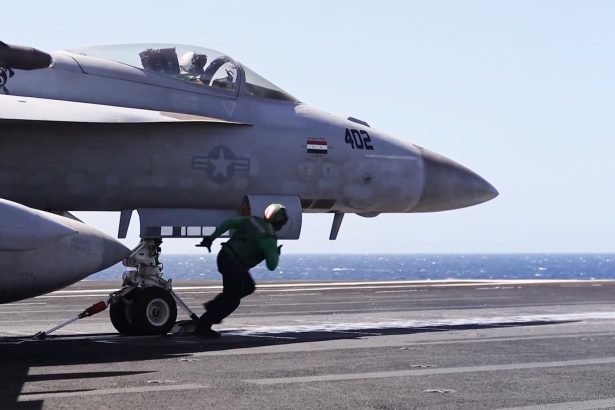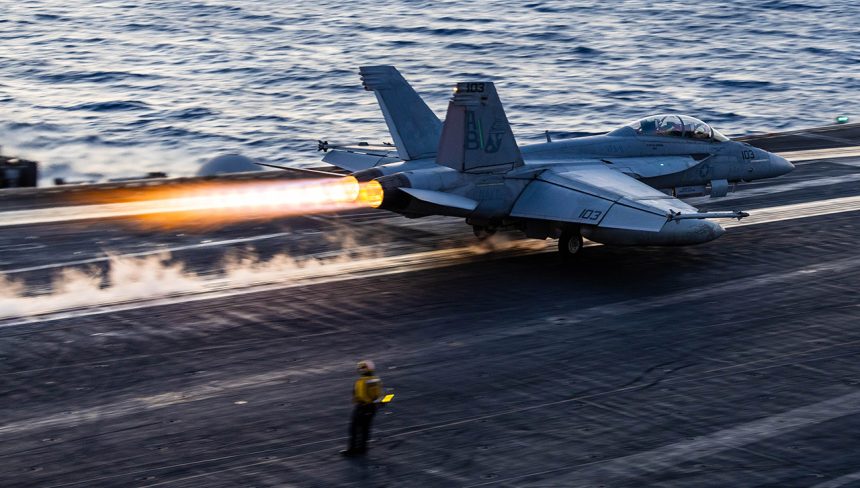
The Navy completed the investigation about the loss of three F/A-18 Super Hornets and the collision with a merchant vessel during the USS Harry S. Truman’s recent deployment in the Middle East.
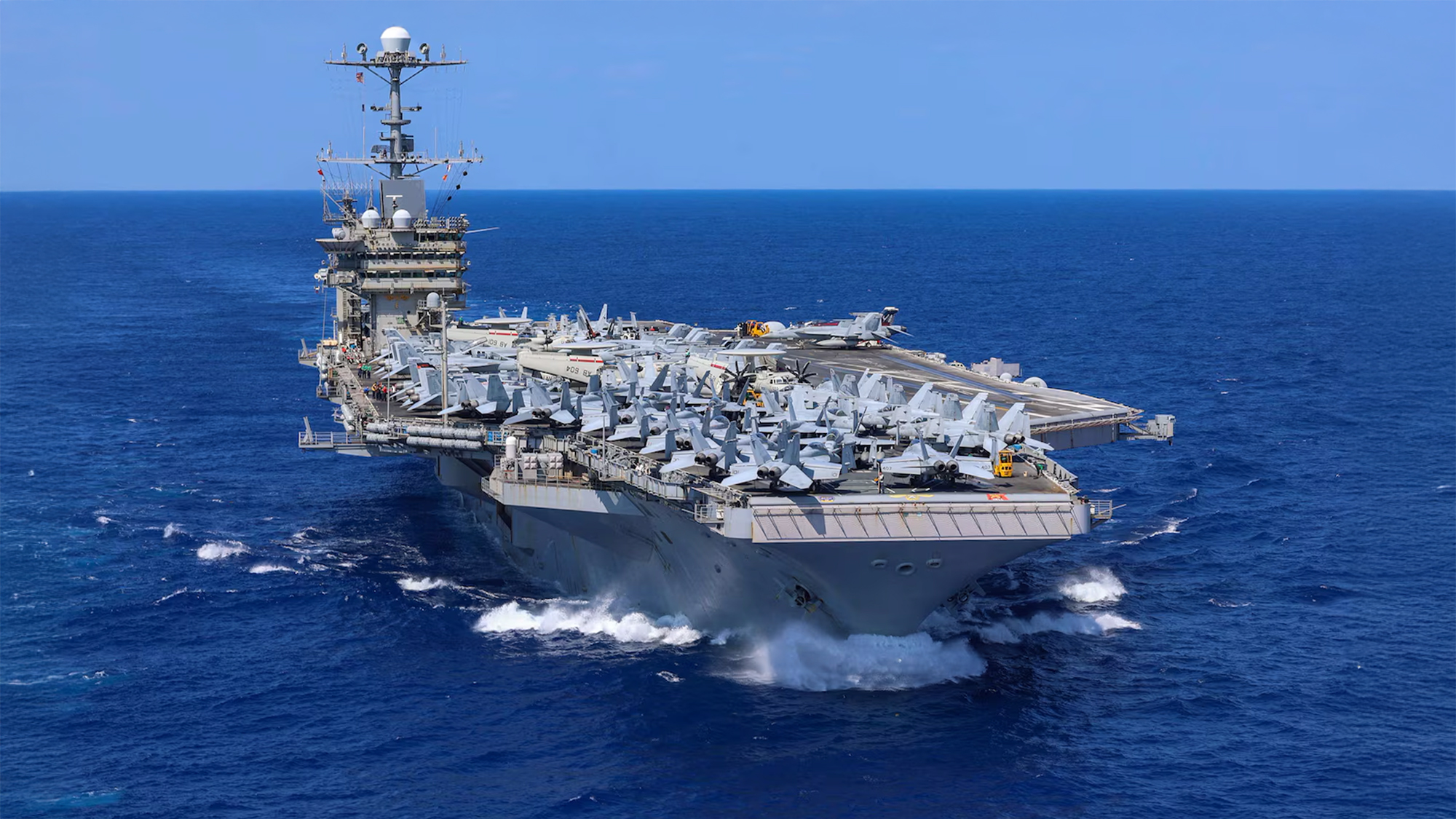
The U.S. Navy has released on Dec. 4, 2025, the finding of the investigations into four different incidents which occurred during the recent deployment of the USS Harry S. Truman (CVN-75) Carrier Strike Group (CSG) in the Middle East. The inquiries examined a friendly-fire shootdown, a collision with a merchant vessel, and two separate losses of F/A-18 Super Hornets during intense operations in the Red Sea and Mediterranean.
In its public statement the Navy said each investigation was “conducted independently and thoroughly” and that “appropriate accountability actions have been taken.” Vice Chief of Naval Operations Adm. Jim Kilby emphasized the service’s aim to learn from the events: “The Navy is committed to being a learning organization… These investigations reinforce the need to continue investing in our people to ensure we deliver battle-ready forces.”
- 1 The Navy completed the investigation about the loss of three F/A-18 Super Hornets and the collision with a merchant vessel during the USS Harry S. Truman’s recent deployment in the Middle East.
- 1.1 Dec. 22 Gettysburg Friendly Fire
- 1.2 Feb. 12 Collision with Besiktas-M
- 1.3 Apr. 28 Hangar Bay Loss
- 1.4 May 6 Arresting Gear Failure
The service highlighted throughout the investigations’ reports that mishaps occurred during a nine-month deployment that included tens of continuous days of high-tempo combat operations as part of Operation Rough Rider. During this time, the Harry S. Truman CSG operated under continuous ballistic-missile, anti-ship missile, and one-way attack drone threats from the Houthis.
However, officials repeatedly stressed that each of the four incidents was preventable, despite the operational pressure.
Here is a breakdown of the events and the investigations’ findings.
Dec. 22 Gettysburg Friendly Fire
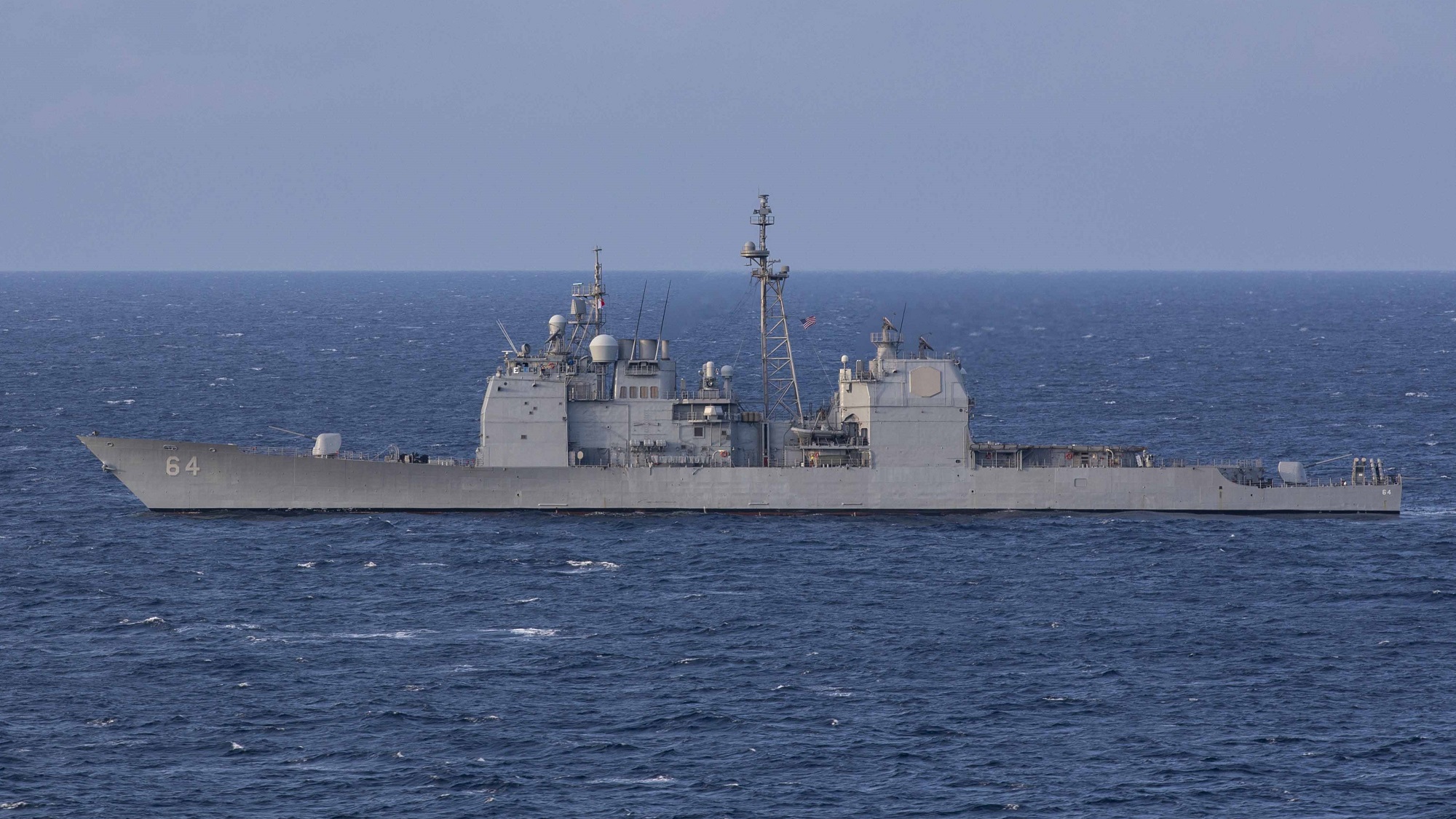
The first investigation to be addressed concerned the Dec. 22, 2024, incident in which the Ticonderoga-class cruiser USS Gettysburg misidentified a U.S. Navy F/A-18F from Carrier Air Wing One operating over the Red Sea and fired an SM-2 missile that brought down the aircraft. As we reported on that occasion, the Super Hornet was returning to the carrier after a mission in the buddy-tanker role in support of a Defensive Counter Air (DCA) mission.
Both aircrew ejected and were safely recovered, with the investigation determining the decision to eject was justified. The incident was about to get even worse as the confirmed there was a near miss with a second aircraft, whose aircrew would also have been justified in case of an ejection, with the missile missing the Super Hornet by a mere 100 ft.
The Navy’s summary noted that several systemic failings, notably a “lack of integrated training opportunities between USS Gettysburg and the Carrier Strike Group, lack of forceful backup on the cruiser, and lack of cohesion across the Carrier Strike Group,” contributed to the misidentification and engagement of the friendly aircraft. Investigators placed significant blame on the Gettysburg commanding officer, as the firing decision was assessed as “neither reasonable nor prudent,” although no mechanical failures contributed to the event.
Regarding the lack of integrated training, the investigation says “It is important to note that over the immediate 45 days prior to the incident, [Gettysburg] only operated with the [strike group] 15 percent of the time (seven of 45 days).” Moreover, a planned 10-day integrated group sail was cut down to just two days due to an oiler shortage on the East Coast.
Making things worse, the Gettysburg did not take part in the planning for the strikes that were launched in the night between Dec. 21 and 22. “The plan for both the strike and the associated air defense plan was not well understood on Gettysburg. Across various members of the [combat information center] watch team, they did not understand the timing of the event, the departure and return to force plan, or the potential threat response,” mentions the report.
Following the strikes and the Houthi response, the DCA aircraft were ordered to return to the carrier. At the same time, a change of shift in the CIC was taking place, a helicopter landing reduced the coverage of the Gettysburg’s AN/SPY-1 air search radar, the ship’s Identification Friend or Foe system malfunctioned and the E-2D Hawkeye’s radar also had a malfunction.
All these causes led the Super Hornets to show up on the ship’s screens as “unknown” contacts. “The Gettysburg CIC team believed them to be enemy anti-ship cruise missiles,” states the report.
The value of the aircraft lost, assigned to the “Red Rippers” of Strike Fighter Squadron (VFA) 11, was not disclosed, although the service mentioned that $55 million were used to correct Aegis Weapon System deficiencies after the incident.
Feb. 12 Collision with Besiktas-M
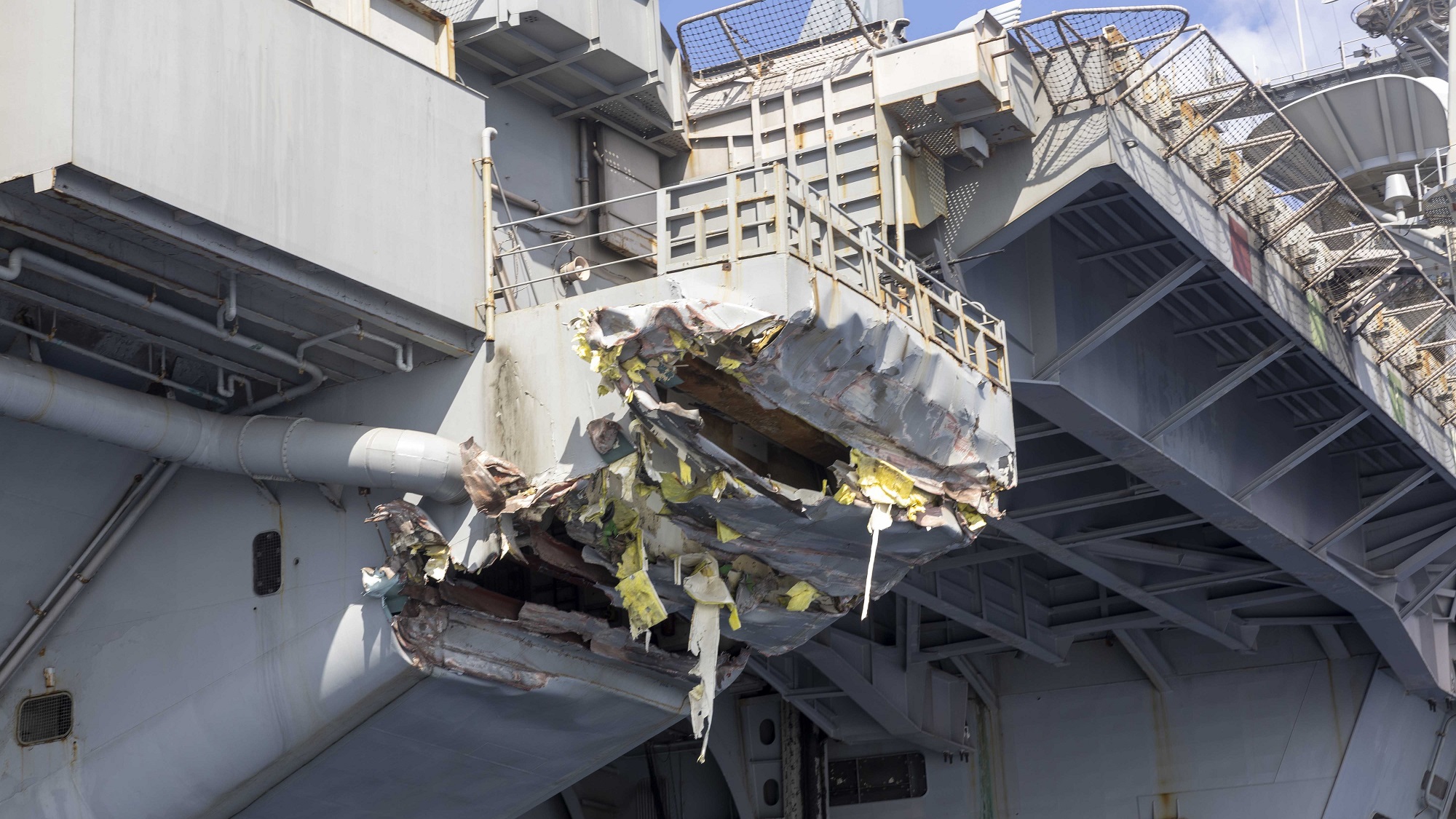
The Feb. 12, 2025 collision between the USS Harry S. Truman and the merchant vessel Besiktas-M near Port Said, Egypt, was judged “avoidable” by investigators. The investigation found the carrier’s bridge team “failed to safely navigate past the merchant vessel.”
The investigation further noted the “just get it done” atmosphere aboard the ship and fatigue were contributing factors. Notably, the carrier was transiting at 19 knots through highly congested waters approaching Port Said, while the planned speed was much lower.
While no flooding, engineering casualties or major injuries were reported, the probe underscored how small changes could have produced catastrophic outcomes. Rear Adm. Todd Whalen’s endorsement of the investigation warned a one-degree change in trajectory could have pierced a berthing compartment and killed sailors.
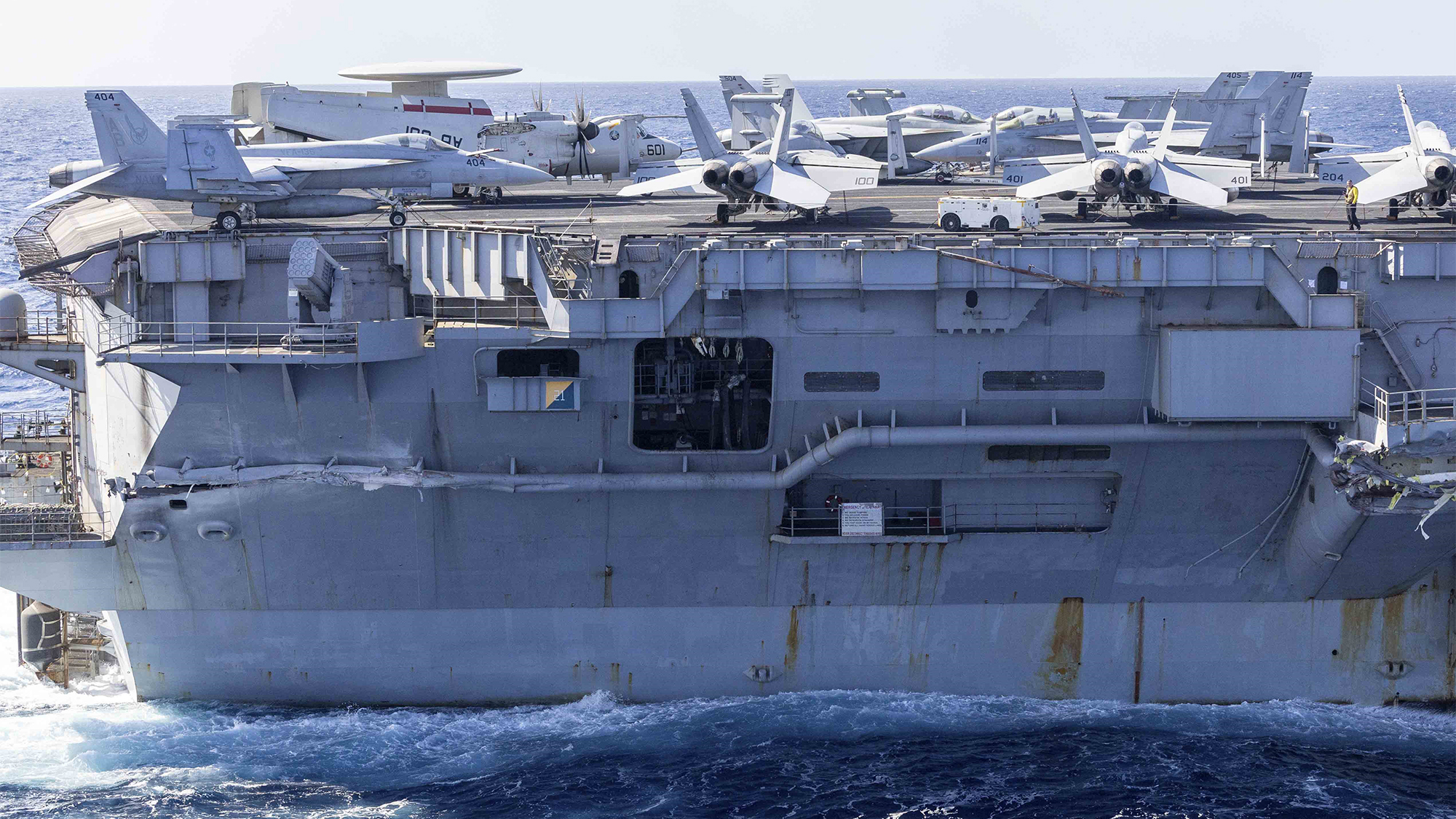
“[A] small change in the timing of the collision or the angle of impact could have caused catastrophic results,” wrote Whelan. “Had the collision occurred 100 feet forward, the impact would have likely pierced a berthing compartment with 120 sleeping sailors. Had [aircraft elevator three] been lowered at the time of the collision, Harry S. Truman would have suffered a significant degradation to flight deck operations.”
“As it was, there were eight sailors in a space less than 10 feet from the impact location; a one-degree change in trajectory could have destroyed the space and caused eight fatalities,” further added the Rear Admiral. “My team spoke with those eight sailors, and they will never forget how close they came to losing their lives. Neither should we.”
As a result of the investigation and loss of confidence, the Navy relieved the ship’s commanding officer in February. The investigation determined Capt. Snowden had “abdicated his responsibility” for safe navigation to subordinates, contrary to Navy regulations.
However, the investigation also noted that, upon returning to the ship’s bridge, Snowden’s “hard right rudder order reduced the closure rate between Harry S. Truman and Besiktas-M, reduced the angle of impact, and delayed the time to impact, which likely prevented more significant damage and potential loss of life.” Rear Adm. Whalen also praised the officer taking responsibility for the events: “[Snowden’s] witness interview was a master class in ownership and accountability. I admired his candor and professionalism.”
The carrier made temporary repairs at Souda Bay, Crete, and full repairs are scheduled during its upcoming Refueling and Complex Overhaul. While at Souda Bay, “repair efforts included patching holes, erecting a temporary bulkhead, replacing safety rails, adding structural supports, and removing non-structural damaged material,” for a total cost of $685,000.
Apr. 28 Hangar Bay Loss
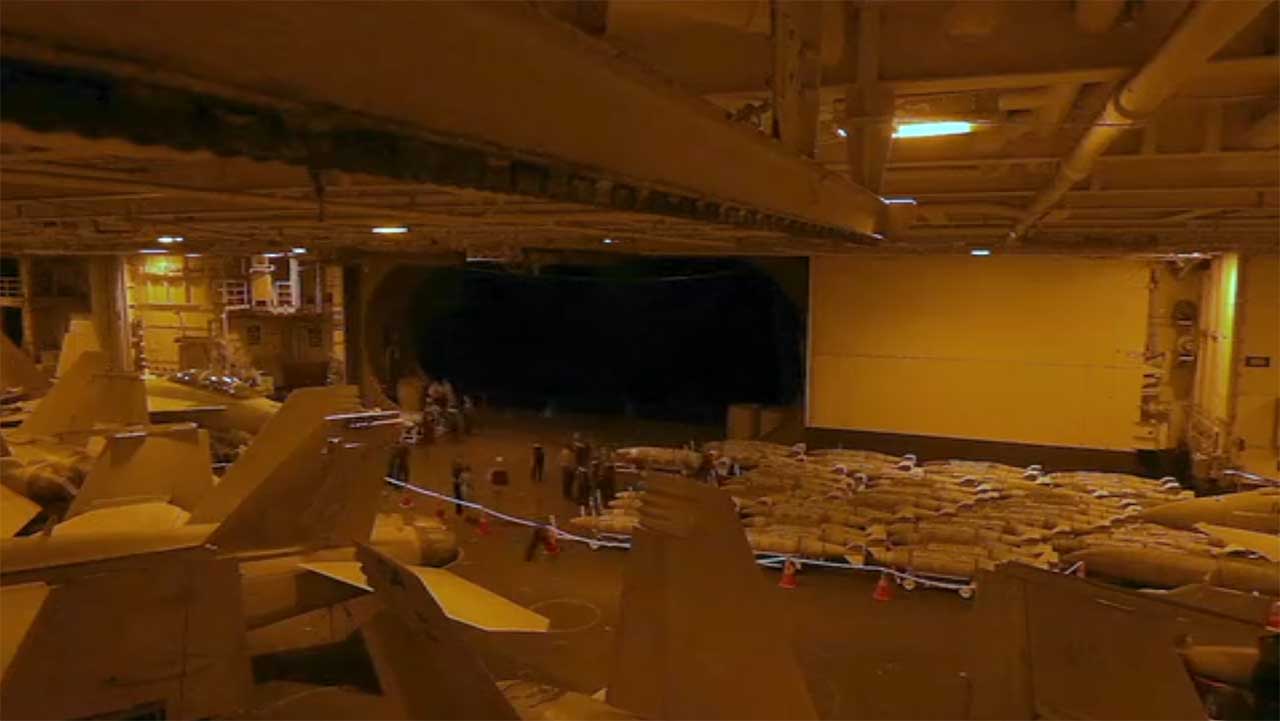
On Apr. 28, 2025, an F/A-18E from VFA-136 and a tow tractor were lost overboard from the hangar bay while the carrier executed evasive maneuvers in response to an inbound ballistic missile report. The service said the F/A-18E was being towed in the hangar bay when the move crew lost control of the aircraft, resulting in both the Super Hornet and the tow tractor going overboard.
As part of the evasive maneuvers, the USS Truman was sailing at 30 knots and started a 10-degree starboard turn, later increased to 15 degrees before being decreased again to 10 degrees and eventually down to two degrees. Personnel in the hangar bay had just removed the wheel chocks and tiedown chains from the F/A-18E, which was parked in an elevator well, to pull it inside and close the doors.
The Navy concluded that while actions were “within standard operating procedures,” the ultimate cause was an aircraft brake system failure compounded by “insufficient communication between the bridge, flight deck control, and hangar bay control.” Irreparable non-skid coatings on surfaces in the hangar, which led to the hangar being described as “slippery” were among the causes attributed to material.
At the time of the incident, a Sailor was in the cockpit of the Super Hornet acting as “brake rider” and another Sailor was operating the tractor, with both jumping when they realized the situation was not recoverable. The service praised the quick thinking and resourcefulness of the crew, which prevented injuries and further damage.
The damage count included the loss of the F/A-18E assigned to the “Knighthawks” of Strike Fighter Squadron (VFA) 136, valued $36 million, and the loss of the tow tractor, valued $61,000.
May 6 Arresting Gear Failure
A May 6, 2025 landing mishap that resulted in an F/A-18F loss, the third Super Hornet lost during the deployment, was attributed to the failure of the ship’s #4 arresting wire after a malfunctioning #4 starboard sheave damper, which sent the crosshead spinning “like the Tasmanian devil.” The pilot and weapon systems officer (WSO) were able to eject from the aircraft and were recovered via helicopter with only minor injuries.
The sheave damper, a hydraulic shock absorber part of the arresting gear, failed because of a missing washer, mentioned the investigation, and thus the material failure may have happened days or weeks before May 6. The investigation also noted the crew failed to notice the failure during maintenance a day earlier and during checks on the day of the mishap.
The investigation singled out maintenance shortcomings, low manning levels, limited knowledge among some operators and insufficient training as contributing factors. The high operational tempo and combat conditions while in the Red Sea were also identified as exacerbating influences.
The damage count included the loss of $60 million F/A-18F Super Hornet assigned to the “Red Rippers” of Strike Fighter Squadron (VFA) 11, $207,000 in repairs to the arresting system and $47,000 for a life raft.