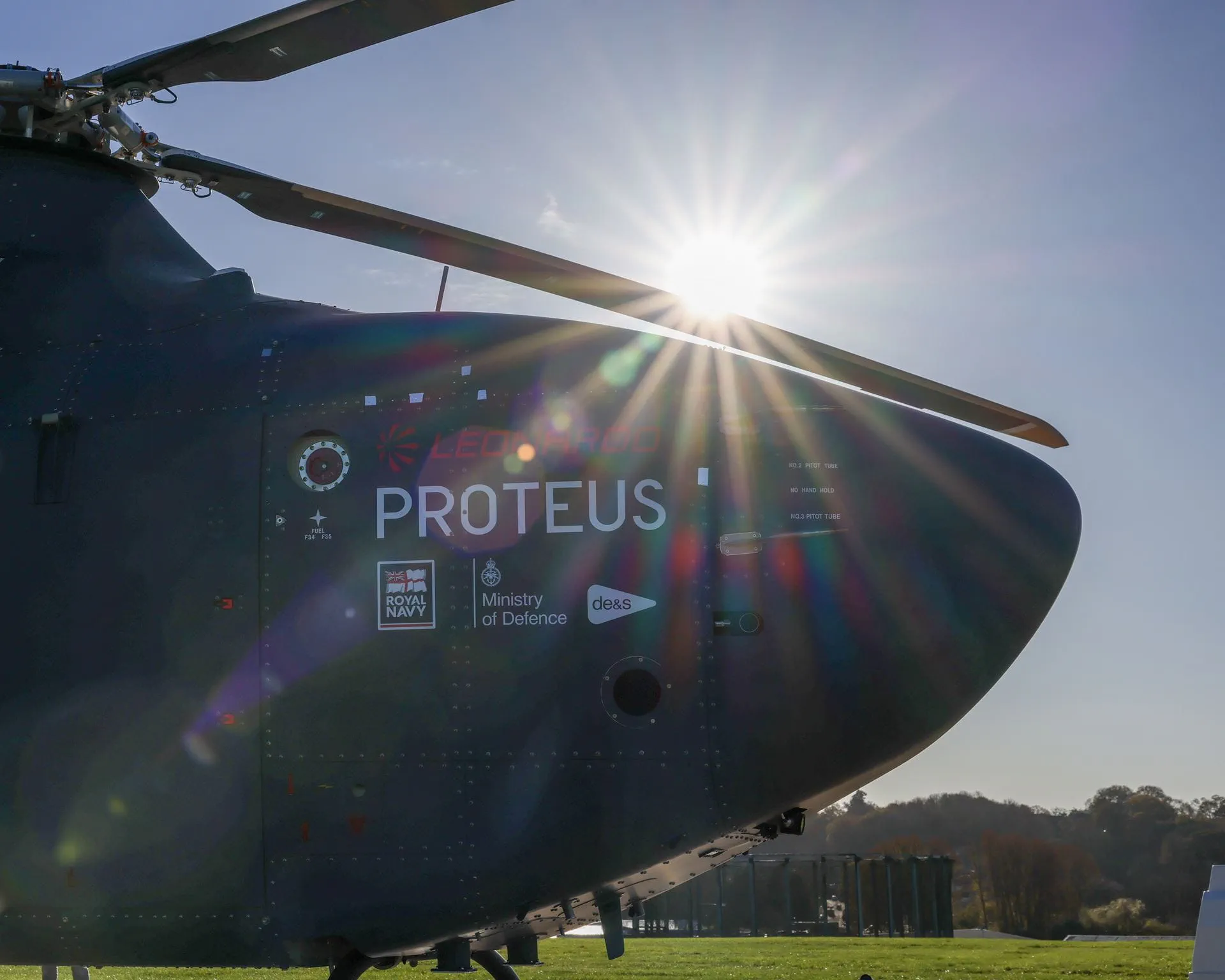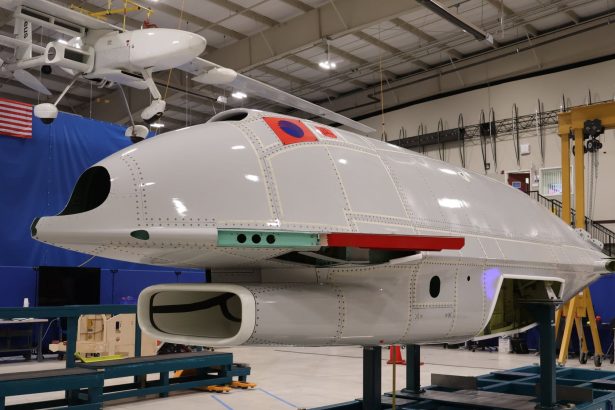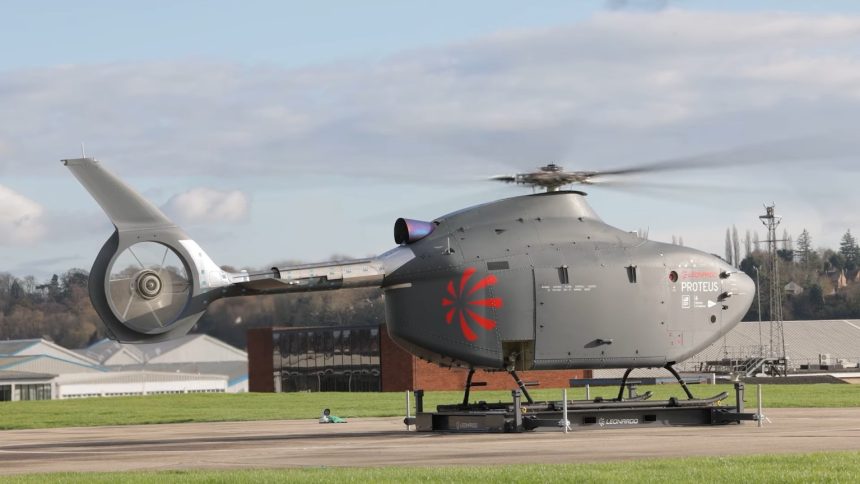
The Royal Navy’s autonomous helicopter project has approached a new milestone as the ‘Proteus’ technology demonstrator completed its ground testing phase ahead of future flight tests.
Produced by Leonardo Helicopters at its factory in Yeovil, Proteus is the Royal Navy’s first full-sized remotely piloted helicopter, designed to test the concept of unmanned helicopters in Royal Navy service. It will help to develop concepts of operation for the use of rotary winged unmanned air systems (RWUAS) and their employment alongside manned systems in the broader Royal Navy as a part of the organisation’s transformation to become “uncrewed wherever possible, crewed only where necessary”.
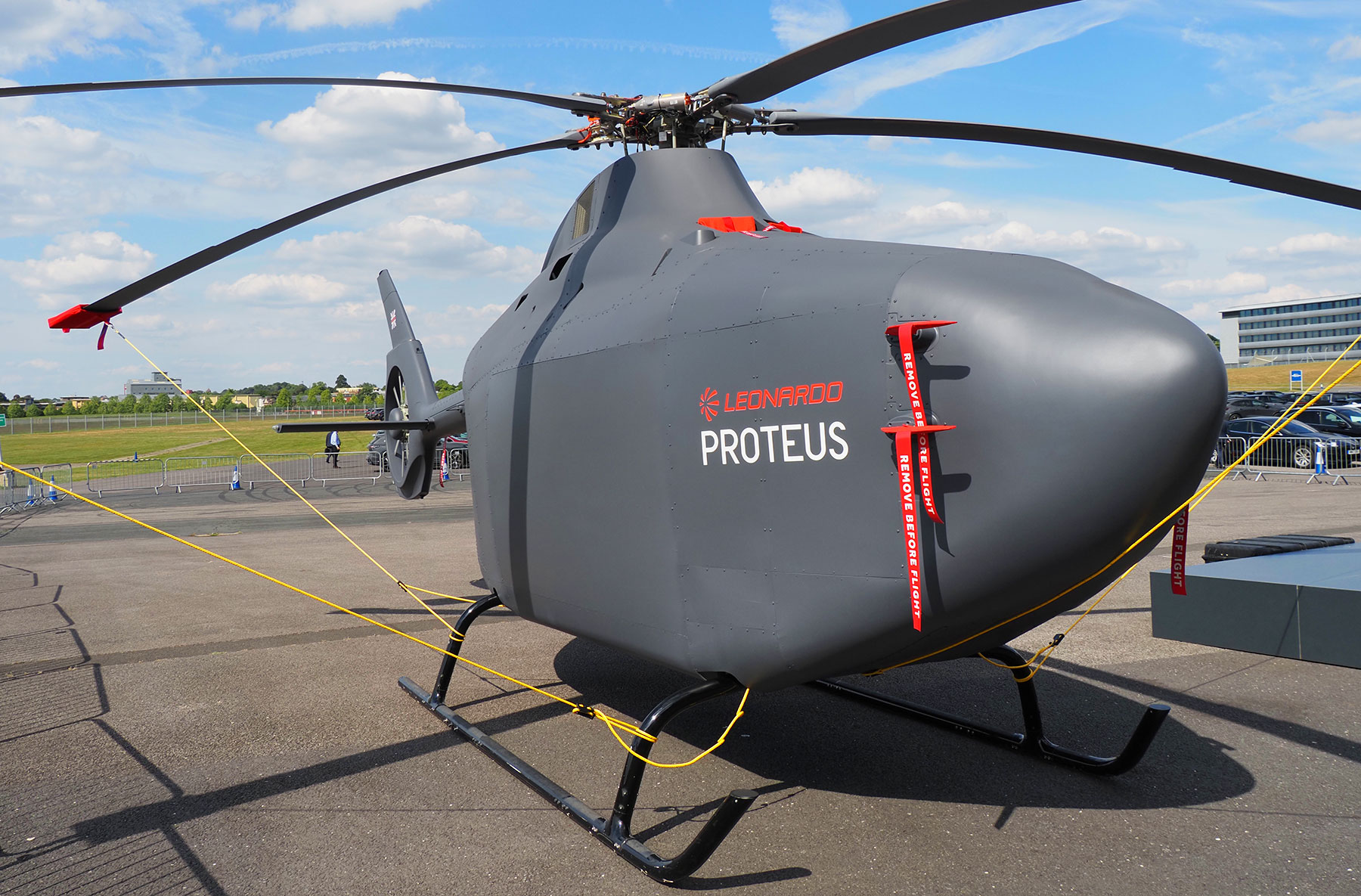
Ground Testing’s Completion
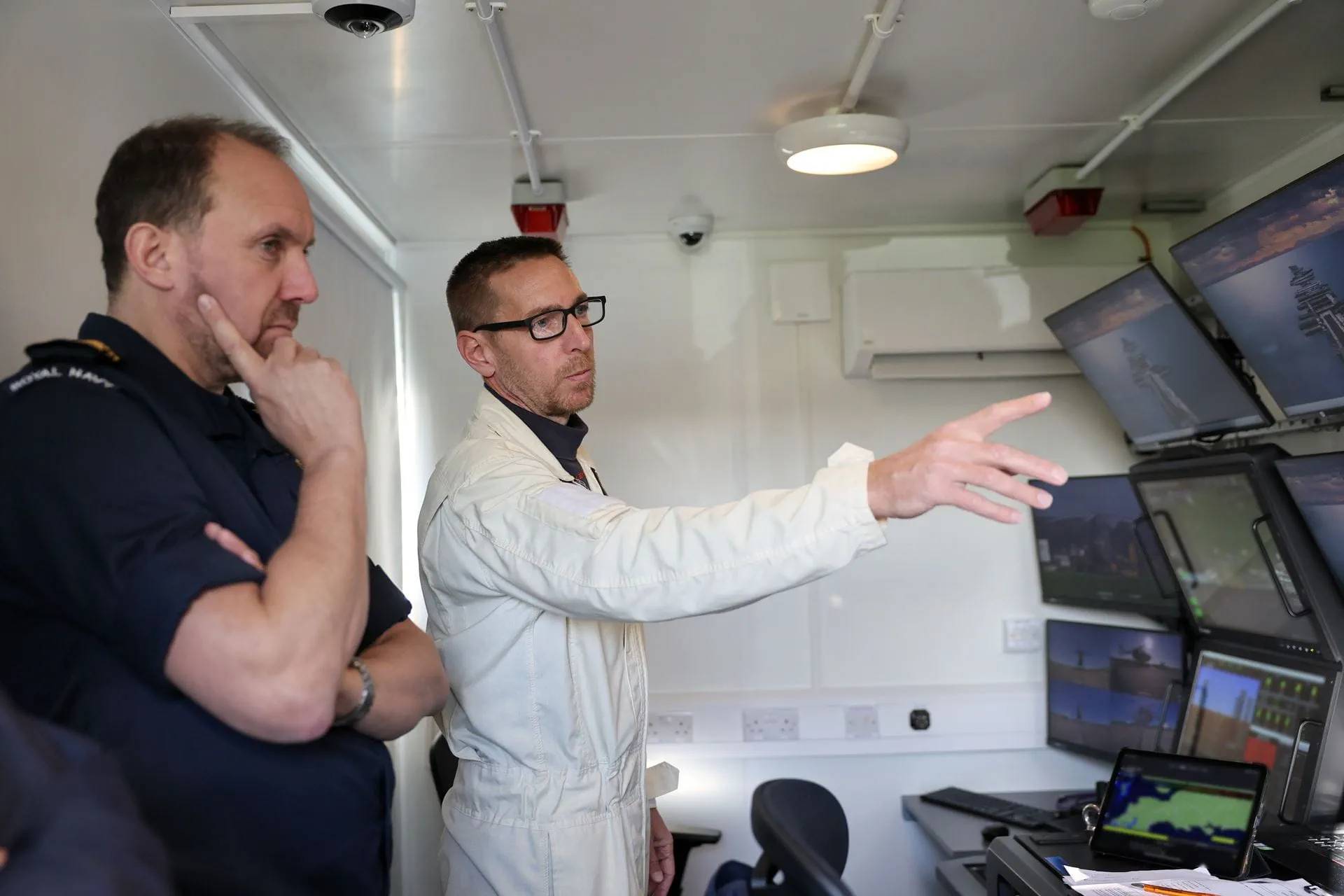
During the latest ground test, Proteus powered up its engines, onboard systems and rotor blades for the very first time, whilst displayed to an assembled group of senior Royal Navy officers and Ministry of Defence specialists. As the tests took place, they would receive a briefing on the software, sensors and artificial intelligence functions that allow Proteus to operate.
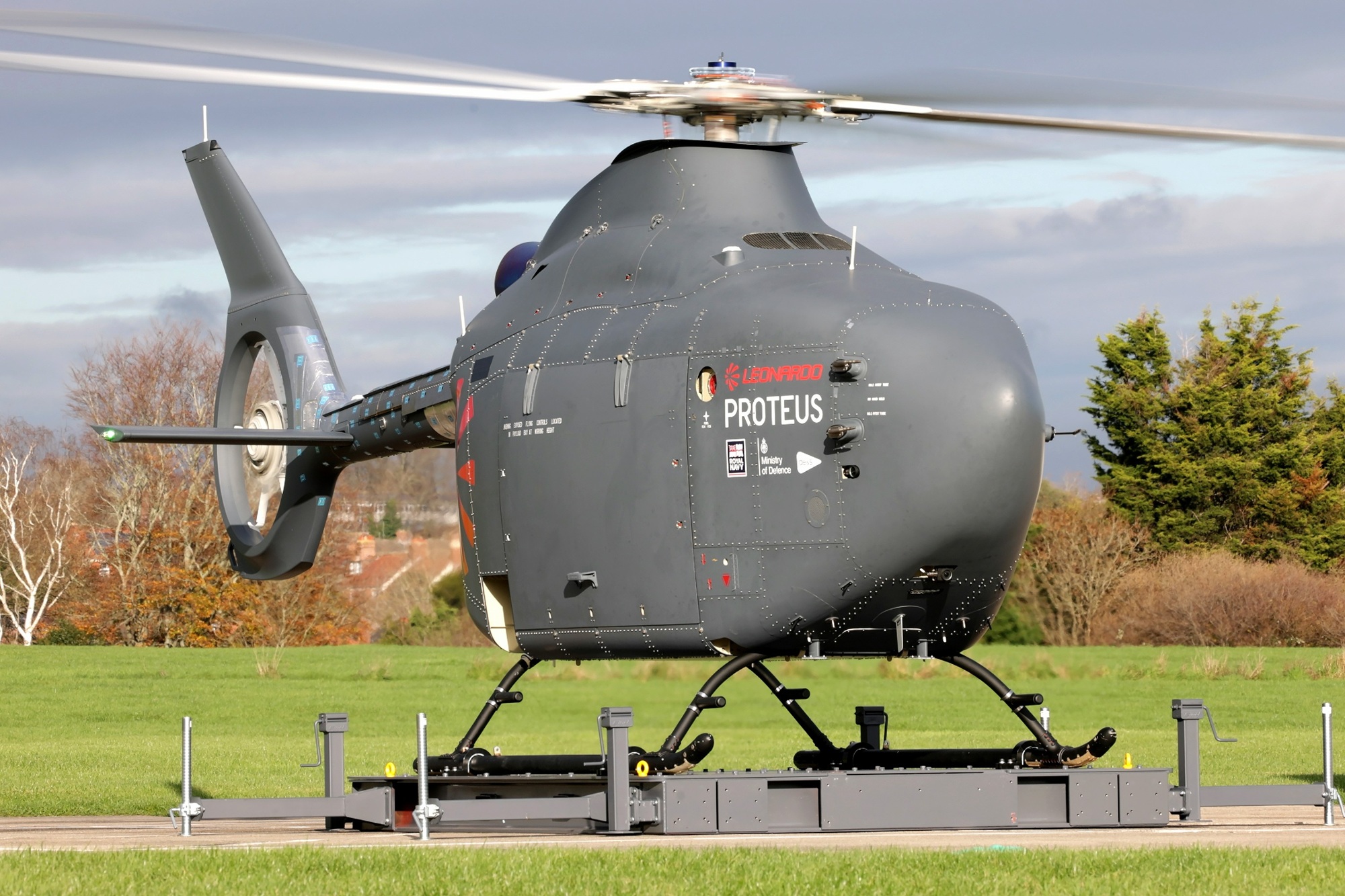
Unlike most UAS and remotely piloted aircraft, Proteus will utilise artificial intelligence for the majority of its active operations, with the aircraft autonomously taking off, patrolling, avoiding collisions and landing. A controller will still be sat at a control station to monitor the RWUAS as it sets about its taskings, ensuring that the aircraft maintains its safety parameters as well as the set rules of engagement.
This will mark a significant step forward for the Royal Navy and the UK’s armed forces as a whole as it will be the first large aircraft to be mostly autonomous, unlike traditional UAS such as the MQ-9A Reaper, which left service earlier this year, or the MQ-9B Protector RG1 that replaced it.
Captain David Gillett, the head of Maritime Aviation and Carrier Strike in the Royal Navy’s Develop Directorate, stated: “It’s been a huge pleasure to work with Leonardo and across Defence, as one team, to deliver Proteus… It combines cutting-edge technology, the experience of recent conflicts and has enormous potential to shape the Royal Navy’s future hybrid air wing.”
Additionally, Nigel Colman, the Managing Director Helicopters UK, Leonardo said: “Leonardo is leading the way globally in autonomy, supported by the Royal Navy… Proteus is equipped with cutting-edge onboard software capabilities, carrying a suite of sensors and systems that allow it to sense its environment, make decisions and act accordingly. All of this processing is conducted onboard the aircraft, while operating in the most extreme environments, including high sea states and strong winds – just where the Royal Navy needs this kind of capability.”
Is it a bird? Is it a plane? No, it’s an autonomous aerial vehicle…
Proteus, the Royal Navy’s first full-size crewless helicopter is one step from its maiden flight after successful ground trials at @LDO_Helicopters in Yeovil. pic.twitter.com/rPUCyXtSfj
— Royal Navy (@RoyalNavy) December 2, 2025
Proteus’ Origins and Future Use
Proteus originated from the Royal Navy’s SPEARHEAD ASW programme, launched to rapidly develop an autonomous testbed for ASW operations with the end goal of reducing the cost of the ASW mission, with a cheaper alternative to manned aircraft, whilst also rapidly increasing the mass of the ASW fleet.
As a result, the primary objective of the flight tests is to prove the platform’s anti-submarine warfare (ASW) capability through trials in maritime search patterns, using information from allied ships, aircraft and underwater systems to calculate likely contact areas. Here the RWUAS will deploy sonobuoys to detect the acoustic signatures of underwater targets establishing Proteus’ ability to relay information to the mission commander for classification and follow-on action.
This video by Leonardo helps to demonstrate the intended use case of Proteus during operations, but it also helps to explain what the Royal Navy wants to see during the subsequent flight tests.
The demonstrator itself is based on the Leonardo Kopter AW09, a light, single engined helicopter intended for civilian utility needs, although the airframe has been greatly adapted for use within the RWUAS program.
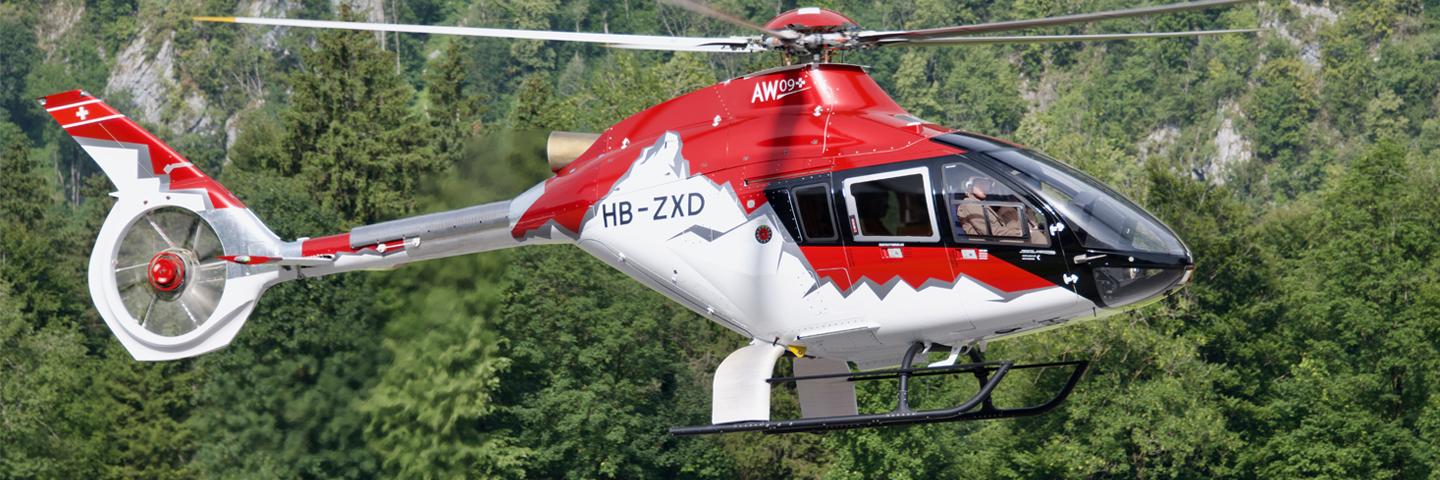
Proteus is designed with a large modular payload bay that can accommodate two standard NATO Pallets allowing for increased mission flexibility over other manned helicopters already in use with the Royal Navy such as the Merlin HM2. This flexibility allows the operator to integrate mission-specific payloads for various operations, such as ASW, Airborne Surveillance and Control (ASaC), Search and Rescue, logistics lift, intelligence gathering and stand-off weapon carriage.
In turn, this would allow mission specific aircraft to focus on their mission sets without compromising the overall fleet due to a lack of available aircraft. Currently funding seems to have focused on the ASW mission pallets, consisting of a set of sonobuoy launchers which will be tested during the upcoming flight phase of tests.
With its modular mission bay, Proteus RWUAS could be employed by the RN in the in the ASaC, ASW or logistics role.https://t.co/2dVqOzYPCL pic.twitter.com/htyd8BRJ6M
— Navy Lookout (@NavyLookout) January 7, 2025
The modularity of Proteus would, if it enters service, greatly enhance the Royal Navy’s ability to reduce the fatigue currently affecting the service’s Merlin fleet of HM2 and HMA4 aircraft, which have been pushed into roles they were not originally intended for.
For example, the Merlin HM2 fleet has suffered in its main ASW role due to the requirement for a number of the 30 operational aircraft to be equipped with the Crowsnest ASaC system, which has reduced the available aircraft for ASW operations. The decision to bolt on the system to existing helicopters made some sense during peace time operations due to cost savings and the perceived decline in the importance of ASW.
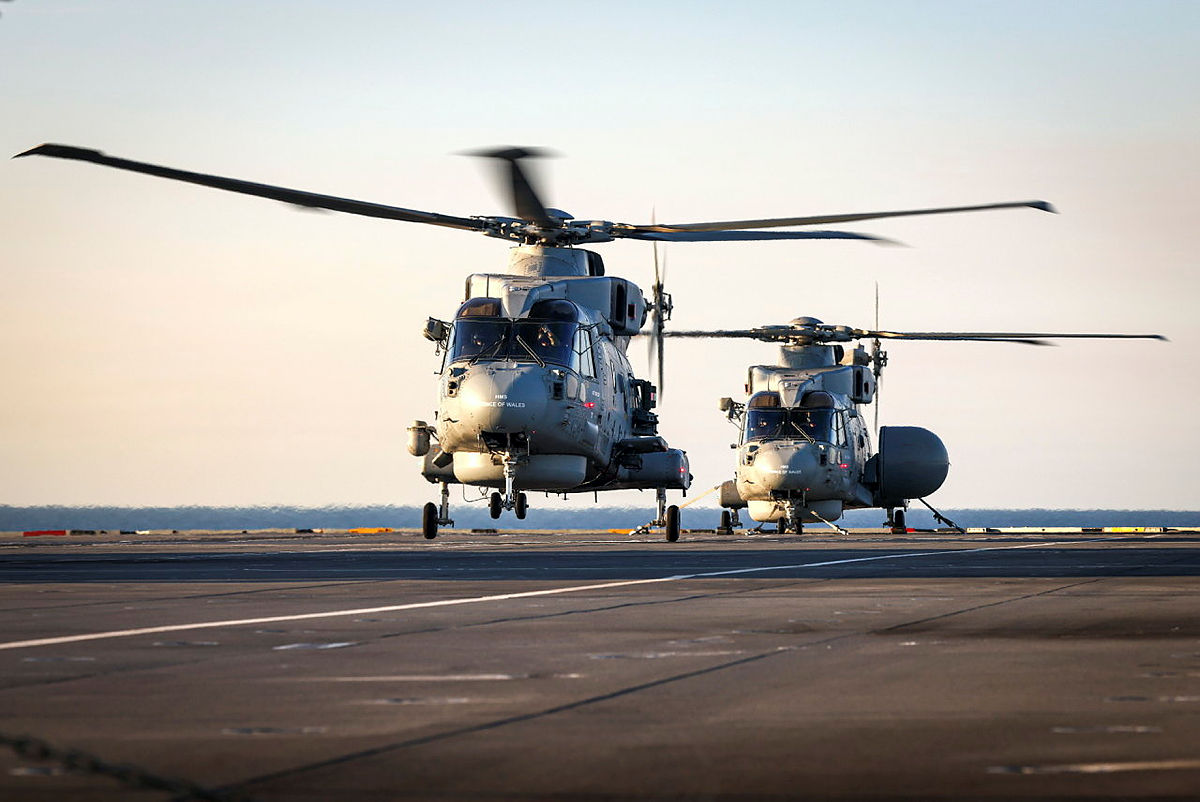
However, given the sharp increase in Russian naval activity post 2022, and its hostile activity towards NATO partners, there is a sudden increase in the requirement for ASW capability around the UK. Here Proteus could serve as a cheaper solution to buying further expensive manned platforms both ASaC and ASW expanding the Royal Navy’s ability to do both in future conflicts, whilst reducing risks to pilots and operators through the use of an unmanned system.
Proteus and the Royal Navy’s Maritime Transformation
News of Proteus’ preparations for flight tests reminds us of the transformation that the Royal Navy is looking to take on. This commitment to unmanned platforms, laid out by First Sea Lord General Sir Gwyn Jenkins at DSEI earlier in the year, seeks to change the navy so that it is “uncrewed wherever possible, crewed only where necessary” increasing military output on a short budget.
This is a strategic shift for the Royal Navy as it hopes to make up for the shortfall in hull numbers with short build cycle autonomous platforms on every level.
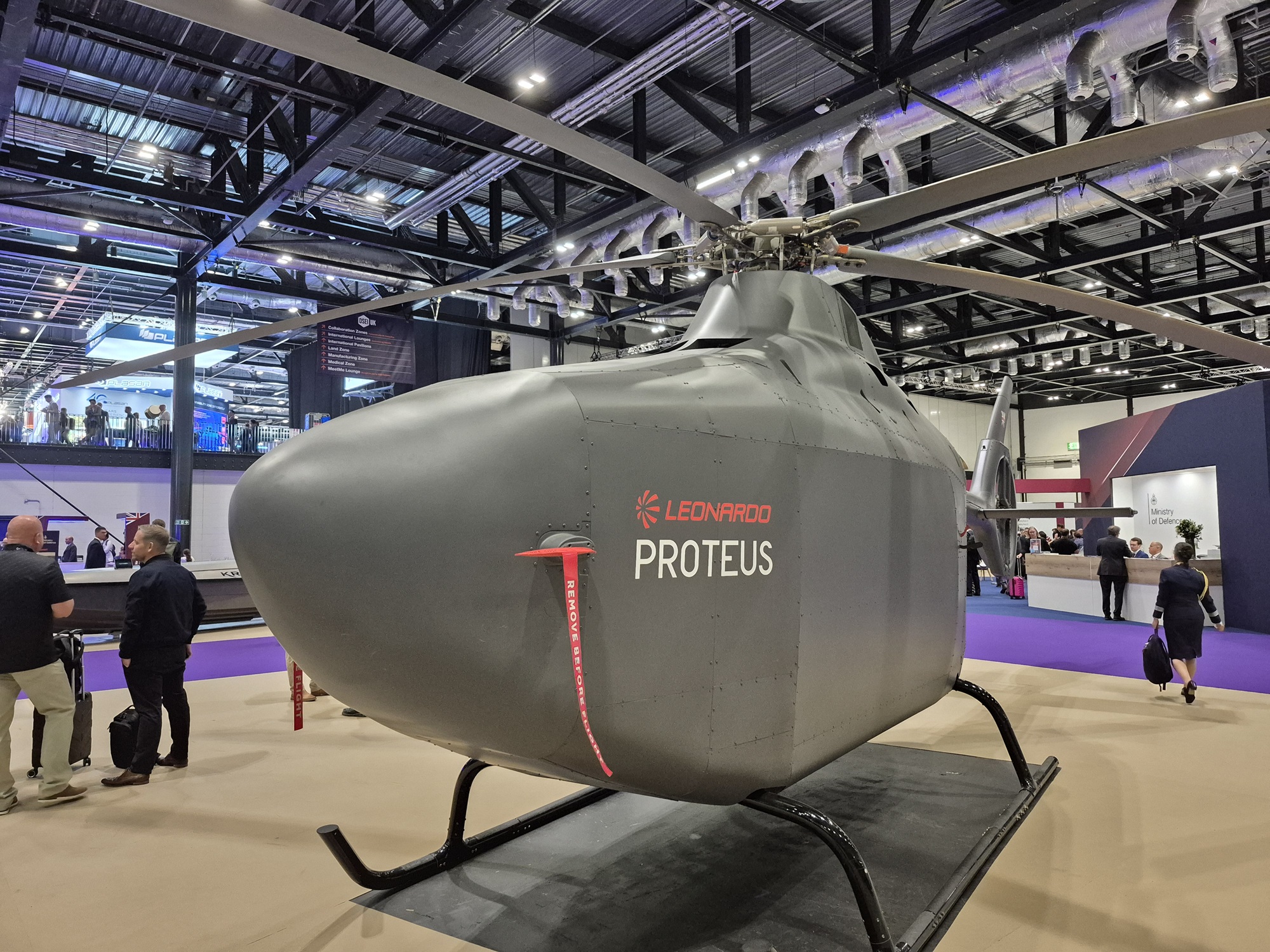
Whilst this pledge is mostly orientated towards the Royal Navy’s surface and subsurface fleets, where the production of a single warship can take almost a decade, the aerial element is clear with a mock up of Proteus taking centre stage at DSEI alongside the British Army’s Challenger 3 and Ajax and the RAF’s Typhoon. Proteus is currently the main visual element of the First Sea Lord’s pledge to change the Royal Navy, with most other projects still in the concept phases and unfunded.
As such the success or failure of the Proteus demonstrator is of utmost importance to the Royal Navy’s transformation into a manned and unmanned force. Leading the way to allow for further acquisitions of unmanned platforms, whether they be warships, fighters or airborne early warning systems.