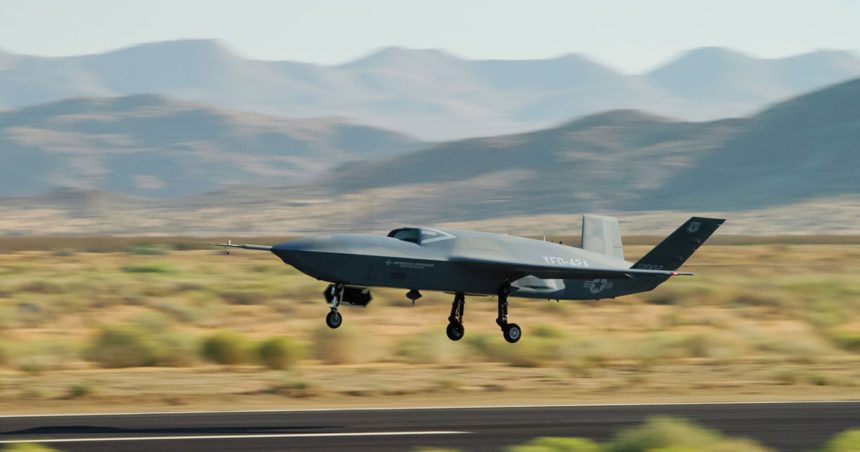
GA-ASI confirmed a YFQ-42 crashed during take-off and testing has now been paused temporarily, with an investigation already launched.
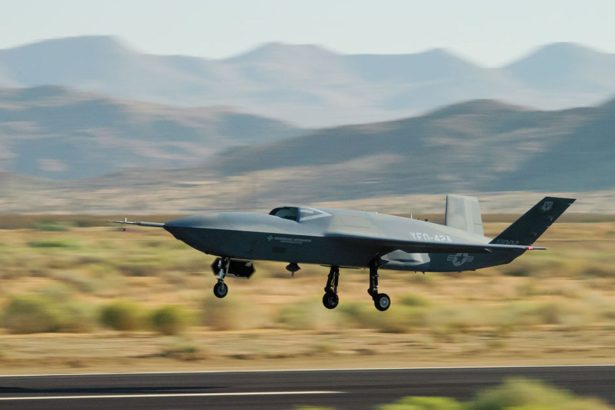
A prototype of the YFQ-42A Dark Merlin Collaborative Combat Aircraft (CCA), developed by General Atomics Aeronautical Systems, Inc (GA-ASI) crashed at the company-owned Gray Butte Airport near Palmdale, California on Apr. 6, 2025, reports said.
GA-ASI confirmed the incident and clarified there were no injuries, adding that flight testing has temporarily been paused and an investigation is in progress. At the moment, the only thing known about the incident is that it happened during take-off.
First generation of CCAs have semi-autonomous capabilities like taxiing, take-off, patrolling along set waypoints, returning to base and landing. There was no statement from the U.S. Air Force at the time of filing this story.
STATEMENT ON YFQ-42A CCA FLIGHT INCIDENT
A YFQ-42A Collaborative Combat Aircraft test platform experienced a mishap following takeoff from a company-owned airport in the California desert on Monday at approximately 1 p.m. Pacific.
No one was injured in the incident. Flight… pic.twitter.com/9Gdh4362HB
— General Atomics Aeronautical Systems, Inc (GA-ASI) (@GenAtomics_ASI) April 6, 2026
Here is the full statement from GA-ASI:
A YFQ-42A Collaborative Combat Aircraft test platform experienced a mishap following takeoff from a company-owned airport in the California desert on Monday at approximately 1 p.m. Pacific. No one was injured in the incident. Flight test operations have been paused temporarily in an abundance of caution.
General Atomics Aeronautical Systems, Inc. (GA-ASI) is assessing the condition of the aircraft and investigating to establish the root cause of the incident. At this early stage, it would be premature to speculate on the circumstances. As with any program, we follow a disciplined investigation process to understand exactly what occurred, and our focus right now is on gathering data and ensuring we learn from this event.
The aircraft is one of several production-representative YFQ-42A CCAs currently in the technical maturation and risk reduction phase of the program for the U.S. Air Force. The jets fly regularly at company-owned facilities as part of their operational test and evaluation program. These flight operations will resume when deemed appropriate.
‘Safety is our top priority, for our people and the public. In this case, established procedures and safeguards worked as intended, and there were no injuries,’ said C. Mark Brinkley, a company spokesman. “We’re going to take a close look at what happened, gather all the data, and allow the investigation to guide us moving forward.’
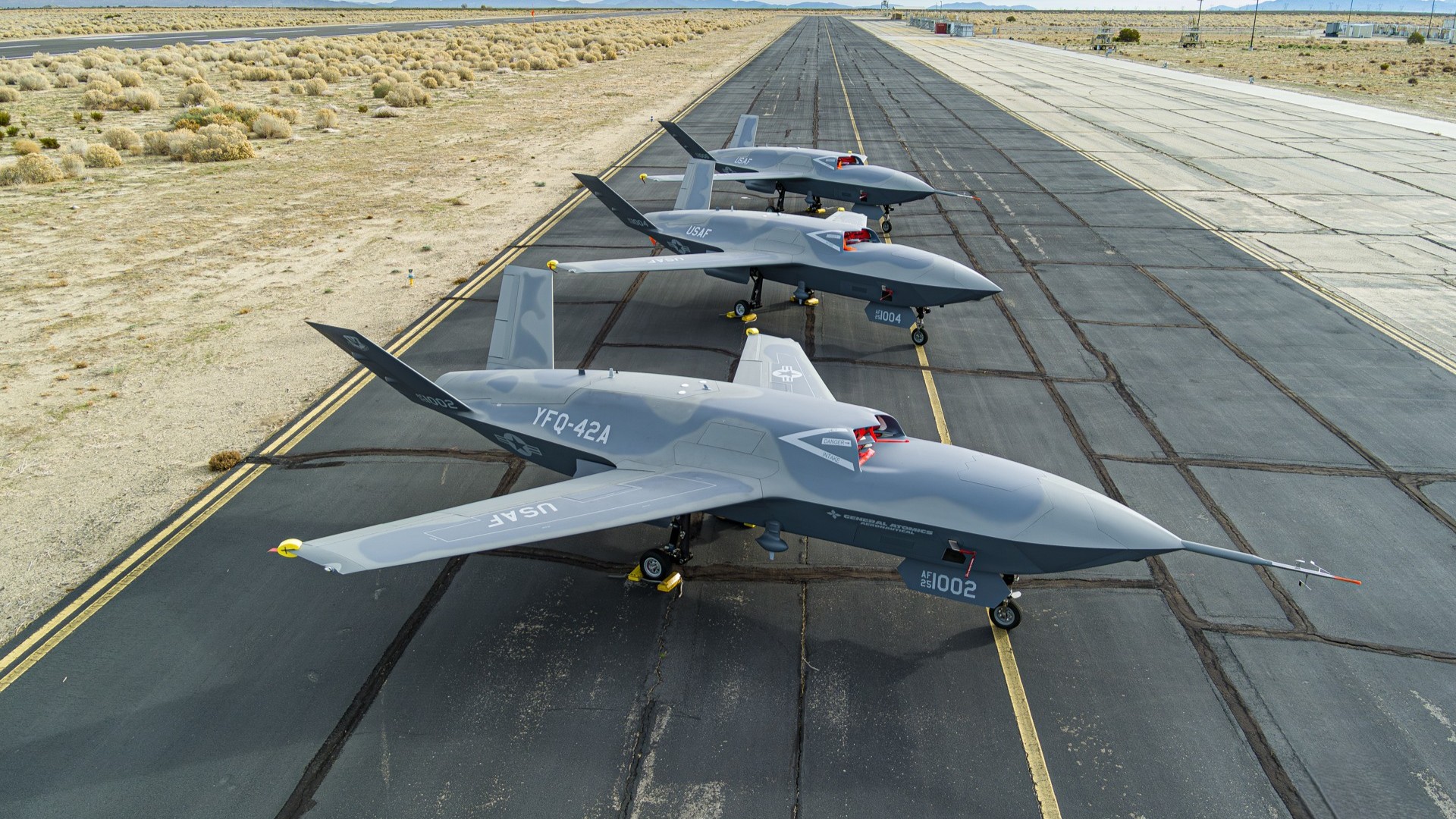
At the moment we are far from knowing which of the three confirmed Dark Merlin airframes was involved, and whether it was under man-in-the-loop or autonomous control.
USAF’s CCA program so far
The YFQ-42A, selected as a part of the U.S. Air Force’s Increment 1 phase for the CCA program, flew for the first time in August 2025, with the company revealing the second airframe a few months later in November. Then, in mid-February, the UCAV flew with Collins Aerospace’s Sidekick autonomous flight software, pursuant to the service’s goal to also have third-party flight program developers fly the various airframes to prevent “vendor locks.”
Shield AI at the time had announced its selection as the autonomy software provider for the CCA program, saying Hivemind was in the process of being implemented on Anduril’s YFQ-44A Fury, the second CCA in Increment 1. Fury, which has two confirmed airframes, also reached significant milestones.
The future of airpower — YFQ-42A. The collaborative combat aircraft is on a robust development schedule that began in August 2025 with initial flight operations, and in less than six months, GA-ASI has built and flown multiple #YFQ42A aircraft.
Read more: https://t.co/MgQLvuM2sM… pic.twitter.com/L6d3piCZjM
— General Atomics Aeronautical Systems, Inc (GA-ASI) (@GenAtomics_ASI) March 4, 2026
On Feb, 23, Fury flew with an AIM-120 Advanced Medium-Range Air-to-Air Missile (AMRAAM), and then days later, on Feb. 26, was controlled by Shield AI’s Hivemind and Anduril’s own Lattice autonomous flight programs. Later in March, Anduril announced the Fury had entered production at its Arsenal-1 factory in Ohio.
Future
The development of the Dark Merlin is supported by GA-ASI’s feeder programs, the primary one being the MQ-20 Avenger. It has flown several times with Hivemind while also conducting simulated air-to-air engagements and being controlled via tablet from an F-22 Raptor.
The other program is the XA-67A Off-Board Sensing Station (OBSS), that GA-ASI has been testing for a few years with the Air Force Research Laboratory.
We’re at the forefront of advancing autonomy, with GA-ASI’s #MQ20 Avenger® jet serving as a Collaborative Combat Aircraft surrogate for more than five years. Our ecosystem of advanced #UCAV consist of proven systems with the demonstrated ability to dynamically adapt to mission… pic.twitter.com/gB0Vji3jLP
— General Atomics Aeronautical Systems, Inc (GA-ASI) (@GenAtomics_ASI) February 18, 2026
Northrop Grumman’s YFQ-48A Talon Blue is the third CCA that entered the fray late, and was assigned the designation by the U.S. Air Force on Dec. 22, 2025. Along with Lockheed Martin’s pure stealth and higher-end Vectis, Talon Blue is expected to be pitched for the CCA’s Increment 2 phase.
The companies are observing the lessons learnt from the prototype testing and the Air Force’s needs in Increment 1, with one of the known areas being whether these aircraft would have internal weapons bays.