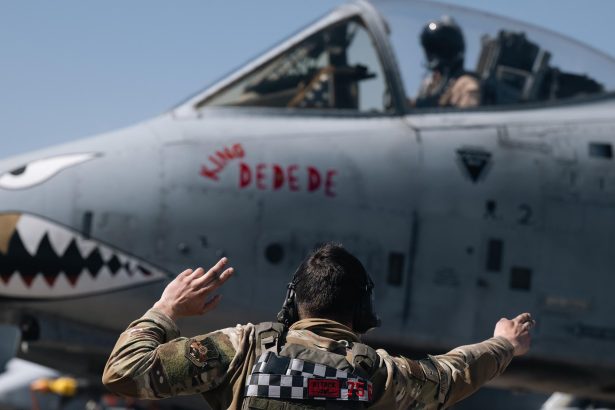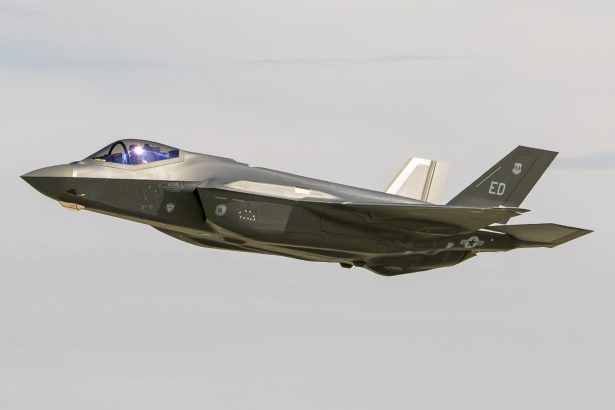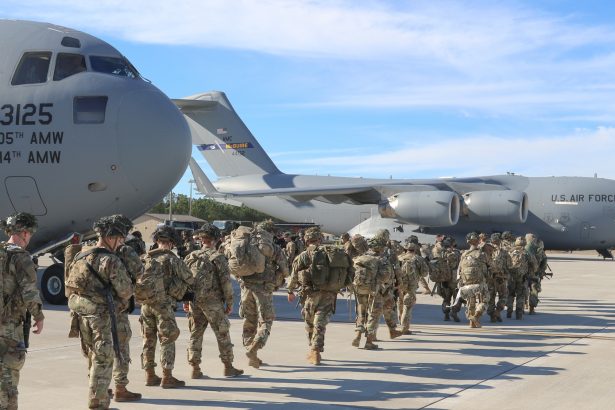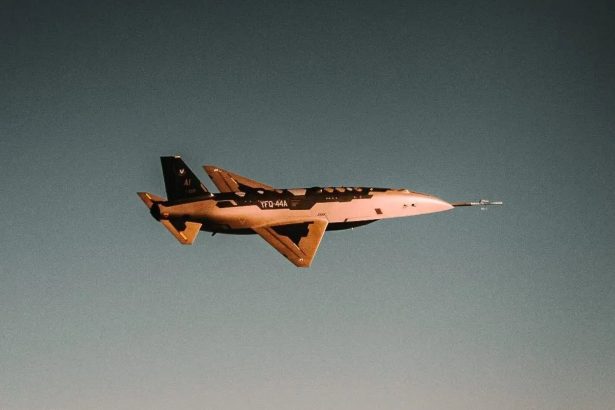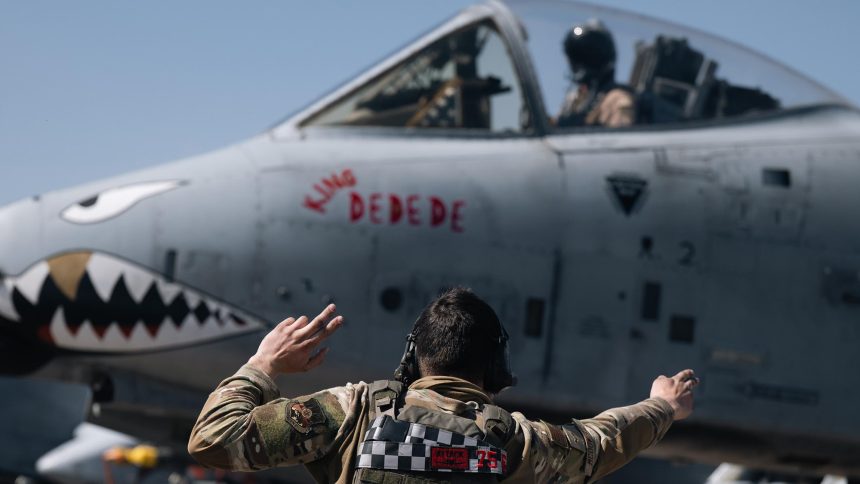
Images shared by U.S. Central Command suggest that at least some A-10s taking part in Operation Epic Fury carry new video game-inspired nicknames, an operationally irrelevant detail but one likely to interest spotters and modelers.
As we already reported a few days ago, the U.S. Air Force A-10 Thundebolt II jets supporting operation Epic Fury have started targeting fast attack watercraft in the Strait of Hormuz. As explained by General Dan Caine, Chairman of the Joint Chiefs of Staff, during the Press Briefing at the Pentagon on Mar. 19, 2026, the Warthogs are now engaged across the southern flank, flying maritime strike missions.
U.S. CENTCOM has just shared a post on social media.
U.S. Air Force A-10 Thunderbolt II attack aircraft have been used to strike Iranian naval vessels during Operation Epic Fury. pic.twitter.com/VasnOrehax
— U.S. Central Command (@CENTCOM) March 25, 2026
The post on X is far from surprising; still, it is interesting because it not only confirms the involvement of the iconic Warthog in the hunt for Iranian naval vessels, but also shows that the A-10Cs deployed to the region were given new nicknames.
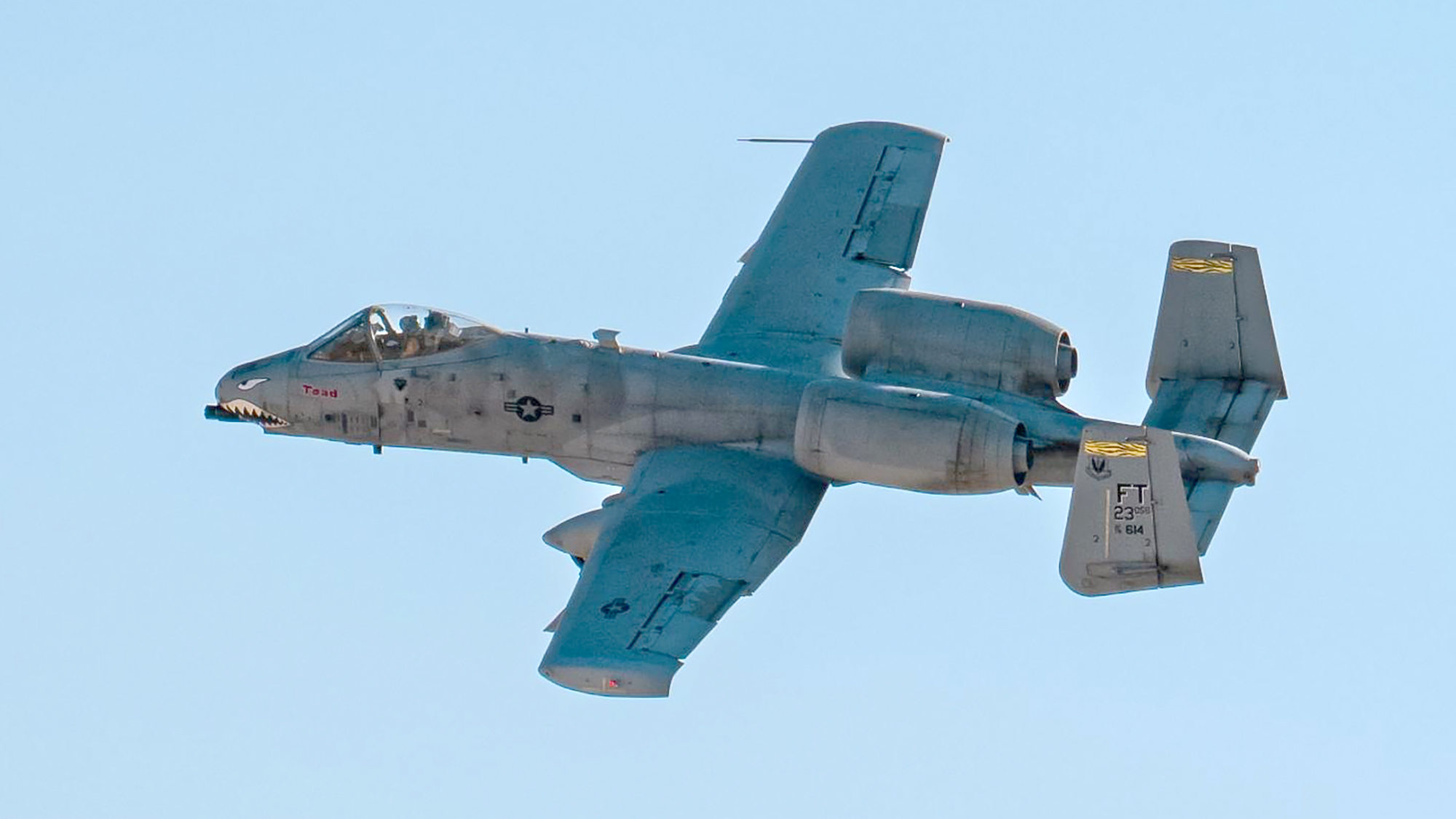
Based on the recently released photos, two A-10s were, in fact, nicknamed “King Dedede” and “Toad,” respectively.
Both are Nintendo characters, although from different game series.
King Dedede is a major character in the Kirby series. He is the self-proclaimed king of Dream Land, usually depicted as a round, blue, penguin-like character wielding a large hammer.
Toad is a character from the Super Mario series. He is one of the mushroom-headed citizens of the Mushroom Kingdom and is often shown helping Mario and Princess Peach.
Well before Operation Epic Fury began, there had been a long-standing tradition of giving all U.S. Air Force assets deployed to the U.S. Central Command AOR (Area of Responsibility) nicknames, usually alongside decorative nose art and kill markings representing the types of weapons employed and/or the types of targets struck.
For instance, in October 2025, A-10s with the 124th Fighter Wing of the Idaho Air National Guard, stationed at Gowen Field Air National Guard Base, Idaho, returned from their 6-month deployed to the CENTCOM AOR with Shahed-type UAS shapes, together with other kill markings as well as Greek gods nicknames.
While these nicknames are not relevant from an operational point of view, they are nonetheless interesting details for aviation enthusiasts, spotters, and modelers, as they offer a glimpse into the identity and culture of the deployed aircraft.
A-10 in naval role
We have covered the Warthog’s role in the maritime strike mission in detail in our previous story that you can find here. Below, a useful excerpt:
The shift to the maritime domain, whether from Jordan or another forward operating base in the region, makes a lot of sense, considering the type has regularly taken part in U.S. submarine escort and live-fire exercises in recent years. Moreover, the U.S. Air Force had released images of its A-10s deployed to the region escorting U.S. warships in the 5th Fleet Area of Operations last month.
In 2024, we reported about Warthogs practicing overwatch of a U.S. nuclear submarine during one of the most vulnerable phases of its navigation through the Strait of San Juan de Fuca, on the Pacific Northwest coast, between the state of Washington and Vancouver Island, British Columbia, Canada.
Few months later, a formation of six A-10Cs, assigned to Moody Air Force Base, escorted an Ohio-class ballistic missile submarine, the USS Wyoming (SSBN 742). The aircraft, were also involved in a live fire exercise with their GAU-8 30 mm gun and 70 mm rockets.
Born as a pure Close Air Support and anti-tank platform, the A-10 has rarely been employed in the maritime domain until roughly 15 years ago. In 2011, during Operation Unified Protector, when an A-10 and a P-3C Orion engaged together a patrol boat and several small attack craft in the port of Misrata, Libya.
More recently, following the renewed attention towards these types of asymmetric threats caused by the attacks in the Red Sea or the skirmishes between the Ukrainian USVs (Unmanned Surface Vehicles) and the Russian Navy in the Black Sea, the type has been used to target swarms of boats and strike small vessels in several training scenarios.
In the 2020s, the Warthog took part in multiple Maritime Surface Warfare exercises and conducted unit defense training. One of the exercises saw, in Sept. 2023, two A-10s engage simulated surface threats in the Gulf of Oman with the Arleigh Burke-class guided-missile destroyer USS Stethem.
High Value Targets, like U.S. warships and civilian ships and tankers could be attacked and overwhelmed by coordinated swarms of USVs, challenging the traditional naval defense strategies. The A-10’s maneuverability at low airspeeds and altitude, flexible armament, highly accurate weapons-delivery capabilities, and extended loiter time are all key attributes that make it highly effective at against fast naval targets in the Persian Gulf and beyond.
Besides the maritime role, the A-10s continue to operate in the more traditional CAS (Close Air Support) role on land-based targets as video regularly circulating online show.
WATCH: USAF A-10 Warthogs strafing Iranian-backed militia positions near Mosul, Iraq.
— Breaking911 (@Breaking911) March 24, 2026
Multiple airstrikes targeted PMF positions in al-Qaim, western #Iraq. 🚨 pic.twitter.com/cr52Jeza4A
— Tammuz Intel (@Tammuz_Intel) March 25, 2026