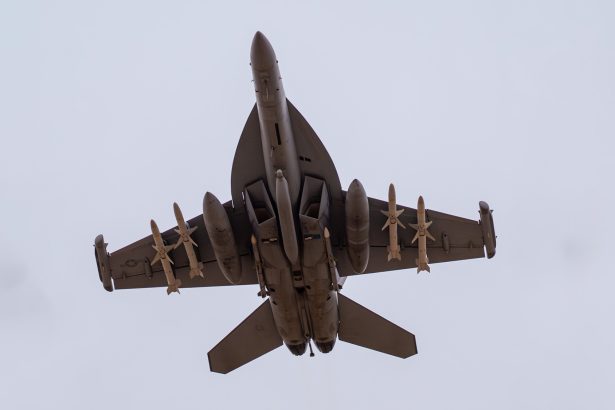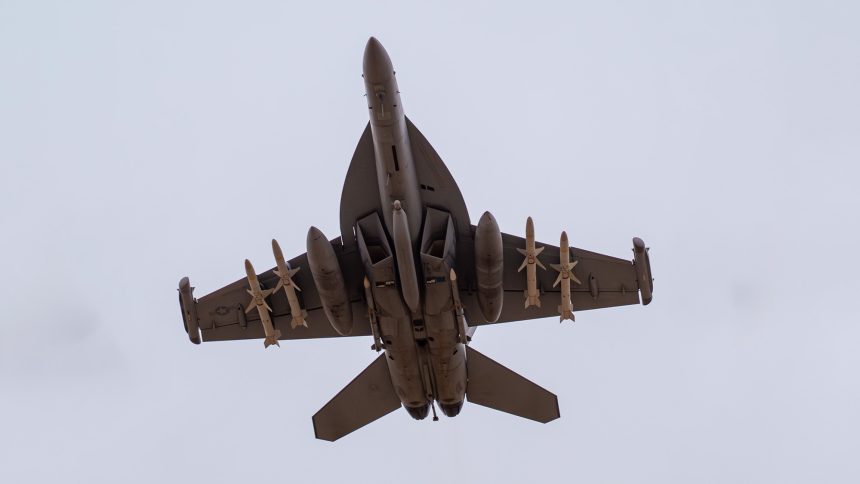
SEAD missions appear to be still a big focus of Operation Epic Fury, with EA-18Gs shown flying with four AGM-88s and F-16s flying with mixed AGM-88/JDAM loads.
New photos released by the U.S. Central Command (CENTCOM) show U.S. fighter jets being launched for new missions over Iran during Operation Epic Fury. Notably, in the latest batch, assets involved in the Suppression of Enemy Air Defenses (SEAD) are the focus.
The new photos
Among the aircraft shown, the most interesting is the EA-18G Growler. In fact, the jet is sporting a rarely seen loadout with four AGM-88 anti-radiation missiles, together with an AN/ALQ-99 Tactical Jamming System (TJS), two AIM-120C/D Advanced Medium-Range Air-to-Air Missile (AMRAAM) and two external fuel tanks (EFT).
America’s military capabilities and advantages are building. pic.twitter.com/TTnXVdmYqD
— U.S. Central Command (@CENTCOM) March 17, 2026
Notably, the AGM-88s are mixed, as two are the older AGM-88C High-speed Anti-Radiation Missile (HARM) variant and two are the newer AGM-88E Advanced Antiradiation Guided Missile (AARGM) variant. The AARGM can be identified by green stripes on the mid-body fins and a different color on the nose cone.
There are also a few other visible differences, the most prominent being the color of the nose cone. pic.twitter.com/K7jycJtXMj
— Guy Plopsky (@GuyPlopsky) December 24, 2025
A similar configuration was seen in 2025 when the Growlers were employed in the U.S. strikes against Houthi targets in Yemen. A more usual payload for the EA-18G would see only two AGM-88s and three AN/ALQ-99s, together with two EFTs and two AIM-120s.
Better quality. Looks like a mixed loadout: two HARMs (mid-board wing stations) and two AARGMs (outboard wing stations). https://t.co/xcQZQsa4ni pic.twitter.com/YU46xn5Yup
— Guy Plopsky (@GuyPlopsky) March 17, 2026
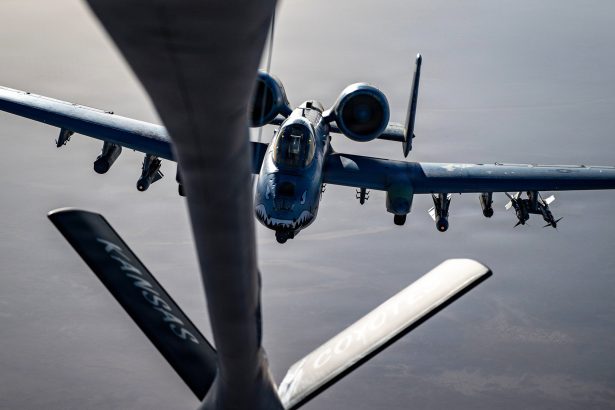
The other SEAD asset shown is the F-16CM Fighting Falcon, which is equipped with a mixed load including an AGM-88C HARM and a GBU-31(V)3 Joint Direct Attack Munition (JDAM), the bunker busting variant of the 2,000 lb guided bomb. This marks a change compared to the initial days when the F-16s were flying with a HARM-only loadout.
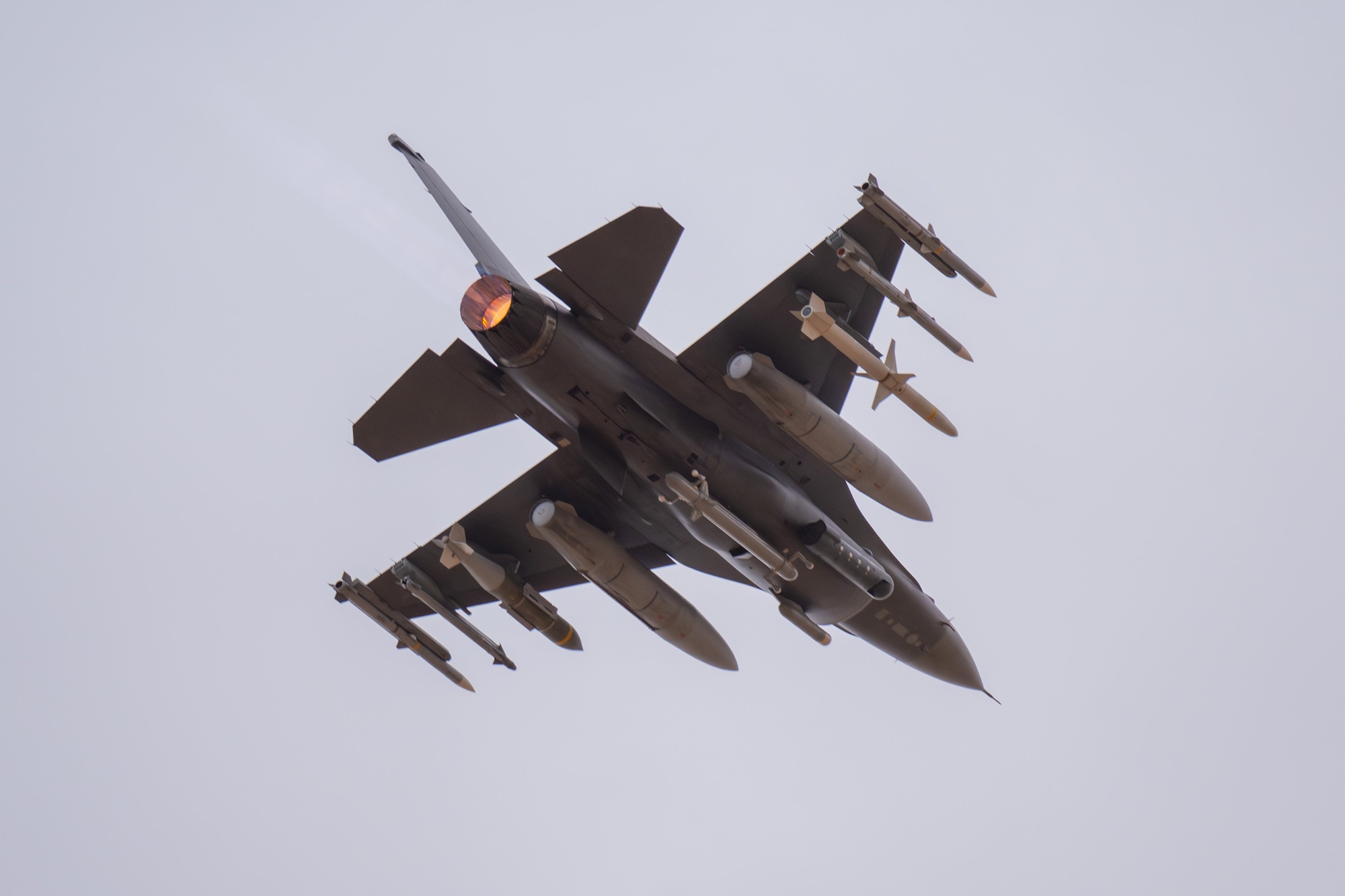
The specialized loadout is completed by an Angry Kitten electronic warfare pod, together with the usual AN/ASQ-213 HARM targeting system (HTS) pod, a Litening targeting pod, three AIM-120s and one AIM-9X Sidewinder. The Angry Kitten, initially born as a training pod, has evolved as a modular DFRM-based electronic warfare pod and is now at its first combat employment.
Angry Kitten carrying SCANG Wild Weasels on Iran ops with a mixed loadout of HARMs and GBU-31s fitted with BLU-109 penetrators, plus HTS pods and LITENING LAs. Three AIM-120C/Ds (up from the standard two), and one AIM-9X rounding it out. Few do multirole like the Viper can. pic.twitter.com/RrH32aNKFL
— Abd (@blocksixtynine) March 17, 2026
Compared to the Growler, the Wild Weasel F-16s appears to be a more multirole loadout, compared to a standard SEAD mission. Previously, the F-16s were also shown with a mixed loadout which included an AGM-88C and a GBU-54 Laser JDAM, a loadout already used in the past for of Destruction of Enemy Air Defenses (DEAD) missions.
Wild Weasel heading into the fray with a mixed loadout simultaneously covering Strike, SEAD, and A2A, with the HTS doubling as an ELINT sensor. Not bad for a 30+ yrs old airframe when you have supposedly omni/swing platforms that still struggle with this level of mission overlap. https://t.co/x9TcchZCMj pic.twitter.com/dkgDUI6sVK
— Abd (@blocksixtynine) March 8, 2026
An F-35A Lightning II is also shown in this latest post by CENTCOM, although it can’t immediately be linked to SEAD missions. In fact, while SEAD is one of the F-35’s primary missions, it is not the only and does not use specialized equipment carried externally.
Hundreds of air assets continue to deliver devastating combat power against the Iranian regime during Operation Epic Fury. pic.twitter.com/aqzHqdnVoh
— U.S. Central Command (@CENTCOM) March 11, 2026
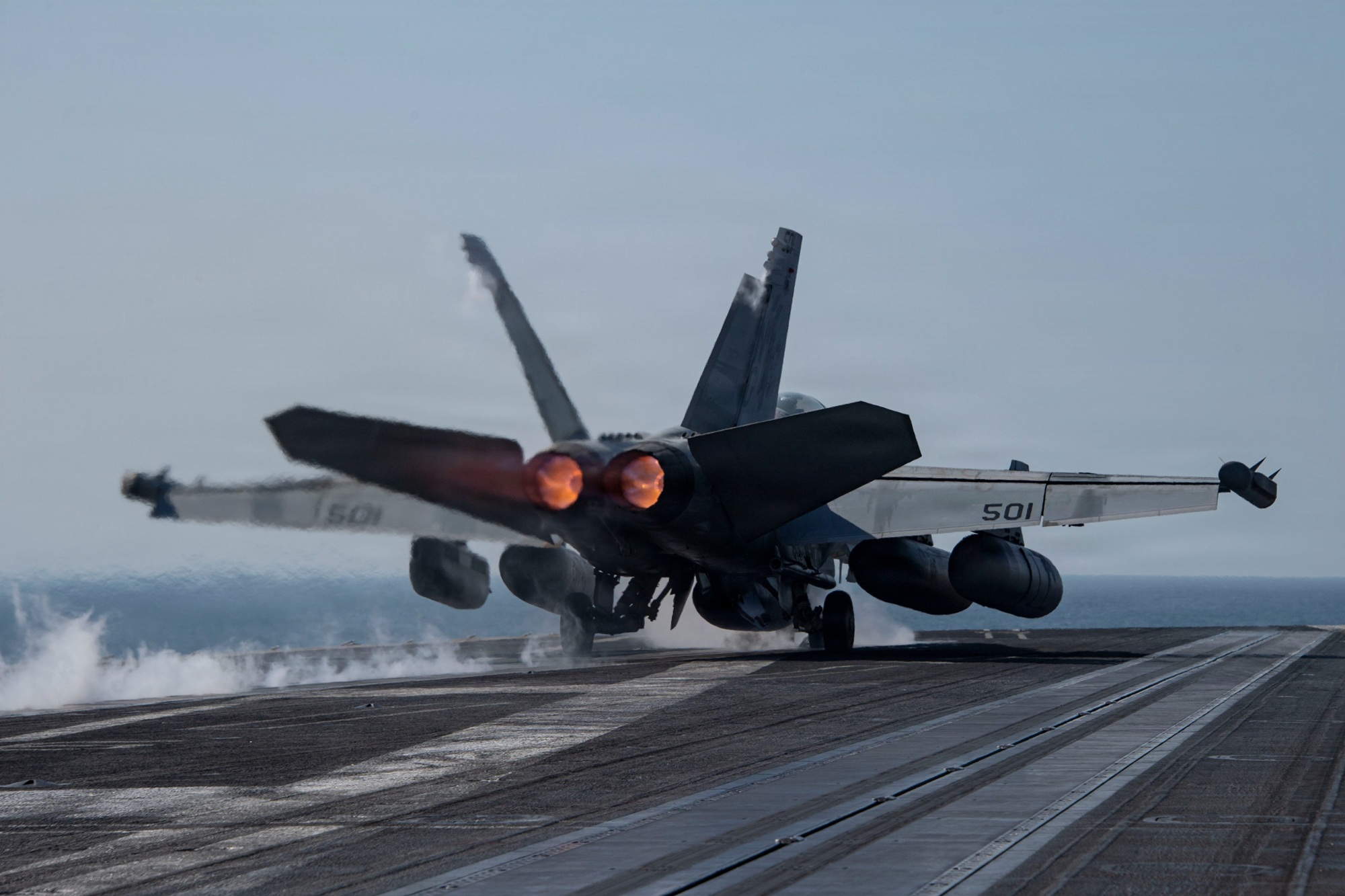
A picture from last week also shows another interesting loadout of the Growler. In fact, an EA-18G is shown launching from the USS Abraham Lincoln (CVN 72) aircraft carrier equipped with an AN/ALQ-99 TJS and a newer AN/ALQ-249 NGJ-MB (Next-Generation Jammer-Mid Band), together with three EFTs and two AIM-120s.
Is SEAD still needed?
Operation Epic Fury is now in its third week since the opening attack on Feb. 28, 2026. One could wonder why SEAD is still needed, especially after the U.S. officials claimed multiple times that the military has completely destroyed Iran’s defenses and achieved air superiority.
It must be noted however, that strikes are hitting Iranian targets progressively farther from the coast, allowing assets to more safely move inland. Thus, there could be areas were threats are still present and need to be treated accordingly.
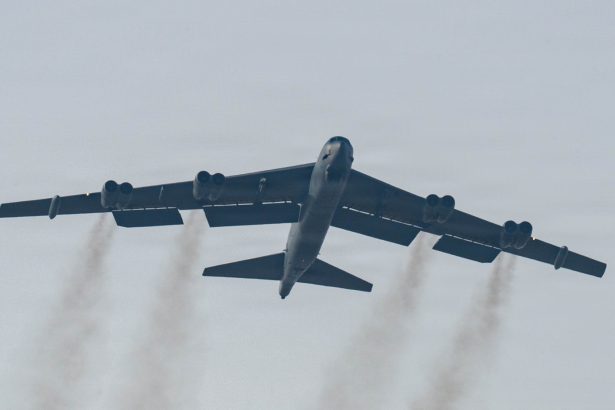
This would be also in line with a more specific “localized air superiority” mention by CENTCOM, which would indeed imply that some areas are still not fully under control. In turn, this would also possibly explain why B-52H Stratofortress bombers continue to employ the AGM-158 Joint Air-to-Surface Standoff Missile (JASSM). With this weapon, which has also been used in the opening phases by the B-1B Lancer, the bombers can conduct their strikes while remaining out of the threat’s range.
First mission from the UK for these two B-52 Stratofortress bombers, loaded with cruise missiles under the wing. They launched this weekend as B-1 Lancers also continue to operate from RAF Fairford in Gloucestershire. pic.twitter.com/dnCTzDcxBo
— CobraEmergency (@CobraEmergency) March 16, 2026
Anyway, what can be considered for certain is that the surface-to-air threat is not yet fully eliminated. For instance, video released by CENTCOM on Mar. 15 and 16 show MIM-23 Hawk surface-to-air missile launchers being destroyed, as well as a ZU-23-2 anti-aircraft autocannon.
Iranian combat power declines, as U.S. dominance builds over vast swaths of Iran. pic.twitter.com/LrYe5PVMj1
— U.S. Central Command (@CENTCOM) March 15, 2026
Thousands of Iranian military targets have been struck by U.S. forces to neutralize threats posed by the Iranian regime now and into the future. pic.twitter.com/dE4VNxjjW1
— U.S. Central Command (@CENTCOM) March 16, 2026
It should not be forgotten that Iran possessed a highly dense and layered air defense networks, whose threat was not underestimated by the U.S. military. While the country has been historically reliant on Soviet-era systems, it started increasingly integrating indigenous systems which apparently emphasized mobility and electronic warfare capabilities.