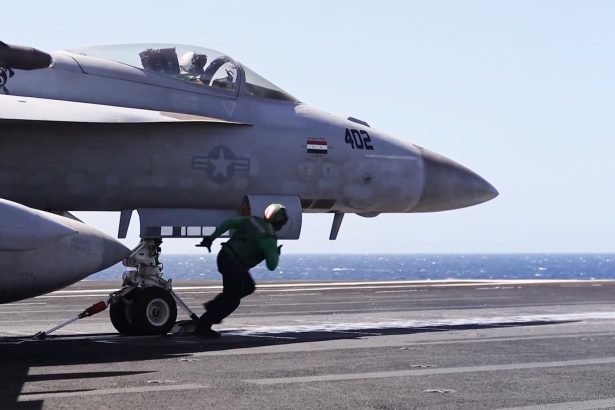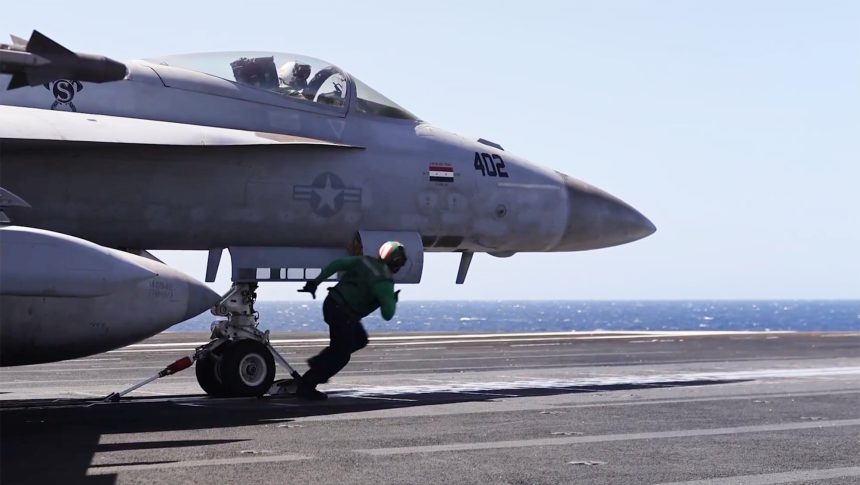
The jet, 168912, which in 2017 scored the first Super Hornet air to air kill and the first U.S. air to air kill since 1999, was seen in official footage launching from the USS Gerald R. Ford, currently operating in the Red Sea.
The 2017 shootdown saw the F/A-18E Super Hornet, then flying from the USS George H. W. Bush (CVN 77) engage and destroy a Syrian Su-22 Fitter using an AIM-120 AMRAAM after the Syrian fighter was seen targeting Syrian Democratic Forces in the Raqqa region. The Aviationist subsequently reported in 2019 on the appearance of a Syrian flag kill marking on the side of the Super Hornet.
rare sight of the F/A-18E that shot down a Syrian Su-22 back in 2017 https://t.co/cw0MD4OQ6v https://t.co/otEg2dAlz3 pic.twitter.com/S0TPkpRMQq
— Samir (@obretix) March 14, 2026
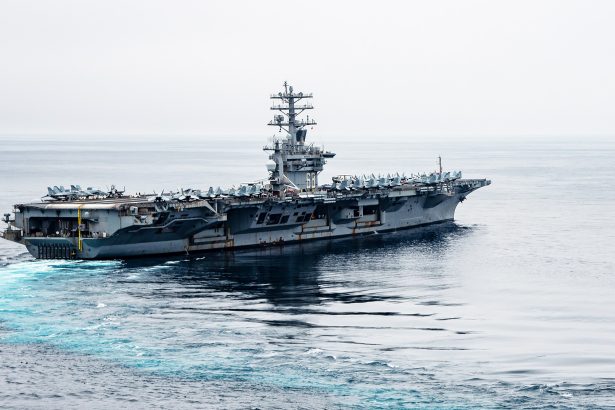
Today, the aircraft is still seen to be assigned to Strike Fighter Squadron 87 (VFA-87), which is attached to Carrier Air Wing 8 (CVW-8) on board the USS Gerald R. Ford (CVN-78). The Ford was rushed back across the Atlantic Ocean to the Eastern Mediterranean in the middle of February, ahead of Operation Epic Fury commencing, and has since moved through the Suez Canal into the Red Sea as Iran-backed Houthi forces in Yemen threaten to forcibly close the Bab-al-Mandeb Strait.
In a video released via the U.S. Central Command (CENTCOM) official social media feeds, 168912 (side number 402) with its kill marking can clearly be seen being prepared for launch from one of the carrier’s two forward catapults.
U.S. forces dominate in the skies by launching from the sea. pic.twitter.com/2p9WfmysBO
— U.S. Central Command (@CENTCOM) March 14, 2026
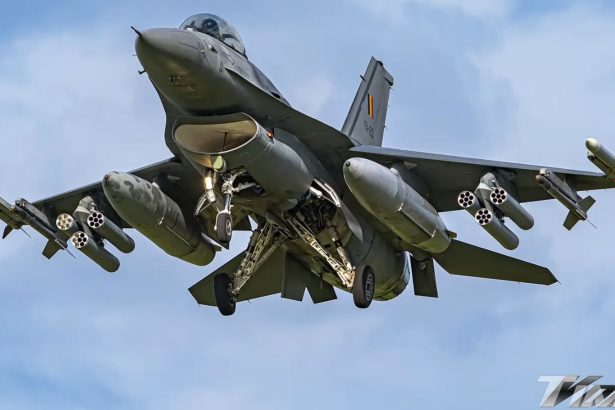
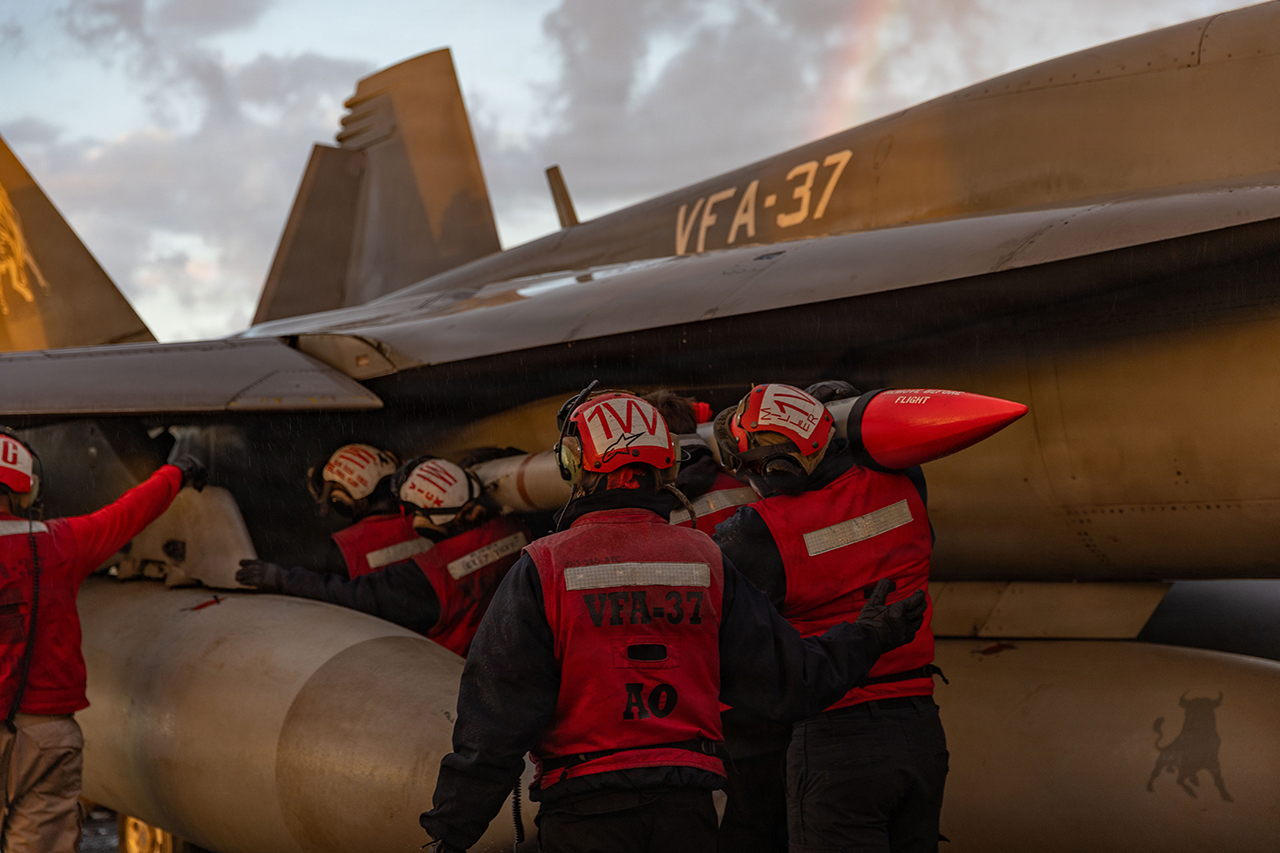
While not as close in proximity to the ‘action’ as the USS Abraham Lincoln (CVN-72) – operating in the Arabian Sea – the Ford is more ideally placed to provide combat air patrol (CAP) sorties to defend regional allies and friendly bases from drones and missiles launched by Iran. As such, rather than huge collections of JDAMs and other anti-surface weapons as seen on the Lincoln, imagery we have from the Ford primarily shows aircraft being outfitted with air to air weaponry like the AIM-9X Sidewinder and AIM-120 AMRAAM.
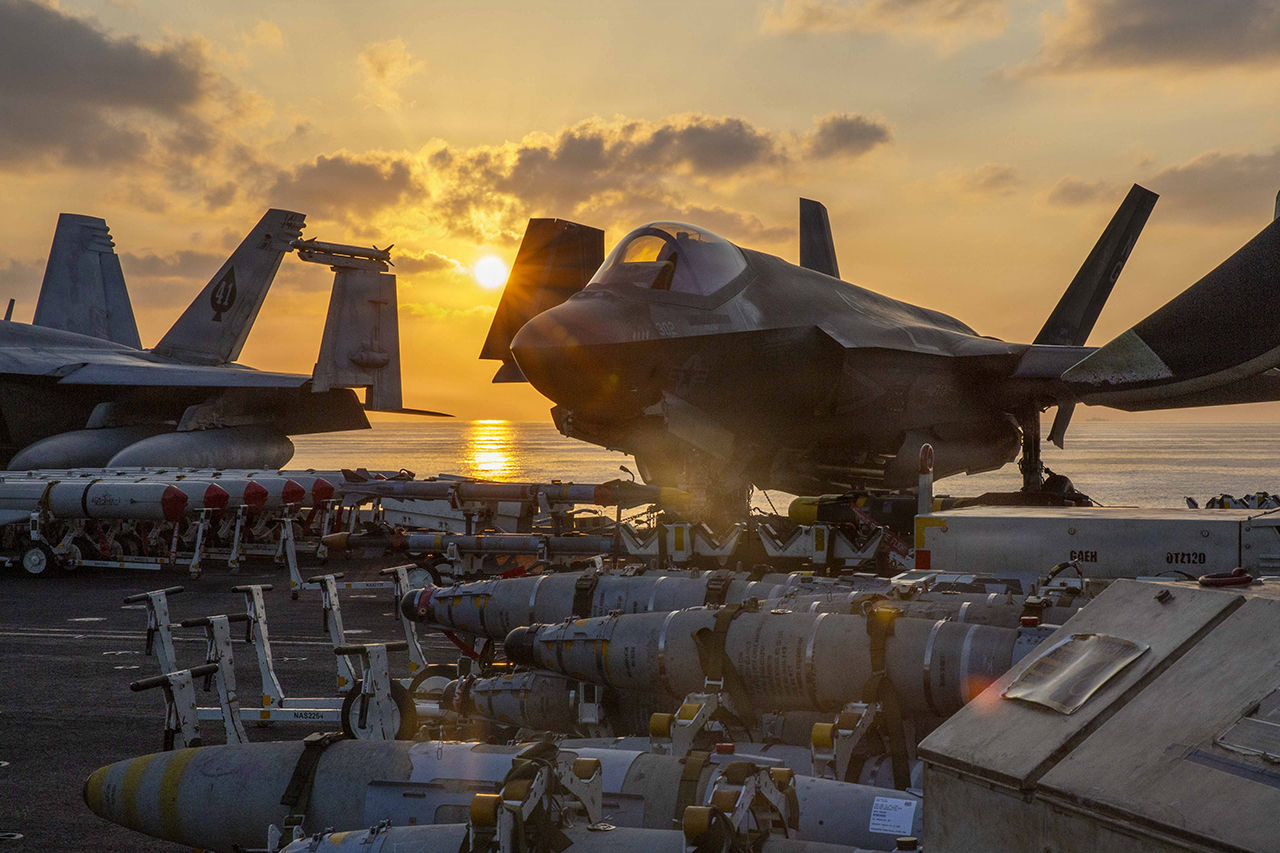
Aircraft from the Ford could also be used to target Iranian-supported groups that operate in Iraq and Syria, though at least in the imagery that we do have – which, it should be stressed, may deliberately not paint the full picture – the appearance of air to surface weaponry has been limited.
Caribbean Ops
Looking back, with the Ford’s recent operational history in mind, we can see that this airframe was also active during Operations Southern Spear and Absolute Resolve in the Caribbean during the latter months of 2025 and early months of 2026. Aviation photographers captured the jet – albeit from the opposite side, without the kill marking visible – at Luis Muñoz Marín International Airport in San Juan, Puerto Rico.
Images released by the U.S. Department of Defense show the aircraft launching and recovering to the Ford on multiple occasions.
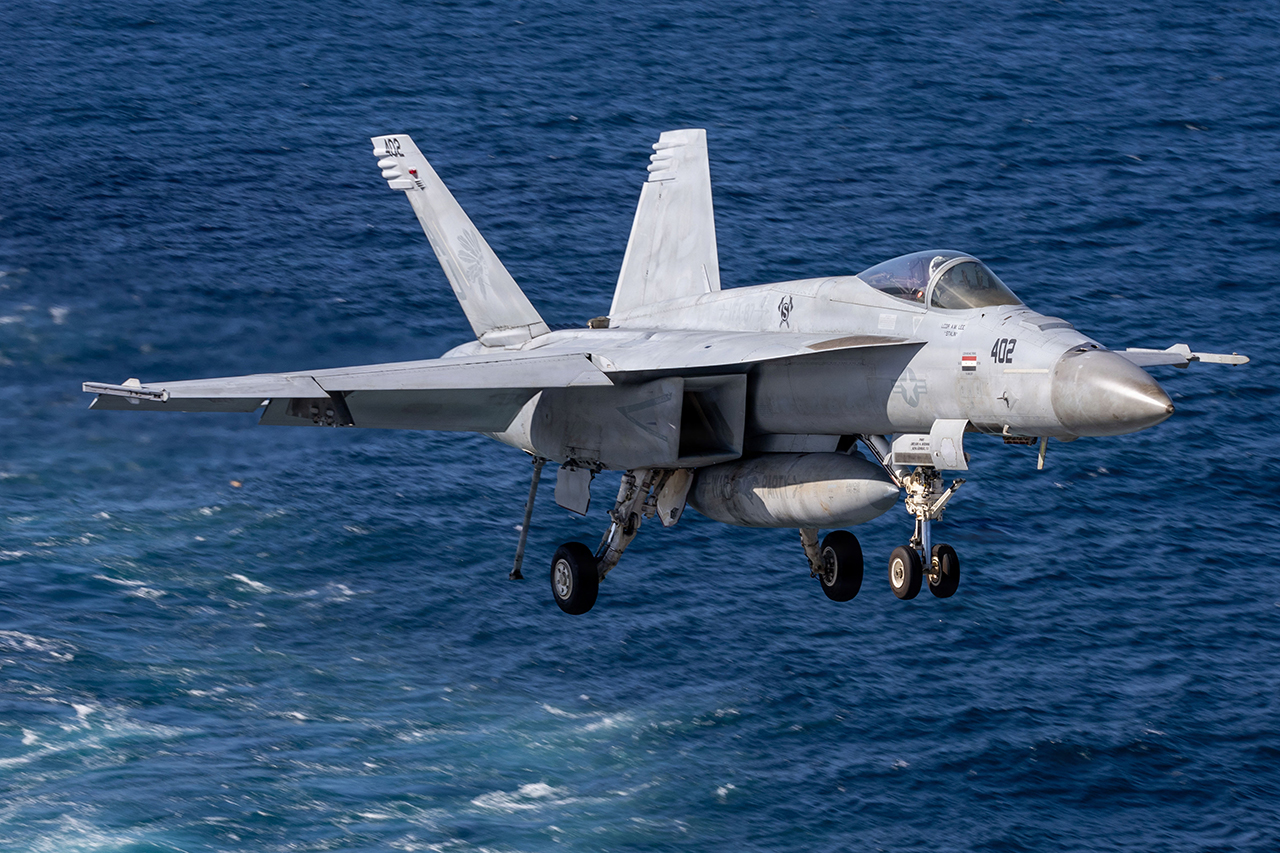
Intensified operations across the Middle East since October 2023, now bolstered even further by the direct and sustained military action being launched against Iran, are certain to see many more F/A-18s (and other types) join the ‘Sukhoi Killer’ with long-lasting kill markings decorating their fuselages. Drone kill markings have been one of the more recent developments, being sported by a variety of aircraft types as well as ships after they were used to destroy mass waves of one-way attack UAVs (OWUAVs), like the Shahed 136, launched by Iran.
The Ford itself, as remarked earlier, is being pushed hard with the Operation Epic Fury deployment coming after the ship had essentially already completed a full tour. By the time it returns to the U.S., the deployment is likely to be one of the longest (in distance and in duration) mounted by a U.S. carrier in decades. Notably, it was recently announced that a non-combat related fire had broken out on board the ship leading to non-life threatening injuries for at least two members of the crew.
The non-combat-related was quickly contained and the ship remains fully operational while supporting Operation Epic Fury.
Story: https://t.co/EAPG84wl0g
— The Aviationist (@TheAviationist) March 12, 2026
The ship’s general material state has been cause for much speculation, with NavyTimes reporting earlier in the year on major plumbing issues being faced on board. Problems with basic life support facilities like the plumbing system are sure to have a negative effect on crew morale, which is a particular concern during an already extended deployment.
In theory, the Ford can soon be rotated out of theatre and replaced by the USS George H. W. Bush. The Bush, which is the U.S. Navy’s newest and last-built Nimitz class aircraft carrier, recently completed the pre-deployment Composite Training Unit Exercise (COMPTUEX) program and is now back in port gearing up for its deployment (which was already scheduled to take place even before the U.S.-Israel attacks against Iran). Even if the ship sailed today, it would still be quite a few more weeks before it, its air wing, and its strike group are in theater and ready to assume the Ford’s tasking.