Iran’s Supreme Leader, Ali Khamenei, has been killed during the strikes in Iran, according to both Israel and the U.S.
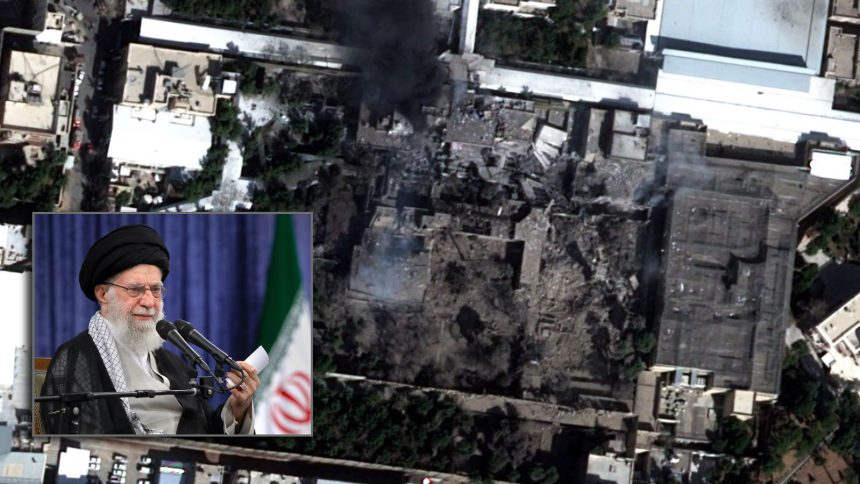
Following the strikes on Iran’s territory on Feb. 28, 2026, Israel and the U.S. are now saying that Iran’s Supreme Leader, Ali Khamenei, is dead. Khamenei’s compound in Tehran was struck by up to 30 bombs, according to some reports, with satellite photo showing several destroyed buildings.
Iran’s Supreme Leader targeted in strikes
Israeli sources initially stated that Khamenei is “almost certainly dead,” with Prime Minister Benjamin Netanyahu later saying there are many signs that Khamenei is “no longer with us.” In the evening, Israeli media then said that Netanyahu has been shown a photo of Khamenei’s dead body being recovered.
(Reuters) – Iran’s Supreme Leader Ayatollah Ali Khamenei, who turned the country into a powerful anti-U.S. force and extended its military influence across the Middle East while crushing repeated domestic unrest, was killed in Israeli, U.S. strikes, senior Israeli official told…
— Phil Stewart (@phildstewart) February 28, 2026
Footage of Iran’s Supreme Leader Ali Khamenei’s corpse has been shown to Prime Minister Netanyahu, according to N12.
— OSINTdefender (@sentdefender) February 28, 2026
Iran’s government has been denying this reports, saying that the Supreme Leader is alive and would soon address the nation. So far, this did not happen.
However, the U.S. is now backing Israel’s assessment that Khamenei has been killed during the strike on his compound, alongside up to 10 top officials. This was similarly stated by U.S. President Donald Trump, who said “We feel that that is a correct story.”
President Trump tells Trump tells NBC, re: reports of Khamenei’s death, “we feel that that is a correct story”
— Brian Stelter (@brianstelter) February 28, 2026
Trump later published a post on his social network, again stating that Khamenei is dead, and adding that Iran has been “obliterated” in “only one day.” The President further stated that the strikes will continue “uninterrupted throughout the week or as long as necessary.”
“Khamenei, one of the most evil people in History, is dead. This is not only Justice for the people of Iran, but for all Great Americans, and those people from many Countries throughout the World, that have been killed or mutilated by Khamenei…” – President Donald J. Trump pic.twitter.com/oXZTFGg5pS
— The White House (@WhiteHouse) February 28, 2026
According to U.S. officials, the group was set to meet in the compound this morning. This meeting has been defined as a “target of opportunity,” which led to the decision to attack in broad daylight instead of night.
US official confirms to Fox that US believes Khamenei and 5-10 top Iranian leaders killed in initial Israeli strike on compound; agree with Israel’s intelligence assessment.
A senior US defense official tells me that the US government agrees with the Israeli assessment that…
— Jennifer Griffin (@JenGriffinFNC) February 28, 2026
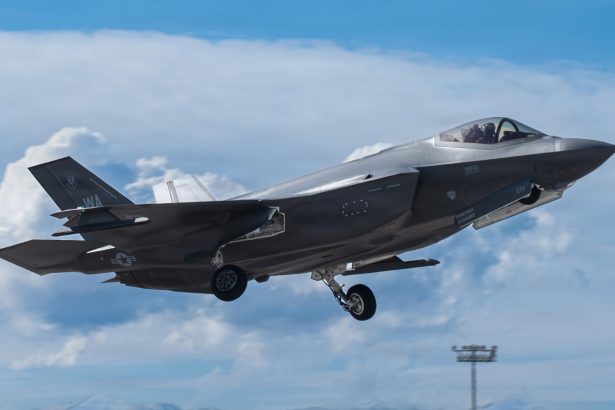
This could also explain why the attack was launched before many fighters reached their destinations in the Middle East, after arriving in the last few days at RAF Lakenheath, UK. Additionally, a number of tanker aircraft left the U.S. this morning, headed toward the Middle East.
Attack on Iran
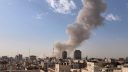
In the morning of Feb. 28, 2026, Israel and the U.S. have launched a new wave of strikes against Iran. Multiple targets across Iran, including the capital Tehran, were hit in broad daylight, with Iran immediately retaliating with missiles and drones against targets in the surrounding countries which host U.S. bases and Israel.
The U.S. Department of Defense announced that the U.S. operation has been named “Operation Epic Fury,” while Israel has named its own operation “Roaring Lion.” According to officials, Israel targeted Iranian leadership, while the U.S. targeted Iranian military capabilities.
President Donald J. Trump Monitors U.S. Military Operations in Iran: Operation Epic Fury, February 28, 2026 pic.twitter.com/OfnMkmBZ8G
— The White House (@WhiteHouse) February 28, 2026
Officials further said that the U.S. conducted nearly 900 strikes, employing aircraft, cruise missiles and one-way attack drones. During the retaliation, Iran has fired around 300 weapons.
The US military carried out nearly 900 US strikes in the first 12 hours of this operation, US defense official tells me. The strikes came “from land, air and sea and included drones.”
All the while “defending against 100s of incoming Iranian ballistic missiles.”
Iran has fired…
— Jennifer Griffin (@JenGriffinFNC) February 28, 2026
Some of these weapons hit U.S. bases, with officials saying that no casualties are reported and the damage is minimal. This prompted officials to define the Iranian response as “ineffective.”
According to reports, the initial strikes were mainly meant to destroy Iran’s defenses to clear the way for follow-on strikes, with an official saying they “have effectively suppressed their air defenses.” The operation is expected to last up to “a couple of weeks.”
🛩️THE LARGEST MILITARY FLYOVER IN IDF HISTORY:
~200 IAF jets completed a broad strike against the missile array and the aerial defense systems of the IRGC in western and central Iran.
500+ targets hit, including aerial defense systems & missile launchers in several locations… pic.twitter.com/cbwGmx0Hza
— Israeli Air Force (@IAFsite) February 28, 2026
According to some sources, Iranian defenses were also active and were able to shoot down some of the munitions launched by Israel and the U.S. since this morning. The airspace, however, seems to be rather permissive at the moment.
In fact, videos are showing what appear to be MQ-9A Reaper drones over Iran, possibly being used to assess damage and locate further targets. This would be in line with the assessment about the suppression of Iran’s defenses.
NEW details on US military strikes targeting Iran:
The US military used some new capabilities in these strikes: for the first time they used “one way attack drones” in combat.
The US military has been focusing on “high value targets”: IRGC significant facilities and…
— Jennifer Griffin (@JenGriffinFNC) February 28, 2026
In a statement after the beginning of the strikes, Netanyahu said that “Israel and the United States embarked on an operation to remove the existential threat posed by the terrorist regime in Iran.” The statement also hinted at regime change being a goal.
Trump similarly said that the objective is to “defend the American people by eliminating imminent threats from the Iranian regime.” He further reiterated that “they can never have a nuclear weapon,” and “we can’t take it anymore.”
As the President stated, our objective is to defend the American people by eliminating imminent threats from the Iranian regime.
The President ordered bold action. CENTCOM forces are delivering an overwhelming and unrelenting blow. pic.twitter.com/B0k5gV4YnU
— U.S. Central Command (@CENTCOM) February 28, 2026
The IDF has later disclosed some details about the operation, explaining that the operation was planned for several months. The decision to carry out the strike in plain daylight rather than at night allowed Israel to achieve a surprise effect.
One of the end goals mentioned for the operation is the destruction of all of the capabilities that Iran could use offensively against neighboring countries. Because of the size of Iran, the number of potential targets that might require to be attacked to achieve this goal is high.
— U.S. Central Command (@CENTCOM) February 28, 2026
Considering the amount of air power deployed to the region and the number of aircraft which are on their way to join the operations, it looks like almost certain a second wave of U.S.-Israeli air strikes will be carried out in the darkness of the night between Saturday Feb. 28 and Sunday Mar. 1, 2026.