India will acquire 114 additional Rafales as part of the Multi-Role Fighter Aircraft program, with 96 possibly produced locally.
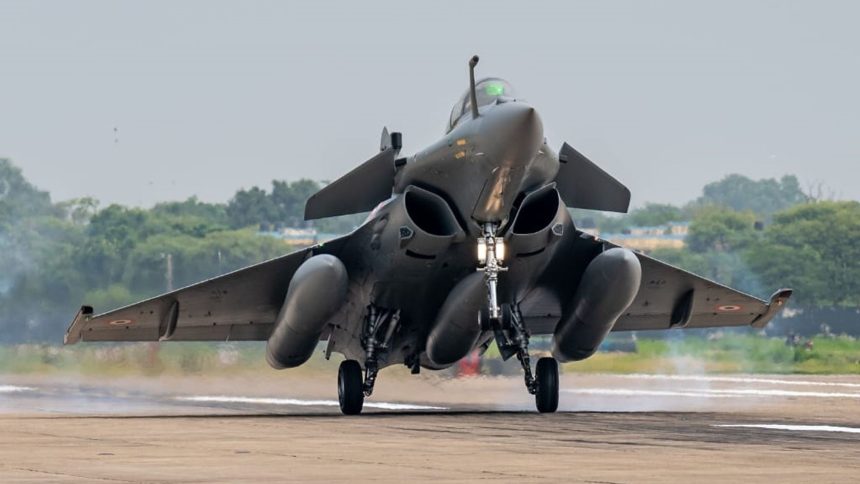
India’s Defence Acquisition Council (DAC) accorded on Feb. 12, 2026, an Acceptance of Necessity (AoN) for additional Dassault Rafale fighters as part of the Multi-Role Fighter Aircraft (MRFA) program, the Ministry of Defence announced. The MoD did not specify how many aircraft would be ordered, but local media reported that New Delhi would acquire 114 Rafale jets, with 18 supplied bought off-the-shelf from manufacturer Dassault and the remaining 96 manufactured domestically.
While already an operator of 36 jets of the F3R version, India would introduce with the new procurement the more recent F4 variant. The contract would include the option to upgrade them to the F5 standard, with the existing F3Rs upgraded to F4, The Print previously reported.
The DAC, headed by defense minister Rajnath Singh, would now forward the proposal to the Cabinet Committee on Security (CCS) headed by Prime Minister Narendra Modi. The development is coming ahead of French President Emmanuel Macron’s visit to India on Feb. 17, 2026, and reports about the French and Indian sides hashing out the domestic industrial modalities have been going around since mid-January.
IAF’s 114 #Rafale MRFA will be a Make in India project; #IAF will negotiate for the ability to upgrade it’s software & integrate Indian weapons package. pic.twitter.com/4kMxnwrwwS
— News IADN (@NewsIADN) February 10, 2026
While overall late and largely disadvantageous to India, given that New Delhi is replicating the Rafale process a second time over, a section still views this as the best deal in the given scenario. The DAC also cleared a host of other procurements, including six more P-8I Poseidon maritime patrol aircraft for the Indian Navy, “stand-off ground attack Combat Missiles” and armored platforms for the Army, collectively worth around $40 billion.
Cancelled MMRCA deal and 36 Rafales
India’s Rafale acquisition is tied to the original Medium Multi-Role Combat Aircraft (MMRCA) deal that began in 2007. Besides the Rafale, it had seen competitors including Boeing F/A-18E/F Super Hornet, Eurofighter Typhoon, Lockheed Martin F-16, United Aircraft Corporation (UAC) MiG-35 and Saab JAS39 Gripen.
While the Rafale emerged as the winner in terms of the performance, price, and industrial offerings, this deal was cancelled by the government in 2015. A part of the reason is that Dassault Aviation had refused to stand guarantee for 108 fighters to be built up to 70% by the Hindustan Aeronautics Limited (HAL).
There were also disagreements over the offset obligations of investing 50% of the deal’s earnings into India’s defense sectors, mostly through purchase of components. Sources however point that such “hiccups are expected in big-ticket international defense deals” and can “easily be addressed through negotiations.”
Veteran IAF pilots, industry leaders and former MoD officials admit that, had India proceeded with the MMRCA deal, the IAF would have had a large fleet of domestically-built Rafales, supported by an indigenous aerospace ecosystem of spares manufacturing and easy integration of Indian weapons. An even broader benefit would have been becoming a repair, upgrade and supply hub for Rafales operated by other air forces like Indonesia and Egypt.
However, in April 2015, during his visit to meet then French Prime Minister Francois Hollande, PM Narendra Modi announced a direct government-to-government deal for 36 off-the-shelf fighters from Dassault Aviation. Then defense minister, the late Manohar Parrikar, later announced in Parliament in July 2015 that the MMRCA program was cancelled and that the original Request for Proposal (RFP) had been withdrawn.
Rafales in IAF service
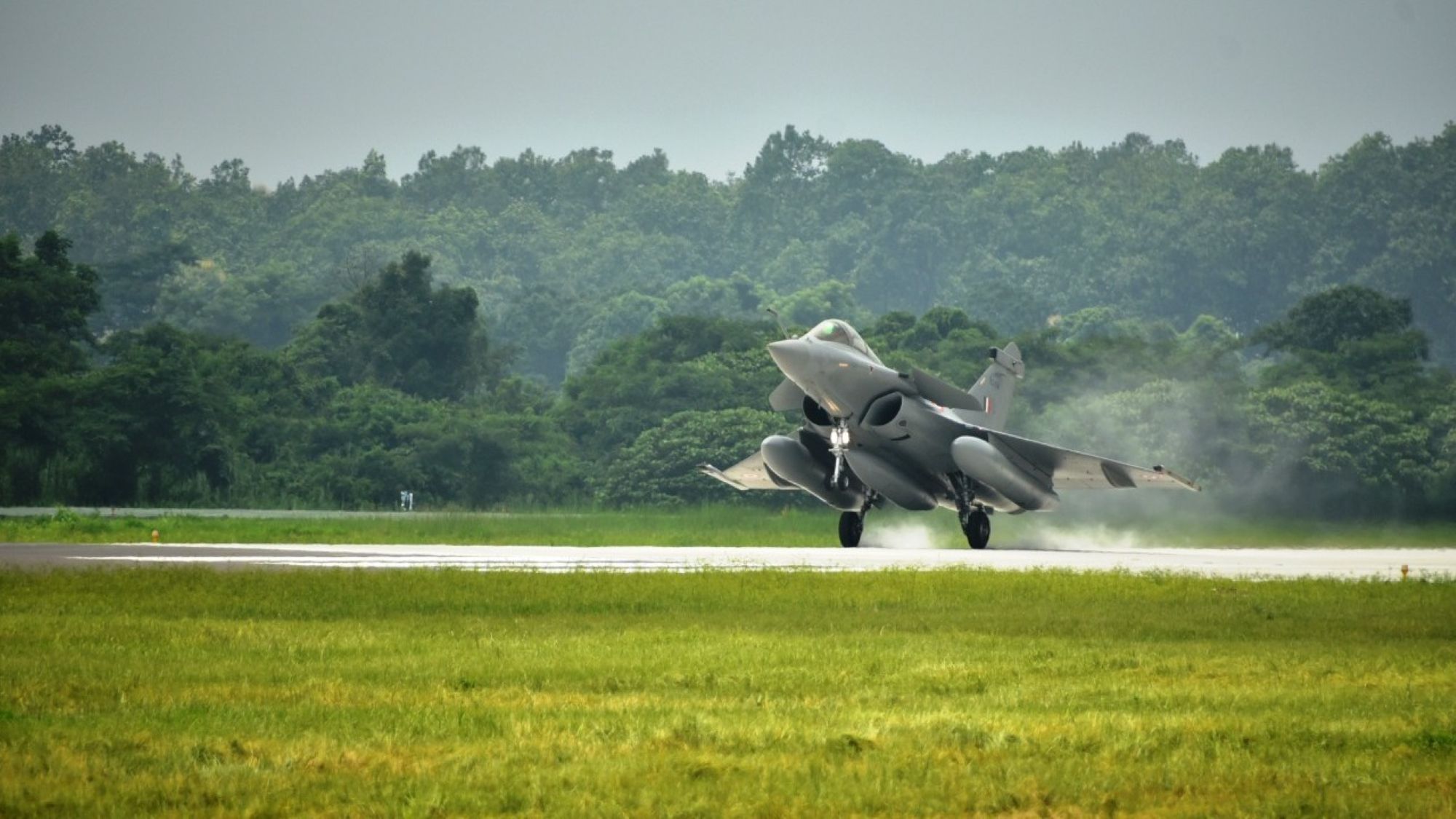
The 36 Rafales currently in service were delivered starting in mid-2020. They are operated by the IAF’s No. 17 “Golden Arrows” Squadron at Ambala Air Force Station (AFS) in the north and the No. 101 “Falcons” Squadron at Hasimara AFS in the far east.
The Defence Acquisition Council (DAC) cleared the long-awaited proposal to buy 114 Rafale fighter jets from France under an inter-governmental deal for the Indian Air Force (IAF), of which 90 jets would be manufactured in India.
The DAC has also cleared the procurement of six…
— Ramandeep Bajwa (@Ramandeep_Bajwa) February 12, 2026
In April 2025, the Indian Navy also chose the Rafale M for its INS Vikrant aircraft carrier, with 26 airframes procured, for logistical ease and uniformity in aircraft types with the IAF. Rafales then participated in May 2025’s Operation Sindoor against the Pakistan Air Force, with conflicting claims about losses from both sides.
MRFA
IAF has long cited a figure of 42 squadrons (with around 18 jets for each unit) to maintain ideal force levels before a simultaneous “two-front threat” from China and Pakistan. With the retirement of the last two MiG-21Bis squadrons, the number fell to 29, and six more squadrons of Jaguar strike aircraft are on their way out by 2032.
With this in mind, the government launched the MRFA program and issued a Request for Information (RFI) in April 2018, seeking 18 jets in a flyaway condition from the winning bidder. The remaining 96 were to be manufactured within the country through a joint venture between the selected vendor and a domestic public or private company. The indigenous content in these jets would be progressively increased, in a deal roughly estimated at $25 billion.
Formation (7/8) pic.twitter.com/RvCUSyWhfs
— Indian Air Force (@IAF_MCC) January 26, 2026
The same competitors for the MMRCA mentioned above threw their hat into the ring, with the U.S. and Russia this time also offering the F-15EX and the Su-57. It is unknown whether the MRFA competitive bid stands cancelled and if the companies have been conveyed the decision.
However, the direct inter-buy is believed to have been largely pushed by the IAF, which has highlighted to the government technical, tactical, operational familiarity with the Rafale, its superior performance, potential for growth and easier life-cycle management with the significant level of transfer of technology and local production.
Best deal in the current situation
This is also where things get ambiguous. That the IAF would have had at least three Rafale squadrons by now, possibly integrated with the homegrown Astra Mk.1 and Mk. 2 beyond-visual range air-to-air missiles and maybe even the BrahMos, is a foregone conclusion.
This is not to mention the international reputational hit in an unstable defense procurement program. Reports have put the level of indigenous content in the deal at 60%, with ANI putting the figure as low as 30% in its January report. Then there are also reports about the French resistance with sharing the source codes for India to modify the mission systems.
#IAF is undertaking joint in-situ air exercise with #RoyalThaiAirForce (RTAF).
The exercise will enhance operational coordination and interoperability between the two Air Forces.
IAF Su-30MKI, AWACS, AEW&C and IL-78 refuelling aircraft are participating in the Ex, alongside… pic.twitter.com/07ampQ0ptx
— Indian Air Force (@IAF_MCC) February 10, 2026
Then it must be remembered that the latest Rafale acquisition is a gap filler for the fifth generation Advanced Medium Combat Aircraft (AMCA), that however hasn’t even got off the drawing board. The LCA Mk2 meanwhile is still to enter serial production, the Mk1As deliveries are delayed, while one of the two Mk1 squadrons only recently attained Initial Operational Clearance (IOC).
Another indian airforce rafale seen with meteor missile,this one is more clear 😁,all the blackpillers should chill now .#rafale #rafaledeal pic.twitter.com/bce8Gx9Ogs
— Chill guy (@Brainstormer48) February 14, 2026
The new Rafale F4s will come with upgraded hardware, including an improved RBE2 XG radar; a more powerful encrypted software defined radio, CONTACT, from Thales; and compatibility with new weapons like the SCALP-NG, MICA-NG and a new version of the AASM Hammer guided bomb.
The 3.25 Lakh Crore Rafale Deal Won’t just prove to be a Force Multiplier for the Indian Air Force but will be a Game-Changer for the India Military Aviation and Domestic Aerospace Ecosystem in Upcoming Years.
>> In 2015 Deal the Cost of per Aircraft was 1,500 Crore that… pic.twitter.com/ZNmlnC9E7S
— BRADDY (@braddy_Codie05) February 12, 2026
Rafale’s engine maker Safran is also setting up a Maintenance, Repair and Overhaul (MRO) facility for its M88 engines, expected to be operational by late 2026, serving both the IAF’s and the Indian Navy’s Rafales once initial deliveries are completed by 2029-30.