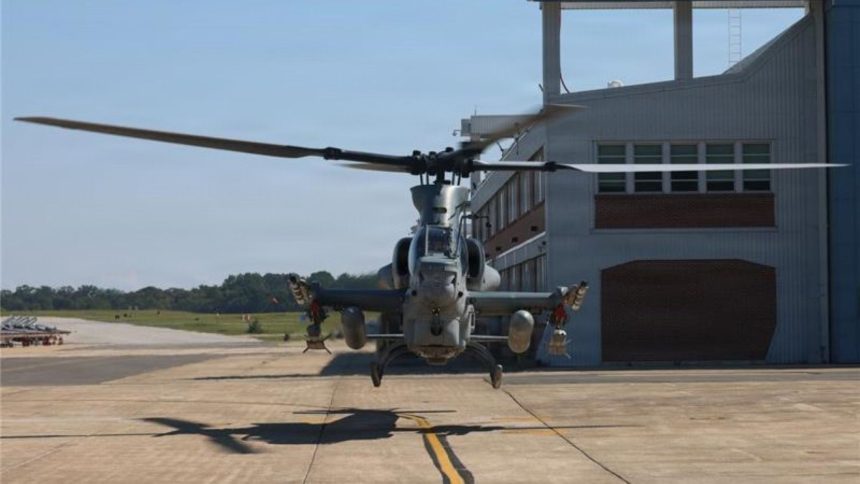
The Red Wolf Missiles will provide Marine rotary wing platforms with long-range precision strike capability, enabling affordable combat mass for surface strikes in a maritime scenario.
L3Harris and Naval Air Systems Command (NAVAIR) announced on Jan. 30, 2026 a major progress in the Precision Attack Strike Munition (PASM) program for the U.S. Marine Corps, with an $86.2 million award to develop, test and manufacture the Red Wolf launched effects vehicle.
The contract requires L3Harris to deliver all units, manuals, training, support equipment, and test equipment for the AH-1Z Viper attack helicopter – the missile’s primary carrier platform that has been testing the weapon for some years now – by late fiscal year 2027. The number of missiles to be produced has not been disclosed.
While L3Harris identified the specific system as the Red Wolf and NAVAIR mentioned the cost, the latter also mentioned this was a Other Transaction Agreement/Authority (OTA) award. The Direct and Time Sensitive Strike Weapons program office (PMA-242) chose this route “to streamline research and development and prototype development.”
L3Harris also said the systems have undergone 52 test fires so far, but did not mention the specific figures of each Red and Green Wolf variant.
More range. More precision. More lethality: The @USMC is fast-tracking the new Precision Attack Strike Munition (PASM)! Following successful testing by #HX21 in 2025, the Navy has awarded L3Harris Technologies the contract to bring this weapon to our AH-1Z Viper fleet. pic.twitter.com/es0sccb2IC
— NAVAIR (@NAVAIRNews) February 2, 2026
L3Harris and NAVAIR also released a new image of two of the missiles under the stub wings of an AH-1Z Viper of the Air Test and Evaluation Squadron (HX) 21, capturing a closer, front aspect shot. As per details on DVIDS, the image was taken on Sep. 9, 2025, and published on Feb. 2, 2026, and pertained to a test that took place in late 2025 off the coast of Virginia, as per the caption.
This test may be part of the “low-altitude test firing” that L3Harris had announced on Dec. 19, 2025. L3Harris previously said this test was held in September 2025.
Critical, cost-effective mass for asymmetric threats
L3Harris’ chairman and CEO Christopher Kubasik said that the Red Wolf fills a “gap in modern warfare with long-range precision weapons capabilities,” reflected in the “recent conflicts and incursions over NATO airspace, particularly with the increased use of mass-produced drones.” This “demonstrates the urgent need for cost-effective alternatives to exquisite munitions,” where the Red Wolf brings the “affordable mass to the Marine’s arsenal of advanced munitions.”
We’ve been selected by @NAVAIRNews to develop, test and manufacture Red Wolf ™ vehicles for @USMC’s Precision Attack Strike Munition program – enhancing long-range precision weapons capabilities that are crucial to modern warfare. Learn more: https://t.co/GL177lB1vv pic.twitter.com/MBj7x6eEwl
— L3Harris (@L3HarrisTech) January 30, 2026
The Marines have long sought a weapon to have ranges greater than the extended range variants of the Hellfire, like the AGM-114R-4, or the JAGM’s ‘MR’ variant, which can touch distances of 21 miles and 10 miles, respectively. L3Harris puts the Red and Green Wolf’s range at 200+ nautical miles at low altitudes and an endurance of over 60 minutes, “far exceeding the single-digit range of other rocket-launched missiles.”
“The system’s beyond line-of-sight communication and autonomous over-the-horizon engagements will dramatically increase the number of aircraft available for strike missions,” the company added. NAVAIR meanwhile stressed on how the contract as a “a critical component of the Marine Corps’ vision for enhancing the lethality and survivability of its rotary-wing assets.”
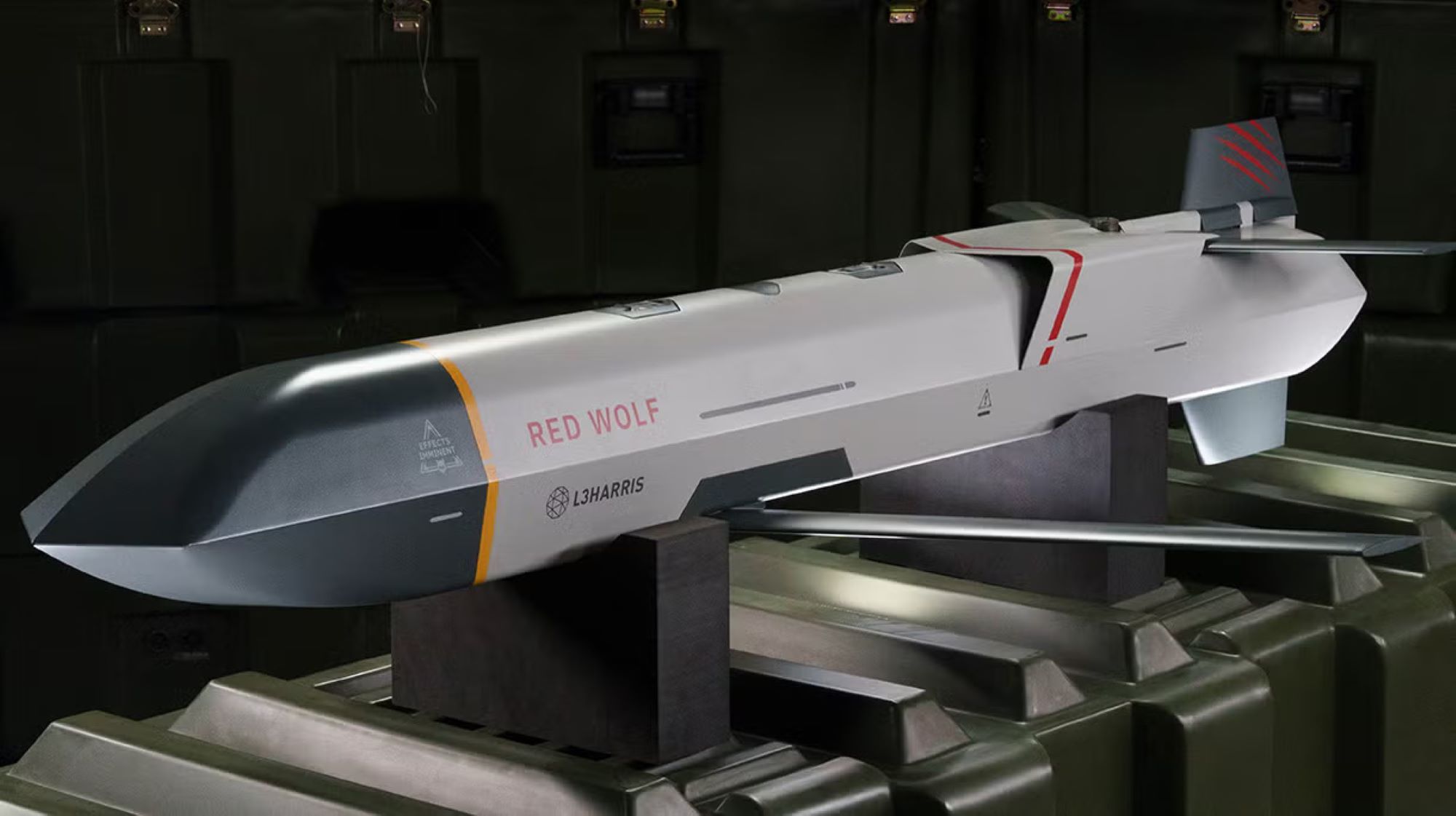
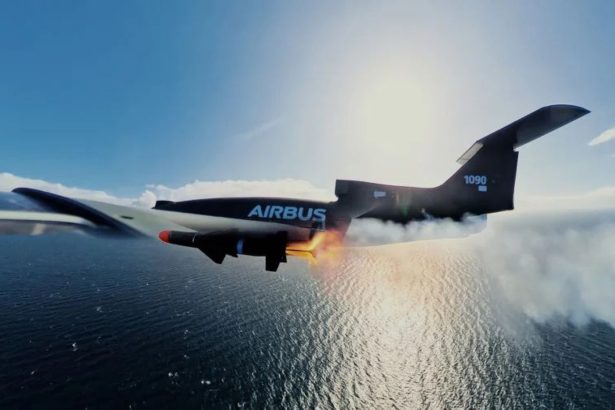
NAVAIR, in all its press releases about the program since 2025, has emphasized on the maritime strike role of the missile. It primarily involves firing the missile on PLA Navy surface combatants, for light disabling hits on the main sensor masts, as per concept videos by L3Harris, prior to what could be larger follow-on anti-shipping operations by naval fighters.
Previous U.S. Marine Corps’ drills have involved AGM-179 JAGM missiles fired from AH-1Z Vipers against a maritime target in the Indo-Pacific. NAVAIR said that the PASM offers to the Marine Corps a “cost-effective, longer-range, precision weapon” for diverse “kinetic and non-kinetic effects” from “AH-1Z aircraft in land and sea-based environments.”
With 45 flights and counting, Red Wolf ™ and Green Wolf ™ ensure warfighters have a critical battlefield edge when it matters most. Learn more: https://t.co/FS2PrpoJCx #AUSA2025 pic.twitter.com/het0wEiJBh
— L3Harris (@L3HarrisTech) October 7, 2025
Marines and L3Harris held the 52 Joint Capability Technology Demonstration (JCTD) tests to acquire the final PASM system, proving its ability to enable a “low-altitude, rotary-wing aircraft to perform offensive anti-surface warfare and maritime strikes.” These demonstrations then finally informed the latest contract.
PMA-242 program manager Capt. Lindsey Buzzell called the use of an OTA contract as “a key part of this strategy, designed to rapidly prototype and field a capability that’s essential for operations in contested environments and against advanced adversaries.”
Clearer view of missiles
The missiles have also now come into a better view, offering a clearer look at the design configuration as compared to previous images from NAVAIR and L3Harris. At the same time, they bear some divergence from the actual examples and renditions previously released by the company.
The wait is over.
Introducing Red Wolf ᵀᴹ and Green Wolf ᵀᴹ, the first vehicles in our expanding pack of launched effects systems. pic.twitter.com/d4oG7fgeE4
— L3Harris (@L3HarrisTech) July 17, 2025
The Red Wolf and Green Wolf missiles are oriented towards kinetic and non-kinetic electronic warfare respectively, to be used in maritime warfare scenarios. They are collectively described as the Long-Range Attack Missile (LRAM), part of the PASM Program of Record (PoR). At the time of the September 2025 test, L3Harris had said it had conducted 45 test fires for “multiple DoD customers” and matured the design over the course of the campaign.
This explains discernible differences between L3Harris’ official unveilings of the Red Wolf and Green Wolf and the live examples – the November 2024 trial from the AH-1Z Viper at Yuma Proving Grounds in Arizona, the U.S. Army’s Project Convergence Capstone 4 multinational exercise in 2024 and the aforementioned September 2025 test over the Atlantic Test Range.
#ICYMI Long Range Precision Fires (LRPF) was successfully executed at Yuma Proving Grounds in Yuma, AZ, Nov 2024. The event was completed with an AH-1Z Viper launching a single weapon by way of a wireless application. #MakeAnImpact #MarineCorpsAviation https://t.co/jpvGJEDwjR pic.twitter.com/RBksnVLsup
— NAVAIR (@NAVAIRNews) February 14, 2025
For one, the bottom protrusion that was assessed to be a ventral air intake, now appears to be the hub of the two fold-out wings – a feature clearly seen in the official units and graphic illustrations by L3Harris. The Red and Green Wolf unveiled by L3Harris have a plus-form tail, while the live missiles underneath the AH-1Zs have an X-form tail. The latest image also appears to show the shovel-like nose seen in the concepts and display units by L3Harris.