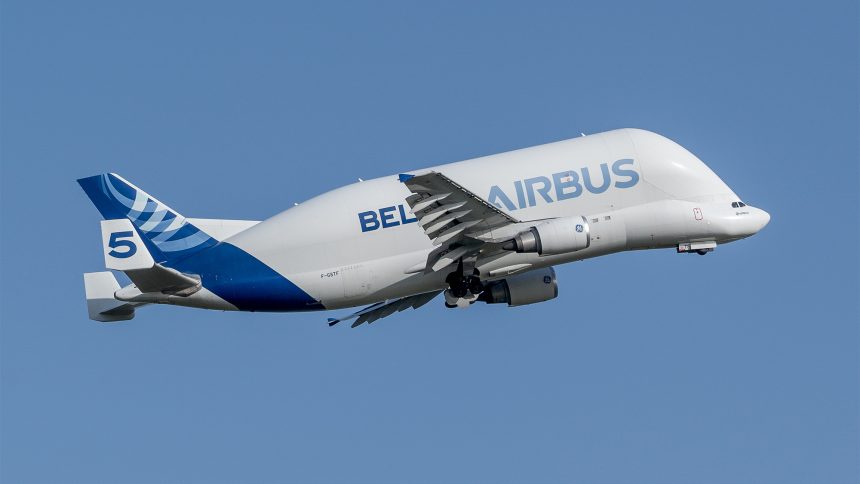
The fifth of five Airbus A300-600ST ‘Beluga’ transports has flown into retirement at Airbus’ Broughton facility in North Wales, where it will be used to promote STEM to schools and community groups.
As the Airbus fleet of Beluga super transporter aircraft readies for withdrawal by 2027 in favour of the larger, more efficient A330-743L BelugaXL, the company is lining up final resting places for the now three decade old airframes. F-GSTF, which touched down for the final time at Hawarden Airport, next to Airbus Broughton, on Jan. 29, 2026, was delivered in January 2001 and was the youngest airframe in the fleet. Throughout its life, F-GSTF carried a large number 5 on its tailfins to denote it as the fifth Beluga airframe.
The Beluga was designed from the popular Airbus A300 airliner series as a replacement for an aging fleet of four Aero Spacelines Super Guppy turboprop transports. Being a joint European endeavor, Airbus relies on production facilities constructing large airframe sections all across Europe and used the transport aircraft to rapidly move components between different assembly facilities.
An @Airbus Beluga lands while the Super Guppy waits to cross the runway in Toulouse, 1995. https://t.co/WSD5khXswt © Neil Brant pic.twitter.com/4F4SkGuxlb
— JetPhotos (@JetPhotos) September 21, 2017
Much larger than its predecessor, the Beluga was specified to be able to carry any part used by Airbus’ various product lines up to and including wing sections for the four-engined Airbus A340. It was only when the massive Airbus A380 was launched that some components grew to a scale exceeding the Beluga’s capability.
The #Beluga giving birth to a new baby!Back when the 1st #A350-1000 arrived in Toulouse for assembly.Be ready for its maiden flight! #A350FF pic.twitter.com/pNSxPdgL2R
— Airbus (@Airbus) November 21, 2016
Only two years after construction began, the first Beluga lifted off on its maiden flight in September 1994. It was certified for service entry just over a year later. While offering only around one third of the payload weight capacity compared to an Antonov An-124 transport, the Beluga’s strength comes with its cargo hold volume. The large, bulbous cargo section is 37.7 meters (124 feet) long and has a diameter of 7.4 meters (24 feet).
Its drawback – and ultimately one reason why its commercial potential after being replaced by the BelugaXL was limited – is that the only access to this cargo hold is above the cockpit and not at ground level. At Airbus’ main facilities, where Beluga and BelugaXL aircraft load/unload payloads on a daily basis, massive rigs inside purpose built hangars would allow for level loading or unloading of cargo.
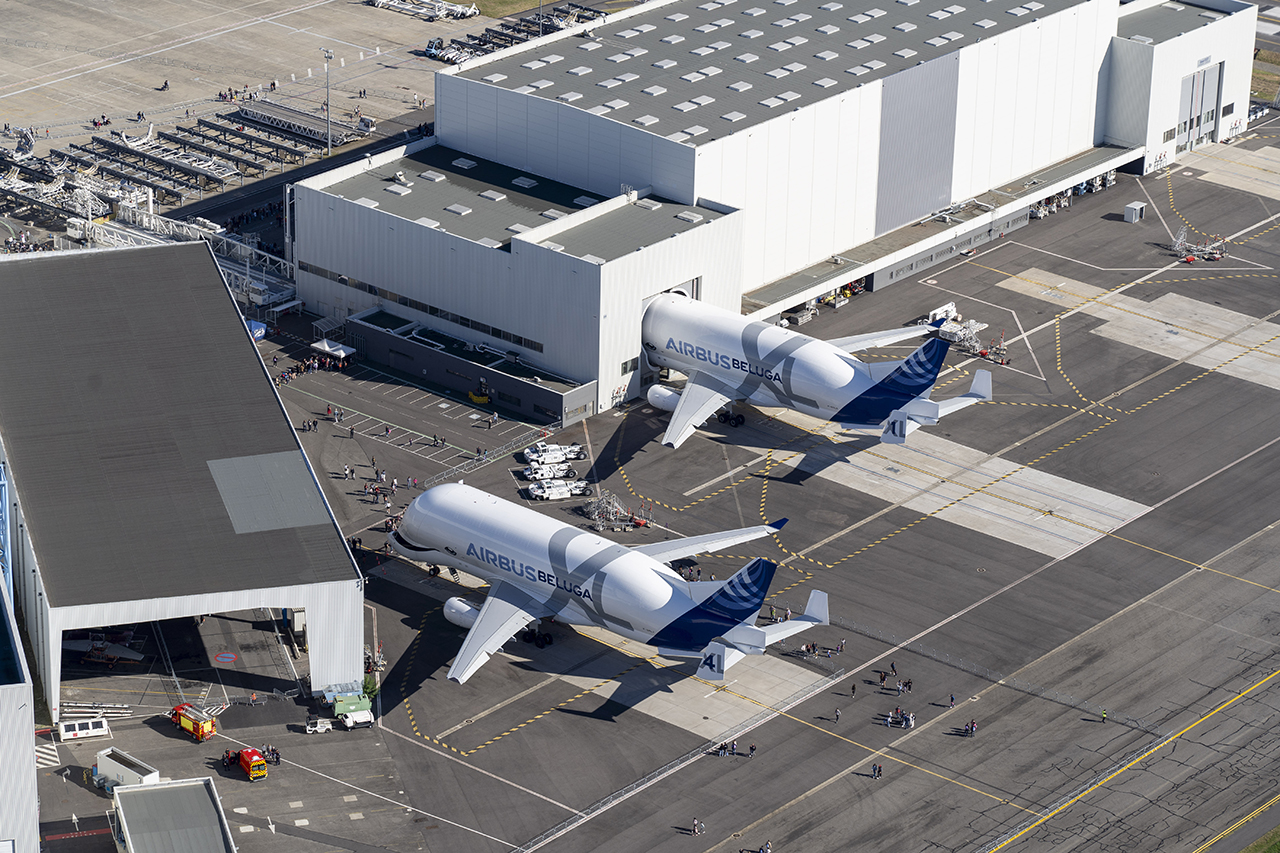
For other airports, especially those without their own cargo lifts of a suitable size, Airbus developed the On-Board Cargo Loader (OBCL) which would be carried inside the aircraft alongside the cargo. This, however, restricted the total space available and could also only support payloads up to 20 tonnes – less than half of the aircraft’ usual maximum.
Airbus began offering the original Beluga fleet for regular commercial charter in 2022 but by early 2025 had wrapped up the project.
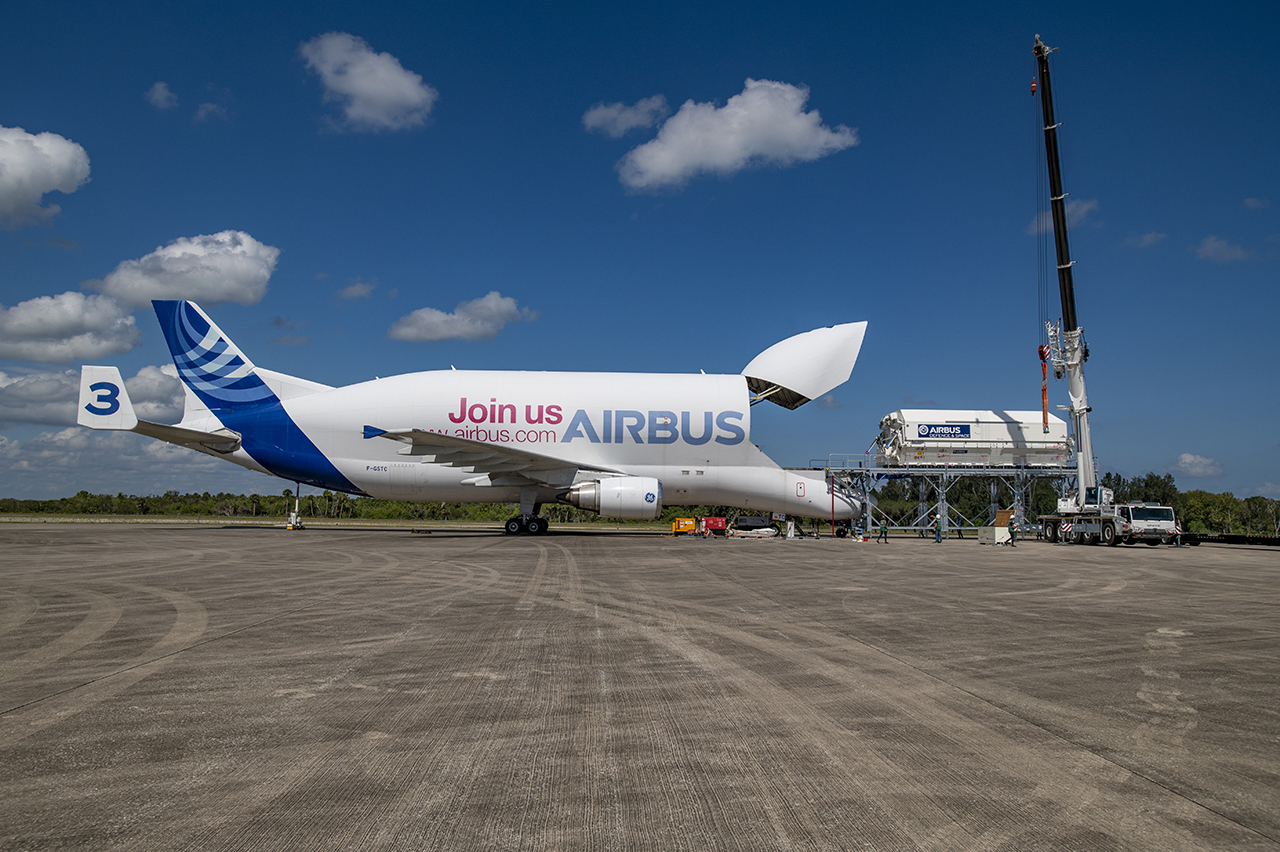
Spotted! 👇
Airbus #EarthObservation satellite 🛰️ captures @Airbus #Beluga aircraft unloading the Airbus-built #HOTBIRD 13G telecoms satellite at Kennedy Space Centre.
📸 Photo by #PléiadesNeo pic.twitter.com/wJJqYX29qU
— Airbus Space (@AirbusSpace) October 18, 2022
F-GSTF’s New Role
At Broughton, the retired Beluga will now be converted into an educational facility that will serve schools and community groups and promote the use and development of Science, Technology, Engineering and Maths (STEM) skills.
Gareth Davies, Head of Airbus Broughton, said, “It’s a proud and incredibly exciting moment for Broughton. This particular Beluga first took flight 25 years ago, and since then has played a crucial part in transporting our wings from Broughton to Airbus’ mainland European sites. By transforming this aircraft into an education facility, we aren’t just preserving our history, we are using it to fuel the future of UK aerospace and inspire the talent of tomorrow.”
“The focus will be to promote STEM in a fun and interactive way to inspire young people to consider a career in science, technology, engineering and maths.”
Airbus Beluga ST5’s final flight into Chester Hawarden Airport, Wales today for retirement of the A300-600ST.
Beluga Super Transporter 5 may become a display here, where the newer Beluga XL continues to transport oversize aircraft parts.
Full videos: https://t.co/rnva0qOXhc pic.twitter.com/xvDn8UQnEQ
— CobraEmergency (@CobraEmergency) January 29, 2026
The Airbus pilot who flew F-GSTF’s last flight into Broughton, Didier Puxeddu, said he hopes the aircraft will inspire a new generation of pilots. “Flying the Beluga has always been a unique privilege, and bringing the ST5 home to Broughton for the last time was no different. As we made our final approach, we were all too aware of the history behind us. Knowing this aircraft will now stay here to inspire future pilots and engineers makes this touchdown one of the most rewarding of my career.”
Famous Beluga Missions
The Beluga fleet, as well as helping to sustain Airbus’ rapid growth to become the world’s largest aircraft manufacturer, has carried a number of notable payloads throughout their three decades in service.
Perhaps the most notable and famous mission came in 2006 when F-GSTC delivered the Columbus Module from the European Space Agency to Kennedy Space Center. Two years after arriving, the 6.9 meter (23 feet) long, 10,300 kilogram module was integrated into the payload bay of Space Shuttle Atlantis and launched to become a major part of the International Space Station.
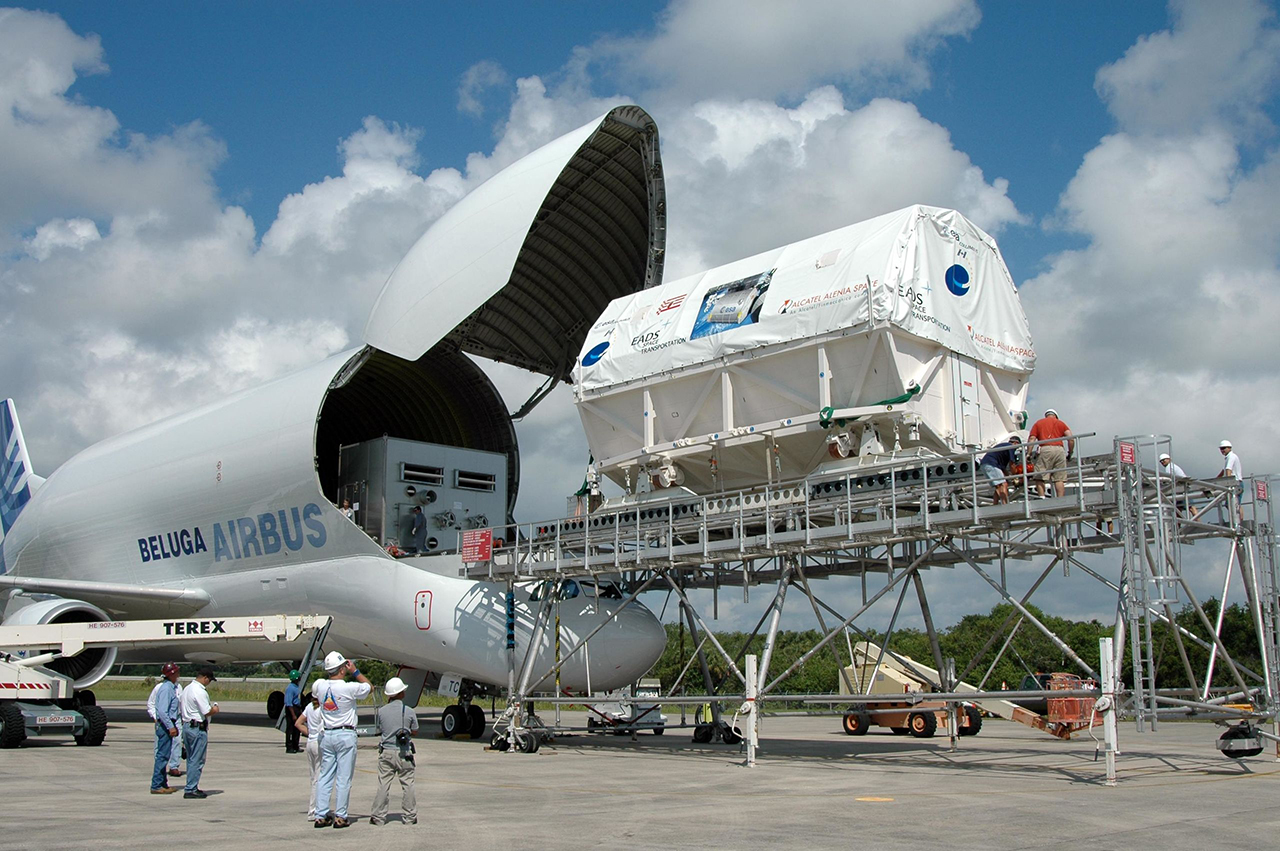
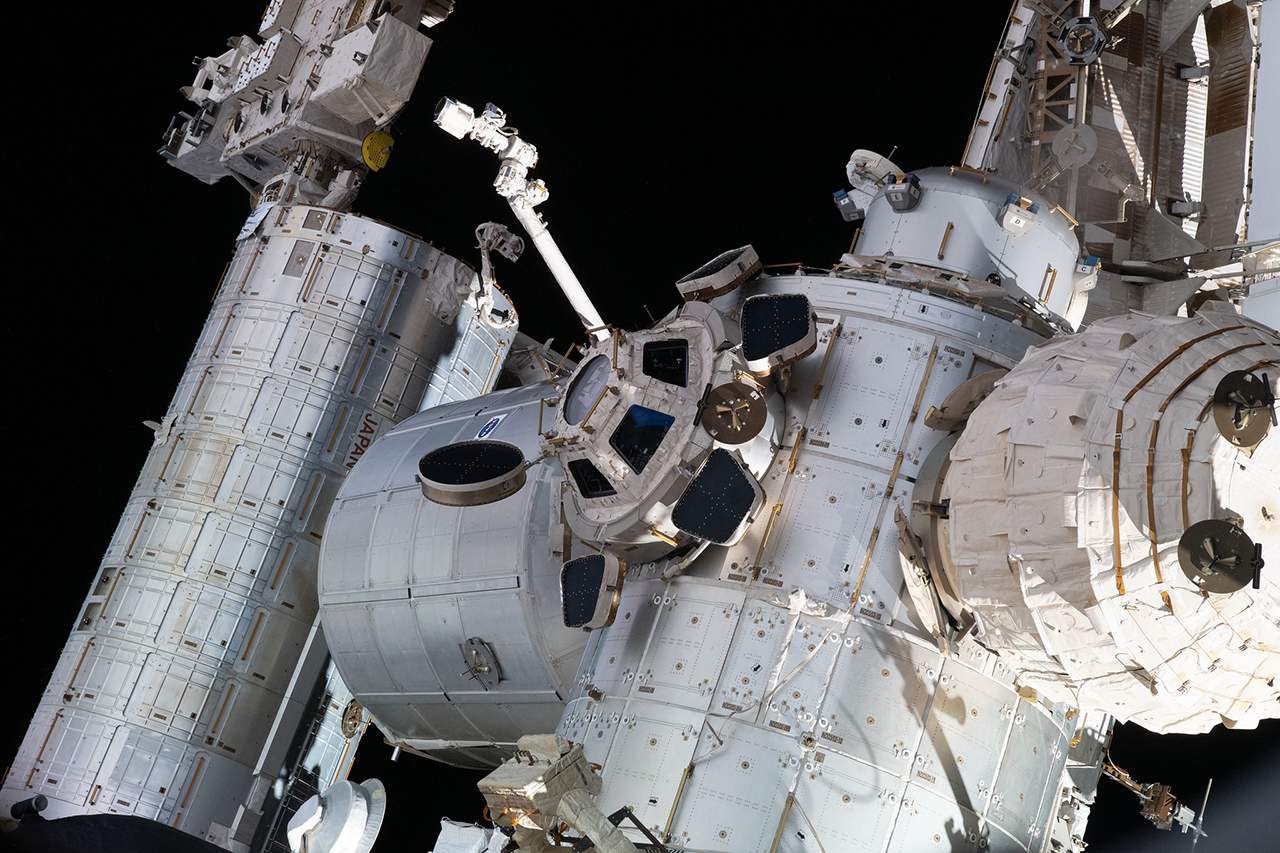
This was not the first space station module carried by the Beluga – in 1998 the Leonardo Multi-Purpose Logistics Module (MPLM) was shipped over by Beluga ahead of its first launch in 2001. Leonardo and the other MPLM, Rafaello, were launched and returned in the payload bay of the Space Shuttle several times each shuttling cargo to and from the station. Leonardo was then converted into a permanent module in 2011 and remains part of the ISS to this day. In 2003, U.S. Node 2, or Harmony, was carried by a Beluga after being manufactured in Italy and subsequently launched in 2007. Node 3, or Tranquility, followed a few years later.
In February 2003, a single Beluga flew to Australia for the Avalon Airshow. Inside the cargo hold was one Tiger and two NH90 helicopters, due to be exhibited at the airshow by Eurocopter. Compared to many other transporters, the vast Beluga cargo hold dwarfed the helicopters.
Quand un @AirbusGroup A300-600ST, Beluga a faim, cela dévore au moins 2 #NH90 pic.twitter.com/LY3kkDejZo
— Philippe Top-Action (@top_force) May 22, 2017
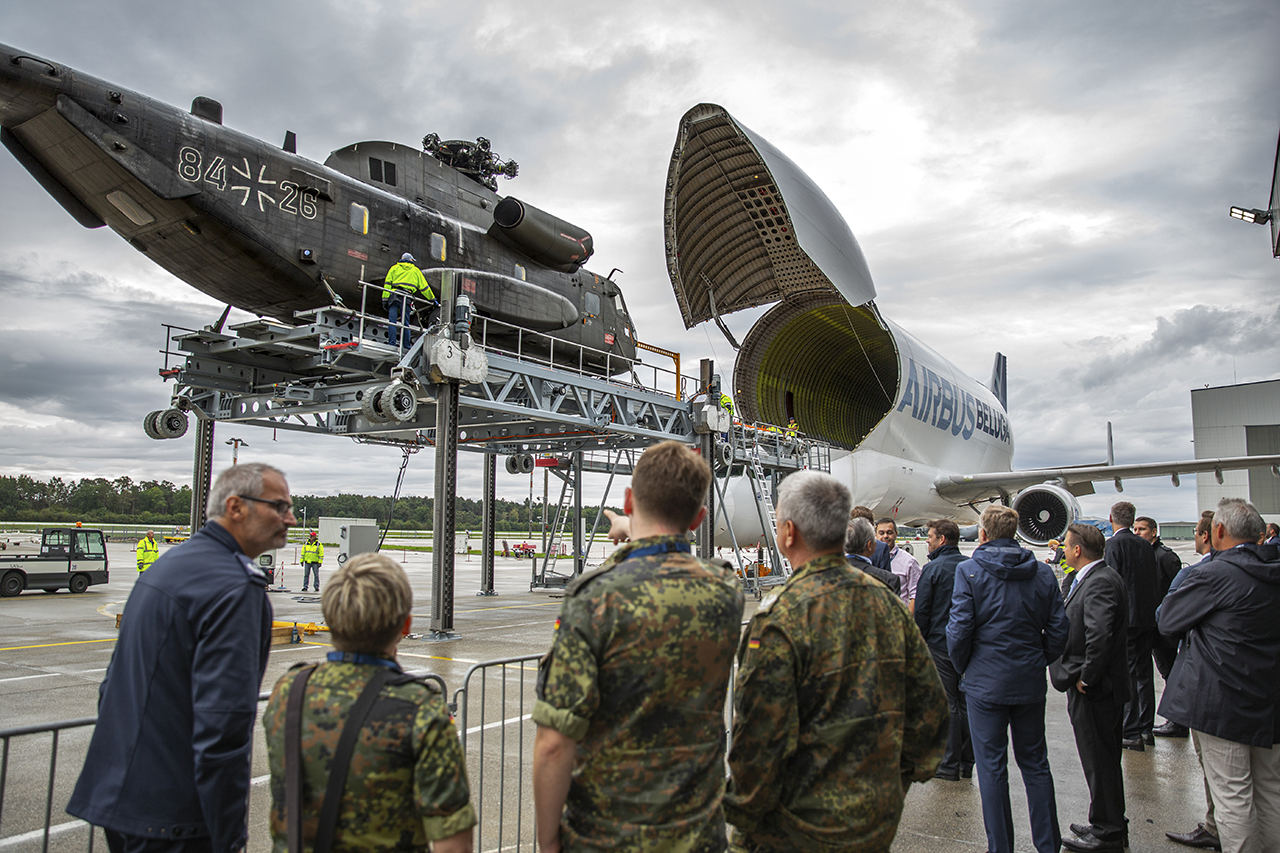
Even the massive CH-53 Sea Stallion operated by Germany was able to be loaded into a Beluga during a demonstration of a new payload loading system in September 2022.
Beluga Future
While no end is in sight for BelugaXL operations, the original Beluga’s sundown in 2027 will be the end of an era. The fate of the other four aircraft, still at Toulouse and available to support Airbus continuing manufacturing demands, is yet to be confirmed.
Many will hope for museums to take on the aircraft, but the size of the airframes places a huge limitation on the number of locations that would be able to not only house them but also care for them, as they would likely be forced to be external exhibits.
Not only will the Belugas soon be grounded forever, but the Airbus A300 family as a whole is becoming increasingly uncommon. The A300 was Airbus’ first aircraft, and flew its first airline flight in 1974 with Air France. Over five hundred examples were built, and a fairly significant number remain in service many of these are cargo only aircraft flown by FedEx, UPS, and DHL. The handful of passenger A300s still flying are small fleets with airlines like Iran Air.