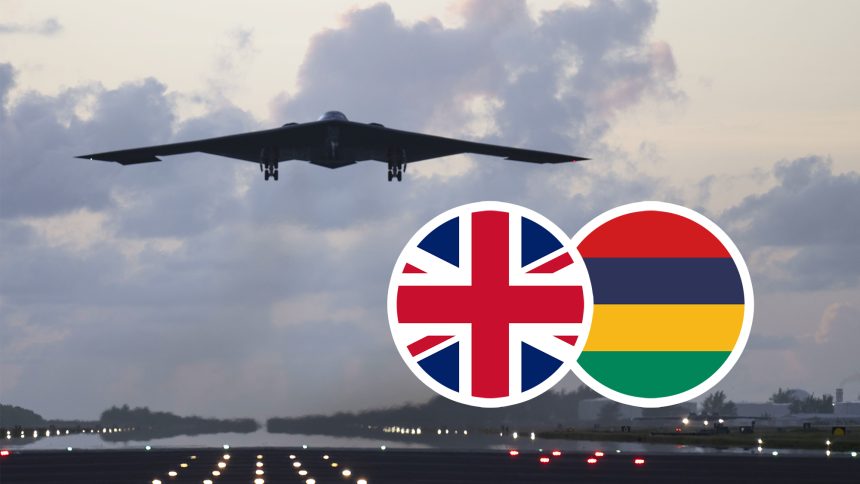
A debate on a bill that transfers sovereignty over the Chagos Islands – including Diego Garcia – to Mauritius has been delayed after questions about its compliance with an existing UK-US treaty were raised.
Just as the Diego Garcia Military Base and British Indian Ocean Territory Bill was set to head into the final stages of debate, a new amendment by the opposition party has called into question whether the bill’s effects are in breach of a still-in-effect 1966 agreement between the United States and the United Kingdom regarding military use of Diego Garcia. The first clause of this agreement states that “The Territory shall remain under United Kingdom sovereignty”.
The bill intends to formalise and, in essence, ratify the deal signed between the UK and Mauritius in May 2025 that would see sovereignty of the British Indian Ocean Territory (BIOT) ceded to Mauritius in return for a 99-year guaranteed lease of Diego Garcia for continued military use. Upon its expiration, this 99-year lease could be extended for up to 40 years.
🌍 La Terre par satellite 🛰
L’Archipel des Chagos Diego Garcia, photographié par le satellite Sentinel 2 🏝️
📸 Copernicus Sentinel Data, 2021 pic.twitter.com/0IAZRZ7SOs
— CNES (@CNES) July 13, 2021
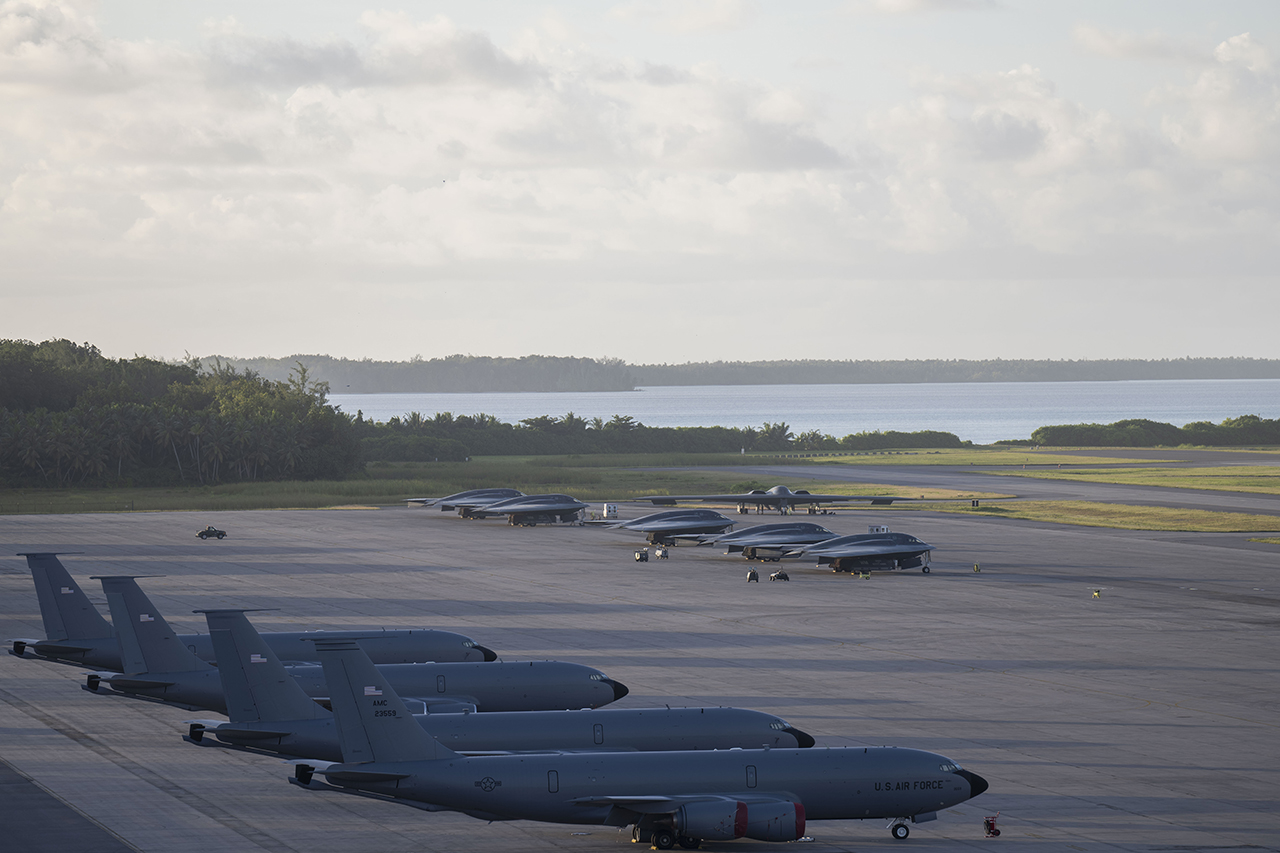
Though officially a British territory and British base, Diego Garcia is predominantly used by U.S. forces. Alongside communications and intelligence gathering facilities – both of which were major justifications for establishing this permanent military outpost in the Indian Ocean – Diego Garcia’s airfield is one of only three locations outside of the continental U.S. equipped with dedicated hangar facilities for the B-2 Spirit, and it can accommodate a vast number of strategic bombers, air to air refuelers, and intelligence gathering aircraft. In 2025, the base saw its first known fighter deployment of F-15E Strike Eagles.
The Sovereignty Dispute
Intended to align the UK’s policy with a previous International Court of Justice (ICJ) advisory judgement and preserve the legality of the base in the long term, the deal with Mauritius and the subsequent bill that seeks to implement it has faced harsh criticism from a variety of sources. Supporters claim that alongside the legal justification, the deal will help to stabilise relations between Mauritius and its African allies and the west – pulling them away from China’s sphere of influence.
The key military value from the Island comes from the USA. But to operate requires being able to do so in a legal manner – whether we like it or not, the territory was disputed, and UK was in breach of the law. If we want moral high ground, we have to observe international law. pic.twitter.com/ZIn6ARLL4f
— Sir Humphrey (@pinstripedline) May 24, 2025
Critics claim that ceding sovereignty places the base at risk of foreign espionage and interference, while introducing an expensive leasing fee, though it should be pointed out that even under the present arrangement foreign intelligence vessels and aircraft could legally operate up to the 12 nautical limit line around Diego Garcia. Other perspectives point out that the deal makes no provision for the Chagos islanders themselves who were forcibly removed from Diego Garcia to construct the military installations. When the BIOT was created in 1965 it was split from Mauritius, under which it had been administrated since the early 1900s.
Mauritius remained a British territory until 1968, after which it increasingly made the argument that sovereignty over the BIOT, under international law, was theirs. The ICJ judgement in 2019 agreed with this interpretation of international law, and ruled that the partitioning of the territory in 1965 was done unlawfully. This judgement was then affirmed by the United Nations General Assembly (UNGA). Because these judgments recognise Mauritian sovereignty as the rightful case under international law, any legally recognised arrangement for the Chagos islanders to return could only be negotiated through the Mauritian government.
Breaking news on CHAGOS.
In the face of relentless Conservative pressure, Labour have pulled their shameful Chagos Surrender Bill from Monday’s House of Lords order paper.
This is a major victory for everyone standing against Keir Starmer’s disgraceful Chagos Surrender.
The…
— Priti Patel MP (@pritipatel) January 23, 2026
While Government legal experts investigate the opposition amendment’s claim further, the Shadow Foreign Secretary, Priti Patel, confirmed on Friday, Jan. 23, 2026 that the bill had been withdrawn from the House of Lords order paper for Jan. 26. The House of Lords – which is the UK’s upper house, comprising appointed members, hereditary members, and 24 Church of England bishops – has already voted down the bill on several occasions. Unlike in the House of Commons, where members are elected by the public, the incumbent Government does not have a majority in the House of Lords.
Donald Trump’s Influence
Coinciding with this development, in recent days U.S. President Donald Trump has seemingly reneged on the support he and his administration had previously given for the deal. In a post on social media, the President declared the deal an “act of great stupidity”.
Donald Trump lashes out at UK over Chagos Islands deal – which he signed off in May last year – describing it as “an act of great stupidity” and another reason for his Greenland takeover plan. pic.twitter.com/TTGx0zJxcN
— Pippa Crerar (@PippaCrerar) January 20, 2026
This comment lit a match underneath the UK efforts to scrap the deal, with the Leader of the Opposition Kemi Badenoch backing Trump’s position. The negotiations for a sovereignty transfer to Mauritius began under a previous Conservative government, though members of the Conservative Party in Parliament have claimed they would have never signed off on the deal as it is written today.
It is difficult to know how much, if at all, Trump’s new comments have encouraged the new delay to the bill. In response to recent remarks about Greenland and NATO’s contributions in Afghanistan, UK Prime Minister Keir Starmer has arguably criticised President Trump more in a more outspoken manner than at any other time since taking office, which suggests that the President’s influence might be testing its limits. Starmer said that Trump’s suggestion that NATO forces stayed further away from the frontlines in Afghanistan was “insulting and frankly appalling.”
‘I consider President Trump’s remarks to be insulting and frankly appalling’
Sir Keir Starmer called on the US president to apologise after he suggested that British troops didn’t fight on the frontlines in Afghanistanhttps://t.co/zKFw8XEiBT pic.twitter.com/nurQW7HwTW
— ITVPolitics (@ITVNewsPolitics) January 23, 2026
The UK joined American forces during the invasion of Afghanistan in 2001 and British forces remained in the country permanently until 2021. 457 British personnel lost their lives in the conflict, the majority of them in the notoriously dangerous Helmand Province.