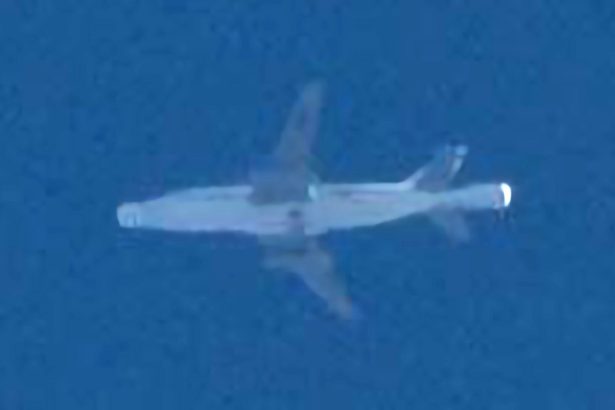
Six pre-owned B-767s will be converted by Israel Aerospace Industries (IAI) into aerial refuellers, as the IAF’s older Russian Il-78MKIs experience availability issues.
The Indian Ministry of Defence (MoD) has granted an Acceptance of Necessity (AoN) for acquiring six Boeing B-767 airliners to be converted into aerial refuellers by Israel Aerospace Industries (IAI), reports on Jan. 12 and Jan. 13, 2025, said. A final contract signing is expected by March.
Meant to replace an equal number of the Indian Air Force’s older and problematic Ilyushin Il-78MKIs, the new tankers have been mentioned in reports about the deal circulating since October 2025. At the time, a report from Aerospace Global News quoted an MoD official who said: “Since India already has a long-standing working relationship with Israel Aircraft Industries, it makes the transition smoother and the oversight process simpler.”
India operates a mix of Russian Su-30MKIs and MiG-29UPGs, French Mirage 2000s and Rafales, Jaguar strike aircraft, and the domestic LCA Tejas Mk1. The mention of the relationship with IAI is a reference to the work undertaken to convert six Russian Il-76s into Airborne Early Warning and Control (AEW&C) aircraft as the Phalcon system, and some of the now retired MiG-21Bis with advanced electronics, displays and helmet-mounted-displays.
–#IndianAirForce to buy 6 B767 multi-role tankers for ₹9000 cr
-Israel Aerospace Industries (IAI) & HAL will do the conversion
-Contract is likely to be signed before the end of FY
-Likely induction into service by early 2029
-IAF has been struggling with the serviceability rate… pic.twitter.com/y959qvhFpZ
— Insightful Geopolitics (@InsightGL) January 12, 2026
It must be noted that an AoN, granted by the Defence Acquisition Council (DAC), is only the acknowledgement of an acquisition need, and does not necessarily translate into a formal contract. Defence.in put the value of the acquisition at Rs. 9,000 crore ($900 million), while other claims have said the deal also involves 30% local manufacturing, related to the conversion program, in partnership with Hindustan Aeronautics Limited (HAL).
Other reports said that the deal could receive a final clearance by March, with IAI beginning the acquisition of the B-767 from the open market, prior to the conversion. Deliveries are expected to commence by 2030 with two aircraft, followed by two aircraft each year, when the IAF will begin the drawdown of the Il-78s.
India’s tanker saga so far
The IAF acquired six Russian-made Ilyushin Il-78M mid-air refueller aircraft in 2001-02 from Uzbekistan, as unfinished yet brand new Il-76 platforms, and began induction from 2003 onwards. All six were delivered by 2004 and assigned to the IAF’s No. 78 Squadron at Agra Air Force Station (AFS) in northern India.
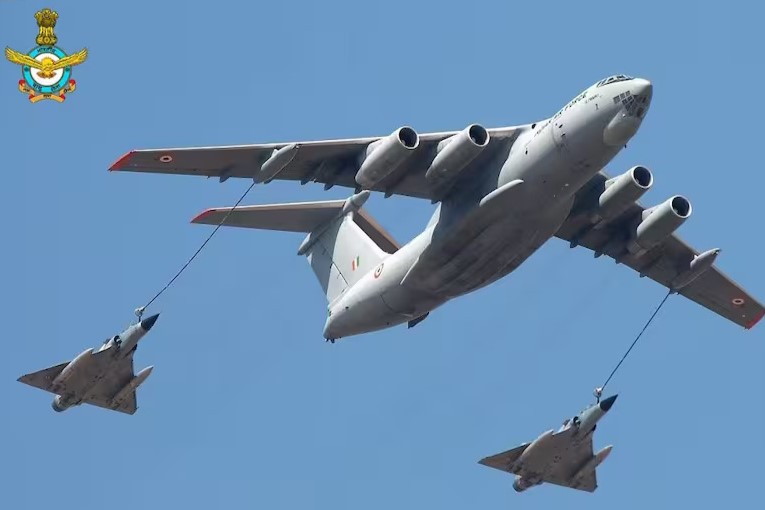
In 2006, the MoD issued a Request for Proposal (RFP) for six more tankers, with two of the contenders being the Il-78 and the Airbus A330 Multi-Role Tanker Transport (MRTT). In the subsequent down selection, following extensive user evaluation and comparative trials, the IAF chose the A330 MRTT and communicated the choice to the Ministry of Finance.
For a series of unknown yet presumable reasons that can be safely attributed to India’s vexed defense procurement process, unusually more vulnerable to bureaucratic and political exigencies than possibly any other country, the procurement did not progress. Sources say the MoF cited budgetary constraints, and the “file did not move” until 2010, when the MoF and the MoD restarted the program with a fresh, second RFP.
A persistent fear of corruption allegations by opposition parties or losing competitors – which has brought down governments and seen the arrest of even a former IAF chief and defense executives – forces MoD bureaucrats to hyper examine files before signing off on them. The nearly dozen multi-billion defense scandals in India stem from a political leadership lacking strategic clarity, and a demanding military brass that refuses any relatively inferior weapons, for any long term economic and defense self-reliance benefits.
Based on a modified IL 76 airframe, the IL 78 MKI is an #IAF aerial refuelling platform.
Capable of refuelling multiple aircraft simultaneously & thus increasing their flying ranges manyfold, it plays an important role in improving the strategic reach of IAF.#IAFCapabilities pic.twitter.com/5uJp6r2nqL
— Indian Air Force (@IAF_MCC) July 21, 2022
The second RFP lingered on until 2016, when “pricing” and “cost” issues again put the brakes on the program, eventually leading it to being cancelled. A third RFP, again for six mid-air refuellers, was issued in 2018, with Boeing, Airbus and Ilyushin participating. In the intervening time, the IAF declined a suggestion to buy more Il-78s, after it had experienced poor support from the manufacturer.
The existing Il-78 fleet had been afflicted with severe availability and maintainability issues, and problems with its hose-and-drogue refueling system. The Hindustan Times reported in August 2017 a Comptroller and Auditor General (CAG) report – equivalent to the U.S. Government Accountability Office (GAO) – finding an Il-78 mission readiness rate at 49%, much less than the IAF’s desired 70%. Other issues included inadequate and incomplete runway extension projects, absence of any support infrastructure at 10 airfields, only one dedicated maintenance hangar and an underground hydrant refueling system (HRS) available at only two air bases.
By Mar. 28, 2025, the MoD announced a contract with private company Metrea to wet lease a KC-135 Stratotanker as a stop-arrangement until planners evolve a longer-term solution. The same day, Scramble reported that the MoD had also approved a wet lease of a French Air and Space Force A330 MRTT for three years. This would also serve to familiarize IAF personnel with the A330 MRTT.
#MakingHistory : MID AIR REFUELING TRIALS OF LCA WITH IL-78 MKI – On 04 Sep 18, IAF successfully carried out the 1st ever Air to Air refueling of the indigenously build fighter aircraft Tejas MK1 with an IL-78 tanker aircraft.
Details on https://t.co/okJbv3h7IU pic.twitter.com/gjN8imATPS
— Indian Air Force (@IAF_MCC) September 5, 2018
What happened to the 2018 RFP is not yet known, but wet leased aircraft operated by foreign entities are not likely to remain present in the country during wartime, when the IAF is likely to revert to its older Il-78MKIs.
It is still not clear if the upcoming contract with IAI for the B-767s is a part of the 2018 RFP, but the fact that reports did not mention other competitors while mentioning the AoN grant suggests it could be a direct single source buy through an expedited, non-competitive route. The Aviationist is still awaiting clarity from MoD officials on this front.
IAI B-767 MMTT
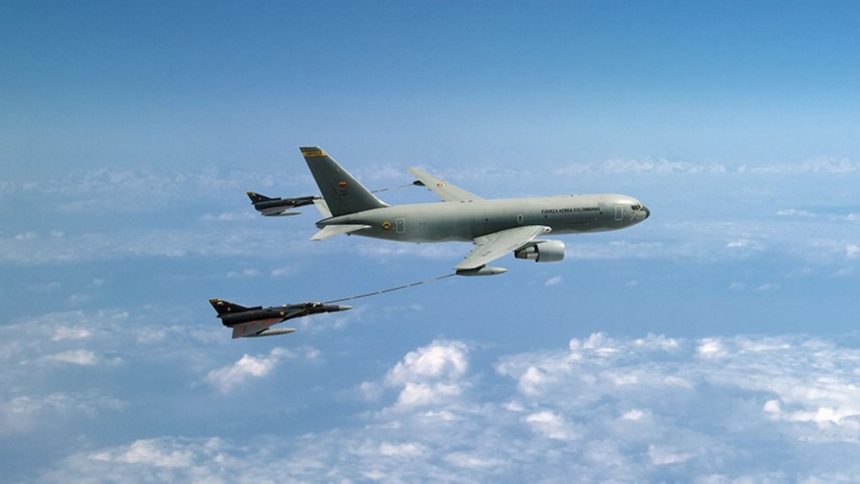
It must be noted that the B-767, on which IAI’s Multi-Mission Tanker Transport (MMTT) is based, is also the base platform for the U.S. Air Force’s KC-46A Pegasus aerial refueler. IAI’s website advertises a Colombian Aerospace Force (CAF) KC-767 “Jupiter” refueller, the sole such aircraft in CAF service, it has converted for the purpose, with two underwing hose and drogue refueling systems.
IAI is single vendor in bid to supply IAF with six tankers for ₹8,000 cr
– Modified Boeing 767
– Likely to bag deal as others didn’t meet reqmnts incl. 3-30% IC need
Via:https://t.co/uCVN701Kp2
– HAL & IAI have an MoU for B767 tankers, so if this goes through part of the… https://t.co/GydytAsJFH pic.twitter.com/OGg7NqXuJs
— Adithya Krishna Menon (@AdithyaKM_) October 27, 2025
IAI says that the B-767 MMTT is also configured simultaneously for “cargo, VIP, passengers and ISR systems as desired by the operator.” Moreover, “each aircraft configuration includes a special cargo door and built-in cargo pallet capabilities, as well as passenger seats and consoles that can be rapidly installed or removed.”
The B-767 and its variants are meanwhile a popular freighters and passenger aircraft which Boeing still produces, with the company saying in October 2024 that it would cease the model’s production only in 2027. This keeps the airframe relevant for the IAF for at least a full decade after delivery.