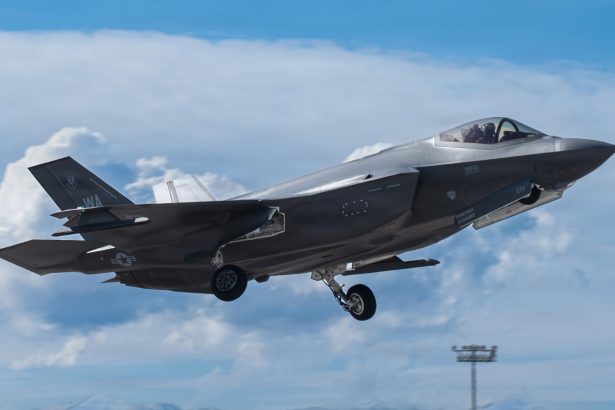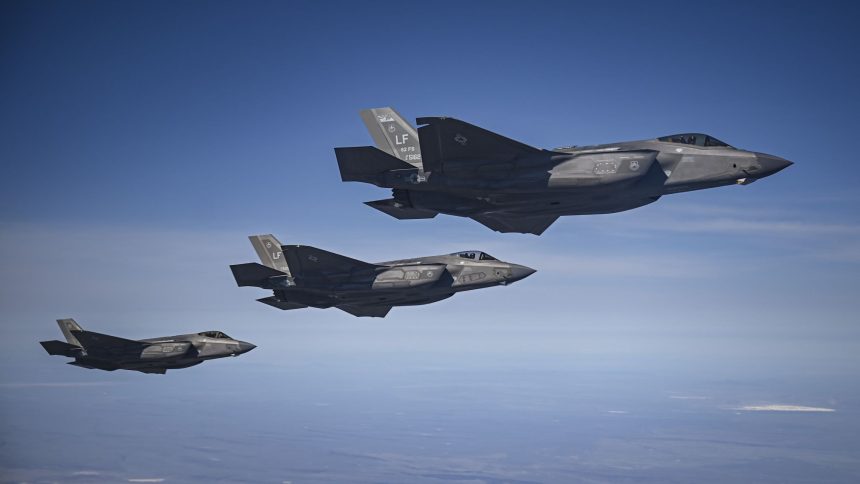
Lockheed Martin said it set a record delivering 191 F-35 Lightning II jets in 2025, clearing backlog deliveries in the process, with a global fleet that now counts 1,300 aircraft.
Lockheed Martin announced that it has delivered a total of 191 F-35 Lightning II fighter jets in 2025, setting a new record that surpassed the previous one of 142 set in 2021. At the same time, the company almost doubled the numbers compared to 2024, when only 110 aircraft were delivered.
The achievement comes after Lockheed Martin cleared the backlog deliveries which were halted after the problems with the Technology Refresh-3 (TR-3) problems. During that period, between 72 and 110 aircraft were reportedly stored before the F-35 Joint Program Office (JPO) allowed deliveries to start again.
“I’m immensely proud of the F-35 enterprise for delivering on our production commitments, performing with excellence and growing our global partnerships in 2025,” said Chauncey McIntosh, Vice President and General Manager of the F-35 Lightning II Program. “As our warfighters continue to employ the F-35 to protect the interests of America and our allies around the world, we’re committed to continuing to push the latest technology into the hands of the warfighter to defeat any threat.”
Global F-35 Fleet
During 2025, the F-35 Lightning II reached new milestones, with one of the most important being the one million flight hours mark. The announcement arrived on Mar. 3, 2025, based on the cumulative flight hours from all 16 services that are currently operating the F-35, encompassing test and operational missions, including training sorties and real-world combat.
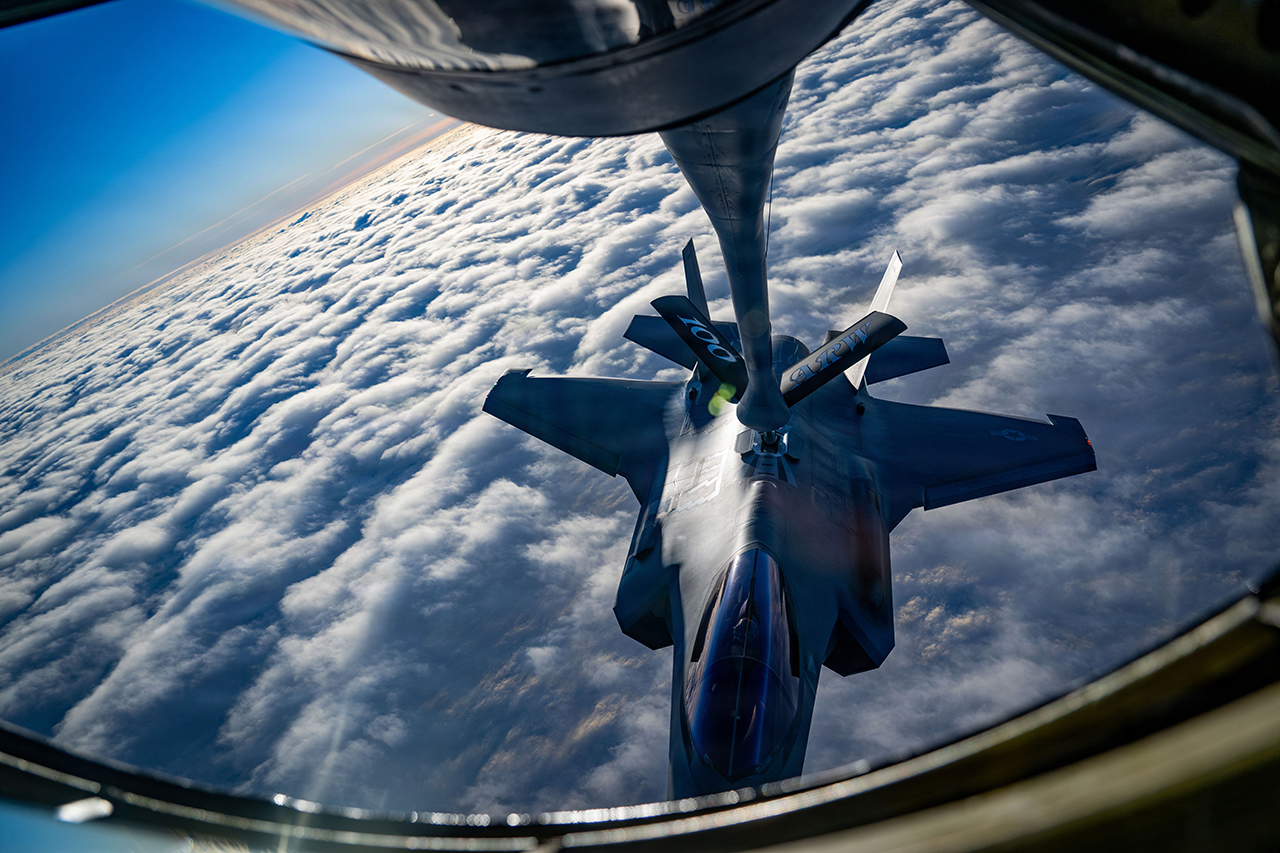
This incredible number of hours not only highlights the reliability of the F-35 platform, but also underscores the massive work “behind the scenes” required to maintain a constant operational readiness. Thousands of people are employed in logistics and support roles to ensure the F-35 is ready to take to the skies around the clock.
As Lt. Gen Michael Schmidt, Program Executive Officer for the F-35 Lightning II Joint Program Office stated, “This milestone is not just a testament to the F-35’s unmatched capability, but also the resilience and commitment of everyone involved in the program.”
Around 1,300 F-35 aircraft are in service globally, and the fleet keeps growing. The last addition, in order of time, is Finland, with the maiden flight of its first F-35A in December 2025.
The F-35 has also been at the center of the news for its combat actions. Among these are the Russian drone incursion over Poland in September 2025.
Multiple Russian drones violated Polish airspace in the night between Sep. 9 and 10, 2025, during Moscow’s large-scale strike on Ukraine. Multiple assets were launched to counter the airspace violation, including Polish F-16s and Dutch F-35s.
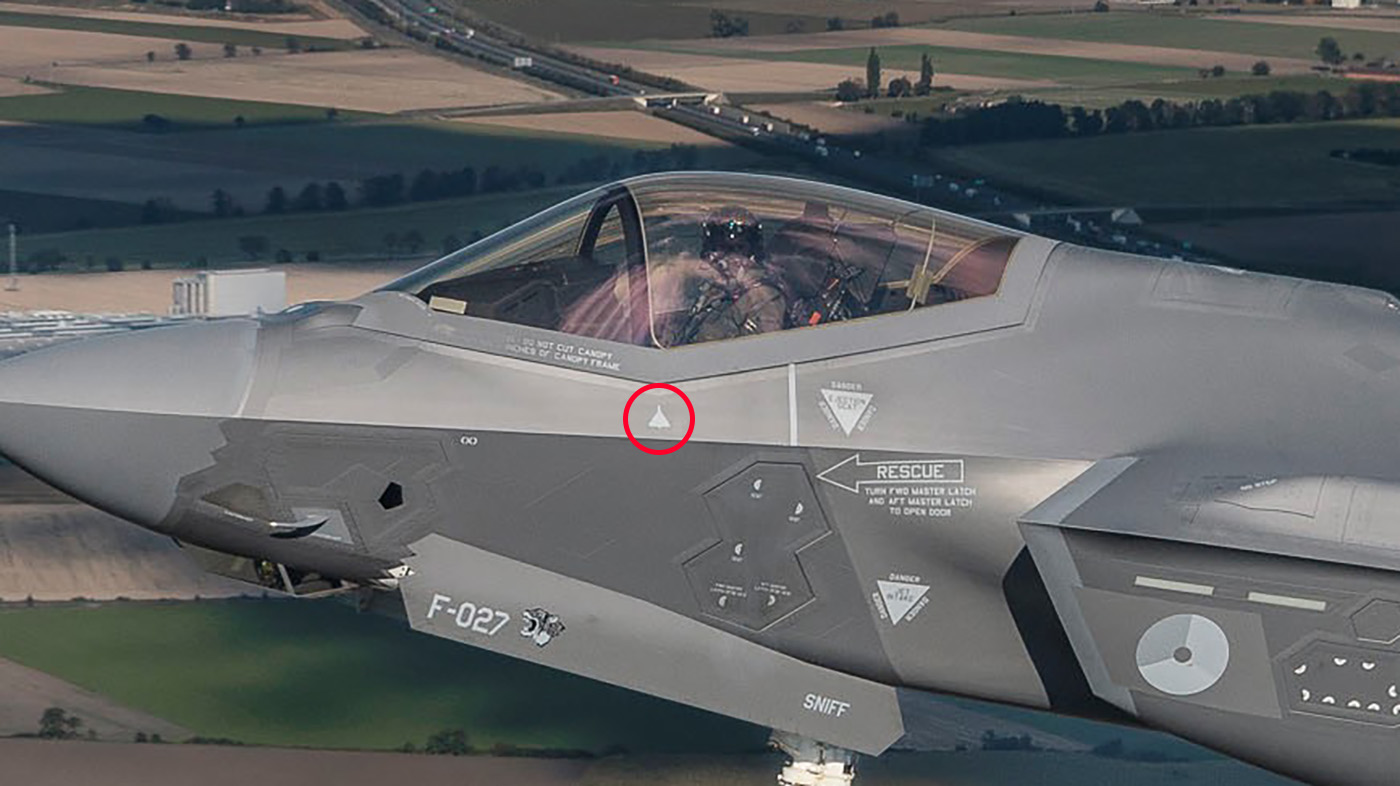
Three drones were reportedly shot down by NATO aircraft, with the Netherlands later confirming that the F-35s were used to shoot down some of them, without specifying the number, and one F-35 received a kill marking. The unprecedented incident marks the first time that Russian assets have been destroyed over NATO territory since the start of Russia’s full-scale invasion of Ukraine in 2022.
Another prominent combat action of the F-35 was its involvement in the Operation Midnight Hammer, the strike against Iranian nuclear facilities in June 2025. On that occasion, the Lightning IIs were tasked with the escort of a strike package, “kicking down the door” and paving the way for B-2 Spirit stealth bombers.
With one of the primary missions sets of the F-35s being the Suppression of Enemy Air Defenses (SEAD), a formation of the unit’s F-35s was the first to penetrate Iranian airspace and the last to leave it. The Lightnings used their stealth, radar, sensors and targeting systems to detect and destroy surface-to-air threats.
The specifics of the action were not disclosed, with the F-35 employing weapons but not targeted by Iranian systems. The aircraft previously took part also in Operation Rough Rider, striking Houthi targets.

“We employed weapons to great effect against surface-to-air missile sites… while they were trying to target us with some very high high-end systems and they were just unable to,” said U.S. Air Force Lt. Col. Aaron Osborne, 34th Fighter Squadron commander. “It was cool to see the jet detect and defeat things – to watch it do exactly what it was designed to do.”
Industry Progress
During 2025, the F-35 program continued to make progress also on the industrial side, with the fleet continuing to grow. Among the major milestones are the completion of the deliveries to Norway in April, the arrival in country of the first Belgian F-35 in October and the first flight of the first Finnish F-35 in December.
Some existing customers are increasing their fleets, with Italy procuring 25 additional F-35s, of which 15 F-35As and 10 F-35Bs, and Denmark procuring 16 additional jets. Germany, Switzerland and Canada are continuing with their plans for the F-35, with deliveries inching closer.
In September, the F-35 JPO and Lockheed Martin finalized the largest production contract of the program. In fact, a final agreement was reached for the Production Lots 18 and 19, which will see the company building up to 296 F-35s for a total contract value of approximately $24.3 billion.
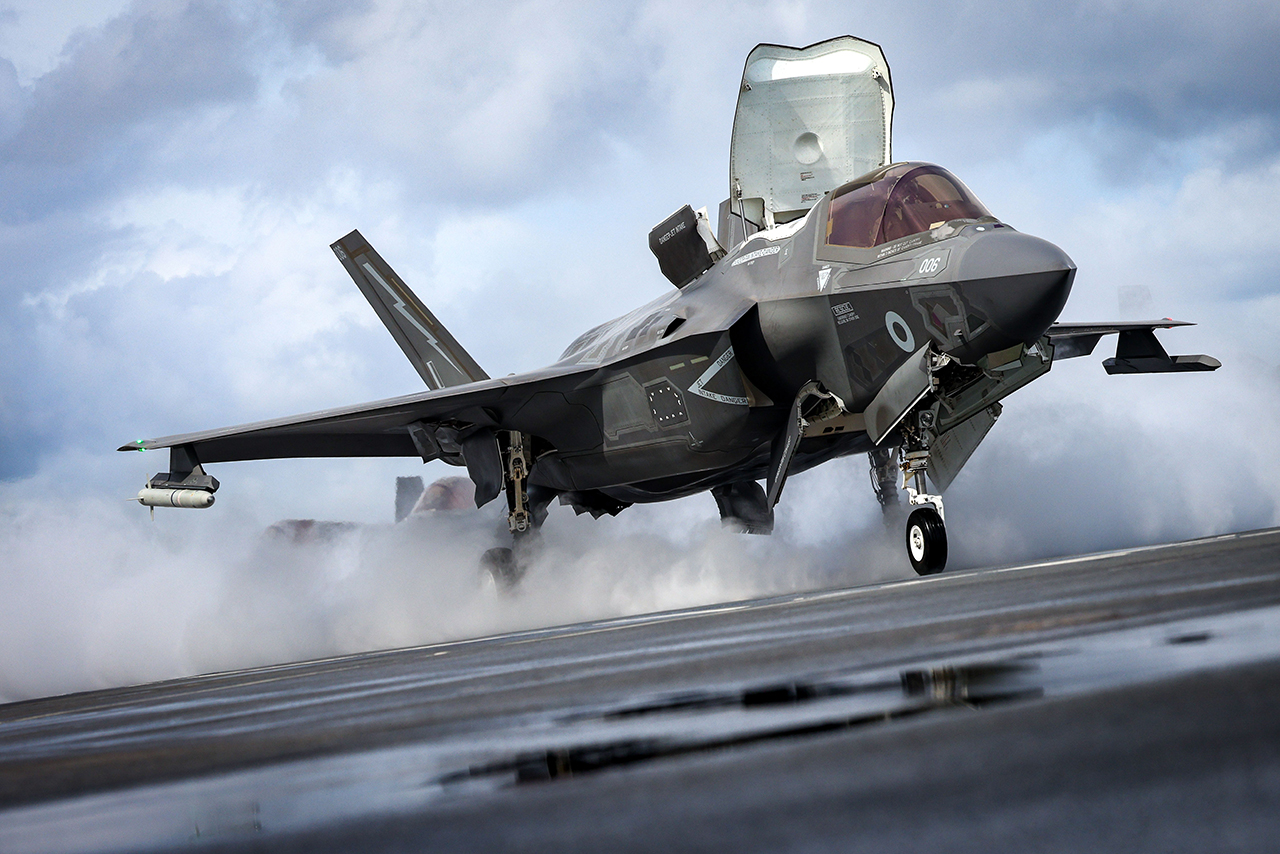
Lockheed Martin was initially awarded in December 2024 a first undefinitized contract for Lot 18, worth $11.8 billion, to produce a total of 145 F-35s by June 2027. These jets include 48 F-35A aircraft for the Air Force, 16 F-35B aircraft and five F-35C aircraft for the Marine Corps, 14 F-35C aircraft for the Navy, 15 F-35A aircraft and one F-35B aircraft for F-35 non-U.S. DoD program partners, and 39 F-35A aircraft and seven F-35B aircraft for Foreign Military Sales (FMS) customers.
The new contract modification awarded on Sept. 29, 2025, worth $12.5 billion, increased Lot 18 to 148 aircraft and added 148 F-35s as part of Lot 19. The latter include 40 F-35A aircraft for the Air Force, 12 F-35B and eight F-35C aircraft for the Marine Corps, nine F-35C aircraft for the Navy, 13 F-35A and two F-35B aircraft for F-35 cooperative program partners, and 52 F-35A and 12 F-35B aircraft for Foreign Military Sales (FMS) customers.
The company says it can produce 156 jets annually, but the number might change in the near future. The U.S. Air Force, in the recent ten-year fighter force structure plan, said a requirement of the production is needed to achieve the required fleet size in adequate time.
U.S. President Donald Trump similarly said there would be a need to expand and speed up the production, eventually building new production plants. This could end up in the recently announced $1.5 trillion increase in defense spending for 2027.