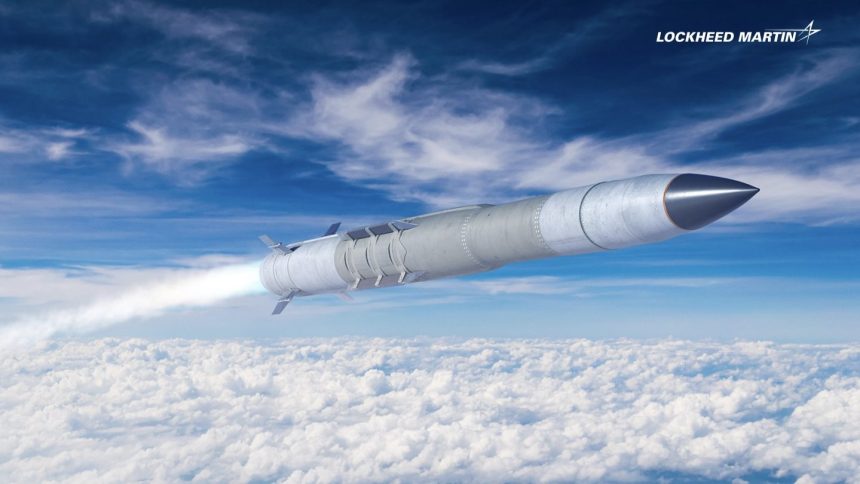
Lockheed Martin and the Pentagon announced plans to increase the annual production of the PAC-3 MSE interceptor from 600 to 2,000 weapons.
Lockheed Martin has announced the signing of a landmark framework agreement with the U.S. Department of Defense to rapidly accelerate the production of PAC-3 Missile Segment Enhancement (MSE) interceptors. This will allow to more than triple the production, increasing from 600 to 2,000 per year.
PAC-3 MSE Production Increase
According to the press release, the agreement plans the increase of the production over seven years. The company says it is well-positioned for this, as the production was already increased by more than 60% over the past two years, allowing to deliver 620 PAC-3 MSE interceptors in 2025.
A new era of rapid defense delivery! We’ve reached a framework deal with the U.S. government to fast‑track annual PAC-3® MSE production from approximately 600 to 2,000 over seven years. Our tooling, test equipment and 13,000+ supplier network boosts supply‑chain resilience. pic.twitter.com/CNEvsGz5Lc
— Lockheed Martin (@LockheedMartin) January 6, 2026
The agreement follows the soaring demand for the PAC-3 MSE which emerged as a consequence of recent events where air defenses saw heavy involvement. Among these are the war in Ukraine and the defense against Iranian drones and missiles in the Middle East.
The company describes the agreement, which did not yet result in a contract (expected later this year), as “a direct outcome of the Department of War’s Acquisition Transformation Strategy, one of the most significant reforms to U.S. warfighting acquisition in decades.” This will allow to provide “long-term demand certainty, enabling industry investment, increasing production rates and driving operational efficiencies.”
“We appreciate the Department of War’s leadership in advancing acquisition reform,” said Lockheed Martin Chairman, President and CEO Jim Taiclet. “This first-of-its-kind approach builds on years of advocacy and collaboration to bring commercial practices to major acquisition programs. We will create unprecedented capacity for PAC-3 MSE production, delivering at the speed our nation and allies demand while providing value for taxpayers and our shareholders.”
The company also highlights that the agreement will support U.S. forces, allies and partner nations. With 17 nations operating the Patriot system, in addition to the U.S. military, the production increase will allow to satisfy the increasing demand without excessively long timelines.
The agreement also follows a multi-year contract by the U.S. Army, worth $9.8 billion, for nearly 2,000 PAC-3 MSE interceptors, awarded in September 2025.
The Role of PAC-3 MSE in Modern Air Defense
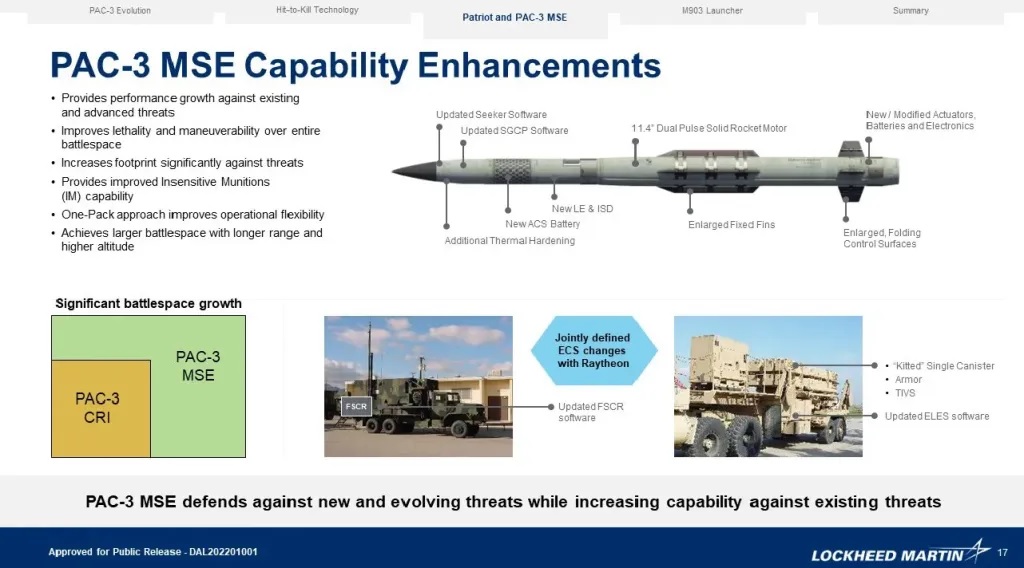
The PAC-3 MSE, designated the MIM-104E, is the most advanced variant of the Patriot interceptor, using hit-to-kill technology to destroy targets through direct impact rather than explosive fragmentation. This approach delivers significantly more kinetic energy, enhancing effectiveness against modern threats.
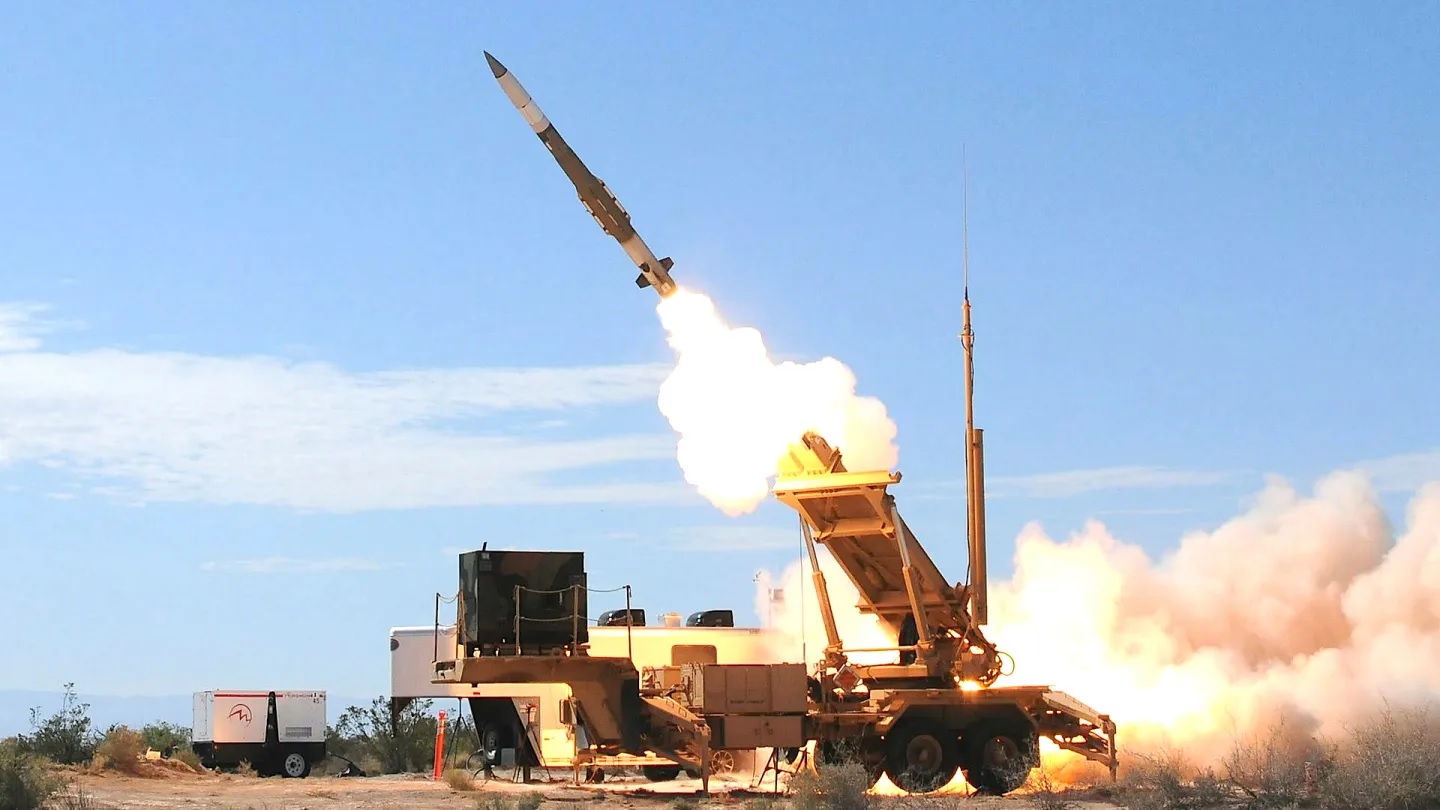
The interceptor is designed to counter tactical ballistic missiles, cruise missiles, hypersonic weapons, and aircraft, explained Lockheed Martin. The PAC-3 required a near complete overhaul of the entire system, comprising the command and control (C2) system, now Link 16-compatible, and an advanced radio communications suite.
The system has already proven itself in combat. Lockheed Martin executives noted that recent operational performance solidified the PAC-3 MSE as a critical capability for the U.S. and allied militaries. “PAC-3 MSE’s recent combat performance solidified it as a must-have capability for America and its allies around the world,” said Jason Reynolds, vice president and general manager of Integrated Air and Missile Defense at Lockheed Martin.
Seventeen partner nations currently operate the PAC-3 interceptor, and its continued procurement reflects both U.S. defense priorities and allied interest in reinforcing integrated air and missile defense capabilities. While air defenses were somewhat neglected for some time, the recent conflicts reignited the interest, with many countries working to improve their air defense networks and missile-based defenses.