The Telegraph reports that Roberto Cingolani, CEO of Leonardo, has warned the UK Defence Secretary that further delays to contracts could threaten the company’s continued operations in the UK.
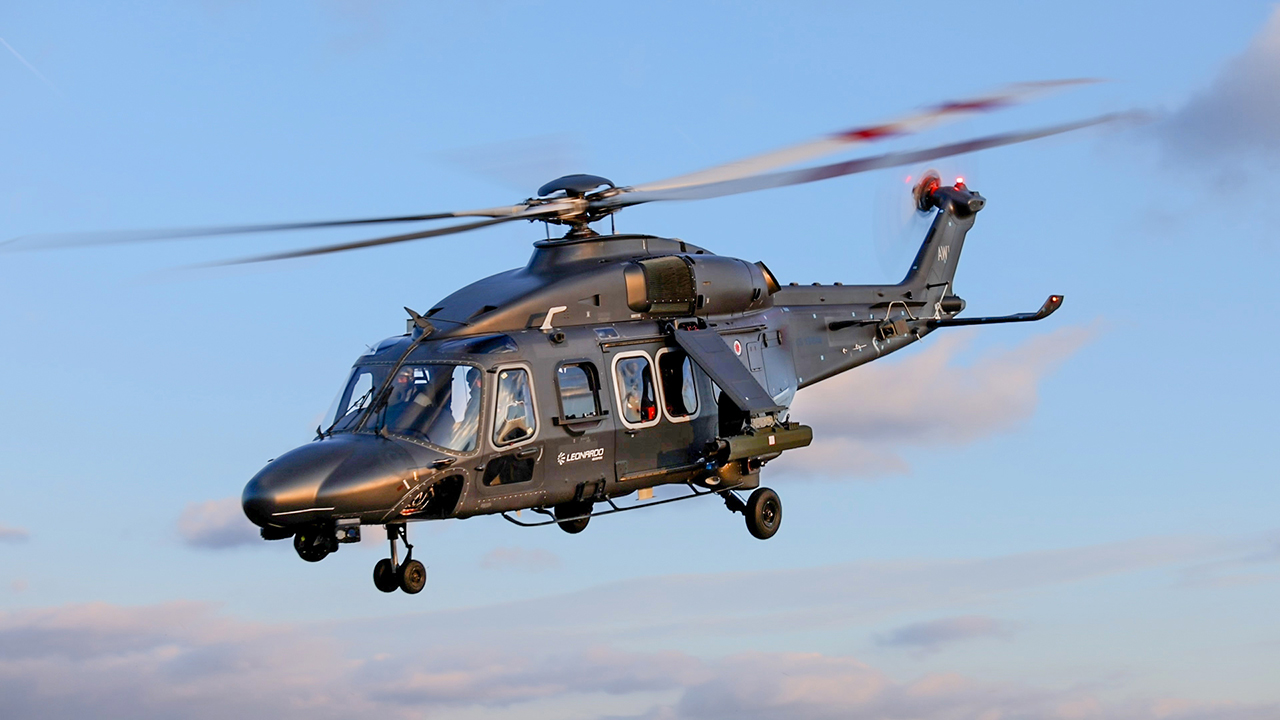
Leonardo, the defence industry giant based in Italy, maintains a significant UK presence with its helicopter production facility at Yeovil, historically operated by Westland, and various other sites across the country. For the past few years it has been clear that the future of the Yeovil plant has rested heavily on the outcome of the New Medium Helicopter (NMH) contract. Despite Leonardo’s offer of the AW149 platform being the sole remaining bid – others having dropped out over a year ago – the UK Ministry of Defence (MoD) has yet to formally place an order.
The company has repeatedly warned that delays in awarding the NMH contract, as well as many other small programs, is placing the jobs of its UK personnel at risk. Now, in what appears to be a last ditch effort, The Telegraph reports that Leonardo chief executive officer Roberto Cingolani personally sent a letter to John Healey, the UK Secretary of State for Defence, to reiterate and reinforce the company’s concerns.
🔴 The boss of defence giant Leonardo has threatened to scrap all investment in Britain following a row over a long-delayed military helicopter contract
Find out more ⬇️https://t.co/9f0NthYcZv pic.twitter.com/X482f2ASSO
— The Telegraph (@Telegraph) December 21, 2025
Industry dissatisfaction over a lack of contracts being issued for new UK defence projects has been particularly strong since the release of the Strategic Defence Review (SDR) in June 2025, which encouraged investment in UK industry. Its scheduled release had been pointed to by officials for some time in the months prior as a reason why new contracts were not then forthcoming, but now manufacturers have been again told to await the release of the Defence Investment Plan (DIP). Originally due this year, the DIP is now expected in 2026, with the high profile problems with the Ajax armored vehicle thought to have had an impact as well as Treasury pushback on spending plans.
Beyond the Yeovil site, Leonardo operates eight further locations stretching as far south as Southampton and as far north as Edinburgh in Scotland. These sites support work for various military capabilities and technologies, including communications, radar, infrared detection and countermeasures, electronic warfare, and more. The company says it supports over 31,000 British jobs, generating £2.5 billion for the UK’s economy.
Worth remembering that the Leonardo UK BriteCloud electronic warfare decoy that BriteStorm is based on, is deemed so capable, the US is buying it to protect F-35s. A major British export to US success story. #StormShroud https://t.co/PPfC9T2Bvu pic.twitter.com/V3YtRY1cLL
— Tim Robinson (@RAeSTimR) May 2, 2025
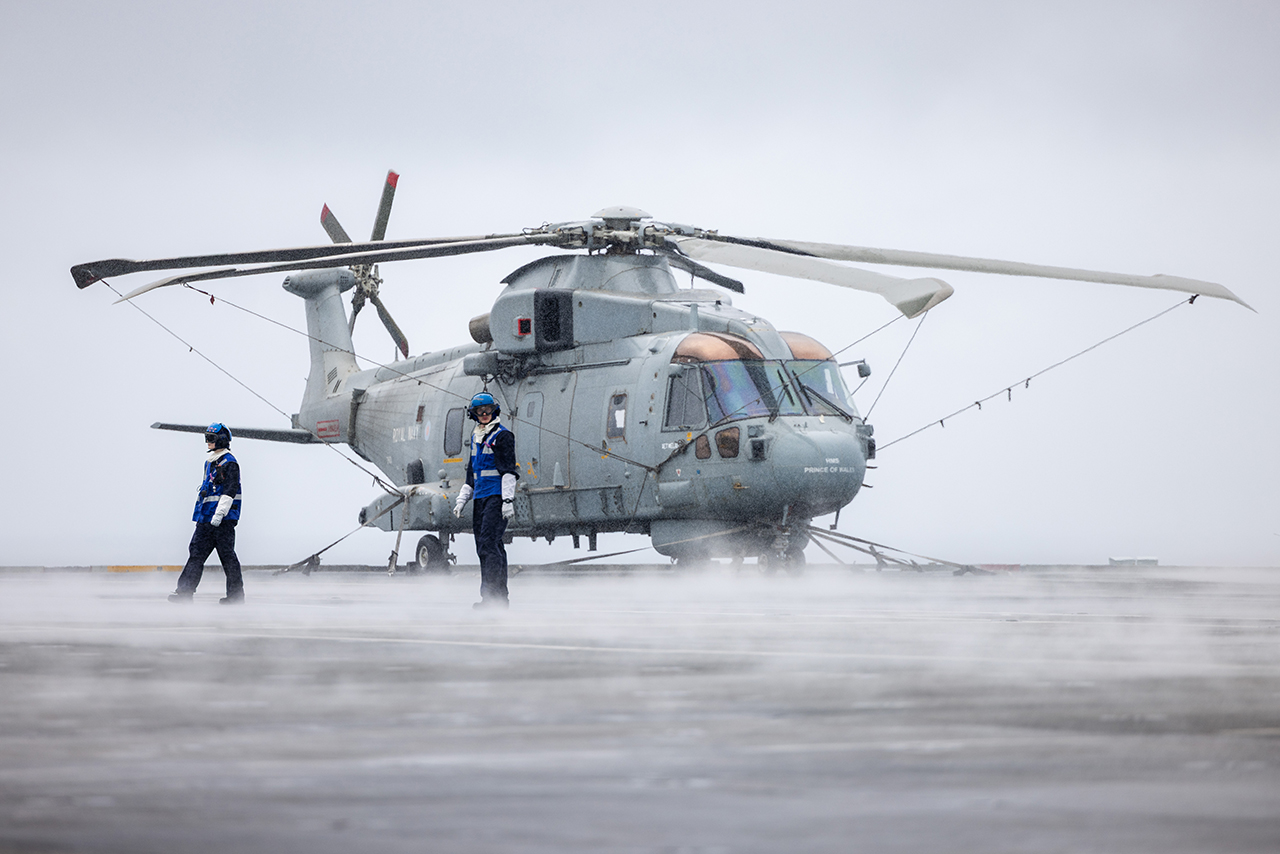
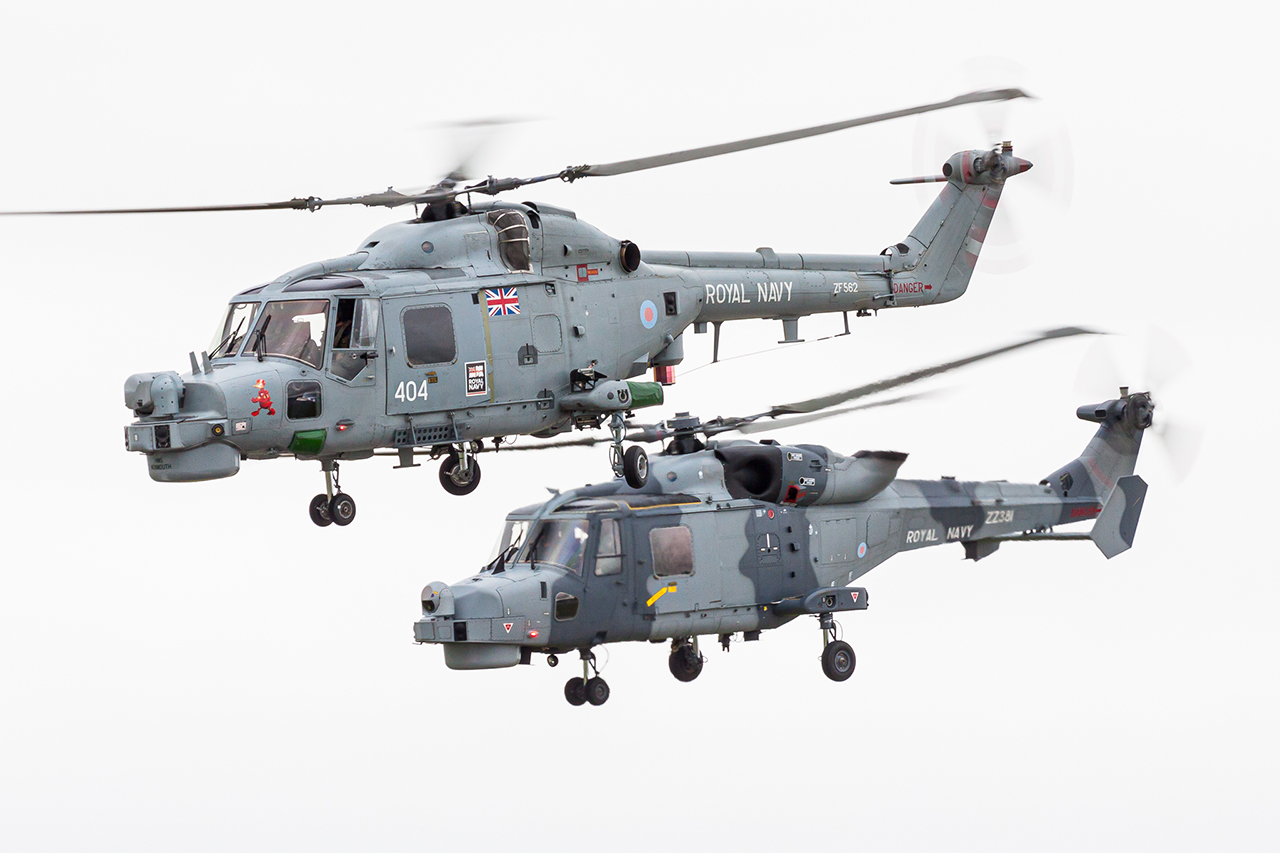
At Yeovil itself, beyond NMH, the company is hopeful for future orders for its Merlin and Wildcat products, both of which are manufactured on site. Norway, who have selected the Type 26 frigate in one of the biggest ever overseas defence deals for the UK, are thought to be considering a buy of the maritime variant of the Merlin to fly from its ships. Expanding with NMH to include an AW149 production line would present more opportunities for ongoing work.
The Telegraph, having seen Cingolani’s letter, says the CEO described NMH, worth around £1 billion, as a “cornerstone” of his company’s future UK plans. Further delays to, or potential cancellation of, the program would “force a reevaluation of Leonardo’s UK presence,” he added. The Yeovil factory is said to directly support 3,000 jobs, with a further 9,000 supported through extended supply chains.
While, given the overall scale of Leonardo’s presence in the UK and the cost of re-establishing this elsewhere, a complete withdrawal is unlikely, even some site closures, cutbacks, and job losses would be a major blow for the UK at a time when ministers frequently attempt to stress their commitment to the UK’s defence industry.
From Westland to Leonardo
Helicopter production at Yeovil dates back to 1948, when Westland Aircraft – who had produced fixed wing aircraft during the Second World War – used the site to manufacture a licence-built Sikorsky S-51. A further 148 would be built at the site under the name Westland Dragonfly.
Yeovil would go on to be home to more of Westland’s collaborations with Sikorsky, namely the Westland Whirlwind, Westland Wessex, Westland Sea King, and even a one-off demonstrator of a Westland WS-70 Black Hawk. Final assembly of Pumas and Gazelles was also supported at Yeovil under agreements struck with Aérospatiale, with Westland then later taking the lead on the Lynx helicopter. Home-grown designs like the Westland Wasp and Westland Scout were also built.
Westland merged with Italian manufacturer Agusta in 2000, then becoming AgustaWestland. After GKN, who owned the Westland brand, sold their share in 2004 the company became solely owned by Finmeccanica. When Finmeccanica restructured and rebranded as Leonardo in 2016, its AgustaWestland subsidiary became Leonardo Helicopters. Locally, the Yeovil plant is still colloquially known as ‘Westlands’.
In more modern times, the Yeovil plant has been home to production lines for the AW101 Merlin and AW159 Wildcat, and assembly of all UK military operated examples of these aircraft was performed at the Somerset factory. The UK’s unique licence-built AgustaWestland WAH-64D Apache attack helicopters were built on site, though the newly delivered AH-64E models were instead procured directly from Boeing. Upgrades for the Merlin fleet, namely the Merlin HC4, Merlin HM2, and Merlin Crowsnest programs, were also carried out at Yeovil. It is the last site in the UK to offer complete end-to-end helicopter production, but has not received a UK contract for new-build airframes since the Wildcat in the late 2000s.
Most recently, Leonardo has produced a prototype of the Proteus rotary wing uncrewed aerial system (RWUAS) at Yeovil. Ground tests were completed in early December, with flight testing due to follow in the near future.