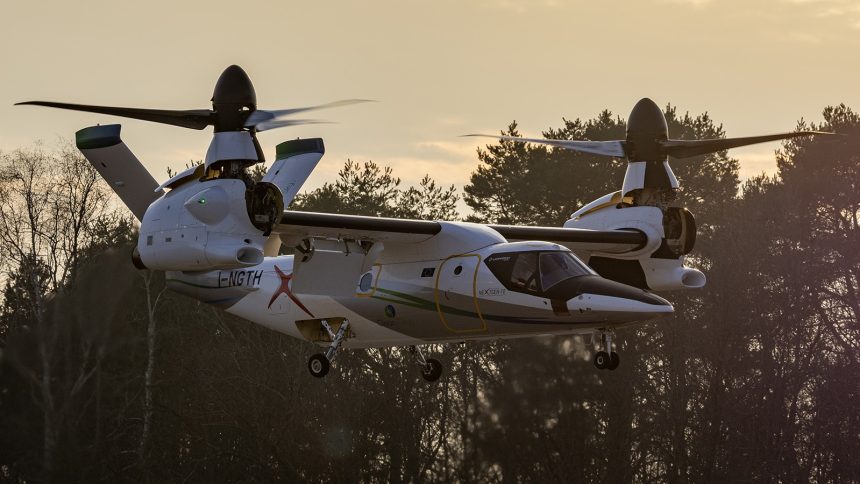
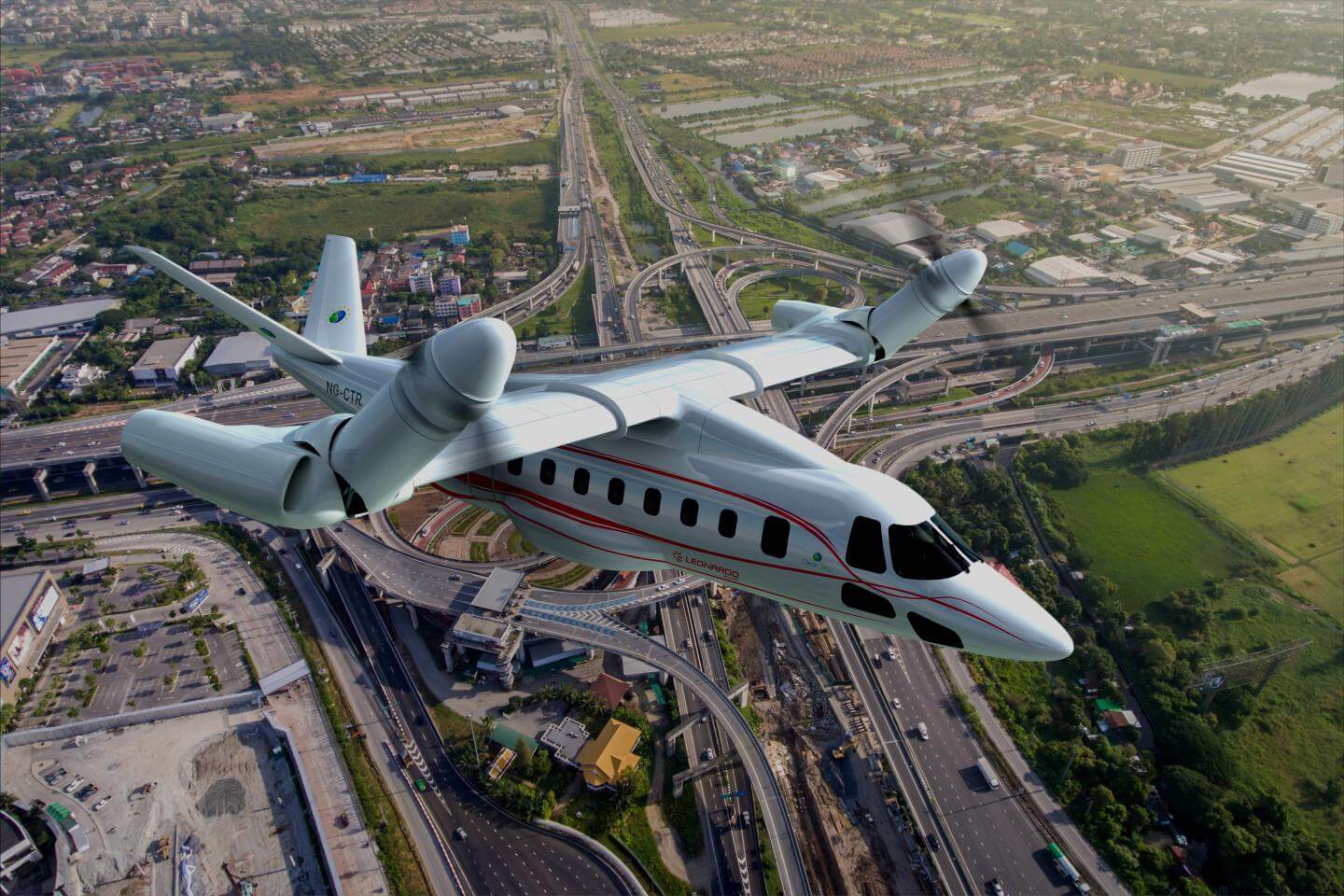
The NGCTR demonstrator is designed to mature key novel technologies that could support the development of a larger civil tiltrotor with lower emissions.
Leonardo has announced the first flight of the Next Generation Civil Tiltrotor – Technology Demonstrator (NGCTR-TD), which took place on Dec. 19, 2025, at the company’s Cascina Costa facility in northern Italy. The flight marks a major milestone for one of Europe’s most advanced civil rotorcraft research programs, developed under the EU-funded Clean Sky 2 initiative.
The event formally opens the flight test phase for the demonstrator, which is intended to mature key technologies to be used for a future generation of high-speed, long-range civil tiltrotors. The NGCTR program aims to combine the vertical take-off and landing (VTOL) flexibility typically shown by helicopters with the cruise performance similar to that of fixed-wing turboprop aircraft, while significantly reducing environmental impact.
#Leonardo and the EU @clean_aviation JU (Joint Undertaking) are pleased to announce the first flight of the Next Generation Civil Tiltrotor – Technology Demonstrator (NGCTR-TD), which took place on 19 December at Leonardo’s Cascina Costa di Samarate facility (Varese, Italy).… pic.twitter.com/rGzNBnp4tU
— Leonardo Helicopters (@LDO_Helicopters) December 19, 2025
First Flight
According to a video released by Leonardo, the first flight consisted only of a brief hovering sortie, meant to verify aircraft stability and overall system functionality before moving to longer tests. The flight was performed by Leonardo test pilot Gianfranco Cito at the Cascina Costa site, the same site where the aircraft was assembled and underwent ground testing.
Leonardo said that the first flight marks the start of a progressive flight-test campaign, during which the demonstrator’s flight envelope will be gradually expanded. Subsequent sorties will then focus on validating individual subsystems and, later on, more complex flight profiles, including transitions between helicopter and airplane modes, which are notoriously among the most critical flight phases for tiltrotors.
The NGCTR program reached another key milestone in July 2024, when the demonstrator successfully completed its first ground run tests. Those activities paved the way for flight clearance and ultimately led to the aircraft’s first flight in December 2025.
“Building on our well-established experience in the tiltrotor sector, bringing this technology demonstrator into the air for the first time represents an important milestone in our journey to make a key contribution toward an even more advanced, effective, and sustainable use of helicopter technologies in Europe. Vertical lift continues to deliver invaluable benefits to operators and communities across a wide range of missions worldwide; for this reason, we are committed to developing and delivering solutions that uniquely combine the best of both worlds – rotary-wing and fixed-wing architectures – unlocking entirely new capabilities.”
— Gian Piero Cutillo, Managing Director of Leonardo Helicopters
Clean Sky 2 Framework
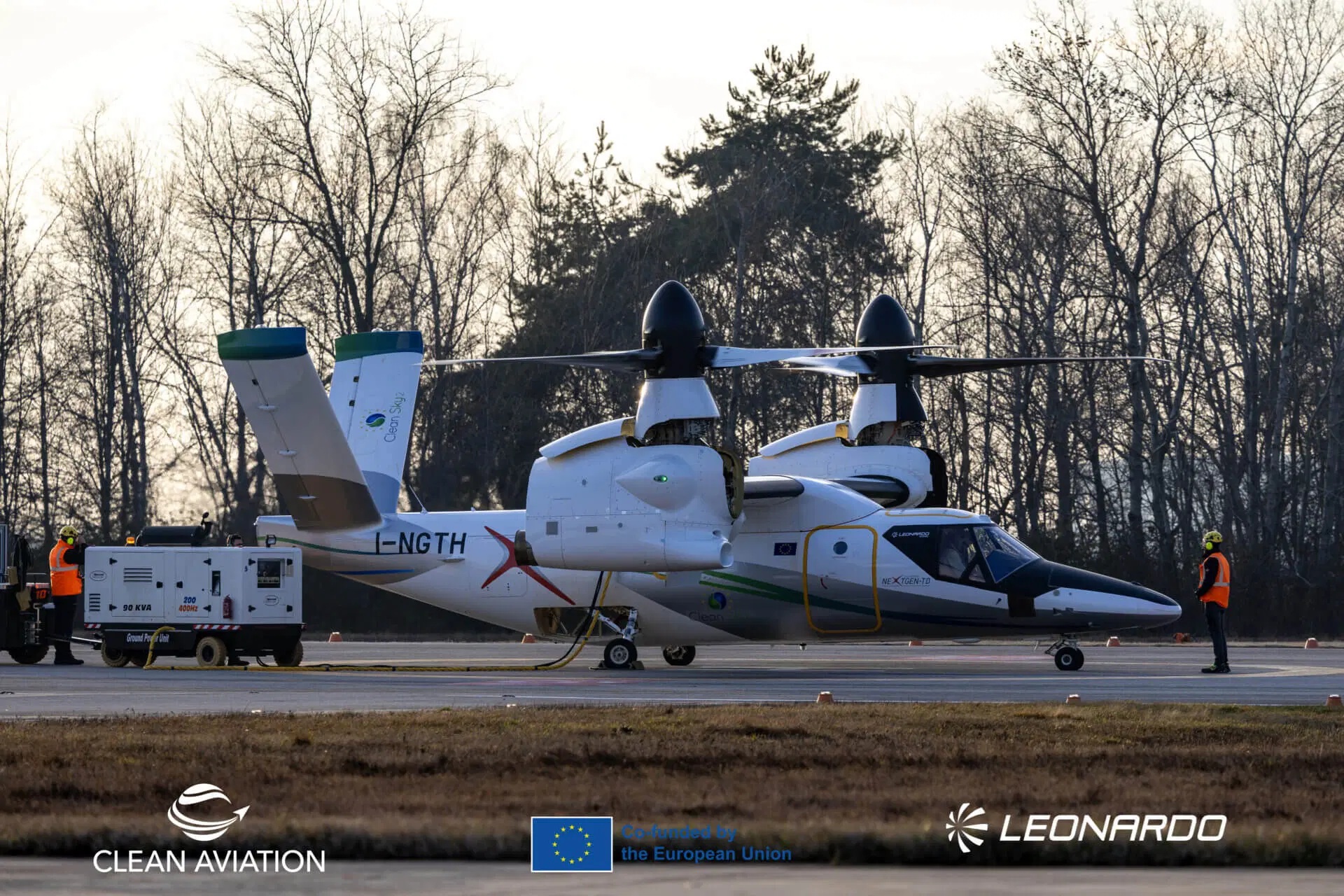
The NGCTR-TD was developed within Clean Sky 2, the European Union’s large-scale aeronautical research program under the Horizon 2020 framework. Clean Sky 2 was designed to reduce aviation emissions, noise, and operating costs while strengthening Europe’s aerospace industrial base. Its successor, Clean Aviation, continues to build on the technologies matured under the program.
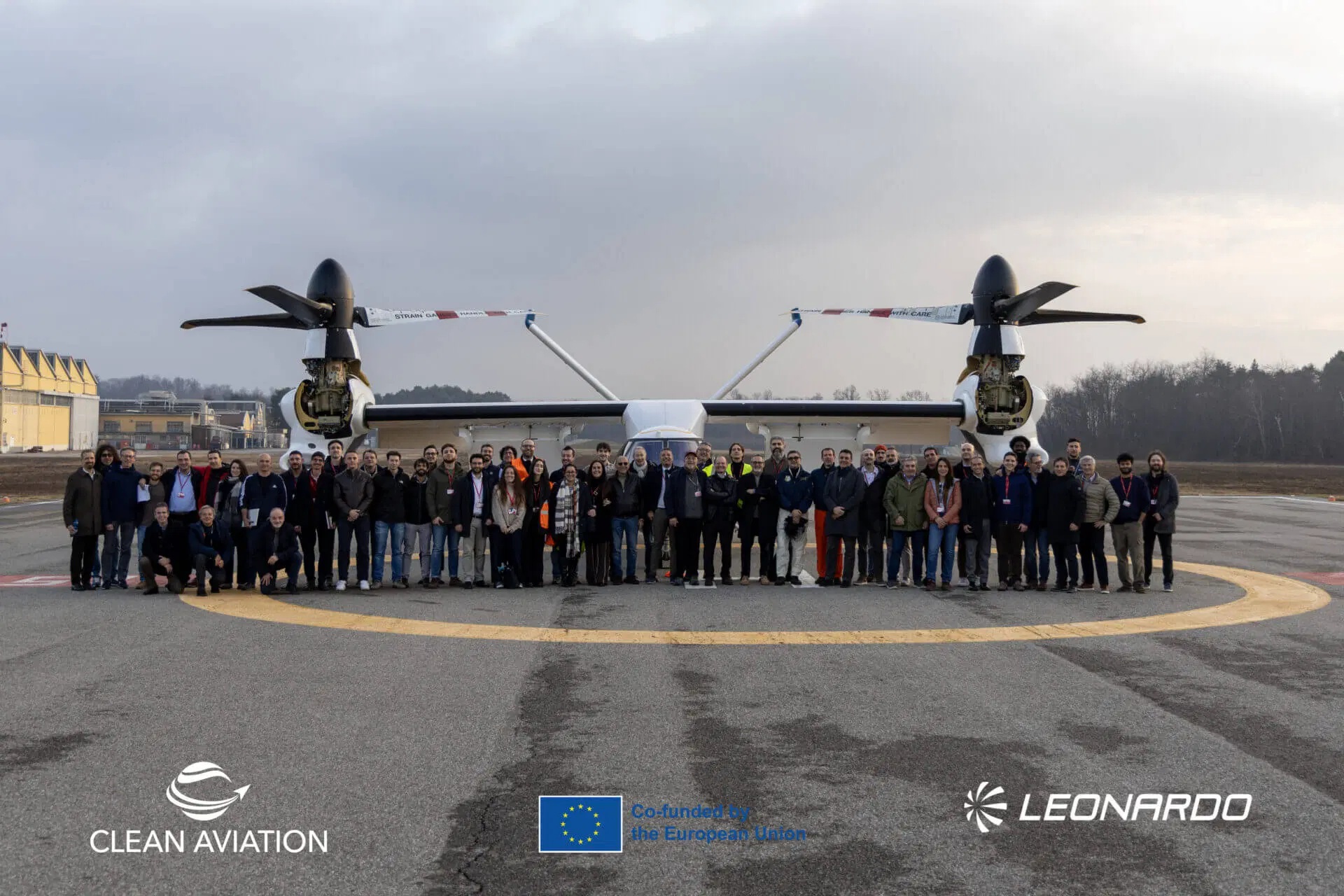
Launched in 2015, the NGCTR initiative brought together industry, research centers, and academic institutions across Europe. According to Clean Aviation, the program involved more than 85 organizations from 15 countries, supported by over €100 million in EU funding distributed across multiple grant agreements.
Clean Sky 2 also placed particular focus on cross-border industrial collaboration and supply-chain development, using demonstrators such as NGCTR to create common design, manufacturing, and testing practices across Europe, explains Clean Aviation’s website. This approach was intended to ensure that the benefits of technology maturation extended beyond a single airframer, strengthening Europe’s long-term competitiveness in advanced rotorcraft and VTOL systems.
“The NGCTR demonstrates how Europe can turn ambition and vision into impact. The programme brought together more than 85 organisations from 15 countries around a shared objective: developing faster and more sustainable rotorcraft based on the tiltrotor architecture. With €116 million in EU funding distributed across more than 30 grant agreements, the outcomes extend well beyond the project itself. More than 20 patents have emerged from the NGCTR, and the programme has helped foster skills, industrial capabilities, and new European supply chains. This makes the NGCTR – launched under Clean Aviation’s predecessor programme, Clean Sky 2 – a key element in strengthening Europe’s strategic leadership in sustainable air transport.”
— Axel Krein, Executive Director of the Clean Aviation Joint Undertaking
Demonstrator Built on the AW609 Platform
The NGCTR builds directly on Leonardo’s decades of tiltrotor experience embodied by the AW609 program. The AW609 is currently considered one of the most significant technological innovations in the global aviation industry and might pave the way for a large-scale diffusion of the tiltrotor platforms, becoming the first commercial tiltrotor.
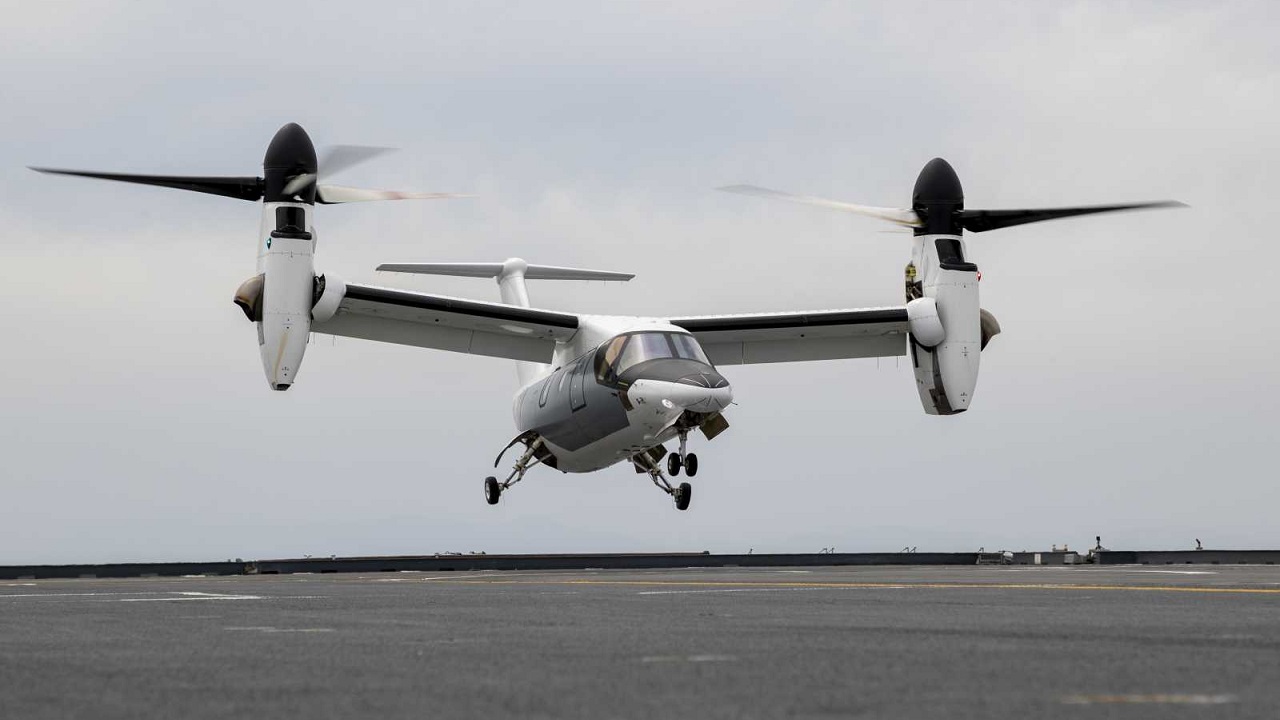
Because of this, rather than relying on an entirely new airframe, the NGCTR-TD uses a Leonardo AW609 fuselage as its baseline, allowing the program instead to focus resources on the validation of new technologies while reducing cost and technical risk. The aircraft is powered by GE Aerospace CT7 turboshaft engines.
Building on the AW609, the demonstrator intends to advance five core technology areas: an advanced wing architecture, an innovative tail layout, a non-tilting engine installation with a high-efficiency nacelle architecture and split-gearbox transmission, as well as an advanced, modular, distributed, and scalable Flight Control System (FCS). The innovative solutions developed and integrated into the NGCTR-TD contribute to reducing aerodynamic drag, optimizing engine installation, and mitigating the effects of emissions.
In fact, beyond designing and building the aircraft itself, the NGCTR was structured to raise key technologies to Technology Readiness Level 5–6 at whole-aircraft level. These outcomes are intended to feed directly into future civil tiltrotor designs and to support evolving European certification frameworks for high-speed VTOL aircraft.
Performance objectives
The NGCTR concept targets a cruise speed of around 280 kt (520 km/h) and a range of approximately 1,000 nautical miles (1,850 km). These figures place it well beyond conventional helicopters and closer to regional turboprop aircraft, while retaining VTOL capability.
Such performance is seen as particularly relevant for passenger transport, cargo operations, and search and rescue missions. In those situations, the ability to combine speed, range, and vertical access could significantly expand operational flexibility. Leonardo and Clean Aviation also emphasize the potential to operate without the need for extensive ground infrastructure.
The program also focuses on the environmental aspects, aiming to demonstrate reductions in CO₂ emissions, NOx emissions, and noise footprint compared to helicopters of similar size and payload. This aligns with the European Union’s climate and sustainable mobility objectives.
Long Development
While the first flight represents a major achievement, it follows a lengthy and complex development path. The NGCTR demonstrator’s maiden flight had originally been planned for 2020, before being delayed due to technical challenges and program restructuring.
Aircraft assembly was completed in June 2024, following a multi-year design and validation phase that included a critical design review at aircraft level in 2021. Ground testing culminated with the successful power-on milestone achieved in July 2024, enabling flight clearance for the December 2025 first flight.
The ongoing flight-test campaign is expected to accumulate up to 200 flight hours, progressively validating the demonstrator’s technologies.