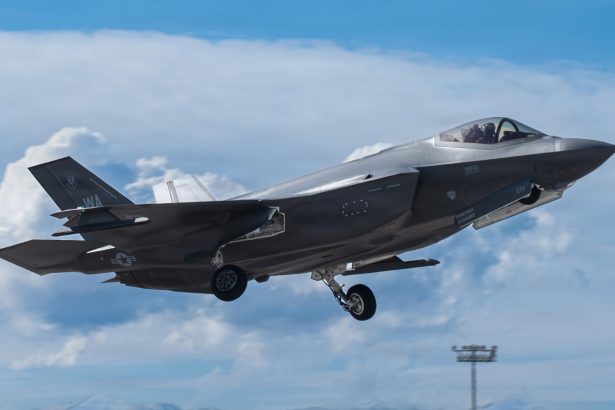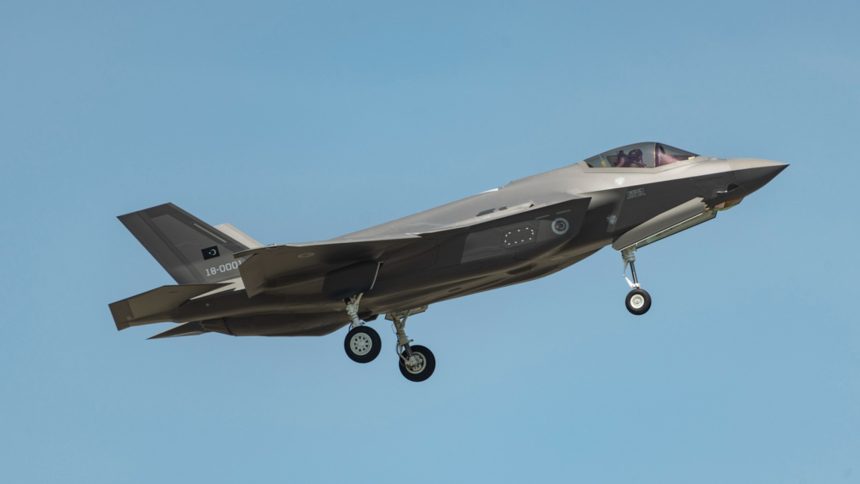
U.S. Ambassador Tom Barrack voiced hope for progress on F-35 talks, but Turkish officials said there are no new developments regarding the S-400 air defence system.
In a recent post on X, U.S. Ambassador to Türkiye Tom Barrack stated his hope that “talks will yield a breakthrough in the coming months” that meet the security requirements of both nations. However, this was met by indignation from Turkish officials who stated that “there have been no new developments regarding the S-400 air defence systems, which has been put on the agenda in recent days.”
The U.S. Ambassador’s statement indicates significant progress in restoring the relationship between the two NATO partners over the issue of the fighter jets, with the talks labelled as the “most fruitful conversations we have had on this topic in nearly a decade.”
The United States is in ongoing discussions with Türkiye regarding their desire to rejoin the F-35 program and their possession of the Russian-made S-400 air defense system. As laid out in U.S. law, Türkiye must no longer operate nor possess the S-400 system to return to the F-35…
— Ambassador Tom Barrack (@USAMBTürkiye) December 9, 2025
Yet, the main sticking point of the status of the S-400 Triumph in Turkish service remains with neither side appearing ready to make concessions. Turkish officials continued with their initial response by explaining that discussions remain ongoing regarding “lifting sanctions and obstacles to the F-35 procurement and re-admitting our country to the programme.”
“Addressing the process regarding the F-35 project within the spirit of alliance, through mutual dialogue and constructive consultation, will contribute positively to bilateral relations,” the ministry added. Turkish Foreign Minister Hakan Fidan last week stated that he believed Türkiye and the U.S. would find a way to remove American sanctions “very soon” allowing for the opening up of US weapons deliveries to Ankara once again.
Türkiye had been a member of the F-35 Joint Strike Fighter program since 2002, when the nation agreed to pay towards the development of the aircraft, and the production of certain sub-assemblies that would go into each F-35 that would be produced. In addition, the Turkish government had planned to order 100 F-35As to replace the then ageing F-4 Phantom fleet that had been in service since 1974.
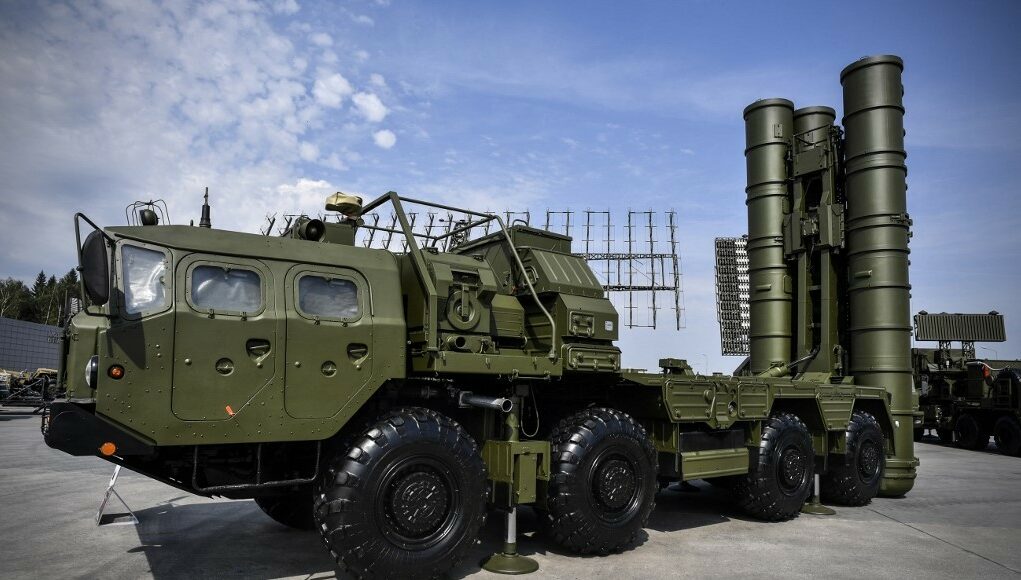
However, the nation was ejected from the program by the United States in July 2019 as a result of Ankara’s decision to purchase the Russian made S-400 air defence system. Following the purchase and the beginning of deliveries to Türkiye, pilots training in the U.S. on the F-35 were sent home, the jets originally earmarked for Türkiye were placed in storage, defence companies in Türkiye producing components for the F-35 had their contracts revoked and additional sanctions were placed on Türkiye under the Countering America’s Adversaries Through Sanctions Act (CAATSA).
The U.S. government was and remains worried that the proximity of Russian origin radar surveillance equipment to F-35 operations could aid the Russian government in uncovering the true radar cross section (RCS) of the fighter. This could compromise the F-35 in multiple ways, giving the Russians an edge in a future combat scenario, or allowing them to better recreate the technology that went into the F-35’s stealth capabilities.
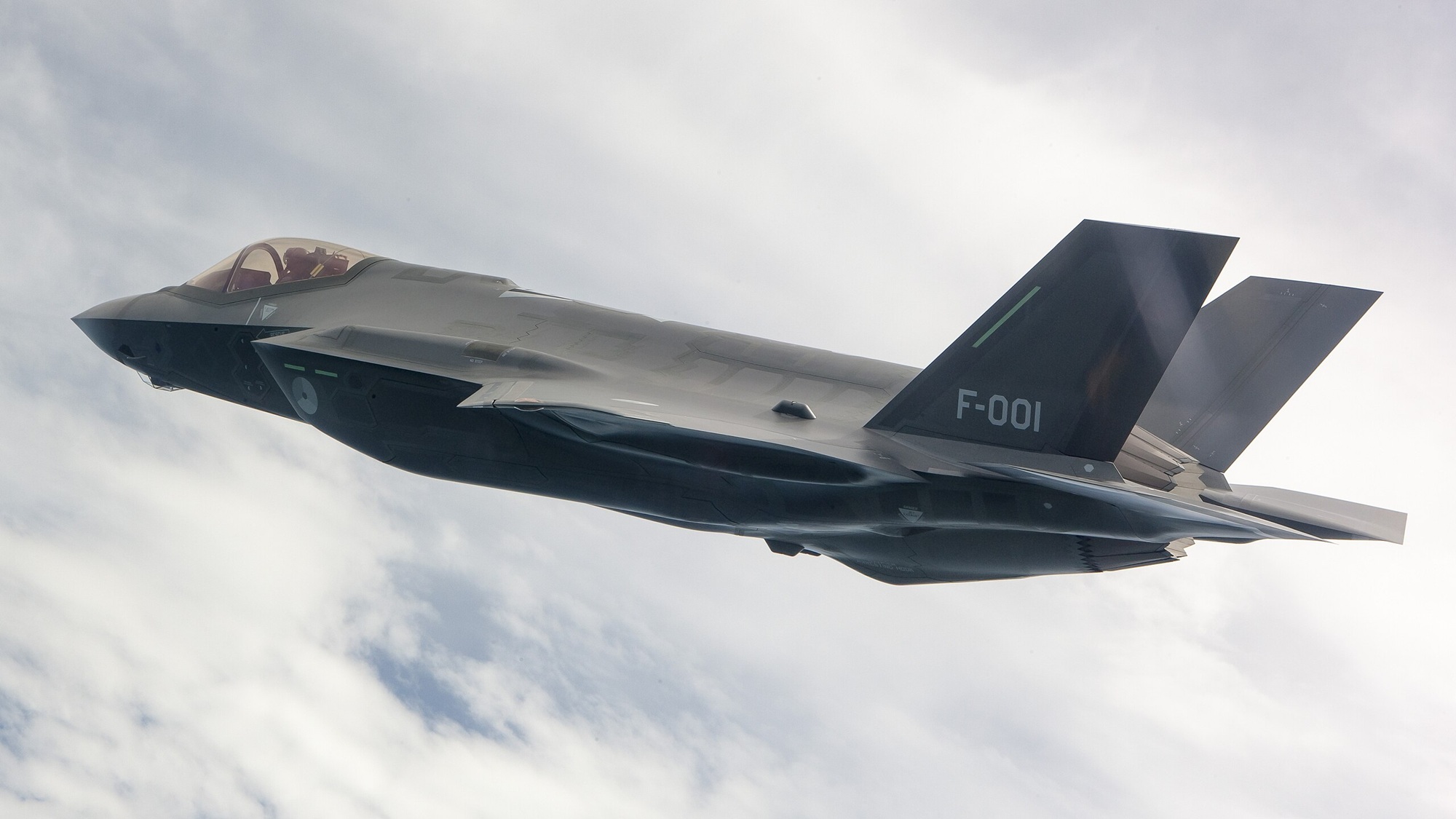
The U.S. and allied forces take this matter extremely seriously, with F-35s not on operations routinely carrying devices named Luneberg lenses that attach to the body of the fighter jet and in turn increase the size of the aircraft’s RCS. They are designed to reflect radar waves back to the sender and maximise their perceived radar signature and thus keep the true size of the F-35’s radar return a secret.
Due to Türkiye’s removal from the F-35 program, relations between Washington and Ankara have been heavily strained as the Turkish government feels as if they have been rebuked for making decisions that are in their own national interests. The S-400 had been ordered after the U.S., France and Italy rejected Turkish proposals for technology transfer and co-production requirements for both the Patriot and the SAMP-T missile systems that these nations developed.
The Russian Ministry of Defense has released rare footage of the S-400 Surface-to-Air Missile (SAM) System in action. pic.twitter.com/SFKR0gag5S
— OSINTWarfare (@OSINTWarfare) November 22, 2025
The S-400 was selected seemingly as a snub towards these nations in response to their refusal to sell the weapons, as well as their opposition to Türkiye’s foreign policy regarding the Syrian civil war and U.S./European support for Kurdish groups fighting in Syria. It is important to note the absence of any clear details on whether Türkiye was able to gain a technology transfer or at least co-production of the S-400 from Russia with President Recep Tayyip Erdoğan refusing to comment on the possibility.
The issue of the S-400 remains the key sticking point between Türkiye and the United States, with high level discussions between Turkish president Recep Tayyip Erdogan and U.S. president Donald Trump over the subject. A March 2025 call between the pair saw Trump express his desire to finalise several deals with Türkiye over the sale of a batch of 40 new build F-16s as well as the potential for a sale of F-35s, if Erdogan agreed to U.S. demands over the removal of the S-400 from Turkish territory.
🇹🇷 Turkish President Erdogan:
We received positive signals from President Trump during our talks. I raised the F-35 issue clearly and directly.
Technical discussions are ongoing to take concrete steps — we hope both the F-35 dispute is resolved and CAATSA sanctions are lifted. pic.twitter.com/dbPU9CMblk
— Defence Index (@Defence_Index) October 8, 2025
In September, the two would meet in person at the White House, with Turkish media speculating that the F-16 and F-35 deals would be one of the main talking points between the two leaders. Shortly afterwards, Trump was questioned by a reporter on whether he could revive Türkiye’s cancelled F-35 deal, with Trump replying that “I could do so easily if I want. We may do that. Well, it depends. [Erdoğan’s] going to do something for us.” likely referring to the removal of sanctions and Türkiye’s rejoining of the F-35 program.
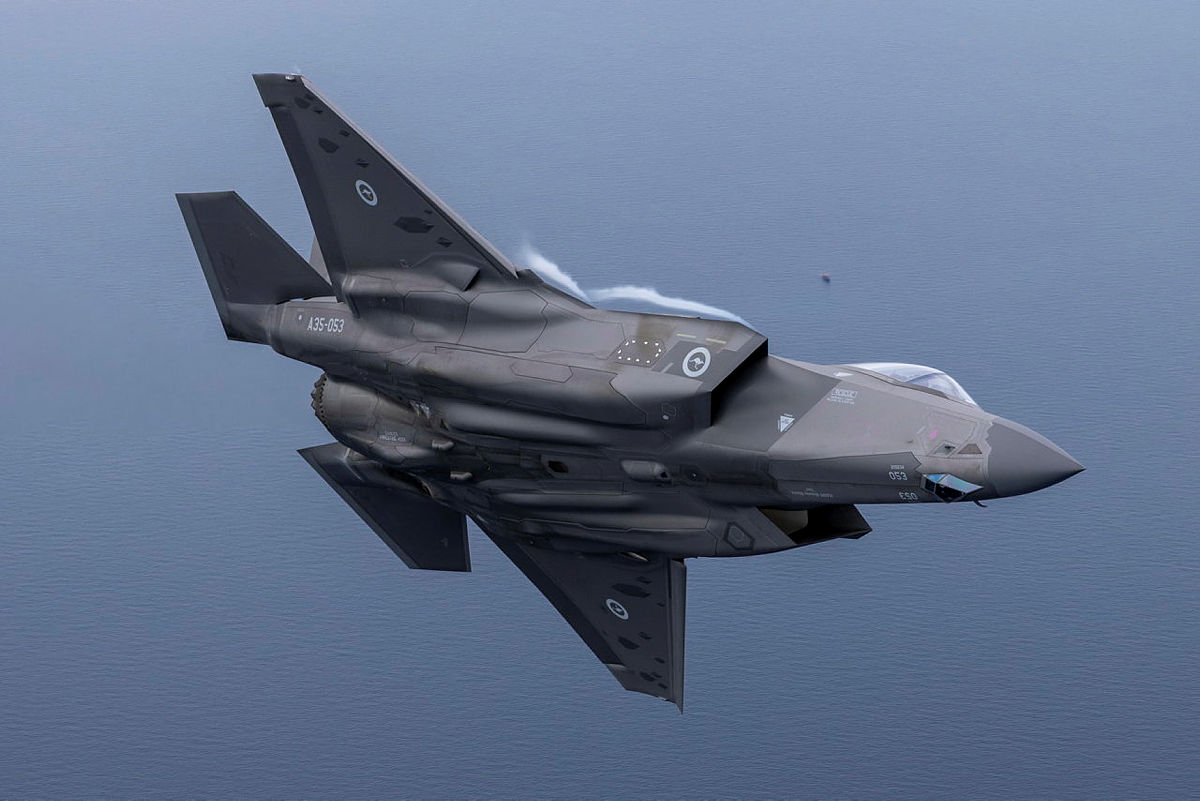
The fact that both governments are continuing discussions on the sale of F-35s is a positive step from where relations had been in past years, however the future of such a sale is still unclear given the diametric opposition of the two governments on the issue.
Current Trajectory of the TuAF Fighter Force
Following Türkiye’s ejection from the F-35 program, Ankara has been left in a difficult situation vis-a-vis its current fighter force. Currently the TuAF operates over 230 F-16C/D aircraft in a number of variants, with most being upgraded to block 50 and beyond under the Özgür/Özgür II upgrade programs.
These enable Turkish F-16s to carry a number of domestic subsystems and weaponry, including what will soon be the domestically produced MURAD Active Electronic Phased Array (AESA) radar. These upgrades are still in the early stages and they are not yet typical across the entire F-16 fighter force.
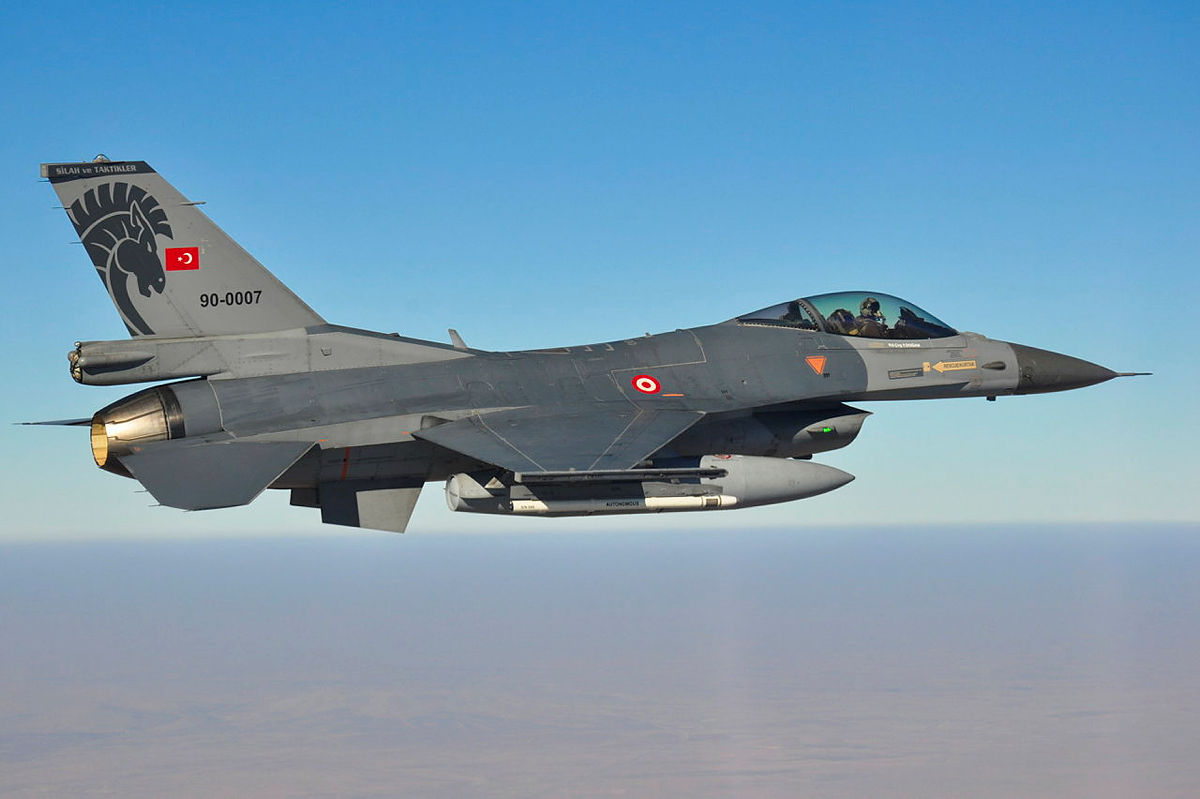
Türkiye had expressed interest in buying 40 new build F-16 Block 70s as well as 79 upgrade kits for the rest of its F-16 fleet in 2021, however this deal has been stalled on a number of occasions by international debate. Notoriously, Ankara used its approval of Swedish NATO membership as a method to force the United States to finally approve the F-16 deal, which it did in early 2024.
Since then, the Turkish government decided against the 79 upgrade kits, instead focusing on the 40 new build fighters to add additional mass to the TuAF. Yet, once again the deal stalled, this time due to ongoing disagreements between Ankara and Lockheed Martin on the costs associated with the deal. Aircraft deliveries are currently expected by 2027, if the disagreement can be resolved.
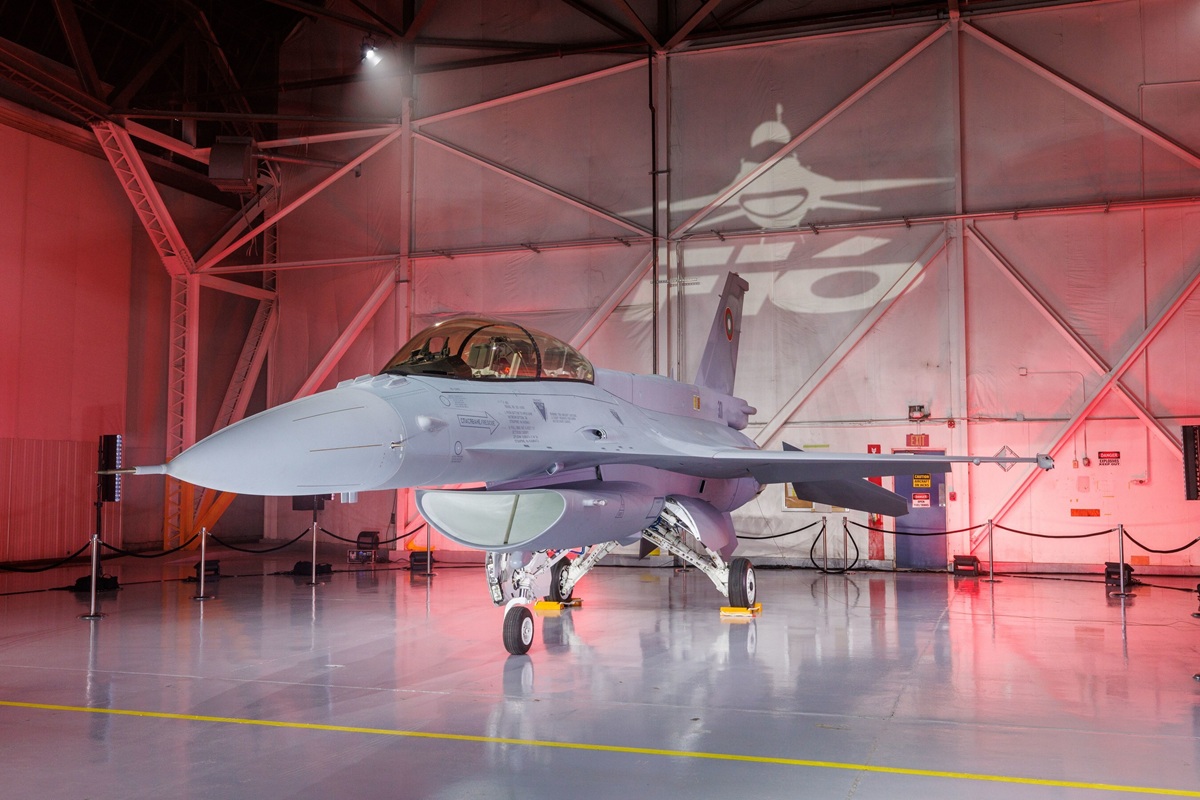
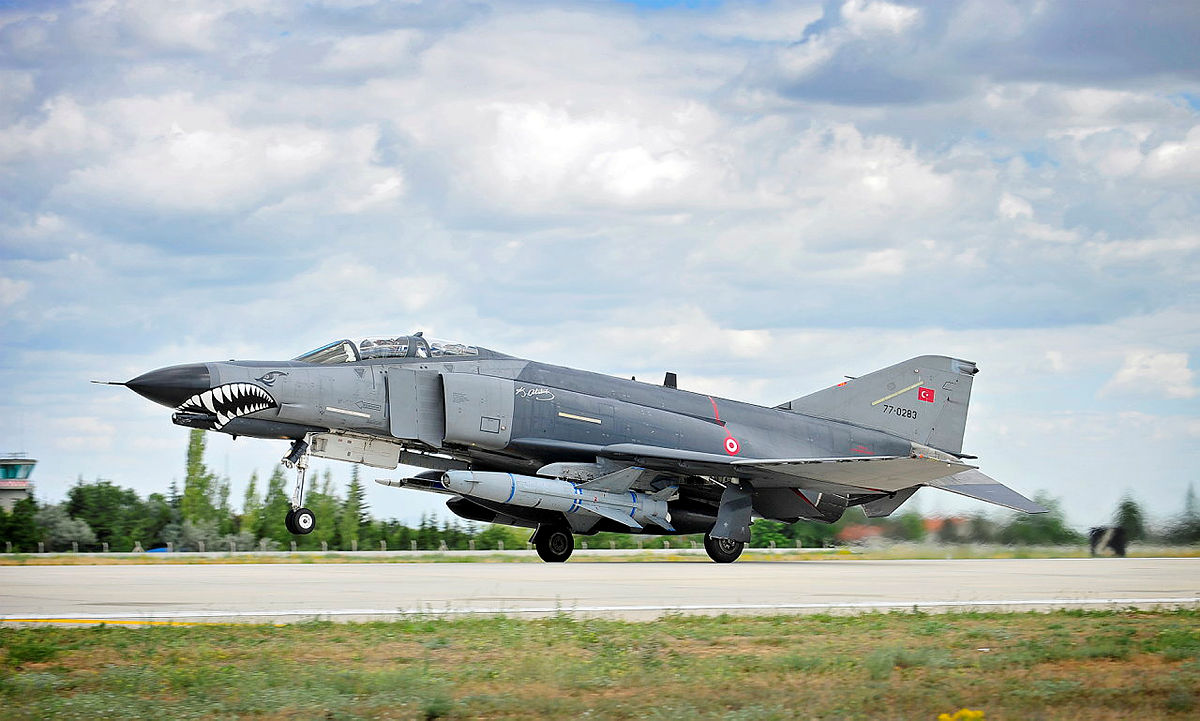
The F-16 serves as the bulk of the TuAF’s fighter force, but it does not operate alone. Currently the TuAF maintains a small number of around 30-40 F-4E Phantom fighter bombers which have stayed in service for over 50 years and are looking to remain in service until 2030 at the latest. The last of Türkiye’s original Phantoms received an extensive set of upgrades from Israel, dubbed the Terminator 2020 variant.
Israel upgraded the aircraft’s avionics and the types of munitions that could be carried including Israeli origin Popeye standoff missiles, and the indigenous Roketsan SOM for use against land and sea targets. These aircraft were originally to be replaced by the F-35, but as this is no longer possible Türkiye has looked to other sources for modern fighter aircraft, including the United Kingdom.
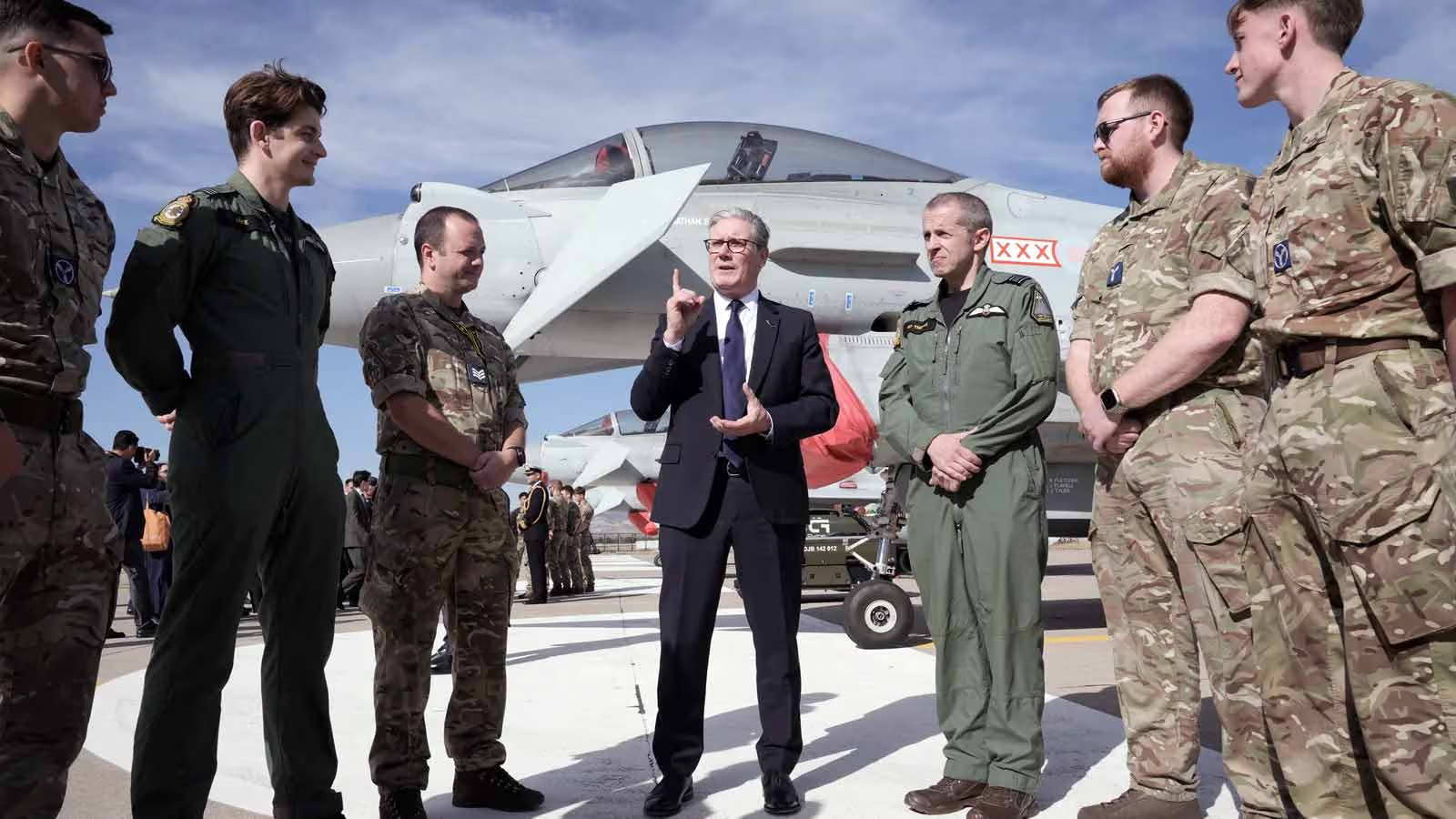
On Oct. 27, 2025, Ankara and London signed a deal for the sale of 20 new-build Tranche 4 Typhoon fighters to Türkiye for the price of £8 billion, with an option for more. These aircraft will be equipped with weapons provided by MBDA missile systems, including the famed Meteor missile, and are expected to see their first deliveries in 2030 at the earliest, due to the current backlog on orders from other nations.
As an order of only 20 aircraft, this purchase will not substantially change the make up of the TuAF, but it will provide a stopgap selection of aircraft until Türkiye’s domestically produced stealth aircraft can take into the skies in larger numbers.
KAAN
Türkiye’s KAAN fifth-generation fighter aircraft, commonly known as the TF-X or Kaan, represents the future of the TuAF. This twin engined heavy fighter is intended to fully replace the TuAF’s significant fleet of F-16s, securing Türkiye’s skies into the future.
The fighter aims to incorporate similar technologies used on the F-35, with Ankara leveraging their experience in the F-35 program to create the fighter. These technologies include the advanced sensor fusion seen on the F-35 along with a domestically produced AESA radar also being incorporated into the current F-16 fleet.
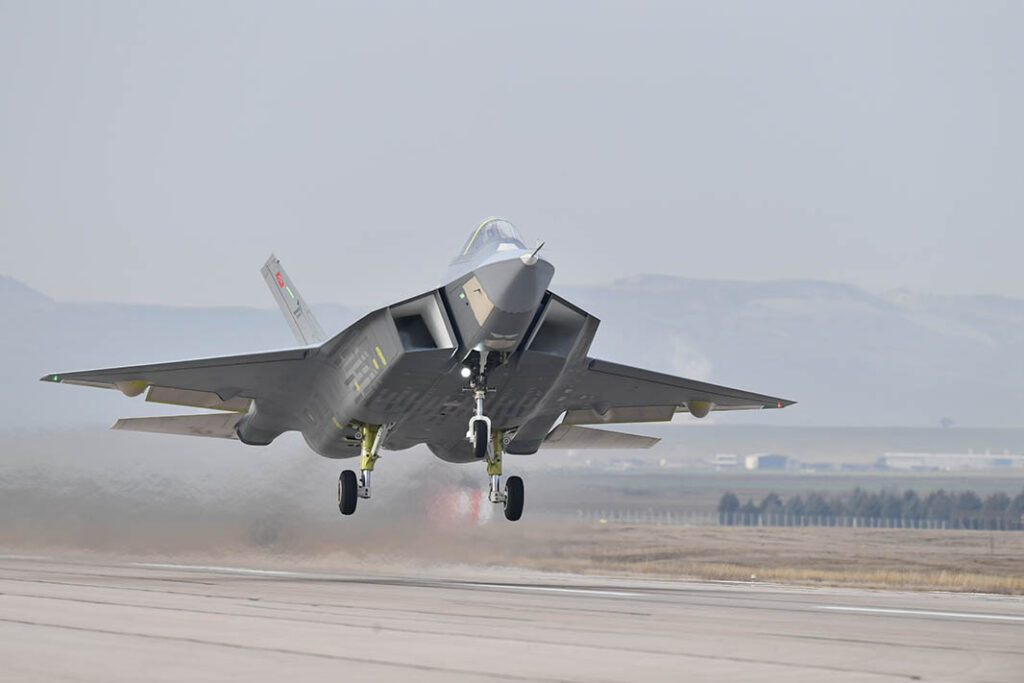
At the moment, the prototypes are limited to reliance on the American-made General Electric F110 engine used by the F-16 and F-15, as Türkiye currently has no domestically produced fighter jet engine. Despite this, the aircraft is seen as both a symbol of national pride and Ankara’s desired independence from the West and the East in terms of its military capabilities.
Official footage of 🇹🇷 Türkiye’s KAAN fighter first flight pic.twitter.com/BNuPYeLYjn
— Fighterman_FFRC (@Fighterman_FFRC) February 21, 2024
The fighter made its maiden flight in February 2024, with a single prototype taking to the skies to prove the aircraft’s flight characteristics in a 13 minute flight, further tests took place across the year extending the time of the flights and the speed of the aircraft. The second prototype is due to make its maiden flight in 2026, when tests will continue.
If Türkiye cannot have the F-35 maybe they could get the next best thing.