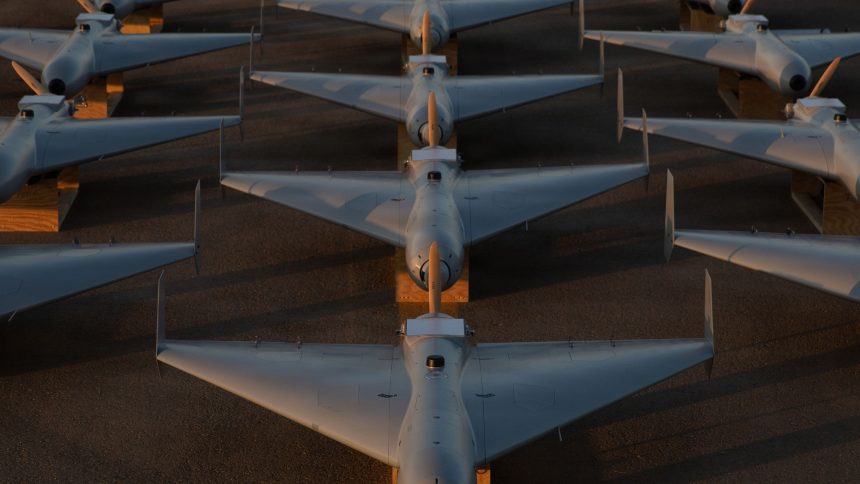
CENTCOM launched Task Force Scorpion Strike will employ the Shahed-like Low-cost Unmanned Combat Attack System (LUCAS) drones currently based in the Middle East.
The U.S. military will employ Shahed-like One-Way-Attack (OWA) drones in the Middle East with the establishment of a new task force. On Dec. 3, 2025, the U.S. Central Command (CENTCOM) launched Task Force Scorpion Strike (TFSS), which will oversee the U.S. military’s first OWA drone squadron.
The squadron has already been established, although the timeline is not clear. However, the photos released on the DVIDS network are dated Nov. 23, 2025, thus the squadron might have been deployed last month.
Task Force Scorpion Strike
In the announcement, CENTCOM says Task Force Scorpion Strike was launched only “four months after Secretary of War Pete Hegseth directed acceleration of the acquisition and fielding of affordable drone technology.” The goal of the TF is to quickly deliver low cost and effective drone capabilities into the hands of warfighters.
— U.S. Central Command (@CENTCOM) December 3, 2025
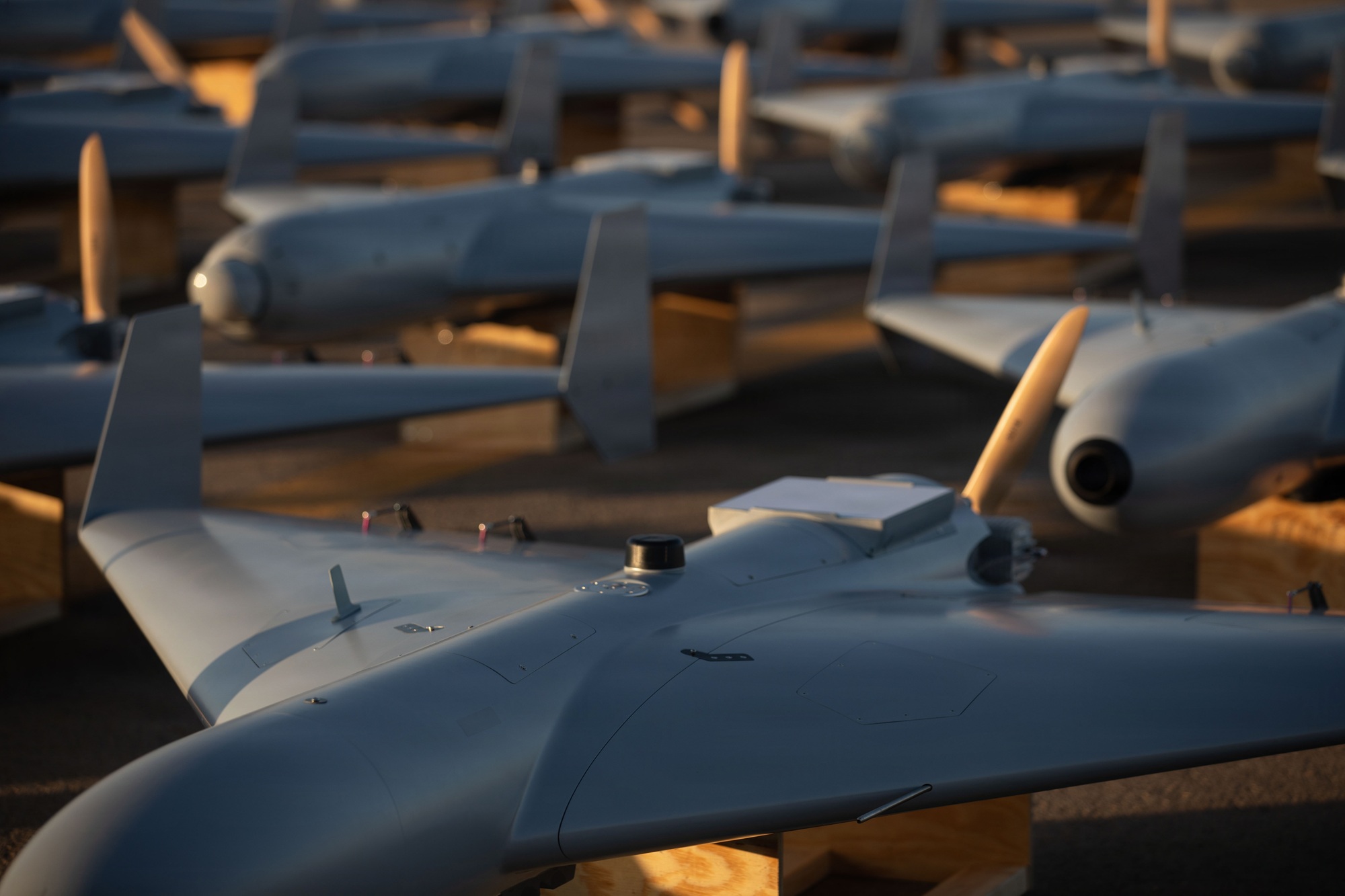
The unnamed squadron assigned to TFSS, which will operate the Low-cost Unmanned Combat Attack System (LUCAS) drones, is currently based in the Middle East at an undisclosed location. CENTCOM says the drones have an extensive range and are designed to operate autonomously.
The command further adds they can be launched with different mechanisms to include catapults, rocket-assisted takeoff, and mobile ground and vehicle systems. This capability removes the dependency on runways normally associated to unmanned aircraft like the MQ-9 Reaper.
“This new task force sets the conditions for using innovation as a deterrent,” said Adm. Brad Cooper, CENTCOM commander. “Equipping our skilled warfighters faster with cutting-edge drone capabilities showcases U.S. military innovation and strength, which deters bad actors.”
TFSS was preceded in September 2025 by the launch of the Rapid Employment Joint Task Force (REJTF) with the goal of fast-tracking processes for outfitting deployed forces with emerging capabilities. REJTF has three focus areas: capability, software, and tech diplomacy.
Notably, CENTCOM says TFSS’s efforts to build the one-way-attack drone squadron are led by personnel from Special Operations Command Central and align with REJTF’s capability focus area.
LUCAS
The Low-Cost Uncrewed Combat Attack System (LUCAS), developed by Spektreworks, a U.S. company based in Phoenix, Arizona, specialized in unmanned systems development and production. Inside the company, the target drone variant has been given the designation FLM 136 – a clear reference to the Iranian Shahed-136 design that inspired its development.
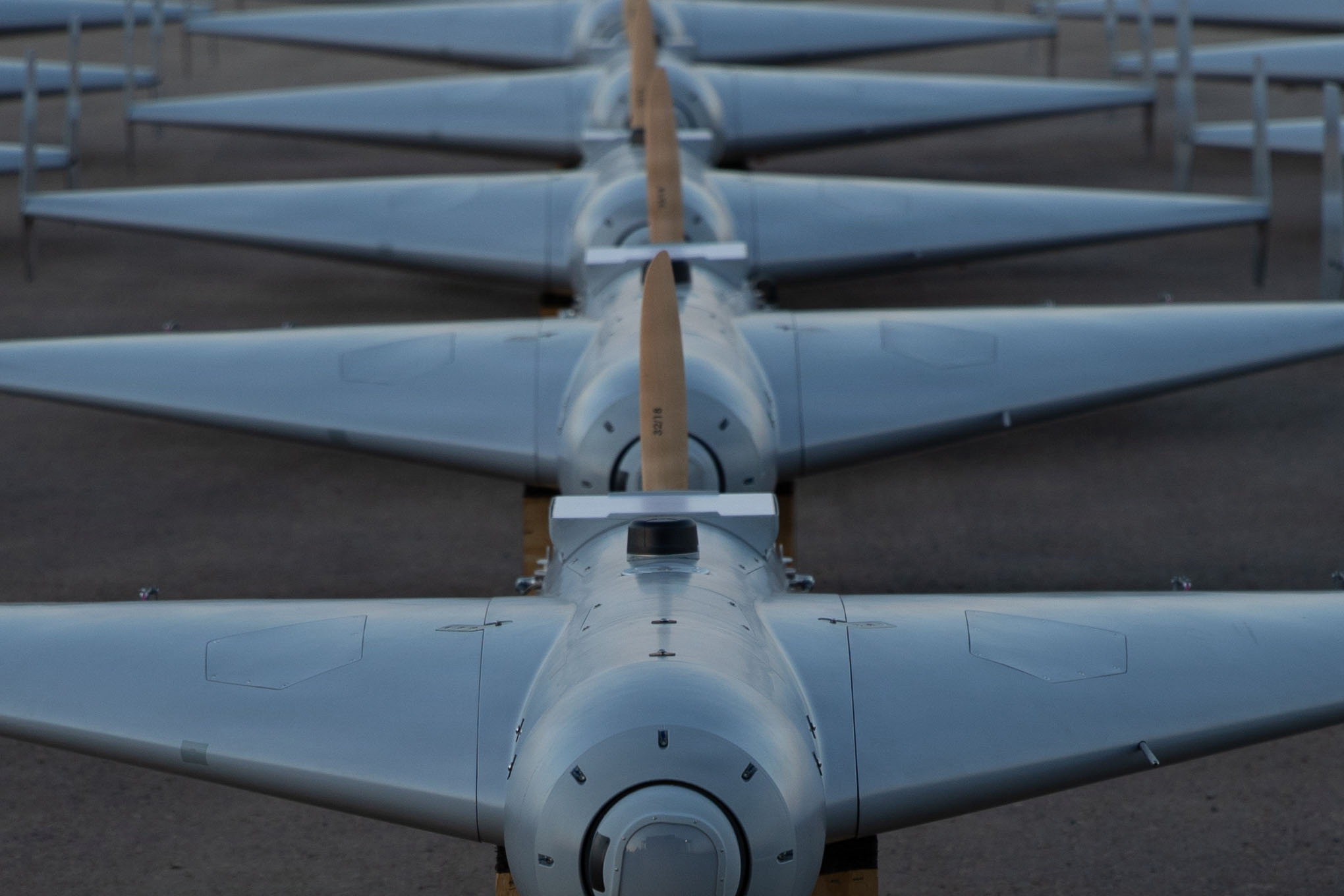
In fact, it has been reported in recent months that the design has been reverse-engineered from an actual Shahed-136 drone which was captured by the U.S. military. LUCAS was designed from the outset to be used in the threat emulation role, and thus aimed to replicate as closely as possible the Iranian design.
However, its current iteration apparently falls short of some of the Shahed-136’s performance characteristics. The Iranian Shahed-136 has a range of approximatively 1,350 nautical miles, 110 pound payload and 440 pound Maximum Take-Off Weight, while length and wingspan are 3.5 meters and 2.5 meters, respectively.
On the other hand, according to Spektreworks, the FLM 136 has a range of 350 nautical miles, six-hour endurance, 40 pound payload and 180 pound Maximum Take-Off Weight, while length and wingspan are 3 meters and 2.5 meters, respectively. Thus, while the external appearance and dimensions are close to the original design, the performance are lower, as they were not the focus in a threat replication scenario.
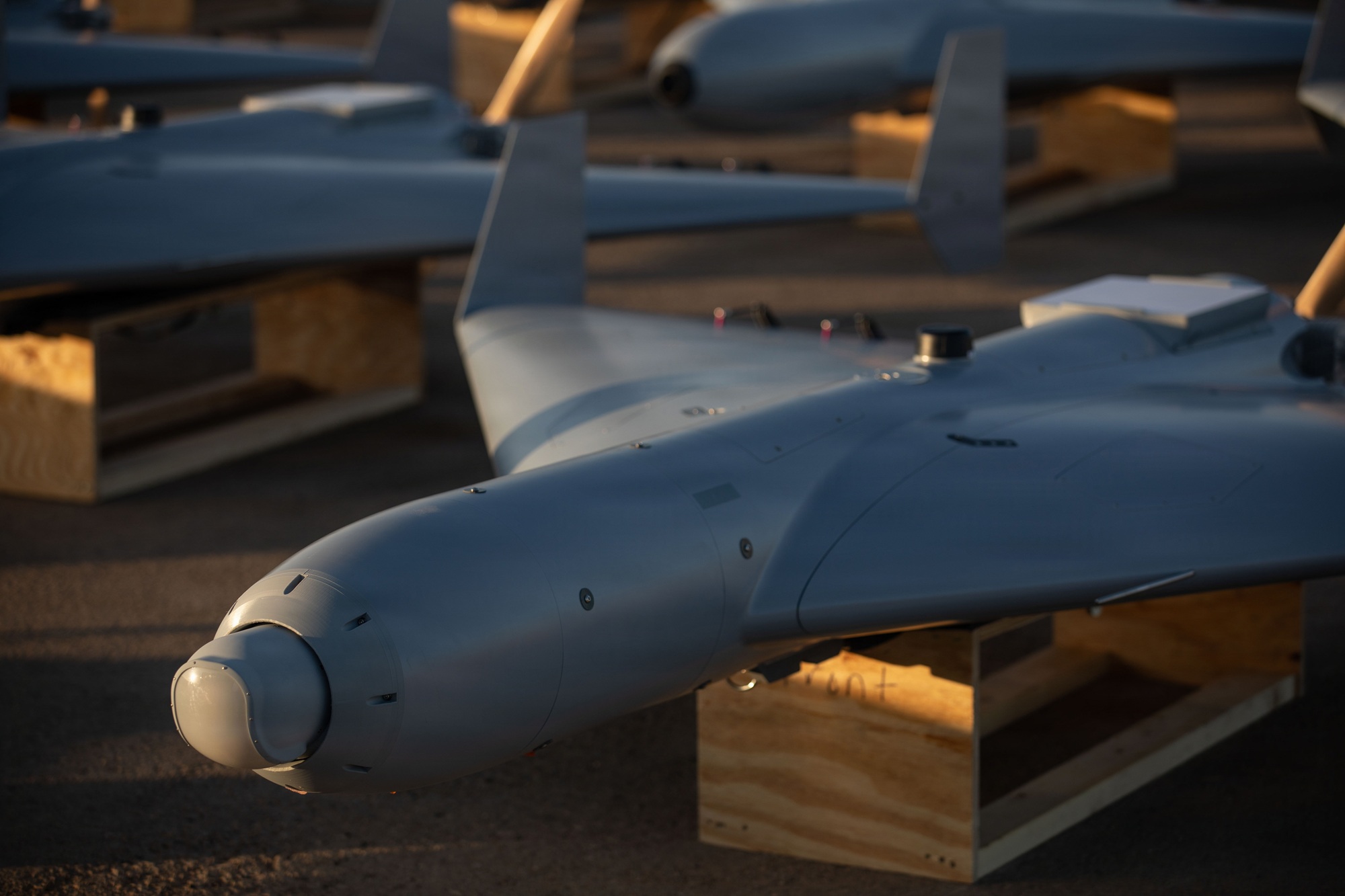
It is unclear if these specifications reflect the ones of the LUCAS variant deployed in the Middle East. Compared to the images of the FLM 136 previously released by the company, the LUCAS drones in the images released by CENTCOM show some differences, with the notable addition of what appears to be a new SATCOM antenna.
The photos also show the drones equipped with two different nose cones, of which ones features what appears to be an electro-optic/infrared (EO/IR) camera turret. According to CENTCOM’s captions, LUCAS drones cost approximately $35,000 per platform.