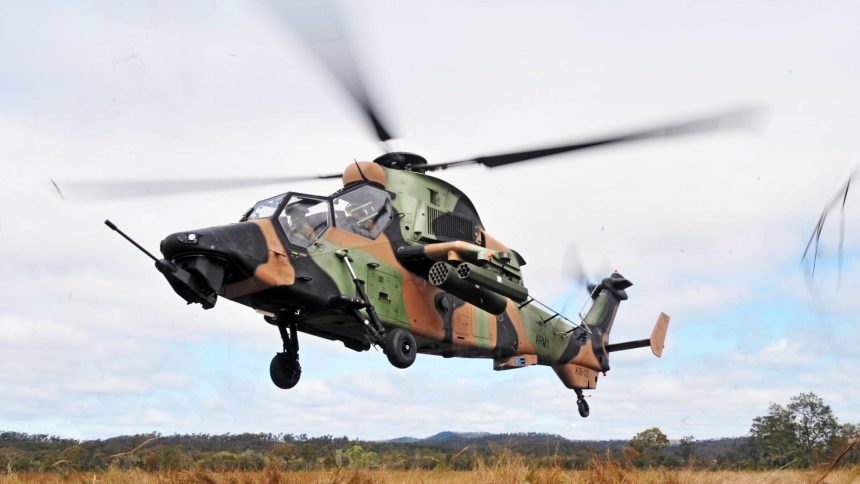
Australian media has reported on the possible transfer of Tiger attack helicopters to Ukraine as the Australian Army withdraws the type in favor of the AH-64E Apache Guardian.
Ukraine first publicly expressed interest in acquiring the soon-to-be-retired fleet in 2024 shortly after being reportedly disappointed over not being offered the troubled MRH-90 Taipan utility helicopters that Australia decided to retire a decade earlier than originally planned. The Tiger, originally marketed by Eurocopter but now an Airbus product, was first delivered to the Australian Army in 2004 but did not reach initial operating capability (IOC) until 2011. Supply chain and availability issues have plagued the helicopter’s service life, and it too is now due to be withdrawn much earlier than planned.
The Tiger Armed Reconnaissance Helicopter (ARH) variant operated by Australia is based on France’s Tiger HAP (Hélicoptère d’Appui Protection/Support and Escort Helicopter) and features the nose-mounted 30 mm gun turret as well as stub-wing hardpoints for guided and unguided missiles and rockets.
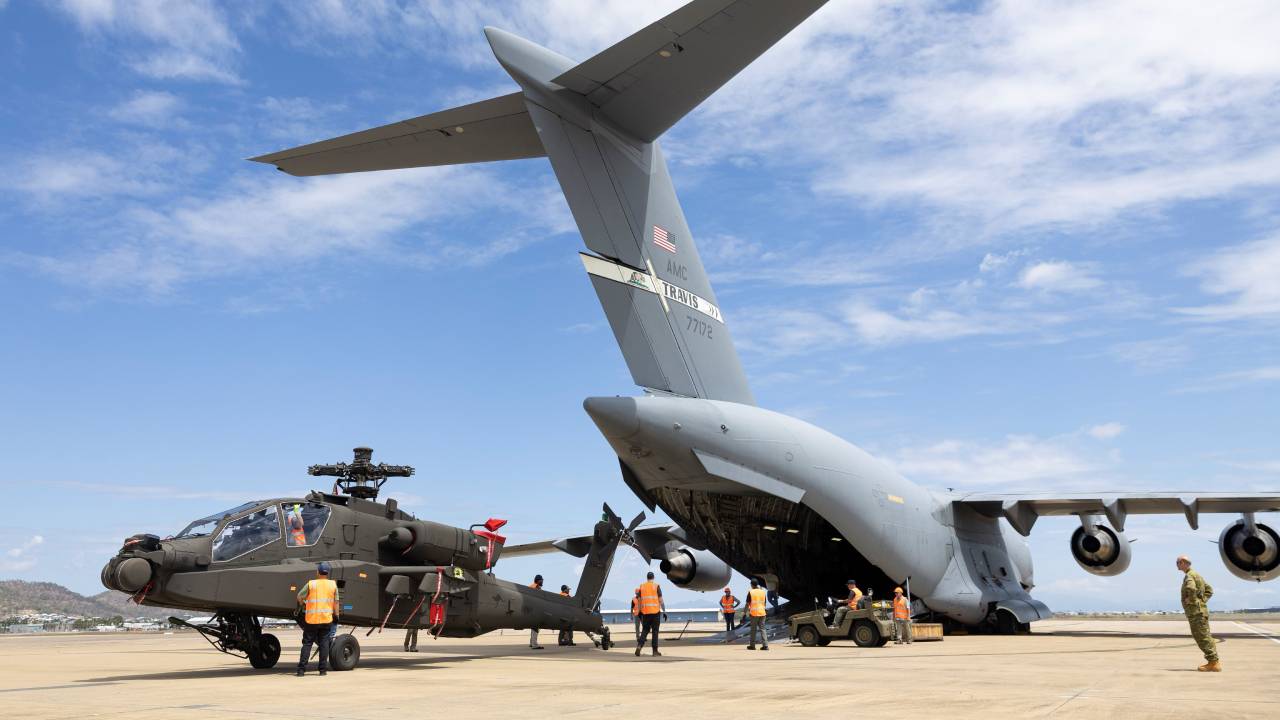
At present, Australia’s 22 Tigers are scheduled to remain in service until 2028. Though the last of their 29 AH-64E Apaches are not due until 2029, there is the possibility that the Tiger’s out of service date could be brought forward. The first two Apaches arrived in October 2025 and more are due in 2026.
Being closer to the European support hubs for the Tiger helicopter, Ukraine’s hit from the supply chains involved in operating the type would likely be much reduced compared to the delays that have hampered Australia. The Tiger would be Ukraine’s first attack helicopter not based on a Soviet design, and, in much the same way as the gradual move to Western-designed fighter aircraft, will be much more sustainable in the long term.
While debate has raged over the attack helicopter’s place on the modern battlefield – with many pointing to the poor performance of Russia’s Kamov Ka-52 ‘Alligator’ attack helicopter in the current conflict – it has been suggested that many of Russia’s attack helicopter woes stem from poor tactics rather than obsolete equipment. Though it isn’t known exactly what role Ukraine pictures for the Tiger, it should be noted that, with the possibility of carrying Advanced Precision Kill Weapon System (APKWS) equipped rockets as well as dedicated air to air missiles like the Mistral alongside the 30 mm gun, the Tiger could find a comfortable niche as a drone hunter.
Ukrainian Mi-24V Hind helicopter gunship “Shahed Hunter”
Czech-supplied Hinds, now in Ukrainian service with dozens of air-to-air drone kills. pic.twitter.com/F5IPl5q2W0
— OSINTtechnical (@Osinttechnical) February 20, 2025
Ukraine has adapted a number of slower fixed wing aircraft to allow them to take down low-cost drones that can travel at speeds below the optimal range for a traditional fast-jet intercept, and some of its fleet of Russian-built helicopters have also been noted employed in this way. 22 extra airframes with the withdrawn Tiger fleet could boost the coverage and availability for these operations, while freeing up other helicopters which could be put to use in utility and transport tasks that the Tiger is not equipped for.
Australian Support for Ukraine
Australia is expected to announce its next tranche of support for Ukraine ‘very shortly’, adding to a running total of AU$1.5 billion committed so far. This has most recently included M1A1 Abrams main battle tanks, which built on existing deliveries of Bushmaster and M113 armored vehicles, DefendTex D40 and Corvo PPDS loitering munitions, RBS 70 man-portable air defence systems (MANPADS), rigid-hull inflatable boats (RHIB), and Slinger counter-drone systems.
Though not transferred to Ukraine itself, part of Australia’s support has also included the forward deployment of a Royal Australian Air Force (RAAF) E-7A Wedgetail airborne early warning (AEW) aircraft to Europe. The aircraft operated from Poland between July and October 2025, adding to the overall air defence and intelligence gathering capabilities over Eastern Europe to protect vital supply lines to Ukraine and safeguard NATO airspace.
Under Operation Kudu, Australian Defence Force aviators silently watched Europe’s eastern flank assisting with peace and stability in the region under Operation KUDU.
Task Element (TE) 631.10.7 worked closely with @NATO to deploy a vital asset, the E-7A Wedgetail.
Throughout… pic.twitter.com/rm6wdYWANF
— Defence Australia (@DefenceAust) October 23, 2025
Decomissioned RAAF F/A-18 Hornets were reportedly offered to Ukraine following strong campaigning and even petitions by Australians, though this deal eventually folded – apparently due to concerns over the sustainability of the legacy Hornet while other more plentiful fighter aircraft were already in the process of being secured.
Relations between Australia and Ukraine during the conflict have been difficult – while Australia maintains its intent to give as much support as possible, the let-downs from unfulfilled requests, particularly with regards to the MRH-90 Taipan, soured Ukraine’s opinions. Australia finally reopened its embassy in Kyiv in December 2024, rectifying another point of concern from Ukraine’s perspective. Now that there can be a more direct line between the Australian government in Canberra and senior officials in Kyiv, both sides seem to hope future cooperation will run more smoothly.