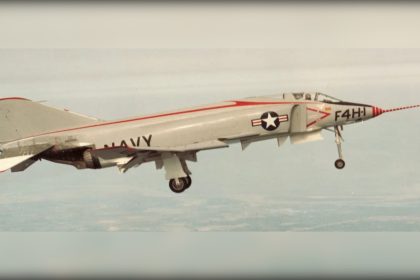
It’s better to replenish the stock before going to war with Iran (or Syria). U.S Air Force Orders 5,000 JDAM bomb kits. February 23, 2012
Posted by Richard Clements in Military Aviation.Tags: Boeing, Iran, JDAM, Joint Direct Attack Munition, Massive Ordnance Penetrator, Precision-guided munition, United States Air Force, US Air Force, USAF
add a comment
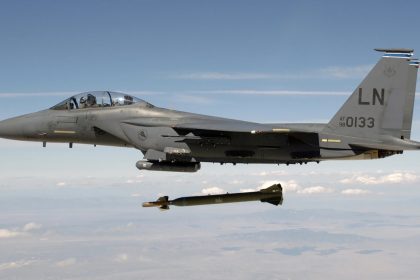
Along with the update of the GBU-57A/B bomb just financed by the Congress, the U.S. Air Force will get additional JDAM (Joint Direct Attack Munition) kits to replenish its stock.
The most recent one, worth 126 million USD for a further 5,000 JDAM kits to be delivered by 2014, is the third such order in a little over 12 months: in January 2011 the service ordered some 3,500 kits and then in March 2011 it ordered a further 4,000 units worth a combined value of $180 million.
Therefore, while studying new tactics to destroy Tehran’s underground bunkers with the Massive Ordnance Pentrators, the Air Force recharge its weapons for the hundreds other targets it would find in Iran (and elsewhere) with a whole bunch of modular kits used to transform 500, 1,000 and 2,000-lb dumb bombs into precision guided ones.
During the Libya Air War, some air forces suffered bomb shortage after dropping few hundred PGMs in the first three months of the war, that’s why the U.S. have started replenishing their own stock: it’s better to be prepared (to lend some bombs to the European allies too), should the need for an air campaign in Iran (or Syria) arise.
Written with The Aviationist’s Editor David Cenciotti
Image: U.S. Air Force
Related articles
USAF to get upgraded Bunker Buster (while developing new tactics to reach buried nuke sites) February 12, 2012
Posted by Richard Clements in Military Aviation.Tags: B-2, Bunker Buster, GBU-57, Massive Ordnance Penetrator, Northrop Grumman B-2 Spirit, United States Air Force, US Air Force
1 comment so far
The U.S. congress has given permission to the $81 million finances to update the GBU-57A/B Massive Ordnance Penetrator bomb. The funding is thought to be needed to upgrade the fusing and the tail fins to give the weapon even greater ground penetration.
The MOP (Massive Ordnance Penetrator) itself is a 30,000lb weapon that can only be carried by the B-52, B-1 and B-2. It’s so big that only two can be carried at one time and in 2007 Northrop Grumman announced a refit contract so that each of the USAF’s 20 B-2’s could carry a couple of these “bunker buster” bombs.
The GBU-57 is GPS-guided bomb believed to be able to penetrate 200 feet down before exploding and began development after Gulf War 2 after it was found that earlier versions had poor ground penetration. The 20 foot long weapon is built by Boeing and the additional funds would also speed up the program.
Image: via Gizmodo
This comes a month after Iran announced that it is to begin Uranium enrichment at its Fordow facility, buried deep underground, and only a few days before Iranian President Mahmoud Ahmadinejad said that he has a major nuclear announcement to make.
It is safe to say that the enhanced version of the GBU-57 (MOP) would in the event of an attack on the Iranian nuclear factilities be taken into Iranian airspace inside the B-2 Spirit.
Nevertheless, the ability to penetrate several hundred feet of concrete has long been the subject of analysis: if you have a bomb that can penetrate 200 feet of concrete, but the Iranians bury their bunkers below 300 feet of cement, the bomb will not be able to penetrate the protective shield and devastate the underground site.
For this reason, along with making bombs more powerful, new tactics have been developed: dropping two MOPs in sequence and place the second bomb in the hole created by the first to get a double penetration depth.
Written with The Aviationist’s Editor David Cenciotti
Future Drone’s World capital? Sigonella, Italy February 9, 2012
Posted by David Cenciotti in Drones.Tags: Broad Area Maritime Surveillance, drones, Global Hawk, Libya, Northrop Grumman, Northrop Grumman RQ-4 Global Hawk, United States Air Force, Unmanned Aerial Vehicle
add a comment
On Feb. 3, 2012, NATO has finally agreed to implement the AGS (Alliance Ground Surveillance) a project that is based on high-altitude long range UAS (Unmanned Aerial Systems), a main operating base and several command and control stations.
The cooperative defense project involves 13 nations: Bulgaria, the Czech Republic, Estonia, Germany, Italy, Latvia, Lithuania, Luxembourg, Norway, Romania, Slovakia, Slovenia, and the United States.
Wondering which drone will provide the alliance the capability to monitor “what’s happening on the ground, at long range, over periods of time, around the clock, in any weather” by year 2015?
Obviously, the Northrop Grumman RQ-4B Global Hawk, the same type of unarmed reconnaissance drone that the U.S. Air Force has recently decided to scrap in favor of the old U-2 spy planes, Cold War veteran that will be kept in service well into the 2020s.
According to NATO Secretary-General Anders Fogh Rasmussen, the alliance will acquire five RQ-4Bs that will be based at the MOB of Sigonella, in Italy.
Located in southeast Sicily, “Saigon” (as the U.S. aircrews dubbed it) has already been used during the Air War in Libya to host the Air Force’s Global Hawk and Reapers involved in ISR (Intelligence Surveillance and Reconnaissance) and SCAR (Strike Coordination and Reconnaissance) missions in North Africa.
For instance, the U.S. RQ-4Bs belonging to the 9th Operations Group/Detachment 4th of the U.S. Air Force deployed to Sigonella, were the first to fly over Libya to perform high altitude Battle Damage Assessment sorties on targets located in regions with a residual SAM (Surface-to-Air Missiles) and MANPADS threat. Since Apr. 21, 2011, they were joined by armed MQ-1 Predators that flew their first strike sorties in the areas of Misurata and Tripoli and launched 145 air strikes firing hundred AGM-114 Hellfire missiles before taking part in the operation that led to the capture and killing of Gaddafi in Sirte, when an MQ-1 teamed up with a mixed flight of a Mirage F1CR and a Mirage 2000D and attacked the convoy used by the Libyan dictator in his attempt to flee the city.
Strategically located in the middle of the Mediterranean Sea, Sigonella is the ideal base to conduct surveillance of North Africa, East Europe and Middle East. The base will not only host the (remaining) Air Force Global Hawks and AGS RQ-4s: the U.S. Navy MQ-4C BAMS-D (Broad Area Maritime Surveillance) drone, the “maritime” version of the Global Hawk, is expected to be based in five locations around the world, including “Saigon”, where some other platforms, as the French Herons and the (manned) RAF Sentinels could be deployed as well.
Rendering Sigonella, the Drone’s World capital.
Image: U.S. Air Force
New Nellis Aggressors F-15′s “splinter” color scheme inspired by Sukhoi Su-35S (and PAK-FA) camouflage February 5, 2012
Posted by David Cenciotti in Military Aviation.Tags: 57th Wing, 65 AGRS, Aggressor Squadron, Color scheme, McDonnell Douglas F-15 Eagle, Nellis AFB, Nellis Air Force Base, Nevada, Red Air, Sukhoi Su-35, United States Air Force
1 comment so far
After publishing the fist images of the F-15C 78-0509/WA-09 of the 65th AGRS (Aggressor Squadron) in a “splinter” camouflage at Red Flag 12-2, many have asked what country’s color scheme the new Nellis Eagle replicates.
Although, it’s not a perfect copy, the scheme seems to be inspired to that of the Sukhoi Su-35S, Russia’s future supermaneuverable multirole combat plane.
Even the PAK-FA color scheme has something in common with the Nellis Aggressor’s splinter paint.
"The jets you're flying against are smaller and faster, just like the enemy MiGs."
Image credits: Tony Lovelock; Sukhoi
Related articles
RQ-4 Global Hawk in shock cancellation news: old planes better than new? January 27, 2012
Posted by Richard Clements in Military Aviation, Drones.Tags: Aviation, Airbus, Military Aviation, Airbus 380, US Air Force, Pentagon, United States Air Force, U-2, Dragon Lady, drone, Global Hawk, Northrop Grumman, Northrop Grumman RQ-4 Global Hawk
1 comment so far
Is new better than old?
It would seem not. Industry insiders have leaked that the Pentagon is to cancel the RQ-4 Global Hawk program not just stopping buying new aircraft but to retire the Air Force active fleet, in favor of keeping the U-2 flying into 2020.
Air force times writer Dave Majumdar wrote: “The Air Force had been planning to buy 42 Block 30 aircraft. According to 2011 budget documents, the cost of each aircraft was around $215 million. It was not immediately clear how many Global Hawks the Air Force has.”
The aircraft is being killed off due to its high cost to buy and to maintain; also the program hasn’t lived up to its early promise. A knowledgeable industry insider confirmed the project cancellation and said “Yes, this is accurate — been a lot of discussion on the possibility of this a long while,” said the source, who was not authorized to speak to the media. “There is a high probability it will come to pass now unless Congress takes a major exception.”
The industry source also said “I don’t think that’s likely in the economic environment of this year’s DoD budget, and there are no real ‘hawks’ in Congress from California,” he said. The aircraft is both built and based in the Golden State.
Majumdar said that Northrop Grumman declined to comment whilst Air Force officials would neither deny nor confirm the reports.
Oddly the US Navy is going to keep its version of the aircraft therefore keeping the option open that it could, if needed, be used by the air force.
Surely, Global Hawk has not enjoyed the best of safety records with three prototypes lost and a failure rate much higher than many manned planes facing lethal threats in combat.
However, the U.S. RQ-4Bs belonging to the 9th Operations Group/Detachment 4th of the U.S. Air Force, based at NAS Sigonella, in Sicily, the base of the NATO AGS (Air Ground Surveillance) Global Hawk program were the first drones to operate in the Libyan airspace where they performed high altitude Battle Damage Assessment sorties.
Anyway, all of this is good news for the U-2, a 50 year old program that has ironed out all its techncal issues many years ago.
Affectionately known as “Dragon Lady”, the U-2 entered service in 1957. Since then, it has undergone many upgrades and has become a relatively cheap viable platform during these harsh economic times. In what would normally be the types twilight years, a breath of fresh air has been breathed over the majestic old ‘Lady’ which will see the type in service for more years to come.
Actually, it has been a bad week for other new or recent aircraft types too.
Another rather embarrasing news (this time for Airbus) is that further cracks have been found in the wings of its much lauded A380 “Superjumbo”, after the famous uncontained engine failure of Nov. 4, 2010. Airbus did tweet “For those following reports on A380 wing rib findings we confirm inspection & repair process underway and aircraft are safe to fly”: a damage limitation message by the company’s PR rather than a reassuring statement.
The apparent win of obsolete technology on newer, supposed to replace it, does pose the usual question: are modern aircraft too complex?
One thing is sure: you can’t compare new planes with older types. Even if there can be programs free from major problems during their whole lifetime and much troubled ones, facing myriad issues since their birth, generally speaking, those that have survived for 3, 4 or 5 decades and are still flying today, were probably properly designed, maintained, fixed and upgraded during their career. So they are today much more reliable than those integrating cutting edge experimental technologies.
Written with The Aviationist’s Editor David Cenciotti
Above image: U.S. Air Force
Top military aviation stories of 2011: drones up and downs, stealth projects exposed and Libya’s 7-month-long war. December 28, 2011
Posted by David Cenciotti in Yearly summary.Tags: Afghanistan, Beast of Kandahar, Central Intelligence Agency, China, CIA, drone, Eurofighter, F-22, intelligence, Iran, Iran drone, J-20, Libya, Lockheed Martin, Lockheed Martin RQ-170 Sentinel, Operation Unified Protector, Osama bin Laden, Pakistan, Rafale, Raptor, reconnaissance, RQ-170, Sentinel, stealth, Surveillance, Typhoon, UAS, United States, United States Air Force
4 comments
Update, Dec. 28 21.35 GMT
A quick look at the main events and news I’ve covered on this blog during 2011 helped me to identify the topics that can be used to characterize the year that is coming to an end.
Before I start, please let me spend a few words about this blog.
Articles on these subjects, along with many more blog posts for a total of 231 articles in the last year only, were read on average by more than 3,200 daily unique visitors worth +1,200,000 unique visitors from all around the world in 2011!
Thank you all for reading my articles (not only on the website but also on “traditional” magazines) and for you continuous support. The impressive amount of visitors and their demand for both updates and the usual professional analysis of the most important aviation and defense news will probably lead me to seek the help of some additional writer….
“Libya Air War”, “F-22 grounding”, “Stealth Black Hawk down”, “Captured RQ-170 drone in Iran”: these are the headlines that more than any other have may have changed the perception of military aviation we had at the beginning of the year; an year that has sent us some interesting “messages”:
There’s an increasing need for drones. Robots are cheaper than conventional planes (as their hourly cost is about a fifth the cost of a manned plane), expendable, persistent and effective, especially in Libya-like scenarios (read below for more info on this subject…) where they do not face hi-altitude anti-aircraft missiles. They are not only useful in combat, they are also used to perform reconnaissance and surveillance in areas hit by natural calamities or along the borders for national security purposes. That’s why air forces and other operators have drones on the top of their shopping lists.
Drones are vulnerable. The virus that infected the Predators’ Ground Control Station has demonstrated that even the most important assets, those that are isolated and not interconnected to public networks, are not immune to the same malware that travels on the web. But, as we have learnt with the recent capture of the stealthy Sentinel drone in Iran, combat robots face also many known threats to their Position, Navigation and Guidance system, such as jamming and spoofing, even thought it still not clear whether the CIA-operated “Beast of Kandahar” currently in Iranian hands (that could possibly study it to reverse-engineer its on board systems) crash landed some 250 km from the Afghan border for a complex cyber attack or (most likely) because of a technical glitch.
Drones are remotely controlled by humans. Hence, they often fall becaused of pilot errors. In fact, although their pilots don’t risk their lives they lack some motion-induced feelings that manned platform pilots have and can react to quickly. Furthermore, airmen who remotely fly attack drones have been experiencing emotional stress caused from long hours of work and ever-increasing workloads to such an extent that there are many on the edge of mental illnesses.
Black projects and advanced stealth tech are not only speculation: the existence of a Stealth Black Hawk helicopter whose designation is not MH-X (and most probably of a Stealth Chinook too), was exposed in May 2011 by the first images that circulated on the Internet of the tail part of one of the helicopters involved in the raid that killed Osama Bin Laden, at Abbottabad, Pakistan. Black projects, supposed to remain secret, are now a reality and they not only live in conspiracy theories and rumors. They exist and take part in special operations “behind the enemy lines”.
Advanced stealth tech is not only U.S. stuff: with the “epic fail” of the RQ-170 and the Stealth Black Hawk’s tail survived to the destruction, chunks of stealth tech and an entire once secret drone are in the hands of some of the worst U.S. friends/enemies: Pakistan, Iran, China and maybe Russia. Probably, not a big deal. Surely, a leap forward in their knowledge of American wartech.
It was a tough year for Lockheed Martin’s stealths. Targeted also by the Iranian satire for losing a CIA drone, LM has had a bitter year, that was made a little sweeter by the decision of the Japan’s Ministry of Defense to select the costly and troubled stealthy F-35 as the future fighter of the JASDF. The F-22 fleet was grounded for four months since May, after an accident a worrying series of disorientation and hypoxia-like syntoms complained by 14 pilots. In spite the root cause of the air-deprivation episodes was not fully identified, and the on board oxygen system was under suspiction before pilot error was blamed for a Raptor crash in Alaska, the next generation fighter plane, believed to be able to face outnumbering Chinese fighters in the future, returned to normal activity at the end of October and will be next year’s only single-ship demo team of the U.S. Air Combat Command.
War against Iran is already started. Even if some observers think that the U.S. is on the verge of a conflict with Iran after Tehran’s regime threatened to stop ships moving through the Strait of Hormuz, a covert war on Iran’s nuclear program, involving computer viruses, drones and PSYOPS is already in progress.
Wars can come unannounced and air forces can’t be found unprepared for that. The air campaign in Libya from March to October 2011 eventually led to the declaration of the full liberation of the country by the National Transitional Council but the way it was planned and executed by a coalition of NATO and non-NATO members has raised many questions. From various reasons, Operation Unified Protector seemed more an opportunity to promote specific air forces and their weapon systems rather than a means to achieve a clear military objective.
For this reason it lasted much more than expected, in spite of the total lack of threat posed by the Libyan Arab Air Force and the extensive use of legacy as well as brand new technologies, including drones, new generation fighters and EW assets, stealth bombers on Global Power missions and cruise missiles.
Indeed, beyond the marketing slogans of the manufacturers, eager to put their products under the spotlight, and the statements of the high rank officers of some services involved in the air campaign (often with the only task of performing endless orbits above the desert to wait for an enemy fighter that never showed up), Operation Unified Protector was an example of how the Air Power should not be used.
So, which were the “lessons identified” in Libya by coalition members that will hopefully become “learned” in the next few years?
1) The need for more drones to perform ISR (Intelligence Surveillance and Reconnaissance) as well as strike missions.
2) The need for more tankers: along with 80% of all the special operations planes (RC-135s, U-2s, E-8 Joint Stars, EC-130Js providing Electronic Warfare, SIGINT, PSYOPS, etc.) more than any bomber, the real added value of Washington’s contribution to the Operation Unified Protector were the obsolete KC-135s and KC-10s which offloaded million pounds of fuel to the allied planes.
3) The need for more bombs in stock: many air forces involved in the air strikes ran short of bombs after the first 90 days of the war.
4) The need for light bombs that can prevent collateral damages. Even if the Paveways and the French AASM (Armement Air-Sol Modulaire – Air-to-Ground Modular Weapon) performed well, the war reinforced the need for lighter weapons as the dual-mode Brimstones, small guided missiles with a range of 7.5 miles, a millimeter wave radar seeker, a semi-active laser (SAL) that enables final guidance to the target by either the launching platform or another plane, that proved to be perfect for small targets, individuals and fast-moving vehicles.
4) The need for low-cost combat planes: even if the multi-role Eurofighter Typhoon and the “omnirole” Dassault Rafale were at the forefront before, during and after the war because they were shortlisted in the India’s Medium Multirole Combat Aircraft “mother of all tenders”, the war in Libya reinforced the need for cheaper planes (as the Italian AMX) to contain the cost of prolonged operations.
Above image courtesy of Nicola Ruffino
5) Helicopters must be used in combat within strike packages, i.e. the French way.
British Apaches on board HMS Ocean flew in pairs and completed roughly 25 combat sorties striking 100 targets in the coastal areas of Brega and Tripoli. Another 40 missions were cancelled due to insufficient intelligence information and the residual threat posed by Libyan anti-aircraft systems.
On the other side, French combat helicopters flew within strike packages and conducted 90% of NATO helicopter strikes in Libya destroying more than 600 targets, including what was left of Gaddafi’s armored and mechanized forces. French helicopters were crucial to the successful take of Tripoli and the final victory.
Back to the UK’s AH-64s embarked operations exposed several shortcomings of the Apache, such as the need for both a floating device and a new canopy jettison system that could improve the crew’s survival probability in the event of ditching.
6) As happened in Serbia, an air campaign must focus on a quick achievement of the air superiority and a subsequent intense use of the air power against the ground targets. The way the air campaign was conducted and planned in Libya, contributed to transform what could have been a quick victory into an almost deadlocked battlefield: during the whole operation, no more than 100 air strike sorties were launched on a single day, with the daily average of 45.
By comparison, during Allied Force in Serbia in 1999, on average, 487 sorties were launched each day, 180 being strike sorties, even if in the opening stages of the war and towards the end (when the air strikes against the Serbian ground forces became more intense), the alliance flew more than 700 daily sorties with roughly one third being bombing missions. A modern war in such a low-risk scenario is always an opportunity for air forces to show their capabilities, to test their most modern equipment in a real environment and to fire live ordnance.
Successful results during the Libyan air war have given them the opportunity to request the budget needed to save some planes from defense cuts and the RAF Sentinel R1 saga’s happy ending can be considered a confirmation of this.
However, some sorties led to some curious or rather embarrassing episodes, like the French Tiger that landed on a beach to pick up a Free Libya flag, the alleged air-to-air kill of Libyan combat planes that were grounded and unserviceable, or the very difficult to explain RAF Tornado’s Storm Shadow missions from the UK.
As mysterious as the real shape of the Stealth Black Hawk.
Other interesting 2011 topics (based on pageviews)
Utøya island attack: another example of news helicopters faster to the scene than police choppers
Blue Angels’ almost crash: the risk of Controlled Flight Into Terrain during formation aerobatics
Iran’s new (amateur) surveillance drone unveiled December 27, 2011
Posted by David Cenciotti in Captured Stealth Drone, Drones, Iran.Tags: Afghanistan, Beast of Kandahar, CIA, drone, Electronic Warfare, Global Positioning System, GPS spoofing, Iran, Iran drone, jamming, Lockheed Martin, Lockheed Martin RQ-170 Sentinel, RQ-170, Sentinel, stealth, UAS, United States, United States Air Force
11 comments
Updated Dec. 27 10.00 GMT
Since Dec. 4, I’ve been constantly monitoring Iranian media for pictures, news releases or statements about the U.S. RQ-170 Sentinel drone captured by Iran.
Even if the news of the once stealthy American drone are slightly fading, on Dec. 26, the Islamic Republic News Agency IRNA, published the images of an electric rone built by students of Islamic Azad University in the city of Heris, East Azarbaijan province.
Similar to a small-scale Learjet business jet (actually, almost identical to the Hondajet as suggested by its markings) sitting on a table, the ultra-light amateur drone is capable of flying 35-minute reconnaissance missions at night, with a maximum speed of 250 km/h and a minimum of 50 km/h. It can cover a distance of 10 km and operate at an altitude of 9,000 feet.
Powered by two electric engines and capable of flying on a single engine, the drone can scan the ground and dispatch the data to a ground station. As reported by the IRNA, according to the Head of the technical team involved in manufacturing the drone, Nasser Nazari Heris, it took only four months to design and manufacture the drone.
Although this drone will remain an amateur project with no military significance, it gives us once again the opportunity to notice that, since it has showed the first (and only) images of the “Beast of Kandahar”, the regime is stepping up the propaganda war, with frequent statements about Iran’s capability to “hack” and take over remote control of U.S. drones (although the Sentinel may have crash-landed in Iran because of technical failure) or reverse engineer the RQ-170 to build its own drones.
In the meanwhile, on Dec. 24, Iran’s Navy launched the massive 10-day naval exercise “Velayat 90” in the area stretching from the east of the Strait of Hormuz in the Persian Gulf to the Gulf of Aden. Iranian submarines, warships, and other naval vessels with their accompanying helicopters are attending the drills. I’ve read no reports about drones taking part to the exercise. So far.
Image source: IRNA
Stay tuned.
This, along with all the previous articles on the Sentinel drone in Iran, can be found at the following link (click and scroll down): http://theaviationist.com/category/captured-stealth-drone/
Size, position and orientation of the captured U.S. stealth drone in Iran: an architect’s analysis December 23, 2011
Posted by David Cenciotti in Captured Stealth Drone, Drones, Iran, Military Aviation.Tags: Afghanistan, Beast of Kandahar, CIA, drone, Electronic Warfare, Global Positioning System, GPS spoofing, Iran, Iran drone, jamming, Lockheed Martin, Lockheed Martin RQ-170 Sentinel, RQ-170, Sentinel, stealth, UAS, United States, United States Air Force
10 comments
Many speculations and very few known facts surround the mysterious capture of the U.S. stealthy RQ-170 Sentinel drone in Iran. While the U.S. claim that the robot was lost as a consequence of a technical failure occurred during a spy mission from Afghanistan (the version that, backed by some local accounts, I consider now the most likely), Iran has always affirmed that the once secret UAS (Unmmanned Aerial System) was ambushed using a GPS-spoofing attack along with a complex cyber warfare operation that enabled its military to take over remote control of the Lockheed Martin robot.
Official statements aside, the only things we can be sure of are the images of the drone showcased in what looks like a gymnasium of a school, made available by Iran’s Revolutionary Guard website.
Whether you belong to the “party” of those who believe the drone is real or you think it is a fake, those pictures ,alongside the footage released by the State TV, are the only proof that the one in Iran is indeed the elusive ‘bot dubbed the “Beast of Kandahar”.
Many details can be discovered by analyzing the few available images that, at the same time, raise many more questions.
Bjørn Holst Jespersen is a Danish architect who has been following the developments of the saga of the Beast of Kandahar on this blog since the beginning. I’ve asked him to check if the gymnasium where the drone was showcased is compatible with the one pointed out a few days ago by a source as the location where the Sentinel was hidden.
Using perspective drawing techniques, by extending lines and establishing vanishing points to subdivide areas using diagonals, he has studied the photographs of the captured RQ-170 to determine both the building and drone size as well as the orientation of the gym.
Here is what he was able to ascertain from the images.
Size
It seems the gym-space is 36-meter long (6×6 meter sections) and about 20-meter wide. The building/drone size is calculated on the basis of markings on the floor. “The assumptions that I have based the reconstruction on are that the circle in the middle is a standard centre circle for basketball, and that there are markings (white lines) for volleyball” Bjørn says.
“Markings correspond and point to a constructive section being 600 cm centre to centre (this is established by extending the lines until they hit the wall) corresponding with standard size Iranian brick that I googled. This together makes a strong case for the length of the building: the bricks can be larger than standard, but that would make the 300 cm markings for volleyball too wide and also make the 360 cm diameter basketball centre circle too large” the Danish architect explains.
“The width of the building was harder to get a handle on but based on the same assumptions I don’t see the gym-space being more than 20-meter wide. With walls and overhang this would be about 22 meters…unless the court is placed asymmetrically(!).
Orientation
By establishing the vertical sun-angle the solar-time (using this calculator) can be determined. This gives the compass-direction to the sun. By establishing the horizontal angle of the entering sun, the orientation of the building can be ascertained, giving an AM and a PM value.
“The drawing explains “which ray” I calculate. Since the lengths of the sides of the horizontal triangle is calculated from counting bricks, the brick size becomes irrelevant, but the counting could be wrong as could the estimated “entrance point” of the ray. Furthermore, the calculation is based on the end-wall leaving no gap behind the last steel frame. The further back the wall is, the more the horizontal angle will fit the building pointed out by the source.”
“The vertical solar angle is possibly lower than I have assumed due to 3 layer of bricks being 18 cm instead of 20 as I have used (have done some more googling since). This will set the time of day to 09.33 AM or 02.27 PM. If this is the case (and the horizontal angle is correct) the building pointed out by the source will be only 5 degrees off” Bjørn says.
Conclusion
According to Google Maps/Google Earth the size of the building identified by the source as the one where the drone is/was hidden is significantly bigger than that the architect has found (about 5 meters longer and some meters wider too).
However, as Bjørn says: ”I cannot entirely exclude that I have made some error or – less likely – that the building is larger than the gym-space. I cannot even say how precise the measuring on Google Maps is. But if the building only has the gym-space, and the measuring on Google Maps is precise I’m close to excluding it as the right location. The ratio of length vs width looks about right.
Dealing with the orientation of the tiped off building: “compared to my the sun-angle study it seems to be about 5 degrees off at AM. This is more than I would like to accept as a margin, but realistically, it is still quite possible. (PM is impossible unless photos are mirrored).”
The two reference figures inserted in the satellite images at the bottom are not exact in size, only in orientation. The tiped off location is still within the margin of error – even though close to falling outside. Both because of the orientation, but mainly because of the size which seem too big.
So, if the U.S. were studying a raid on this gymnasium near Kashmar to free their drone, maybe it’s better they reconsider it…. :-)
Stay tuned.
This, along with all the previous articles on the Sentinel drone in Iran, can be found at the following link (click and scroll down): http://theaviationist.com/category/captured-stealth-drone/
F-22 and F-15E mishaps: two accidents, one cause. And not even drones are pilot’s error-free December 21, 2011
Posted by David Cenciotti in Drones, Military Aviation.Tags: Air Force, drone, F-15E, Iran, Joint Base Elmendorf-Richardson, Libya, Lockheed Martin F-22 Raptor, OBOGS, RQ-170, Sentinel, UAS, United States Air Force, Unmanned Aerial System
2 comments
The U.S. Air Force has recently made available two Accident Investigation Board (AIB) reports about mishaps that have become somehow famous in the last year or so.
Until the U.S. Air Force released the investigation report about the mishap involving the F-15E Strike Eagle “Bolar 34″ lost over Libya on Mar. 21, 2011, during Operation Odyssey Dawn, the widespread opinion (as well as the official version) was that the cause of the loss was an unspecified technical failure. However, the official report publicly released on Dec. 18 (and available along with many more here: http://usaf.aib.law.af.mil/index.html) found a pilot error as the root cause of the accident.
According to the report, the cause of the mishap was the Strike Eagle sudden departure from controlled flight after exceeding the critical angle of attack during a combat egress maneuver (after GBU-38 release), conducted at a previously untested altitude with unbalanced aircraft.
Although the crash cost the U.S. taxpayers about 48 milion USD, both the pilot and WSO, belonging to the 492nd FS from RAF Lakenheath (temporarily deployed to Aviano AB, Italy), ejected safely and were rescued, while the remains of the plane were bombed in order to prevent someone from inspecting the wreckage (something that the U.S. would have done on the intact RQ-170 drone captured by Iran on Dec. 4).
Pilot error was blamed for fatal loss of the Lockheed Martin F-22 Raptor “Rocky 03″ tail number 06-4125, assigned to the 525th
Fighter Squadron, that crashed on Nov. 16, 2010, approximately 120 nautical miles northeast of Joint Base Elmendorf-Richardson.
This along with a series of reports of disorientation and hypoxia-like syntoms complained by 14 pilots on 6 different airbases , led to a four-month stand down, lifted just to let the stealthy fighters based at Langley AFB, leave their homebase to escape Hurricane Irene in what was an early implementation of the return-to-flight plan.
At the time, carbon monoxide entering the cockpit OBOGS (onboard oxygen generating system) was considered one of the most likely causes of the hypoxia, a condition of inadequate oxygen supply that can have fatal consequences.
Although the root cause of the oxygen problems was not identified, the fleet of fifth-generation fighters was cleared back to fly to be ordered to cease flight operations again following another problem experienced by a Raptor pilot. The radar-evading plane returned to normal activity on October 25. In 2012, the costly and troubled fighter plane will be the only single-ship demo team of the U.S. Air Combat Command.
According to the accident report, the mishap was not caused by the OBOGS.
During the RTB (return to base) phase, when the mishap pilot attempted to rejoing with his flight lead at 1,039 knots true airspeed (KTAS) at 38,400 feet (ft), his aircraft suffered a bleed air leak malfunction. As a consequence, the OBOGS did shut down (along with the cabin pressure and other on board systems) and the pilot most probably suffered a sensation of oxygen deprivation or “severely restricted breathing”. He channellized his attention on restoring the airflow to his oxygen mask to mitigate the sense of suffocation he was experiencing and failed to recover from ununsual attitude using the appropriate corrective actions.
While trying to activate the emergency oxygen system he didn’t notice he had rolled the plane inverted and put it in a supersonic steep dive that led to a controlled flight into terrain.
Nevertheless, although the report ruled out the possibility that the accident was caused by the OBOGS, it appears somehow debateable that a mishap starting with a malfunction in the system that brings the air to various systems (including the OBOGS) has nothing to do with several previous F-22 in-flight emergencies by pilots experiencing lack of oxygen.
Image source: US Air Force
Provided that we can consider the F-22 a controlled flight into terrain only caused by a pilot error, both the Strike Eagle in Libya and the Raptor in Alaska crashed because of the so-called human factor.
Even if experience, technology, training and simulators have improved the safety standards, military aviation is still subject to pilot errors because of the type of flying. High speed planes maneuvering close one another in a hostile environment are likely more subject to risk of human error than an airline pilot.
Some believe the extensive use of drones will reduce error occurrences because, by eliminating the stress caused by flying on a conventional asset, drone’s pilot will be able to apply the right emergency procedure at the right time. However, if you look at the AIB reports page for FY11 or FY10, you’ll notice that many documents deal with drone mishaps and that the vast majority blame pilot errors as the root cause of the accidents.
“Pilot’s improper control of aircraft airspeed and AOA that caused the aircraft to enter a stall and spin” (Link 1); “pilot failed to correctly execute the procedure to turn on the aircraft’s Stability Augmentation System” (Link 2); “pilot deviating from check list procedures” (Link 3); “failure of the student pilot and instructor pilot to recognize that the aircraft’s speed was too low for the weather conditions” (Link 4); “pilot error caused primarily by mishap pilot2’s channelized attention away from flying the mishap RPA and an inattention to the high terrain in the MRPA’s immediate vicinity. Furthermore, inattention by both MP1 and MP2 resulted from a perceived absence of threat from the environment” (Link 5); “Loss of aircraft control due to mishap pilot failure to apply stall recovery procedure” (Link 6).
So, the fact that pilots of robots operate inside a ground control station without risking their own life does not reduce the risk of losing the drone because of a human error.
According to a U.S. today report about 30 percent of airmen who control attack robots have been experiencing emotional stress caused from long hours of work.
Looks like pilots and operators who manage U.S. drones working for 50 – 60 hours per week, with an amount of tasks that has quadrupled from 2007 to 2011, complain “of frequent shift changes, “mind-numbing” monotony, strains on families and ever-increasing workloads” to such an extent that there are many on the edge of mental illnesses.
Actually, as reported in the above mentioned article, Lt. Gen. Larry James, Air Force deputy chief of staff for intelligence,
ruled out the possibility that any of the pilot errors identified as root cause of drone accident were tied to emotional stress.
At least, “in contrast to the job exhaustion rates, researchers found very low levels of post-traumatic stress disorder” the article explains, without forgetting the main difference between an airplane pilot and a drone one: convetional pilots risk their own life each time they make an error.
Now I would be curious to know if pilot’s error, stress, technical failure, or Iran’s Electronic Warfare capabilities caused the recent capture of the U.S. stealthy RQ-170 drone and the Reaper crash at the Seychelles.
Captured U.S. stealthy drone in Iran: the simplest solution solves the mystery December 19, 2011
Posted by David Cenciotti in Captured Stealth Drone, Drones, Iran, Military Aviation.Tags: Beast of Kandahar, CIA, drone, Electronic Warfare, Global Positioning System, GPS spoofing, Iran, Iran drone, jamming, Lockheed Martin, Lockheed Martin RQ-170 Sentinel, RQ-170, Sentinel, stealth, UAS, United States, United States Air Force
6 comments
The solution to the mystery of the capture of the U.S. (once) most secret drone could be much simpler than everyone has speculated so far.
Today’s post on the topic will in fact provide some new theories emerged during the last days and a quite simple one that could explain various oddities of the story of the Lockheed Martin RQ-170 Sentinel captured by Iran on Dec. 4, 2011.
Let’s start from the latter.
It comes from the Iranian physician, blogger and political activist Dr Mehdi Khazali, who is also one of the strongest critics of the government of Tehran.
As pointed out by some visitors of the site, he has deleted a report he had published in the aftermath of the “downing” of the drone, in which he explained that the U.S. drone crash landed unnoticed by anyone in the desert and was spotted some days later by sheep-keepers who were afraid to get closer so they reported the airplane’s presence to the police that reported it to the Revolutionary Guard.
Obviously, upon arrival on the scene, the IRG seized all mobile phones from people who had recorded films of the American spy-robot.
He has deleted his report from his website but the original post is still available on Google cache and answering to viewers’ questions about deleting the post about the U.S. drone, he said that he has been pushed to delete them because of Iran National Security Issues.
Summing up: the stealth drone, undetected by any radar crash lands in an uninhabited area in the Iranian desert. The cause of the crash could have been an unknown failure that the U.S. are unable to determine because the drone has crashed in an unknown location making a recovery or destruction mission impossible.
At the beginning, the U.S. decide not to disclose the information because the robot may have crashed in the mountains, where no one will ever find it, or have suffered extensive damage that will make it useless in the hands of the Iranian analysts. And, by giving the news, they would admit they have undertaken spy missions in the Iranian airspace, thus confirming they have joined Israel in the covert war on the Iranian nuclear program.
However, a shepherd finds it almost intact and the news spreads, forcing the U.S. to admit the loss. Iran has the great opportunity to show it and to make some propaganda “advertising” some of their (most probably existing) capabilities in the Electronic and Cyber Warfare fields.
In conclusion: the CIA has lost its most secret drone behind the enemy lines and it has survived the crash landing; Iran has been given an unexpected gift that can be used to study and reverse engineer the U.S. technology.
Needless to say, this is just one of many theories that have emerged since the drone’s first pictures appeared on Iran’s State TV as the “Beast of Kandahar” was showcased in a school’s gymnasium. Quite simple, not involving any jamming, GPS spoofing, satellite-link encryption breaking and control link spoofing. While acknowledging the skills and progress in these fields of the Iranians, and the vulnerabilities of the U.S. drones, some of them were a bit far fetched.
We should also not forget that any army capable to detect a drone, because it is using a Syntetic Aperture Radar, with Infrared, visually spotted, or because it always flies the same route, would probably try to down it first with an interceptor or a surface to air missile than dare to take over control of it.
Ok, now let’s get back to the last post about the mysterious hatch, that among other things (speculation on!) could have been used for a recovery chute.
According to Bernhard “b”, those lines along the access hatches could be tape.
“That would explain the not very straight lines and the “wheel grinder cut mark” which isn’t one. We do know that on the B-2 as well as on the F-22 radar absorbing tape is used to mask any gap at the seem of access hatches” he commented.
“In the original B-2 design, specially formulated tapes and caulks were used to cover gaps on the surface such as those near maintenance access panels. These materials have to be removed each time maintenance is performed, then reapplied and allowed to cure before the aircraft can be returned to service” he added mentioning the following website.
Another visitor, Jaime Maia, provided a possible explaination to the wavering and other artifacts of the close up picture of the hatch: “if it was grabbed from a video, they would be produced by Discrete Cosine Transform of the image compression algorithm.”
That said, I still believe the drone is real and not fake. Maybe it was repaired or cleaned (and probably the hatch has nothing to do with a recovery chute) but I think it’s authentic. In addition President Obama has requested it to be returned.
However many experts, aviation enthusiasts and journos don’t agree with me.
Mark McGrath, a military aviation photographer, believes “the drone in Iran is a 1:1 scale fibreglass replica of an RQ-170, which is unpainted hence the colour difference. The Iranians say they have captured other US & Israeli drones – this may or may not be true, but the US may want to investigate how capable the Iranian EW is with a view to developing countermeasures & jamming for it. They build a replica drone that they know will be “lost” over Iran & fit it out with some sensors that relay the EW attack on it to a real drone over Afghanistan.”
A bit excessive, as Mark admits, but the secret operation in Pakistan involving special forces and a brand new stealthy chopper, has already proved that reality can be stranger than fiction.
Update Dec. 19 23.29GMT
I forgot to add a detail about the story recalled by Kazhali. He says that weapons were found on the drone. Since we know the RQ-170 is unarmed, unless we assume a sensor was reported by someone as a bomb, this detail seems to discredit the Iranian blogger’s story.
However, two new pictures published on Dec. 2011 issue of Combat Aircraft before the drone was “downed”, show a new kind of sensor under the fuselage and the evidence of a ventral weapons bay.
Now connect the dots: the recent mysterious blasts in nuclear sites in Iran and a bomb carried by a stealth drone… Intriguing but unlikely, since Iran would let the world see the PGM if the drone carried it.
Stay tuned.
This, along with all the previous articles on the Sentinel drone in Iran, can be found at the following link (click and scroll down): http://theaviationist.com/category/captured-stealth-drone/