jump to navigation

494FS deployment to Decimomannu – part 3 February 4, 2011

Posted by David Cenciotti in 494FS Deci, Aviation, Italian Air Force, Military Aviation.
Tags: , , , , , , , , , , , , , , , ,
1 comment so far

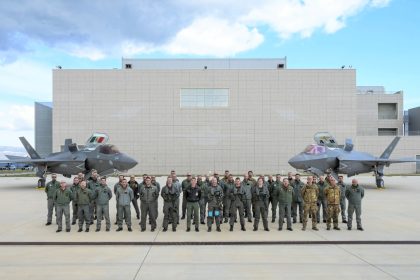
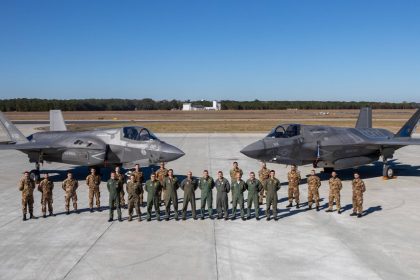
More pictures taken at Deci during the 494th FS detachment on Feb. 1 – 2.

Part 1
Part 2


494FS deployment to Decimomannu – part 2 February 3, 2011

Posted by David Cenciotti in 494FS Deci, Aviation, Italian Navy, Military Aviation.
Tags: , , , , , , , , , , , , , , , ,
1 comment so far

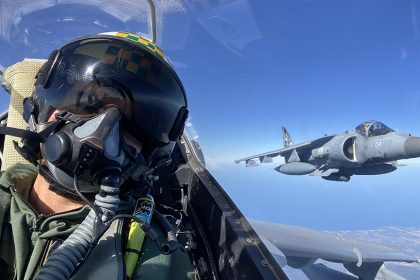
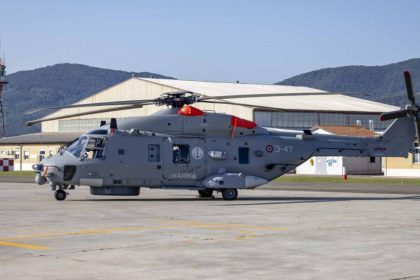
On Feb. 1 and 2 I visited Decimomannu airbase, in Sardinia, to see the 494th FS detachment at work. Below you can find some of the pictures I took there. More pictures will be uploaded in the next days. Interestingly, the F-15E performed two daily waves, almost always launching up to 10 aircraft that flew A/G missions in the Capo Frasca range or A/A missions in the restricted areas located to the East of Sardinia. On Feb. 2, the Strike Eagles performed DACT (Dissimilar Air Combat Training) vs the Italian F-2000 Typhoons of the 4° Stormo, based in Grosseto. Deployed to Deci in these days are also 7 AV-8B+ Harrier of the I GrupAer of the Marina Militare (Italian Navy).

Part 1
Part 3


How to Fly the Harrier Jump Jet | Danger Room | Wired.com December 22, 2010

Posted by David Cenciotti in Aircraft Carriers, Italian Navy, Military Aviation.
Tags: , , , , , , , , , , , , ,
add a comment

A few days ago, I published a post to explain how the F-35 JSF flies in both conventional and STOVL (Short Take Off Vertical Landing) Harrier-like mode. The following article provides some interesting info and images about the AV-8B, a version much similar to the one flown by the Marina Militare (Italian Navy):

The Harrier made its final flight with the British RAF last week, marking one end to the jet famous for being able to take off and land vertically. The jet’s recently declassified flight manual shows just how extraordinary it is.

read the rest here: How to Fly the Harrier Jump Jet | Danger Room | Wired.com.

Aircraft carriers with no aircraft….. December 22, 2010

Posted by David Cenciotti in Aviation, Italian Air Force, Italian Navy, Military Aviation.
Tags: , , , , , , , , , , , , , , , , , , , , , , , , , , , ,
1 comment so far

The following defense news article deserves a read:

RAF: Harrier Retirement Won’t Hurt F-35C Skills
By ANDREW CHUTER
Published: 17 Dec 2010 08:55
One of Britain’s senior Royal Air Force commanders has rebutted suggestions that retiring the Harrier GR9 will damage the ability to regenerate skills to operate the new F-35C variant of the Joint Strike Fighter off a new aircraft carrier when it enters service around 2020. “Anybody who thinks that operating a Harrier today was somehow going to link you with the F-35C on the Queen Elizabeth-class aircraft carrier is [wrong]. It is just not true,” said Air Officer Commanding No. 1 Group Air Vice Marshal Greg Bagwell.
The Harrier is a short-takeoff-and-vertical-landing aircraft, while the F-35C is a conventional aircraft requiring catapults and arrestor wires to operate. The latter aircraft is destined to be used on the new 65,000-ton carriers now being built by a BAE Systems-led alliance. Britain originally intended to acquire the STOVL F-35B version of the Joint Strike Fighter, but as part of the strategic defense and security review in October opted to switch to the conventional F-35C variant. At the same time, the British government decided to immediately ax the joint RAF/Royal Navy Harrier GR9 force and decommission the aircraft carrier Ark Royal, leaving Britain without a maritime air strike capability until 2020, when the F-35C and the Queen Elizabeth-class warship are available. Britain’s joint force of 79 Royal Air Force and Royal Navy Harrier GR9′s aircraft took off into retirement Nov. 15 from their base at Cottesmore in eastern England and will now be scrapped, unless they can be sold or a new use for them is found. The Daily Telegraph newspaper said earlier this week the MoD was looking at a proposal to create a reserve squadron using the Harriers. The decision to decommission the Harrier and the Ark Royal has caused huge controversy, in part because its opponents say it will be difficult to regain the skills needed to run carrier strike operations in the future. Bagwell said he does not underestimate the challenges and risks involved in building the F-35C operation, but he thinks the RAF and the RN forces would have faced the issue regardless of whether the Harrier had stayed in service.
“The techniques and procedures to recover a conventional carrier aircraft using catapult launches and arrestor gear recoveries, or ‘cats and traps,’ are totally different from that of a STOVL aircraft,” he said. “That is just as true for the aircrew as it is for the ships crew. Whilst the Harrier would have preserved the requisite skill sets for the F35B STOVL variant of the Joint Combat Aircraft” – the name the British called their JSF program – “they are largely irrelevant to that needed to operate the F35C.
“Effectively, we need to build the skill sets for the new aircraft and carrier configuration from scratch. We all ready have plans in place to begin that build up over the next 10 years with our allies and partners.” He said it was a “tall order,” but regaining carrier skills is a problem Britain had previously faced and overcome. One senior Royal Navy commander agreed with Bagwell’s assessment and said there was a much bigger question mark over regaining deck skills than the capabilities of pilots Bagwell, who commands all of Britain’s fast jet operations, said the RAF and the RN “have 10 years to get our act in gear and understand what operating the F-35C variant means for training and other preparation. Some we will have to learn from the USA and France,” he said. The British already have a pilot exchange program with the U.S. with officers flying carrier operations with the F-18. Bagwell said he was confident British pilots would also be flying French Navy jets as well “We will be flying Rafales from French carriers within a few years. I’m sure of it,” he said.
The British are targeting the availability of a single squadron of F-35Cs by 2020 to equip a joint RAF/RN operation. Briefing reporters last week, Bagwell said that would require an initial order for about 40 aircraft. How the aircraft will be employed in the future has yet to be worked out, but said he thought the aircraft would not be tied to the aircraft carrier. “They are there to project air power. It’s irrelevant where they are launched from. The Royal Navy will hate me for this, but sometimes they will be launched from the deck of an aircraft carrier for good reason. Other times it will be in-country closer to the problem,” he said. Either way, he said the F-35C gave the British better deep penetration, ISTAR and other capabilities than the more limited STOVL F-35B.

Anything weird? Apparently, not. As Bagwell affirms, the Harrier could not contribute to generate the skills required to fly the F-35C since the conventional carrier variant has not a STOVL (Short Take Off Vertical Landing) capability. Right. Unfortunately, what must be underlined is that Britain had originally chosen the STOVL variant before the Strategic Defense and Security Review in October deciced to switch to the C variant making the Harrier GR9s APPARENTLY useless. It’s a matter of logic: the Harrier was not scrapped because of the C variant; the C variant was chosen because the Harrier was sacrificed (along with the Ark Royal aircraft carrier). With this decision, UK will not have aircraft to equip aircraft carriers until 2020. Since the development of the F-35 is taking more than expeceted in both terms of time and costs, was this the right pick? I don’t think so.

Below, a of RN Sea Harrier FA.2

Two RAF Harrier GR7s (the left one photographed during an air-to-air refueling mission on board a Spanish KC-130 from Aviano in 2000; the right one taking off during RIAT 2002).

Is it Italy facing the same risk? Absolutely not. The current scenario offers just two options for the Italian Navy that can’t afford building a new catapult-equipped aircraft carrier in the short-mid period:

1) the F-35B is axed and the I GrupAer AV-8B+ will keep flying from the Cavour aircraft carrier until the aircraft lifetime expires

2) the Italian Harriers are replaced by the STOVL F-35B as soon as it becomes available.

Below, AV-8B+ Harrier of the Marina Militare refueling from a B707 tanker.

The F-35B heating problems November 24, 2010

Posted by David Cenciotti in Military Aviation.
Tags: , , , , , , , , , , , , , ,
1 comment so far

In the last few days, I’ve often written about the F-35B. I have explained that the STOVL concept could not be abandoned and that, hopefully, USMC, Italian Air Force and Italian Navy, will most probably get their Harrier replacements sooner or later. However I forgot to complete the previous sentence: “hopefully, USMC, Italian Air Force and Italian Navy, will most probably get their Harrier replacements sooner or later provided that Lockheed Martin will be able to solve the heating management issues. Over the last couple of years, the US Navy has in fact discovered that the engine exhaust from the F-35B (and also from the tilt-rotor MV-22) was too hot for the deck plates on some on the carriers and that high temperatures could deform the deck plate’s understructure.
Below is an interesting article published on Aviation Week’s blog Ares by Bill Sweetman that clearly explains the type of problem the F-35B users could be facing because of the high temperatures and high jet exhaust speed of the STOVL variant of the Lightning II. If the heating problem is not solved, the F-35B will not be able to operate from unprepared strip or aircraft carrier, becoming almost useless (at least for the requirements it was expected to satisfy).

About That Austere-Base Thing…

Posted by Bill Sweetman at 3/11/2010 6:45 AM CST

In operations around Marjah in Afghanistan, the Marines have been using
AV-8B Harriers as they were designed to be used, flying the jets from
runways that are too short or ill-prepared to accommodate a conventional
fighter. Kimberly Johnson is reporting on this for DTI’s April issue.

The Marines say that the the AV-8B’s replacement, the F-35B Joint Strike
Fighter, will be able to do the same: “The flexibility that the STOVL
variant of the F-35 will add to the contemporary Marine Air Ground Task
Force is amazing,” Marine commandant Gen James Conway said when the first
F-35B was rolled out, more than two years ago. “This generational leap in
technology will enable us to operate a fleet of fighter/attack aircraft from
the decks of ships, existing runways or from unimproved surfaces at austere
bases.”

But a Navy report issued in January says that the F-35B, in fact, won’t be
able to use such forward bases. Indeed, unless it ditches its short
take-off, vertical landing capability and touches down like a conventional
fighter, it won’t be able to use land bases at all without some major
construction efforts.

The newly released document, hosted on a government building-design resource
site, outlines what base-construction engineers need to do to ensure that
the F-35B’s exhaust does not turn the surface it lands on into an
area-denial weapon. And it’s not trivial. Vertical-landing “pads will be
exposed to 1700 deg. F and high velocity (Mach 1) exhaust,” the report says.
The exhaust will melt asphalt and “is likely to spall the surface of
standard airfield concrete pavements on the first VL.” (The report leaves to
the imagination what jagged chunks of spalled concrete will do in a
supersonic blast field.)

Not only does the VL pad have to be made of heat-resistant concrete, but
currently known sealants can’t stand the heat either, so the pad has to be
one continuous piece of concrete, with continuous reinforcement in all
directions so that cracks and joints remain closed. The reinforced pad has
to be 100 feet by 100 feet, with a 50-foot paved area around it.

By the way, any area where an F-35B may be stopped with the engine running -
runway ends, hold-shorts on taxiways, and ramps – also has to be made of
heat-resistant concrete to tolerate the exhaust from the Integrated Power
Pack (IPP), which is acting as a small gas turbine whenever the aircraft is
stopped.

This follows the revelation that the US Navy is worried about the exhaust
damaging ship decks.

Lockheed Martin pooh-poohs the report, saying that it was based on
“worst-case” data and that “extensive tests” conducted with prototype BF-3
in January (after the report was completed) showed that “the difference
between F-35B main-engine exhaust temperature and that of the AV-8B is very
small, and is not anticipated to require any significant CONOPS changes for
F-35B.”

What do “very small” and “significant” mean? In VL mode the main engine on
the F-35B is producing some 15,700 pounds of thrust, while a Harrier’s aft
nozzles deliver about 12,000 pounds of thrust. (The fore-aft split is
roughly equal.)

But the F135′s overall pressure ratio is almost twice as high, which would
point to a much higher jet velocity (which LockMart doesn’t mention), the
JSF nozzle is much closer to the ground, and the Harrier has two nozzles,
several feet apart.

So maybe the F-35B is not shaping up to be the best anti-runway weapon since
the RAF retired the JP233. However, it may still not be what the Marines got
when they first acquired the Harrier in the early 1970s.

Having clung tenaciously to the WW2-era AU-1 Corsair until the late 1950s,
because unlike early jets it could use minimally improved fields, the
Marines had finally entered the jet age with the help of the Short Airfield
for Tactical Support (SATS), an astonishing set of equipment that included a
portable water-brake arrester system and (I am not making this up) a
catapult powered by J79 jet engines.

The original Harrier allowed them to get rid of this kit. While the first
justification for land-based STOVL – that it provided a dispersal
alternative when air attacks shut down major bases – has a Cold War feel to
it, the idea of using STOVL as a more expeditionary force has remained
somewhat valid, and has been used by both the UK and the Marines: the RAF’s
Harriers were able to operate from Kandahar when other aircraft could not.

Again, the question is how well the F-35B will be able to do that, and what
“significant ” means. Worst case or not, there is a very big difference
between a solid slab of high-grade concrete and the kind of surface you are
apt to find anywhere ending in -stan.

The (un)certain future of the F-35B November 21, 2010

Posted by David Cenciotti in Italian Air Force, Italian Navy, Military Aviation.
Tags: , , , , , , , , , , , , , , , , , , , , , , , , , , , , , , , , , ,
15 comments

Just a few days ago I wrote that, should Italy be forced to choose a single F-35 variant because of budget costraints (as happened in the UK), the hypothesis of selecting the F-35Bs for both the Aeronautica Militare (Italian Air Force, ItAF) and the Marina Militare (Italian Navy, ItNy) should be seriously taken into consideration (for more details read here: “F-35, STOVL, Joint Force: will Italy follow the British path?“). However, on Nov. 11, 2010, an interesting article available on DefPro titled “Deficit Commission: Cancel Marine Corps Version of the F-35 Joint Strike Fighter and Several Other Weapons” explained that a bipartisan National Commission on Fiscal Responsibility and Reform had just issued a series of draft proposals to cut government spending; among which, one of the most interesting is to cancel the Marine Corps version of the F-35. This option would not only cancel the Marine Corps version of the F-35 Joint Strike Fighter “because of its technical problems, cost overruns, schedule delays, and the adoption by the services of joint combat support in current wartime operations” but would leave Italy, that saw the F-35 as the ideal Harrier replacement, without aircraft for its Cavour aircraft carrier. Should the F-35B be canceled, the Italian partecipation in the JSF programme would be at risk since the carrier was tailored to this aircraft and could not be converted to accomodate the F-35C carrier version. The only alternative to the F-35B would be to extend the service life of the AV-8B, more or less the same option available for the USMC. However, I think that the STOVL (Short Take Off Vertical Landing) version of the 5th generation aircraft will not be scratched for many reasons:
1) the F-35B is going to replace not only the USMC Harriers but also the F/A-18 to cover the full spectrum of modern warfare scenarios with its own resources: not only CAS (Close Air Support) but also air superiority and strike missions. The Marine Corps needs a fixed wing aircraft operating from a LHA (Landing Helicopter Assault) or LHD (Landing Helicopter Dock) to support a MEU (Marine Expeditionary Unit) in regional crisis and a STOVL is the only viable option.

2) the entire America class amphibious assault ships were designed to accomodate, operate and support the F-35B and, to increase the number of accommodated aircraft, it will not feature the well decks that are used to house landing craft on the Tarawa and Wasp class amphibious assault ships.

Fortunately, to reassure the Italian Navy (the Italian Air Force and, especially, USMC….), on Jun. 19, 2010, Lockheed was awarded 3.5 billion USD contract modification from the U.S. Department of Defense to manufacture 31 F-35 Lightning II stealth fighters in the fourth lot of low-rate initial production (LRIP). “The contract also funds manufacturing-support equipment, flight test instrumentation and ancillary mission equipment. Including the long-lead funding previously received, the total contract value for LRIP 4 is $3.9 billion. Under the contract, Lockheed Martin will produce 10 F-35A conventional takeoff and landing (CTOL) variants for the U.S. Air Force, 16 F-35B short takeoff/vertical landing variants for the U.S. Marine Corps, four F-35C carrier variants for the U.S. Navy and one F-35B for the United Kingdom. Additionally, the Netherlands has the option to procure one F-35A”.
Even if the British F-35Bs funded in LRIP 3 and 4 when the MoD was expecting to order the B model will be most probably sold to the USMC, the contract awarded by the US DoD gives those air forces interested in the STOVL version of the JSF (Italian Navy, Italian Air Force, Israeli Air Force and possibly the Spanish Navy and the Japanese Maritime Self Defense Force) a reason to be highly optimistic about the future of the F-35B.

Departures from Circus Maximus (in bad weather) November 14, 2010

Posted by David Cenciotti in Armed Forces Day, Military Aviation.
Tags: , , , , , , , , , , , , , , , , , , , , ,
add a comment

Below, the pictures of the departures from the static display at the Circus Maximus for the Armed Forces Day, taken on Nov. 10, 2010, by Giovanni Maduli.


Circus Maximus exhibition (for the Armed Forces Day 2010) November 12, 2010

Posted by David Cenciotti in Armed Forces Day, Aviation.
Tags: , , , , , , , , , , , , , , , , , , , ,
4 comments

The Italian Armed Forces celebrated the 92nd Anniversary since the end of WWI and the Armed Forces Day with the traditional exhibition in the Circus Maximus (Circo Massimo) in Rome with weapons systems and equipment belonging to the Aeronautica Militare (Italian Air Force), Marina Militare (Italian Navy) and Guardia Costiera (Coast Guard), Esercito Italiano (Italian Army), Guardia di Finanza (Custom Police) and Carabinieri (Military Police). Here are the pictures I and Giovanni Maduli took on Nov. 7, at the exhibition.


Cavour aircraft carrier – Civitavecchia November 8, 2010

Posted by David Cenciotti in Italian Navy, Military Aviation.
Tags: , , , , , , , , , , , , , , , , ,
2 comments

As happened in 2008 and 2009, once again in 2010, Cavour aircraft carrier was at Civitavecchia harbour for the Armed Forces Day. I went there and made a quick tour of the ship as already done in the previous years and took the following pictures of the AV-8B+ Harrier and SH-3D “Sea King” that were on display on the flight deck of “Nave Cavour”.

A side note that might be useful if you’ll plan to visit the ship next year: the aircraft carrier could be visited from 9AM to 12AM in the morning and from 3PM to 6.30PM. Visitors could reach the ship using one of the shuttle buses which connected the harbour car park with the dock (that were some kilometers apart). Unfortunately, without any prior notice, the buses that should bring the people from the ship back to the car park ceased their service after 12PM leaving hundreds visitors (comprising many infants and elderly people) under the sun, without any other chance than waiting from a few hours or walking for 2,5 chilometers to reach their cars on foot! Thumbs down to the organizers for this unacceptable management of the bus service.