jump to navigation

Another day, another Iranian drone. Tehran reveals the new “A1″ UAV. January 30, 2012

Posted by Richard Clements in Drones, Iran.
Tags: , , , , , , , , ,
2 comments

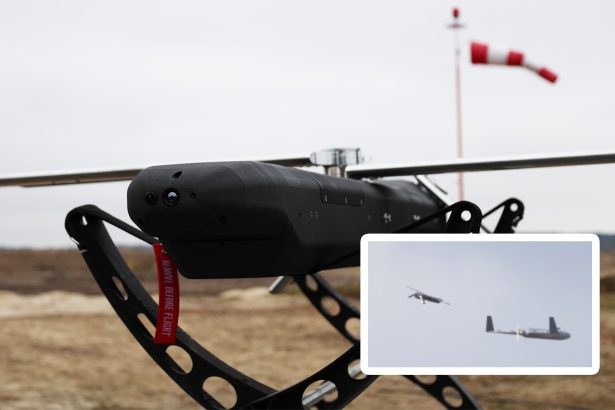
On Jan. 30, Iran has announced the development of a new UAV (Unmanned Aerial Vehicle) called the “A1″. According to the information released so far, the new drone allegedly has a service ceiling of 10,000 feet, an endurance of two hours and can carry up to a 11lbs (5kg) payload. Furthermore, it has an engine running on hi-octane gas/oil mix (2 stroke engine??) with a 2 blade pusher propeller and can be either launched from a ramp attached to the bed of a truck or ship-launched from rocket launchers.

These “features” seem to suggest that the new drone  is another variant of the Ababil indigenous UAV family, which already includes the Ababil-5,  used as a medium range surveillance platform, and the Ababil-T, a short to medium range UCAV with offensive capabilities.

Image credit: PressTV

Press TV website which broke the news also mentions a –B and a –S version but does not disclose what the purposes of these are.

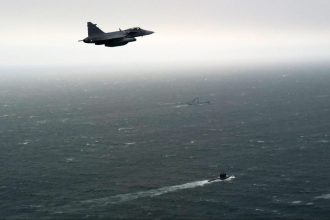
It was an Ababil-T drone, allegedly launched from within Lebanon and sported Hezbollah markings, that was shot down in 2006 by an Israeli Air Force F-16 using a Rafael Python 5, about 5 nautical miles off Israel’s coast.

Ababil-T (credit: IDF)

The launching of the new drone is a further evidence of a blooming indigenous UAV program which has similar beginnings to that of the Israeli UAV program, started many years ago to develop drones for artillery spotting and battlefield overwatch as well as decoys for SAM sites (they are used to personify manned assets and spur a reaction by the SAM site that can be then attacked by other SEAD assets).

Although the significance of Iran’s UAV program remains unclear (especially if we consider the claims about the prodigious performance of some drones that are nothing more than scale models), it’s once again interesting to notice how the Iranian government use the local media to trickle out information on new systems being developed by Tehran.

The Aviationist will monitor further developments as and when they arise.

Written with The Aviationist’s Editor David Cenciotti

Airspace violations – Episode 8 January 30, 2012

Posted by David Cenciotti in Airspace violations.
Tags: , , , , , , , ,
2 comments

Previous episodes: Archive

The following episode took place about 24 years ago. However, it occurred  in the Strait of Hormuz, saw the direct involvement of U.S. warships operating in the 5th Fleet Area Of Operations amid heightened tensions, and involved also an Iranian F-14 (one of those has recently crashed during a mysterious night scramble).

Hence it is also quite topical since it gives an idea of what the above mentioned contributing factors can produce.

U.S. – Iran war games…24 years ago

(Iran Air Flight 655 shot down by USS Vincennes)

On Jul. 3, 1988, an Airbus A-300 (registration EP-IBU) operating as Iran Air Flight 655 from Tehran Bandar Abbas to Dubai was shot down by two ground-to-air missiles fired by the USS Vincennes, a Ticonderoga-class warship that was cruising in the Persian Gulf waters to keep a closer eye on the bloody and consuming war that involved Iraqi and Iranian armed forces.

Both missiles struck the fuselage, breaking off part of the tail and one wing and causing the death of all 290 people on board.

Background

During the Iran-Iraq war in the ’80s, the U.S. presence in the region was significant in order to protect oil tankers threatened by both countries. Just one year before this incident, in May 1987, the guided missile frigate USS Stark was attacked by an Iraqi Mirage F-1 jet and 37 American sailors perished during the clash. Further  investigation led Captain Glenn Brindel to be blamed not to have defended its frigate against the attack.

Therefore, the U.S. Navy agreed that new and more strict rules of engagement (ROE) were needed in order to allow Captains to get a more powerful right to defend themselves and “fire before being fired upon”.

These premises constitute the roots which gave birth to the root causes of the tragedy.

The event

On Jul. 3, 1988, three U.S. ships were patrolling the Persian Gulf: USS Vincennes, USS Montgomery and USS Sides. Suddenly, the second one reported enemy fire coming from small boats belonging of theIRGC (Iranian Revolutionary Guard Corps).

Responding the request of support from the USS Montgomery, the Captain of USS Vincennes ordered to step in the battlescene and engaged some IRGC boats for half an hour.

In a few minutes, some missiles were also launched and shortly after an Iranian F-14 was shot down in a great ball of fire.

In the meantime, in the more peaceful but busy environment of the Bandar Abbas airport, the doomed Airbus A-300 was ready for a short flight to Dubai, United Arab Emirates.

After take-off, flight 655 was instructed by the ATC to activate the transponder (on the Airbus, the transponder ‘squawks Mode III’ identified the aircraft as neutral and civilian) and was requested to reach an altitude from 7,000 to 12,000 feet.
At the same time the USS naval ships in the Strait of Hormuz got another warning signal on their radar devices and identified it as a possible and serious threat.

During the seven minutes between take-off of of flight 655 and the launch of missiles, the U.S. naval units made several attempts to get in contact with the Iran Air A300: USS Vincennes tried to use the military radio channel of frequency 243.00 MHz used for emergency purposes and four other attempts on the civil channel at 121.5 MHz.

So how this incident occurred if many attempts to communicate were made?

First of all ICAO final investigation report proved that the A-300 was not able to receive communication on the military emergency frequency 243MHz with onboard radio equipment.

Instead, dealing with the attempts made on the civilian radio frequency 121.5MHz, the board of inquiry ascertained that the Iran Air crew did not pay the due attention during the first phases of the flight or did not realize to be a possible target of naval units.

The crew was in continuous communication with ATC and was therefore unable to hear the warnings issued on the civil aviation distress radio frequency. ICAO also determined that of the four warnings issued on this distress frequency, only one was considered clear enough to be recognizable by the flight crew as directed to them.

Forty seconds past this last recognizable transmission, the USS Vincennes crew fired the missile.

More in details ICAO stated that:

  1. The aircraft weather radar was probably not operating during the flight nor would normal procedures have required its operation in the prevailing weather conditions.
  2. The radio altimeters were probably functioning throughout the flight;
  3. Apart from the capability to communicate on the emergency frequency 121.5MHz, United States warships were not equipped to monitor civil ATC frequencies for flight identification purposes.
  4. Four challenges addressed to an unidentified aircraft (IR655) were transmitted by United States ships on frequency 121.5MHz.
  5. There was no response to the four challenges made on 121.5MHz, either by radio or by a change of course. This indicated that the flight crew of IR655 either was not monitoring 121.5MHz in the early stages of flight, or did not identify their flight as being challenged.
  6.  The aircraft was not equipped to receive communications on the military air distress frequency 243MHz. There was not coordination between United States warships and the civil ATS units responsible for the provision of air traffic services within the various flight information regions in the Gulf area.

Final statement summarised that: “The aircraft was perceived as a military aircraft with hostile intentions and was destroyed by two surface-to-air missiles.

After stating that the environment on board the civilian plane contributed to the incident, the ICAO inquiry led to a more bewildering truth on the chaos and strain that reigned onboard the US naval units.

During the seven minutes between the take-off and the shot down of flight 655, excited communcation were made among the Captains of US naval units in the area, clearly stating the doubtfulness of identifying the approaching aircraft.

The US Department of Defense admitted that “…there was growing excitement and shouting in the Combat Information Centre of the USS Sides about a commercial flight.”

In the very first moments the radar operator of USS Vincennes identified the radar track as “unknown-assumed enemy” as the “Combat Information Center” of the same unit identified it as an enemy F-14 fighter jet.

Two minutes later the Captain of USS Sides, assumed the non-threating nature of the aircraft but a minute later USS Vincennes Captain ordered the shot down.

The Aftermath

The US Navy never blamed its crew for the incident and excused it with the need of defending the crew itself and their ships from any possible threats.  On the same day of the incident, US President Ronald Reagan stated that USS Vincennes followed all the requirements for the interception of foreign aircraft and that the Captain on duty ordered the launch of missiles only for defense purposes.

On Jul. 13, 1988, Vice-Secretary Williamson declared before the ICAO Counsel how high the level of danger was during the event. He noted that on Jul. 3 all the US naval units were engaged on a large operation of pursuit against Iranian vessels and it could have been considered a real war theatre.

On the extraordinary session of ICAO Counsel (Jul. 13-14, 1988), the ICAO President stated that: “…fundamental principle that States must refrain from resorting to the use of weapons against civil aircraft must be respected by each State”.

Representatives agreed to blame the U.S. act and some pushed for a rapid approval of Article 3bis of Chicago Convention – at that time not yet ratified. In particular, USSR and Nigeria blamed the US to lead a barbaric and brutal campaign against free and innocent people.

At the end of the technical investigation, on Mar. 17, 1989 the ICAO Counsel adopted the following Resolution:

“THE COUNCIL…
Having considered the report of the fact-finding investigation instituted by the Secretary General…and the subsequent study by the Air Navigation Commission of the safety recommendations presented in that report;
Recalling that the 25th Session (Extraordinary) of the Assembly in 1984 unanimously recognized the duty of States to refrain from the use of weapons against civil aircraft in flight;
Reaffirming its policy to condemn the use of weapons against civil aircraft in flight without prejudice to the provisions of the Charter of the United Nations;
Deeply deplores the tragic incident which occurred as a consequence of events and errors in identification of the aircraft which resulted in the accidental destruction of an Iran airliner and the loss of 290 lives;
Notes the report of the fact-finding investigation instituted by the Secretary General and endorses the conclusions of the Air Navigation Commission on the safety recommendations contained therein;
Urges States to take all necessary measures to safeguard the safety of air navigation, particularly by assuring effective co-ordination of civil and military activities and the proper identification of civil aircraft.”

“Deplores”, “Notes”, “Urges”: nothing really effective to avoid repeating the incident.

24 years later the tension between US and Iran is at its highest peak ever. Let’s hope we are not going to witness another similar episode in the Persian Gulf. For sure, we would not feel very comfortable flying across the Strait of Hormuz these days.

© David Cenciotti & Simone Bovi

Above image credit: Irandefense.net

Global Hawk: Northrop Grumman launches campaign to save program. On Twitter. January 29, 2012

Posted by Richard Clements in Drones, Military Aviation.
Tags: , , , , , ,
add a comment

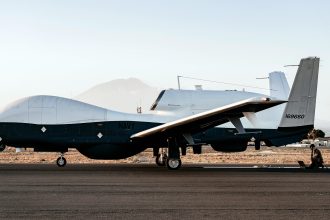
The Aviationist wrote a post the other day relating to the fact that industry insiders had leaked that the Pentagon was planning on cancelling the whole Global Hawk program not only not buying any further aircraft but to retire the fleet they already have.

This would actually appear to be true going by some of the unusual tweets posted by Northrop Grumman itself. In one, the company announced that they had been loaning parts for the U-2 program surveillance sensors to keep those aircraft in the air. They have also tweeted a link to a website urging visitors to lobby their member of congress, even having a box for the visitor to fill in their zip code so they could work out who that person is. If you would like to take a look at this website please look here.

All very unusual actvities, suggesting that this isn’t the last we have heard of this.

Northrop Grumman did release the following media statement on the Jan.26:

“The Pentagon announced today that it is planning to cancel the Global Hawk Block 30 program and plans to perform this mission with the U-2 aircraft. Northrop Grumman is disappointed with the Pentagon’s decision, and plans to work with the Pentagon to assess alternatives to program termination.

“The Global Hawk program has demonstrated its utility in U.S. military operations in Iraq, Afghanistan and Libya, as well as its utility in humanitarian operations in Japan and Haiti. Just a few months ago, the Pentagon published an acquisition decision memorandum regarding Global Hawk Block 30 that stated: ‘The continuation of the program is essential to the national security… there are no alternatives to the program which will provide acceptable capability to meet the joint military requirement at less cost.’

“Global Hawk is the modern solution to providing surveillance. It provides long duration persistent surveillance, and collects information using multiple sensors on the platform. In contrast, the aging U-2 program, first introduced in the 1950s, places pilots in danger, has limited flight duration, and provides limited sensor capacity. Extending the U-2′s service life also represents additional investment requirements for that program.

“Northrop Grumman is committed to working with our customers to provide the best solutions for our country and our allies. We are pleased with the continuing support for the Global Hawk Block 40 system, as well as for the Navy’s Broad Area Maritime Surveillance system and our other unmanned systems.”

It’s looking like North Grumman is going to fight this tooth and nail to try and reverse this decision.

Richard Clements for TheAviationist.com

Is Boeing calling time on the stealthy F-15 Silent Eagle? Lockheed Martin hopes so. January 29, 2012

Posted by Richard Clements in Military Aviation.
Tags: , , , , , , ,
add a comment

Silent Eagle, not to become reality?

The Korea Times has reported that there is a possibility that aviation giant Boeing may not full fill its promise to provide the stealthly version of it’s F-15 to South Korea.

In an article published on Jan. 25, titled Boeing may give up offering stealthy jet journalist Lee Tae-hoon wrote that “a source familiar with Boeing’s plan to modify its F-15s said little progress has been made in the making of the F-15SE, especially in the development of its conformal weapons bay (CWB), which allows the aircraft to carry weapons internally.”

According to the informed source “only 10 percent of work has been completed for the research and development of the F-15SE’s conformal weapons bay.”

Boeing’s proposal had included canted vertical stabilisers and a conformal weapons bay on each side of the aircraft to reduce the radar cross section of the aircraft, all compulsary requirements to Korea’s KX-III procurement program to acquire advanced jets. Seoul had removed these requirements to allow other manufacturers the chance to compete, although had signed a memorandum of understanding with Boeing back in 2010. However Boeing announced late on 2010 that it had suspended development of the proposed features.

Tae-hoon also reported that other industry officials noted that it will be physically impossible for Boeing to complete the development of the CWB and canted tails by the end of October this year when Seoul plans to finalize the deal after three to four months of evaluations and negotiations. “Boeing will most likely change their offer. They won’t offer the Silent Eagle” a senior official of Lockheed Martin, which is competing with Boeing and the European Aeronautic Defense and Space Company (EADS) for the FX-III bid, said asking for anonymity.

“They are going to offer the F-15K because that’s the only plane they can deliver by 2016.”

This opens the door for the F-35 and the Eurofighter Typhoon to get a toe hold in Korea.

Although EADS could try to offer a version with conformal fuel tanks and thrust vectoring, neither variant of the Typhoon is stealth. Therefore, since radar-evading capability remains a crucial factor in deciding the next South Korea fighter jets, Lockheed Martin F-35 seems to be favorite and this would explain Tom Burbage (Executive VP of Lockheed Martin and General Manager of F-35 Program Integration) optimism over the deal in the recent Press Briefing held in Rome.

What is yet to be determined is which of the three versions of the F-35 Lockheed has put forward to Seoul for consideration.

Written with The Aviationist’s Editor David Cenciotti

Credit: Boeing

“Cleared hot”: the Italian AMX light combat planes to be cleared to carry (and use) bombs in Afghanistan January 28, 2012

Posted by David Cenciotti in Military Aviation.
Tags: , , , , , , , , ,
2 comments

As the air war in Afghanistan winds down, hitting a 3-year low in terms of combat sorties, Italy is about to lift one of the national caveats that has denied the Air Force’s AMX light bombers deployed to Herat, to carry PGM (Precision Guided Munitions) in combat.

In fact, although being able to carry bombs to support ground troops, the Italian AMXs, that emerged as some of the most cost-effective assets during the Air War in Libya and, much earlier, during the Allied Force in Serbia and Kosovo, were not allowed to carry any LGB (Laser Guided Bomb) or GPS-guided JDAM (Joint Direct Attack Munition) .

So far, Italian ground troops in in trouble in Afghanistan have relied on AMX’s gun or….U.S. air support.

Since they could not carry bombs, AMX have mainly conducted reconnaissance missions in Afghanistan, using the Reccelite pod.

Following the experience in Libya, where the Italian planes have largely made use of bombs to protect Libyans threatened by pro-Gaddafi forces, in the last few days, the Minister of Defense Giampaolo Di Paola, has said before the joint defense committees of both houses  that the MoD is willing to use the aircraft “without limitations.”

The use of precision bombs will not change the ROE (Rules of Engagement) said Gen. Biagio Abrate, Joint Chief of Staff, who added: “In Libya, we dropped the bombs and we did well.”

The AMX will be allowed to carry the GBU-32 JDAMs, the GBU-16 Paveway, and the Lizard guidance kit that enables 500-lbs Mk82 bombs to hit the target illuminated by the laser.

Abrate also explained that the MoD is willing to provide weapons to the Predator UAS (Unmanned Aerial System) that in Afghanistan is used for reconnaissance duties only. Both the Predator A and the B (Reaper), that was used in Libya to boost NATO’s ISR (Intelligence Surveillance Reconnaissance) capabilities, can carry bombs even if Italy has not procured missiles and PGMs for them yet.

An AMX taking off from Nellis AFB during a Red Flag (credit: Italian Air Force)


You will believe China has already copied the Lockheed Martin F-35 and the T-50 just visited Nellis AFB when you see these images. January 28, 2012

Posted by David Cenciotti in Information Warfare.
Tags: , , , , ,
7 comments

Did you know that China’s J-18 Night Owl has already been photographed and appears as a copy of the Lockheed Martin F-35? And what about the T-50 that has secretly visited Nellis AFB?

Have a look at the following images.

I didn’t know that either until Al Clark, an aviation illustrator and photographer, sent me a link to his works. Obviously, above images were photoshopped, but the result is awesome and it takes some time to analyze them and be sure they are not genuine.

I’ve often been asked to evaluate the authenticity of images published on Chinese forums and websites, as well as footage released by Iran that has often used doctored videos and fake images to spread regime’s propaganda messages and, in most cases, the authenticity of the material released by the Iranian State TV or news agency, could soon be determined.

If they want to deceive not only intelligence officer but also amateur analysts, and be much more credible, maybe Iran state media should start studying how Al Clark creates his realistic digital mock-ups.

Old Harriers and new choppers unleashed. Welcome aboard the Cavour aircraft carrier during “blue water ops”. January 27, 2012

Posted by David Cenciotti in Aircraft Carriers.
Tags: , , , , , , , , , , ,
2 comments

On Jan. 25, along with the ambassadors of NATO members, EU, Middle East and Mediterranean partners, The Aviationist has had the opportunity to visit the Cavour aircraft carrier during “blue water ops” off Civitavecchia port.

The event was jointly organized by the Ministry of Defense and the Ministry of Foreign Affairs to showcase one of the most important assets of the Italian Defense, one of the few European aircraft carriers that is not only important for military operations, but it is also a versatile platform that made its operative debut during the Haiti relief mission.

The Cavour symbolizes “a variety of possible uses that make it cost-effective” said Adm. Luigi Binelli Mantelli, future Chief of Staff of the Italian Navy.

Along with the F-35 program, the Italian Navy flagship was recently targeted by potential budget cuts as a consequence of the country’s financial crisis. However, “the AV-8B will fly until 2020, when they will be replaced by the F-35B. The MoD Di Paola has confirmed the project will continue. We don’t know how many aircraft we will get. The Air Force will get the majority, but even the Italian Navy will receive its planes” Binelli Mantelli said.

According to the Admiral, the F-35, is mainly an Air Force project, since the service needs the plane for its future. However, the Navy has joined the program and the future STOVL (Short Take Off Vertical Landing) variant of the Joint Strike Fighter, that was removed from probation one year earlier than expected, will serve as a force multiplier and complement the capabilities of the ship, capabilities that were showed to the ambassadors, diplomats and media during a tactical event involving the AV-8B+ Harrier (both single and double seat), AW-101 and NH-90 helicopters, the San Marco Regiment special forces and the Caio Duilio, a radar-evading Anti-Air Warfare destroyer.

Giovanni Maduli took the following images for The Aviationist.

RQ-4 Global Hawk in shock cancellation news: old planes better than new? January 27, 2012

Posted by Richard Clements in Drones, Military Aviation.
Tags: , , , , , , , , , , , ,
add a comment

Is new better than old?

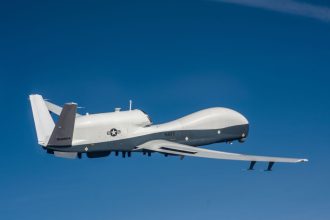
It would seem not. Industry insiders have leaked that the Pentagon is to cancel the RQ-4 Global Hawk program not just stopping buying new aircraft but to retire the Air Force active fleet, in favor of keeping the U-2 flying into 2020.

Air force times writer Dave Majumdar wrote: “The Air Force had been planning to buy 42 Block 30 aircraft. According to 2011 budget documents, the cost of each aircraft was around $215 million. It was not immediately clear how many Global Hawks the Air Force has.”

The aircraft is being killed off due to its high cost to buy and to maintain; also the program hasn’t lived up to its early promise. A knowledgeable industry insider confirmed the project cancellation and said “Yes, this is accurate — been a lot of discussion on the possibility of this a long while,” said the source, who was not authorized to speak to the media. “There is a high probability it will come to pass now unless Congress takes a major exception.”

The industry source also said “I don’t think that’s likely in the economic environment of this year’s DoD budget, and there are no real ‘hawks’ in Congress from California,” he said. The aircraft is both built and based in the Golden State.

Majumdar said that Northrop Grumman declined to comment whilst Air Force officials would neither deny nor confirm the reports.

Oddly the US Navy is going to keep its version of the aircraft therefore keeping the option open that it could, if needed, be used by the air force.

Surely, Global Hawk has not enjoyed the best of safety records with three prototypes lost and a failure rate much higher than many manned planes facing lethal threats in combat.

However, the U.S. RQ-4Bs belonging to the 9th Operations Group/Detachment 4th of the U.S. Air Force, based at NAS Sigonella, in Sicily, the base of the NATO AGS (Air Ground Surveillance) Global Hawk program were the first drones to operate in the Libyan airspace where they performed high altitude Battle Damage Assessment sorties.

Anyway, all of this is good news for the U-2, a 50 year old program that has ironed out all its techncal issues many years ago.

Affectionately known as “Dragon Lady”, the U-2 entered service in 1957. Since then, it has undergone many upgrades and has become a relatively cheap viable platform during these harsh economic times. In what would normally be the types twilight years, a breath of fresh air has been breathed over the majestic old ‘Lady’ which will see the type in service for more years to come.

Actually, it has been a bad week for other new or recent aircraft types too.

Another rather embarrasing news (this time for Airbus) is that further cracks have been found in the wings of its much lauded A380 “Superjumbo”, after the famous uncontained engine failure of Nov. 4, 2010. Airbus did tweet “For those following reports on A380 wing rib findings we confirm inspection & repair process underway and aircraft are safe to fly”: a damage limitation message by the company’s PR rather than a reassuring statement.

The apparent win of obsolete technology on newer, supposed to replace it, does pose the usual question: are modern aircraft too complex?

One thing is sure: you can’t compare new planes with older types. Even if there can be programs free from major problems during their whole lifetime and much troubled ones, facing myriad issues since their birth, generally speaking, those that have survived for 3, 4 or 5 decades and are still flying today, were probably properly designed, maintained, fixed and upgraded during their career. So they are today much more reliable than those integrating cutting edge experimental technologies.

Written with The Aviationist’s Editor David Cenciotti

Above image: U.S. Air Force

“The F-35 remains essential to the future of air superiority” Panetta says. And Lockheed Martin reassures: “we will solve all JSF problems.” January 27, 2012

Posted by David Cenciotti in F-35.
Tags: , , , , , , , , , ,
1 comment so far

On Jan. 26, several hours before U.S. SECDEF Leon Panetta would say the Joint Strike Fighter remains a DoD top priority program “essential to the future of air superiority”, Charles “Tom” Burbage, Executive VP of Lockheed Martin and General Manager of F-35 Program Integration, had already explained in a Press Briefing held in Rome that, in spite of rumors and criticism surrounding the costly fifth generation combat plane, he did not anticipate any significant downsizing of the program.

“Every country is reducing defense budget but no country has reduced the F-35” he said, explaining also that one of the most appealing features of the program for international partners is the involvement of local companies, which supply components, systems and know-how, well before a single aircraft is purchased.

Moreover, the F-35 has recently collected some important achievement, making Burbage and the rest of the company optimistic about the future of the entire program.

First came in December 2011 the selection of the JSF as the Japan Air Self Defense Force (JASDF) next gengeration aircraft, following the F-X competitive bid process that saw the Lockheed plane win on both the Eurofighter Typhoon and the Boeing F-18 Super Hornet.

Then the F-35B STOVL (Short Take Off Vertical Landing) was removed from probation one year ahead of schedule. Finally, the F-35C (Carrier Variant) was fixed with a new tailhook system that will be tested beginning next April, making arrested landing on aircraft carriers possible after the series of failed tests.

Last year was particularly important for the revolutionary plane. It flew about 20% more than expected, performed sea trials taking off and landing (vertically) from USS Wasp and “had no issues on the ship”, Burbage said, in spite of the alleged noise and heating problems.

Dealing with the series of issues highlighted by the JSF Concurrency Quick Look Review and other official and unofficial reports leaked at the end of last year, Burbage explains: “we are currently 20% into the test program. Today’s issues are not going to affect customers that will receive the aircraft years later, when the problem is fixed.”

In the last few days, Burbage and its entourage have met the Italian Minister of Defense Di Paola and the top Italian Air Force and Navy officers. Talks were satisfactory and Lockheed is quite confident that in spite of the financial crisis and raising criticism at political level, Italy will keep the commitment as Level 2 partner (worth 2 Billion USD already invested) in the program, which calls for total U.S. purchases of 2,443 F-35s in both A, B and C versions for the Air Force, Navy and Marine Corps, and envisages 697 planes for other partners (UK, Italy, Netherlands, Australia, Canada, Denmark, Norway and Turkey).

Japan aside, the F-35 has export chances also in South Korea, that is the only non-partner country Lockheed Martin is in talks for a possible JSF sale. Should the F-35 be selected in South Korea, the number of planes procured by Security Cooperative Participants (Singapore and Israel)  and foreign customers (including Japan) will exceed the number of F-35s ordered by partners.

Since there’s no commitment yet nor any value was set, no reduction or cut in the amount of aircraft can be foreseen. Italy is not buying 131 planes. The initial requirement was for 69 F-35A and 62 F-35B (40 for the Air Force and 22 for the Navy), but Italy will buy the plane in batches: 4 planes, then 5 planes and so on. Therefore, Italy will have some F-35s, some of them will be STOVL ones to equip the Cavour aircraft carrier.

Eventually, in the U.S. the F-35 survived the Pentagon budget cuts: the US will continue buying F-35s, but will slow its purchase of the stealth fighter planes.

Indeed, it’s a very good period for the Joint Strike Fighter.


China’s J-18 Snowy Owl: Myth or Reality? January 26, 2012

Posted by Richard Clements in China, Military Aviation.
Tags: , , , , , , , , , ,
5 comments

Over the past year or so, rumours on the Internet have persisted that China has been building a stealthy STOVL (Short Take Off Vertical Landing) aircraft in a similar vein to the F-35 Lightning II. Pictures of said aircraft are non existant but the rumour mill still persists that it’s either real or will be at some point in the future.

It doesn’t take long looking on the chinese defense forums and websites to see the odd snippet of information, although there is a lot of miss information out there also, of which some could be started by the Chinese government to hide what they are really up to.

The common theme does seem to favour an engine set up similar to the F-35B which in itself wasn’t a new design. Take a look at the Russian Yak 141 and you will see the lift fan at the front and the swivelling jet nozzel at the rear. There is even talk that the engine will be a modified version of what is planned to go into the well documented J-20 when it reaches production. Is this definite? of course not, it doesn’t even appear to be off the drawing board yet and probably will remain so for quite a while (if not indefinately).

Above image of a Russian Yak-141: Chinese Internet

So what will the fabled J-18 Snowy Owl look like if it were to take to the skies?

Well, many analysts favour the canted twin vertical stabilisers high wing design in a similar vein to the F-35 with some sort of lift fan at the front just behind the cockpit. It’s interesting to note that the Yak141 had two lift fans one behind the other and it’s suspected that the J-18 would be the same. The big question is: would it sport one or two engines at the rear?  The rendering below seems to favour two engines both with the swivelling nozzels and a smooth low RCS (Radar Cross Section) fuselage internal weapons bays and other stealthy features.

Above render source: Tiexue.net

Assuming for a moment the aircraft is real and it’s near to flight testing how would China use it?

It has been widely reported that China’s first Aircraft Carrier has been under going sea trials. Again it has been widely reported that China has a navalised version of the J-15, itself  a copy of the Sukhoi SU-30, which is real and is flying so it is hard to see the need unless there is some sort of unknown plan to build smaller carriers in the vein of the USS Wasp to provide maritime support of amphibious forces.

The STOVL project is going to be a huge technological exercise and that is going to take time. The J-18 is likely to remain rumours and internet chatter for a long time to come, and in true Mythbusters style, this Myth is busted at least for now.

Richard Clements for TheAviationist.com

Follow

Get every new post delivered to your Inbox.

Join 4,463 other followers