Future Drone’s World capital? Sigonella, Italy February 9, 2012
Posted by David Cenciotti in Drones.Tags: Broad Area Maritime Surveillance, drones, Global Hawk, Libya, Northrop Grumman, Northrop Grumman RQ-4 Global Hawk, United States Air Force, Unmanned Aerial Vehicle
add a comment
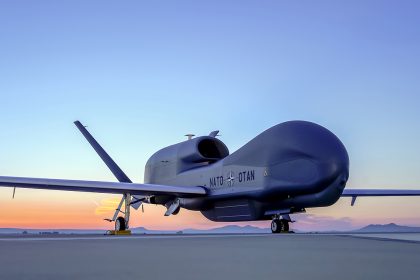
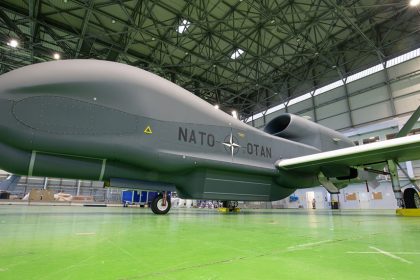
On Feb. 3, 2012, NATO has finally agreed to implement the AGS (Alliance Ground Surveillance) a project that is based on high-altitude long range UAS (Unmanned Aerial Systems), a main operating base and several command and control stations.
The cooperative defense project involves 13 nations: Bulgaria, the Czech Republic, Estonia, Germany, Italy, Latvia, Lithuania, Luxembourg, Norway, Romania, Slovakia, Slovenia, and the United States.
Wondering which drone will provide the alliance the capability to monitor “what’s happening on the ground, at long range, over periods of time, around the clock, in any weather” by year 2015?
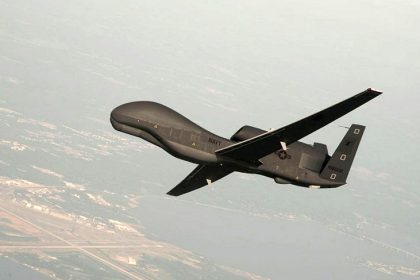
Obviously, the Northrop Grumman RQ-4B Global Hawk, the same type of unarmed reconnaissance drone that the U.S. Air Force has recently decided to scrap in favor of the old U-2 spy planes, Cold War veteran that will be kept in service well into the 2020s.
According to NATO Secretary-General Anders Fogh Rasmussen, the alliance will acquire five RQ-4Bs that will be based at the MOB of Sigonella, in Italy.
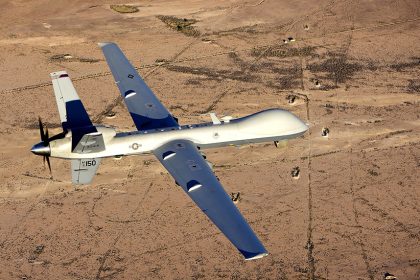
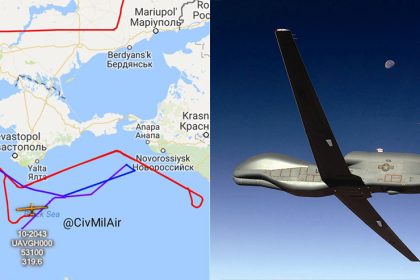
Located in southeast Sicily, “Saigon” (as the U.S. aircrews dubbed it) has already been used during the Air War in Libya to host the Air Force’s Global Hawk and Reapers involved in ISR (Intelligence Surveillance and Reconnaissance) and SCAR (Strike Coordination and Reconnaissance) missions in North Africa.
For instance, the U.S. RQ-4Bs belonging to the 9th Operations Group/Detachment 4th of the U.S. Air Force deployed to Sigonella, were the first to fly over Libya to perform high altitude Battle Damage Assessment sorties on targets located in regions with a residual SAM (Surface-to-Air Missiles) and MANPADS threat. Since Apr. 21, 2011, they were joined by armed MQ-1 Predators that flew their first strike sorties in the areas of Misurata and Tripoli and launched 145 air strikes firing hundred AGM-114 Hellfire missiles before taking part in the operation that led to the capture and killing of Gaddafi in Sirte, when an MQ-1 teamed up with a mixed flight of a Mirage F1CR and a Mirage 2000D and attacked the convoy used by the Libyan dictator in his attempt to flee the city.
Strategically located in the middle of the Mediterranean Sea, Sigonella is the ideal base to conduct surveillance of North Africa, East Europe and Middle East. The base will not only host the (remaining) Air Force Global Hawks and AGS RQ-4s: the U.S. Navy MQ-4C BAMS-D (Broad Area Maritime Surveillance) drone, the “maritime” version of the Global Hawk, is expected to be based in five locations around the world, including “Saigon”, where some other platforms, as the French Herons and the (manned) RAF Sentinels could be deployed as well.
Rendering Sigonella, the Drone’s World capital.
Image: U.S. Air Force
Global Hawk: Northrop Grumman launches campaign to save program. On Twitter. January 29, 2012
Posted by Richard Clements in Drones, Military Aviation.Tags: Aviation, Global Hawk, Military avaition news, Northrop Grumman, Northrop Grumman RQ-4 Global Hawk, Pentagon, Rq-4
add a comment
The Aviationist wrote a post the other day relating to the fact that industry insiders had leaked that the Pentagon was planning on cancelling the whole Global Hawk program not only not buying any further aircraft but to retire the fleet they already have.
This would actually appear to be true going by some of the unusual tweets posted by Northrop Grumman itself. In one, the company announced that they had been loaning parts for the U-2 program surveillance sensors to keep those aircraft in the air. They have also tweeted a link to a website urging visitors to lobby their member of congress, even having a box for the visitor to fill in their zip code so they could work out who that person is. If you would like to take a look at this website please look here.
All very unusual actvities, suggesting that this isn’t the last we have heard of this.
Northrop Grumman did release the following media statement on the Jan.26:
“The Pentagon announced today that it is planning to cancel the Global Hawk Block 30 program and plans to perform this mission with the U-2 aircraft. Northrop Grumman is disappointed with the Pentagon’s decision, and plans to work with the Pentagon to assess alternatives to program termination.
“The Global Hawk program has demonstrated its utility in U.S. military operations in Iraq, Afghanistan and Libya, as well as its utility in humanitarian operations in Japan and Haiti. Just a few months ago, the Pentagon published an acquisition decision memorandum regarding Global Hawk Block 30 that stated: ‘The continuation of the program is essential to the national security… there are no alternatives to the program which will provide acceptable capability to meet the joint military requirement at less cost.’
“Global Hawk is the modern solution to providing surveillance. It provides long duration persistent surveillance, and collects information using multiple sensors on the platform. In contrast, the aging U-2 program, first introduced in the 1950s, places pilots in danger, has limited flight duration, and provides limited sensor capacity. Extending the U-2′s service life also represents additional investment requirements for that program.
“Northrop Grumman is committed to working with our customers to provide the best solutions for our country and our allies. We are pleased with the continuing support for the Global Hawk Block 40 system, as well as for the Navy’s Broad Area Maritime Surveillance system and our other unmanned systems.”
It’s looking like North Grumman is going to fight this tooth and nail to try and reverse this decision.
Richard Clements for TheAviationist.com
RQ-4 Global Hawk in shock cancellation news: old planes better than new? January 27, 2012
Posted by Richard Clements in Drones, Military Aviation.Tags: Airbus, Airbus 380, Aviation, Dragon Lady, drone, Global Hawk, Military Aviation, Northrop Grumman, Northrop Grumman RQ-4 Global Hawk, Pentagon, U-2, United States Air Force, US Air Force
1 comment so far
Is new better than old?
It would seem not. Industry insiders have leaked that the Pentagon is to cancel the RQ-4 Global Hawk program not just stopping buying new aircraft but to retire the Air Force active fleet, in favor of keeping the U-2 flying into 2020.
Air force times writer Dave Majumdar wrote: “The Air Force had been planning to buy 42 Block 30 aircraft. According to 2011 budget documents, the cost of each aircraft was around $215 million. It was not immediately clear how many Global Hawks the Air Force has.”
The aircraft is being killed off due to its high cost to buy and to maintain; also the program hasn’t lived up to its early promise. A knowledgeable industry insider confirmed the project cancellation and said “Yes, this is accurate — been a lot of discussion on the possibility of this a long while,” said the source, who was not authorized to speak to the media. “There is a high probability it will come to pass now unless Congress takes a major exception.”
The industry source also said “I don’t think that’s likely in the economic environment of this year’s DoD budget, and there are no real ‘hawks’ in Congress from California,” he said. The aircraft is both built and based in the Golden State.
Majumdar said that Northrop Grumman declined to comment whilst Air Force officials would neither deny nor confirm the reports.
Oddly the US Navy is going to keep its version of the aircraft therefore keeping the option open that it could, if needed, be used by the air force.
Surely, Global Hawk has not enjoyed the best of safety records with three prototypes lost and a failure rate much higher than many manned planes facing lethal threats in combat.
However, the U.S. RQ-4Bs belonging to the 9th Operations Group/Detachment 4th of the U.S. Air Force, based at NAS Sigonella, in Sicily, the base of the NATO AGS (Air Ground Surveillance) Global Hawk program were the first drones to operate in the Libyan airspace where they performed high altitude Battle Damage Assessment sorties.
Anyway, all of this is good news for the U-2, a 50 year old program that has ironed out all its techncal issues many years ago.
Affectionately known as “Dragon Lady”, the U-2 entered service in 1957. Since then, it has undergone many upgrades and has become a relatively cheap viable platform during these harsh economic times. In what would normally be the types twilight years, a breath of fresh air has been breathed over the majestic old ‘Lady’ which will see the type in service for more years to come.
Actually, it has been a bad week for other new or recent aircraft types too.
Another rather embarrasing news (this time for Airbus) is that further cracks have been found in the wings of its much lauded A380 “Superjumbo”, after the famous uncontained engine failure of Nov. 4, 2010. Airbus did tweet “For those following reports on A380 wing rib findings we confirm inspection & repair process underway and aircraft are safe to fly”: a damage limitation message by the company’s PR rather than a reassuring statement.
The apparent win of obsolete technology on newer, supposed to replace it, does pose the usual question: are modern aircraft too complex?
One thing is sure: you can’t compare new planes with older types. Even if there can be programs free from major problems during their whole lifetime and much troubled ones, facing myriad issues since their birth, generally speaking, those that have survived for 3, 4 or 5 decades and are still flying today, were probably properly designed, maintained, fixed and upgraded during their career. So they are today much more reliable than those integrating cutting edge experimental technologies.
Written with The Aviationist’s Editor David Cenciotti
Above image: U.S. Air Force