China’s Light Attack Helicopter Z-19: a silent (rather than radar evading) chopper February 1, 2012
Posted by Richard Clements in China, Helicopters, Military Aviation.Tags: Chinese Aif force, Helicopter Gunships, Military avaition news, Military Aviation, military helicopter, z-19
4 comments
The new Z-19 does not have a cool name, but it does have some very interesting features.
The use of the word ‘Stealth’ is probably a little too strong a term for this new helicopter as the stealth used is not in the classical sense. In the case of the Z-19, it’s acoustic stealthiness along with exhausts that shield the aircraft from Infra-red threats, rather than radar-absorbing materials and shapes like the modified Stealth Black Hawk used in the Osama Bin Laden raid.
The Z-19 is being developed by Harbin Aircraft Industrial Corporation and is suspected to operate alongside the larger Z-10 which is roughly the size of a Ah-64 Apache and is more of a tank killer. Moreover, the Z-10 is now entering front line service with the smaller Z-19 a few years behind.
The Z-19 is roughly the size of an OH-58 Kiowa and made its first flight in May 2010. Although it has been reported that one prototype was lost during September 2010, there are no details of the cause of the crash or even if there were fatalities. The fuselage is the usual slim tandem cockpit design, although unlike most gunship designs the pilot sits in the front seat with the gunner in the elevated rear seat. The chin turret sits in the usual place and the cabin has the distinct look of the Agusta A-129 about it.
Moving to the rear of the aircraft, the Z-19 has exhuasts that point up reducing the infra-red signature, ‘stubby’ wings with hard points and the tail boom whose look remind the AH-66 Comanche with the fenestron tail. It’s the latter that gives clues to its acoustic damping that is ideal for a forward scout able to creep up on an unsuspecting enemy or provide targeting data for its partner in crime the Z-10.
The Z-19 boasts armour plating for its crew along with crash resisting seats; the chin turret has FLIR, TV and a laser range finder. The chopper can carry a wide weapons load including 23mm gun pods, anti-tank and air-to-air missiles giving it a wide-ranging punch. A range of 700km, a service ceiling of 2,400 m and a cruising speed of 245 km/h finishes off the performance figures.
The most interesting thing about the z-19, other than its obvious evolution over previous designs, is its export potential to countries that do not have the big budgets and are looking for a cheaper alternative to the Apache’s, Hinds and Z-10s.
China could find it has a best seller on its hands if it capitalizes on the new helicopters potential.
Its in service date is unknown. However, since it is currently in an advanced flight testing program, the PLAAF should be taking delivery of the Z-19 within the next few years.
Richard Clements for TheAviationist.com
Image via Chinese Internet
Related articles
Another day, another Iranian drone. Tehran reveals the new “A1″ UAV. January 30, 2012
Posted by Richard Clements in Drones, Iran.Tags: Ababil, drones, F-16, Iran, Islamic Republic of Iran Air Force, Israel, Israel Defence, Military Aviation, UAV, Unmanned Aerial Vehicle
4 comments
On Jan. 30, Iran has announced the development of a new UAV (Unmanned Aerial Vehicle) called the “A1″. According to the information released so far, the new drone allegedly has a service ceiling of 10,000 feet, an endurance of two hours and can carry up to a 11lbs (5kg) payload. Furthermore, it has an engine running on hi-octane gas/oil mix (2 stroke engine??) with a 2 blade pusher propeller and can be either launched from a ramp attached to the bed of a truck or ship-launched from rocket launchers.
These “features” seem to suggest that the new drone is another variant of the Ababil indigenous UAV family, which already includes the Ababil-5, used as a medium range surveillance platform, and the Ababil-T, a short to medium range UCAV with offensive capabilities.
Image credit: PressTV
Press TV website which broke the news also mentions a –B and a –S version but does not disclose what the purposes of these are.
It was an Ababil-T drone, allegedly launched from within Lebanon and sported Hezbollah markings, that was shot down in 2006 by an Israeli Air Force F-16 using a Rafael Python 5, about 5 nautical miles off Israel’s coast.
Ababil-T (credit: IDF)
The launching of the new drone is a further evidence of a blooming indigenous UAV program which has similar beginnings to that of the Israeli UAV program, started many years ago to develop drones for artillery spotting and battlefield overwatch as well as decoys for SAM sites (they are used to personify manned assets and spur a reaction by the SAM site that can be then attacked by other SEAD assets).
Although the significance of Iran’s UAV program remains unclear (especially if we consider the claims about the prodigious performance of some drones that are nothing more than scale models), it’s once again interesting to notice how the Iranian government use the local media to trickle out information on new systems being developed by Tehran.
The Aviationist will monitor further developments as and when they arise.
Written with The Aviationist’s Editor David Cenciotti
RQ-4 Global Hawk in shock cancellation news: old planes better than new? January 27, 2012
Posted by Richard Clements in Drones, Military Aviation.Tags: Airbus, Airbus 380, Aviation, Dragon Lady, drone, Global Hawk, Military Aviation, Northrop Grumman, Northrop Grumman RQ-4 Global Hawk, Pentagon, U-2, United States Air Force, US Air Force
1 comment so far
Is new better than old?
It would seem not. Industry insiders have leaked that the Pentagon is to cancel the RQ-4 Global Hawk program not just stopping buying new aircraft but to retire the Air Force active fleet, in favor of keeping the U-2 flying into 2020.
Air force times writer Dave Majumdar wrote: “The Air Force had been planning to buy 42 Block 30 aircraft. According to 2011 budget documents, the cost of each aircraft was around $215 million. It was not immediately clear how many Global Hawks the Air Force has.”
The aircraft is being killed off due to its high cost to buy and to maintain; also the program hasn’t lived up to its early promise. A knowledgeable industry insider confirmed the project cancellation and said “Yes, this is accurate — been a lot of discussion on the possibility of this a long while,” said the source, who was not authorized to speak to the media. “There is a high probability it will come to pass now unless Congress takes a major exception.”
The industry source also said “I don’t think that’s likely in the economic environment of this year’s DoD budget, and there are no real ‘hawks’ in Congress from California,” he said. The aircraft is both built and based in the Golden State.
Majumdar said that Northrop Grumman declined to comment whilst Air Force officials would neither deny nor confirm the reports.
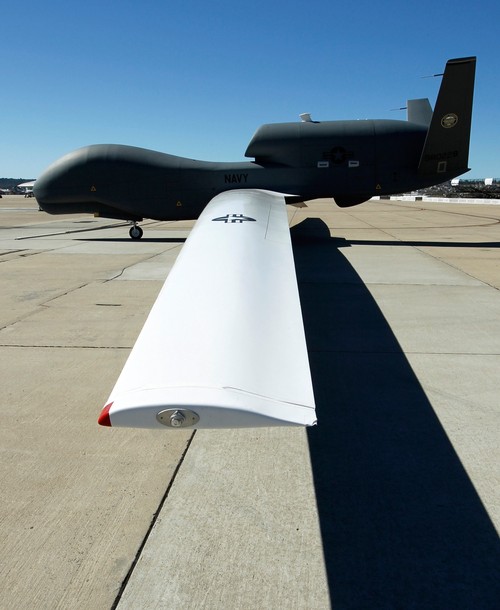
Oddly the US Navy is going to keep its version of the aircraft therefore keeping the option open that it could, if needed, be used by the air force.
Surely, Global Hawk has not enjoyed the best of safety records with three prototypes lost and a failure rate much higher than many manned planes facing lethal threats in combat.
However, the U.S. RQ-4Bs belonging to the 9th Operations Group/Detachment 4th of the U.S. Air Force, based at NAS Sigonella, in Sicily, the base of the NATO AGS (Air Ground Surveillance) Global Hawk program were the first drones to operate in the Libyan airspace where they performed high altitude Battle Damage Assessment sorties.
Anyway, all of this is good news for the U-2, a 50 year old program that has ironed out all its techncal issues many years ago.
Affectionately known as “Dragon Lady”, the U-2 entered service in 1957. Since then, it has undergone many upgrades and has become a relatively cheap viable platform during these harsh economic times. In what would normally be the types twilight years, a breath of fresh air has been breathed over the majestic old ‘Lady’ which will see the type in service for more years to come.
Actually, it has been a bad week for other new or recent aircraft types too.
Another rather embarrasing news (this time for Airbus) is that further cracks have been found in the wings of its much lauded A380 “Superjumbo”, after the famous uncontained engine failure of Nov. 4, 2010. Airbus did tweet “For those following reports on A380 wing rib findings we confirm inspection & repair process underway and aircraft are safe to fly”: a damage limitation message by the company’s PR rather than a reassuring statement.
The apparent win of obsolete technology on newer, supposed to replace it, does pose the usual question: are modern aircraft too complex?
One thing is sure: you can’t compare new planes with older types. Even if there can be programs free from major problems during their whole lifetime and much troubled ones, facing myriad issues since their birth, generally speaking, those that have survived for 3, 4 or 5 decades and are still flying today, were probably properly designed, maintained, fixed and upgraded during their career. So they are today much more reliable than those integrating cutting edge experimental technologies.
Written with The Aviationist’s Editor David Cenciotti
Above image: U.S. Air Force
China: does it need to copy the RQ-170 “Beast of Kandahar” captured in Iran? January 24, 2012
Posted by Richard Clements in China, Drones.Tags: China, Dark Sword UAV, Darksword, J-20, Lockheed Martin RQ-170 Sentinel, Military Aviation, RQ-170, Shenyang University, Sour Dragon UAV, UAV, Unmanned Aerial Vehicle
add a comment
As has been widely reported it is no secret that China is trying to acquire stealth technology for use in their indigenous aircraft program. It was only last year that photo’s and video of the J-20 started to appear on the internet. It was clear that China had made advances into the dark art of stealth technology, although first radar evading tech dates back to about 40 years ago. What was interesting was that the J-20 did not posses the angular lines of the Nighthawk but the more rounded curves of the B-2 or Raptor, it was clear a lot of work had been done behind closed doors for the Chinese scientists.
Another area that Chinese designers have made advances in is that of UAV’s (unmanned aerial vehicles) or UAS (unmanned aerial systems). Rumours started in 2007 when, during the Paris Air show, China displayed the ‘Dark Sword’ concept.
The Dark Sword clearly had a very low RCS (Radar Cross Section) and showed the way Chinese designers were going in their work. It has appeared several times since then, indicating that this might not just be a concept but could be something that becomes reality in the future.
At the end of 2011 photos started emerging from China of a new Stealth UCAV/UAV dubbed the “Wind Blade” that features a blended wing design with long slim wings with “Sharklets” and an engine intake at the front and above the wing-like body. The overall design would lean towards a high altitude surveillance platform and going by reports it was designed by students from the Shenyang University which happens to be connected to one of China’s largest aircraft producers. Although the aircraft in the photo is a scale model it’s not clear how old the photo is, so it could be conceivable that there is now a full-scale version.
China does have several non stealthy UAVs too.
There is the SOAR Dragon which looks very similar to the Global Hawk although it has swept wings and the tail plane joins with the main wing and from the photo’s below appears to have radar absorbing paint. What is interesting in these photo’s is that the aircraft is in an advanced state of completion and looks to be being painted.
All images source: Chinese Internet
There are videos of a hybrid Predator – Global Hawk look-alike doing fast taxis down an unknown runway. The drone seems to be in an advanced state of testing meaning this could now be in a flyable position.
Analysts are divided as to where Chinese scientists are with UAV development. Based on the designs that are being displayed, the designers could have mastered stealthy shapes and the complexities of controlling the UAV. There are even reports that the Chinese are testing small-scale UAV’s for automated carrier landings.
Where most analysts agree is that China does not have the infrastructure to have a UAV reach outside of Chinese airspace and even within Chinese borders the signals are unreliable.
Maybe some of the radio/satellite link equipment, as well as internal memories, circuitry, lenses, and sensors contained in the RQ-170 Sentinel captured by Iran could be somehow helpful cause they can be evaluated, tested and copied. And, maybe, improved.
China is still a fair few years away from having a true global UAV reach which will require a lot of space systems investment to be able to achieve this. However there is one thing for sure, it will happen at some point in the future.
Richard Clements for TheAviationist.com
F-35: flying on phased out fuel or programmed by a videogame freak? January 23, 2012
Posted by David Cenciotti in F-35.Tags: Air BP, Glass cockpit, Joint Strike Fighter, JP-4, JP-8, Lockheed Martin, Lockheed Martin F-35 Lightning II, Military Aviation, Pentagon
1 comment so far
Soon after publishing the article about the “F-35 from the Cockpit” I’ve received some emails and comments about an interesting thing readers have noticed in one of the webminar slides used to show the Joint Strike Fighter glass cockpit’s symbology.
As the following image seems to suggest, the most advanced 5th generation combat plane, integrating the best stealth technologies, full sensor fusion and a futuristic X-ray-like capable helmet, flies on JP-4 fuel, a dangerous kind of propellant, quick to ignite and explode, that was largely used from 1951 to 1996, when it was phased out and replaced by the safer, kerosene-based, JP-8.
Image: Lockeed Martin (highlight mine)
As explained in the website of Air BP (“the specialised aviation division of BP, providing fuels, lubricants & services to our customers in over 50 countries worldwide”):
although JP-8 has replaced JP-4 in most every case, the potential need for JP-4 under emergency situations necessitates maintaining this grade in specifications MIL-DTL-5624 and Defence Standard 91-88.
However, unless the JP-4 was/is used for testing purposes, it is quite strange that while some combat planes are beginning to perform test flights on eco-friendly biofuel or synthetic fuel, the F-35 is flying on a type of jet propellant presumed to be phased-out or used only in emergency situations.
Unless, the F-35′s glass cockpit symbology, so “user friendly” to remind some early flight simulator games, was not only designed for a “videogame freak” as test pilots said during the webminar, but also by someone who used to play with arcade games with some simulation elements (as F/A-18 Interceptor or F-19 Stealth Fighter) in the ’90s, when the JP-4 was still in use :)
U.S. Fifth Fleet vs Iran Navy update: American supercarrier monitored with…binoculars. December 29, 2011
Posted by David Cenciotti in Iran, Military Aviation.Tags: aircraft carrier, Bahrain, Blue Angels, E-2C, Hawkeye, Hormuz, Iran, Islamic Republic of Iran Navy, Military Aviation, Naval Aviation, Strait of Hormuz, Tehran, United States, USS John C. Stennis, USS John C. Stennis (CVN-74)
21 comments
Here’s an update to my previous post titled “U.S. supercarrier detected by an Iranian spyplane near the Strait of Hormuz”. Trivial as that could be the last thing that plane will ever detect.
Russia Today has published the alleged video taken by an Iranian maritime surveillance plane of a U.S. supercarrier near the Strait of Hormuz.
Although it is extremely difficult to determine when the video was filmed, it shows the USS Stennis: if you see the video in full screen HD mode you’ll get a glimpse on the “74″ code on the flattop’s island that designates the USS Jonh C. Stennis (CVN-74).
As shown by the video, the Islamic Republic of Iran Navy Aviation (IRINA) plane gets near the aircraft carrier (whose deck is not as busy as I’d expect…) and one of the most advanced tool used by the crew members of the Fokker F-27 used for maritime patrol to monitor the ship is….a binocular.
Furthermore, the IRNA news agency has published an interesting picture of the “Saeghe” (Thunder) an indigenously modified version of the American F-5 Tiger, whose twin tails and blue colour are loosely reminiscent of the Blue Angels’ F-18s Hornet, carrying two MK-82 Snakeye (?) dumb bombs.
According to the IRNA: “The combat jets bombed the sea areas after processing the data delivered by stealth reconnaissance aircraft.”
Which one?
“U.S. supercarrier detected by an Iranian spyplane near the Strait of Hormuz”. Trivial as that could be the last thing that plane will ever detect. December 29, 2011
Posted by David Cenciotti in Iran, Military Aviation.Tags: aircraft carrier, Bahrain, E-2C, Hawkeye, Hormuz, Iran, Islamic Republic of Iran Navy, Military Aviation, Naval Aviation, Strait of Hormuz, Tehran, USS John C. Stennis (CVN-74)
4 comments
According to the news reported by the Iranian news agency IRNA, an Iranian warplane involved in the Velayat-90 exercise has identified a U.S. flattop near the Strait of Hormuz.
“This shows that the Iranian Navy keeps a close eye on the movements of all ultra-regional forces in the region and checks their activities,” said the Iranian Navy’s Deputy Commander Rear Admiral Mahmoud Mousavi.
The news came the day after the U.S. 5th Fleet, based at Manama in Bahrain, said it would not tolerate any disruption to the freedom of navigation in the area after Iran earlier threatened it will block the Strait of Hormuz if sanctions against Tehran are toughened.
Some western media have added that the Iranian spyplane took some photographs of the U.S. aircraft carrier it detected.
My first comment to the news was that if the situation was really serious, that would be the last thing that the Iranian spyplane will ever detect for various reasons.
First of all, a carrier air wing made of about 60 aircraft. For example, when I visited the USS Nimitz involved in Operation Enduring Freedom in 2009, the CVW-11 was made by 20 F/A-18C (VFA-86 and VFA-97), 12 F/A-18Es (VFA-14), 12 F/A-18Fs (VFA-41), 4 E/A-6Bs (VAQ-135), 4 E-2Cs (VAW-117), 4 SH-60Fs and 3 HH-60Fs (HS-6), a “mix” that, with minor differences, can be used as a reference.
Hence, among the aircraft included in an embarked air wing (worth a small autonomous air force capable to perform a wide variety of missions), there are also some E-2C Hawkeyes, aircraft that can perform Air Space Management and Tanker Coordination tasks, to manage and deconflict planes (as done for traffic flying in the Afghan airspace during OEF tasks) and provide the “picture” to the ship’s CDC (Combat Direction Center) that can be literally interconnected to any other AEW (Airborne Early Warning) platform.
The CDC is responsible for the tactical management of all the missions launched by the carrier, by means of fighter and mission controllers whose radar screens can be fed with the tracks discovered at long distance by the Hawkeyes, one aircraft of those is always flying and ready to guide interceptors (both on alert and flying) to the identification of intruders that it can detect from several hundred miles away.
Then, a U.S. Nimitz-class nuclear aircraft carrier does not travel alone (as recently done by the Chinese trainer Varyag) but it is the flagship of a Carrier Strike Group that usually includes two AEGIS destroyers, a Ticonderoga class missile cruiser, a Perry-class frigate and, although they are not officially attached to the CSG, a nuclear submarine and various supporting vessel, whose task is, among the others, to defend the flattops from enemy aerial or maritime attack.
As you may understand, such a huge force does not go unnoticed. Neither it wants to as its purpose is to deploy the air wing wherever it is needed for a Crisis Support Operation or to “flew muscles”.
So, unless the news is that “an ex-US RQ-170 stealthy drone now remotely controlled by the Iranian military” has identified the USS Stennis approaching the Strait of Hormuz, the fact that a spyplane has spotted or even photographed from a long distance an American nuclear flattop is absolutely trivial.
And will not change the outcome of an eventual war.
Typhoon’s super sci-fi helmet: a (supposedly) unnecessary extra feature on the F-22 December 12, 2011
Posted by David Cenciotti in Military Aviation.Tags: Eurofighter, F-22, F-35, Helmet Mounted Symbology System, High-Off BoreSight, HMDS, HMSS, HOBS, JHMCS, Joint Helmet Mounted Cueing System, Military Aviation, Typhoon
add a comment
When I first saw this picture (taken by contributor Nicola Ruffino), I immediately thought that the Eurofighter Typhoon’s Helmet Mounted Symbology System (HMSS), is not only quite advanced, if compared to the the American JHMCS (Joint Helmet Mounted Cueing System), but it is also so ugly and bumpy that let the backseater look like a sort of Hellboy (a comic book superhero).
Even if they implement the same basic features, compared to the American JHMCS (Joint Helmet Mounted Cueing System) (that was developed earlier and became operational beginning in the late ’90s), the Typhoon’s HMSS features lower latency, higher definition, improved symbology and night vision.
Both the JHMCS and the HMSS provide the essential flight and weapon aiming information through line of sight imagery. Information imagery (including aircraft’s airspeed, altitude, weapons status, aiming etc) are projected on the visor (the HEA – Helmet Equipment Assembly – for the Typhoon) , enabling the pilot to look out in any direction with all the required data always in his field of vision.
Noteworthy, although it is integrated in U.S. F-15C/D, F-16 Block 40 and 50 and F-18C/D/E/F, the F-22 Raptor doesn’t need a JHMCS. There are various reasons why the most advanced (and much troubled) air superiority fighter lacks it and the HOBS (High Off-Boresight) weapons: confidence that capability was not needed since no opponents would get close enough to be engaged with an AIM-9X in a cone more than 80 degrees to either side of the nose of the aircraft; limited head space below the canopy; the use of missiles carried inside ventral bays whose sensor can’t provide aiming to the system until they are ejected. And also various integration problems that brought the Air Force to cancel funding.
Did the F-22 need HOBS? Sure, as it would have improved its lethality even further. Indeed, although simulated 1 F-22 vs 3 JHMCS F-16Cs engagements proved that the Raptor can master even challenging scenarios such an extra feature would have been a useful addition when facing large formations of Gen. 5 fighters like the Chinese J-20.
In fact as I’ve already written on this blog, “quantity” rather than “quality” should worry U.S. fighter planes in the future:
“the real problem for the US with the J-20 is not with the aircraft’s performances, equipment and capabilities (even if the US legacy fighters were designed 20 years earlier than current Chinese or Russian fighters of the same “class”); the problem is that China will probably build thousands of them.”
Left image: U.S. Air Force
By the way, the multi-role F-35 will get a HMDS (Helmet Mounted Display System): all of the plane’s sensors along with a set of cameras mounted on the jet’s outer surfaces feed the system providing the pilot with a X-ray vision-like imagery: he can see in all directions, and through any surface, with all the information needed to fly the plane and to cue weapons projected onto the visor.
Although the JHMCS is quite common all around the world, the Typhoon’s HMSS is obviously more rare. A good opportunity to see this helmet in action in the U.S. could come in the next years, following the German Air Force plan to base 24 Eurofighter Typhoons at Holloman Air Force Base, at the German Air Force Flying Training Center established in 1958. The Typhoons will be used to train German pilots on the type, as done with the Tornados, that the GAF expects to keep in New Mexico until 2019.
Image: Eurofighter
“I’d rather go to war in a Typhoon than in a F-18 (Super) Hornet” an Aussie exchange pilot says December 5, 2011
Posted by David Cenciotti in Military Aviation.Tags: 6 Sqn, F-18, fighter pilot, FPDA, HEA, HMSS, Hornet, JHMCS, Military Aviation, RAAF, RAF, RAF Leuchars, RMAF, RMAF Butterworth, Royal Australian Air Force, Typhoon
15 comments
“I’d rather go to war in a Typhoon than in a F-18 Hornet”. This alleged Australian exchange pilot’s statement is one of the most interesting outcomes (and marketing slogans) of BERSAMA LIMA 11 an exercise marking the 40th Anniversary of the Five Powers Defence Agreement (FPDA) the only multilateral defence agreement in South East Asia with an operational element commitment undertaken by five nations (UK, Singapore, Malaysia, New Zealand, and Australia) to consult in the event of an attack on Singapore or Malaysia.

Image source: RAF/Crown Copyright
This year’s edition of the exercise was attended by 18 ships, two submarines, 4000 troops and 68 aircraft: among them four RAF Typhoons (three single seat and one twin seat jets, both belonging to the Tranche 2) from RAF Leuchars that undertook a 4-day 7,000 mile trip to RMAF Butterworth (including stops in Jordan, Oman and Sri Lanka).
According to an email I’ve received today from a Eurofighter pilot, the overall performance of the plane was almost faultless and much better than anybody had anticipated in spite of the limited support and spare parts available:
“There were no significant problems with the aircraft apart from a small radar issue on one aircraft during the exercise. No issues were attributed to the extreme humidity and local environment, a significant improvement on performance during the Singapore campaign.”
During Bersana Lima 11, the British Typhoons, that had their baptism of fire in the air-to-surface role during the Air War in Libya, faced Malaysian Mig 29s, Australian F-18s (C and F) and Singaporean F16s using for the first time during an operational deployment, their electric hat (HMSS/HEA – Helmet Mounted Simbology System/Helmet Equipment Assembly the Typhoon JHMCS equivalent) and “easily came out on top in all engagements.”
To such an extent that the Aussie pilot made the notable comment (don’t forget the Royal Australian Air Force is an operator of both Legacy and Super Hornets….).

Image by Nicola Ruffino
Shortlisted in the Indian MMRCA (Medium Multi-Role Combat Aircraft) tender for 126 fighter planes for the Indian Air Force with the Dassault Rafale (the recent loser of the Switzerland selection for a fighter plane to replace the ageing F-5Es), with Ex. Bersana Lima 11 the Typhoon has undertaken another operative (and marketing) campaign to prove the aircraft expeditionary capabilities and its superior technology.